
St Nicholas at Wade · 24.8 road miles north
Roofers in St Nicholas at Wade
St Nicholas at Wade has a Grade I church, two Grade II listings at the old forge and a conservation area of its own. Each points to a different consent route, so a survey here begins by working out which route your house follows. Then it moves to the roof itself. After the survey, one written total price.
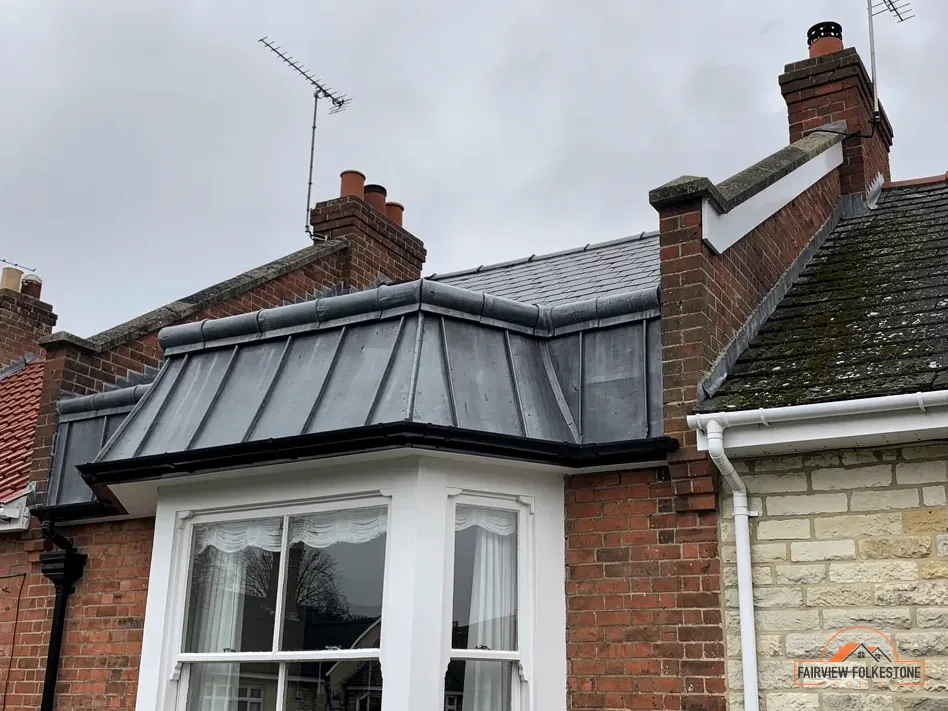
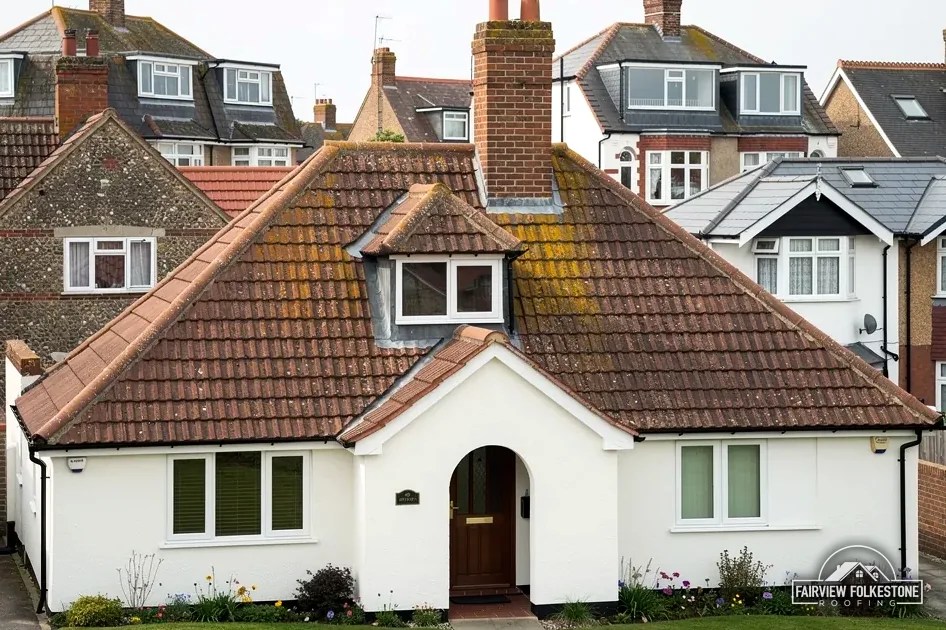
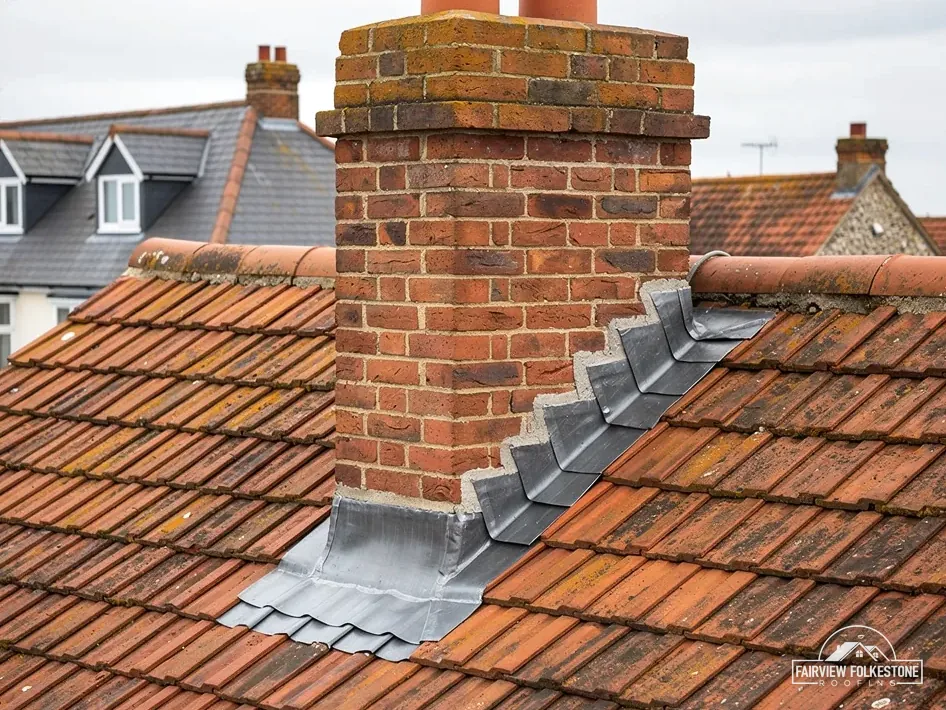
- Saint Nicholas
- The church is listed Grade I and still holds Church of England worship
- Old forge
- Forge House and the forge beside it, both listed Grade II
- Scaffold fee
- Kent County Council, £52 per week for 2026 to 2027
- Time on the road
- 24.8 road miles, about 36 minutes
Three faults a St Nicholas at Wade survey looks for
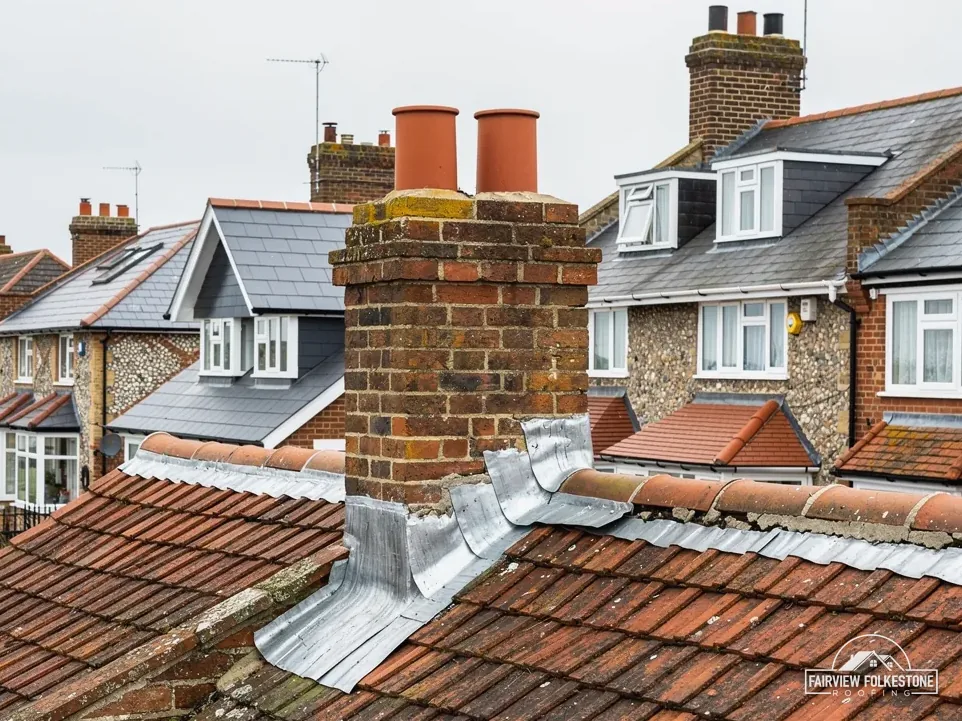
What we found
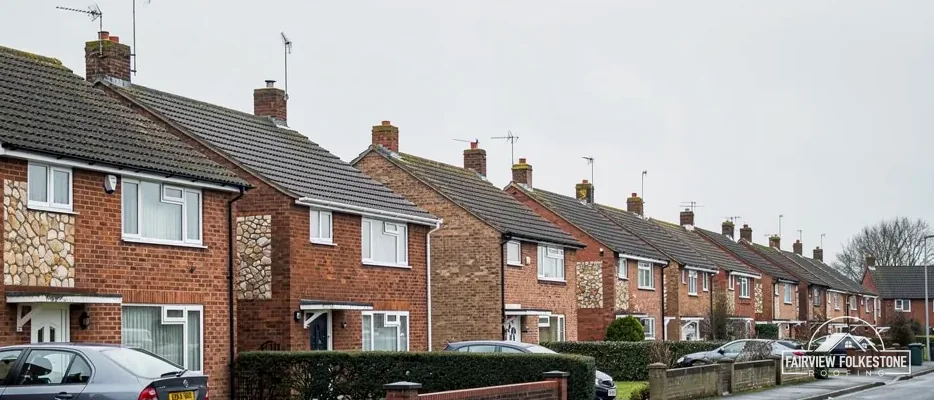
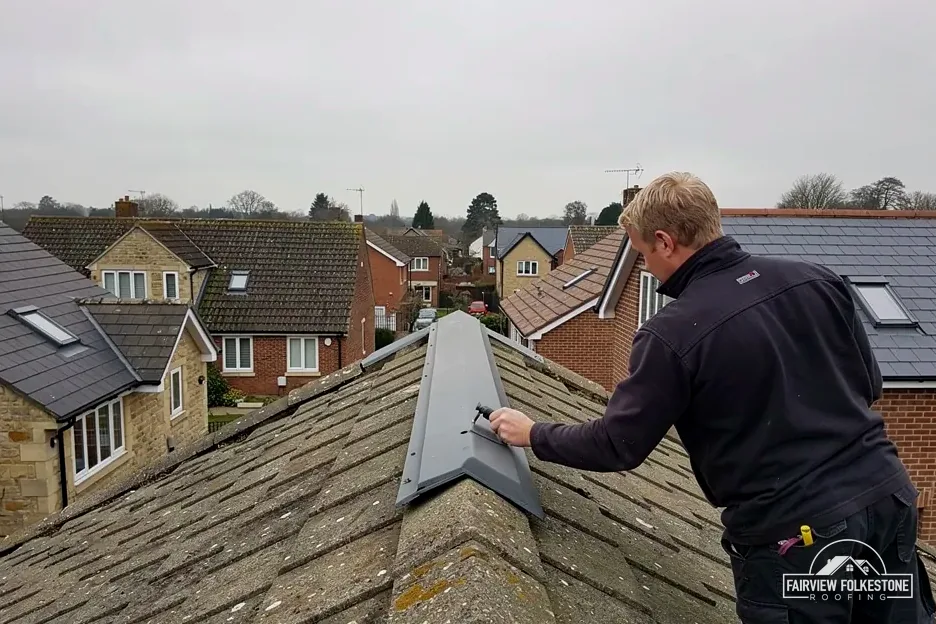
Flashing lifting at the foot of a chimney stack
What it fairly needs
Dress it back, seal it and re-point the edge.
What we found
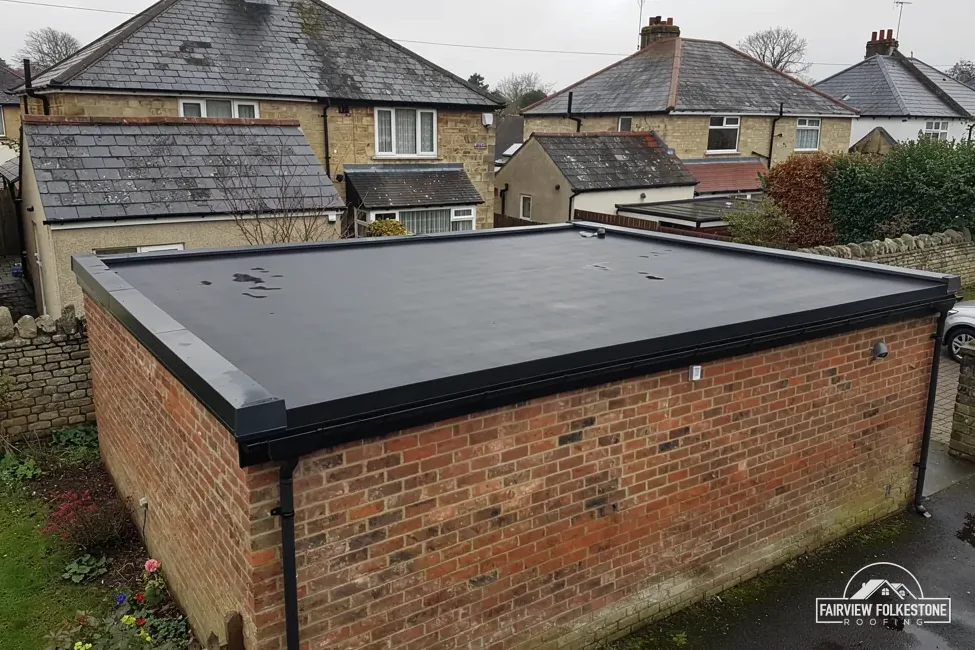
Worn covering on a listed house beside the forge
What it fairly needs
Consent route settled in writing first.
What we found
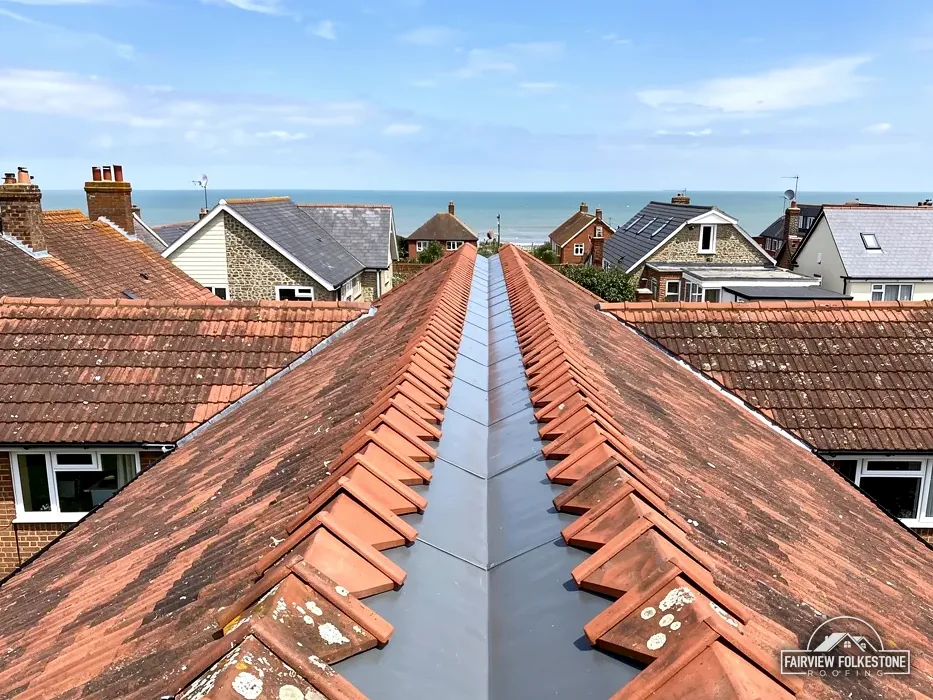
Valley lining split along its length
What it fairly needs
Open the valley and line it again.
The fair ledger
Church, forge and the route to a new covering in the village
A Grade I church with a faculty route of its own, two Grade II listings at the forge, and the Planning Portal test for any re-roof. A repair, replace or check stamp ends every entry.
Entry 01Parish church
Church of Saint Nicholas: a Grade I roof and the faculty route
Saint Nicholas is listed Grade I and is a working Church of England church, so its roof is not handled the way a house roof is.
Faculty first, never the council
Historic England lists the church as entry 1225043, first listed on 11 October 1963. A church used for Church of England worship falls inside the ecclesiastical exemption, so repairs go through the Church of England's faculty system. Applying to the council for listed building consent would be the wrong door for that building.
Houses near the church are another matter. A cottage beside it answers to any list entry of its own and to the village conservation area. A church next door does not lend its route across a boundary wall, and an exempt church does not make a neighbouring roof exempt either. Our pitched roofing survey begins by looking up the house itself, before any slope is climbed.
That matters in practice because a church and a house can stand within sight of each other and still follow different rules. Mixing the two up is the quickest way to order materials for a job that then has to wait, so the first visit is spent on paperwork and photographs, and the ladder comes after.
Myth: A house beside a Grade I church shares the church's consent route.
Fact: The church follows the faculty system. The house follows any listing it carries, plus the usual planning rules.
Three ways a village address can go
- The building is the church: the Church of England faculty system applies.
- The house is itself on the list: listed building consent is needed as well.
- The house is neither, but stands in the conservation area: Thanet District Council confirms what that changes.
Whichever applies, the answer is written down before a covering is ordered, and a copy stays with you for the file.
1225043
Historic England's number for Saint Nicholas church, Grade I
Historic England list entry
Entry 02Old forge
Forge House and the forge beside it, both Grade II
Forge House and Forge Adjoining Forge House to the Right are both listed Grade II. A roof on either one is a listed building consent question.
Two listings, one lane, one question
Forge House is entry 1225004 and the adjoining forge is entry 1266642, both first listed on 25 June 1971. Whether they, or any other address, stand inside the St Nicholas at Wade conservation area is for Thanet District Council to confirm, address by address. A listed house keeps permitted development for roof work, with listed building consent required on top whenever the work changes what is special about the building.
So a new covering is not proposed on the first visit. We photograph, measure and write up the fault, and the council sees the roof before it sees a plan. Where the fault is small, the proposal is small too: refix, patch, re-bed. The covering is described as it stands, with nothing changed on paper that is not changed on the roof. The planning guide sets out the planning side in more detail.
On a listed village roof
Single slipped tile, rest sound
Refix it
Ridge bed cracked along its run
Re-bed with fixings
Covering failing slope-wide
Ask the council
Can I refix a few tiles on a Grade II house near the forge without asking?
It turns on whether the work reaches the building's special character. A handful of refixed tiles that leave the roof looking the same asks less of the council than a new covering does, but only Thanet District Council can rule on it. We put the question in writing, wait for the reply and start only after it.
Why a smaller repair gets an easier hearing
- It leaves the covering looking as it did.
- It can be photographed before and after, so the council sees exactly what changed.
- It keeps the old fabric in place where it is still sound.
A full re-cover is sometimes the right answer for a listed roof. Then the written case explains why a repair would not hold, with photographs of the failed areas beside it.
Photographs taken at the survey are dated and kept with the quote, which leaves the council, and any later owner, a plain picture of the roof on the day of the visit.
The test building control applies
The Planning Portal frames it as two limits. The first is the building envelope: re-roofing normally needs no Building Regulations application while less than 25 per cent of it is affected. The second is the roof: less than 50 per cent of it must be affected as well. Weight is a separate point. A new covering that comes in 15 per cent or more heavier needs approval however little of the roof is touched, and a structural check is the sensible first step.
Thanet District Council runs its own Building Control team, and a registered building control approver is the other route. Before a roof replacement begins, we find out which route applies and write the reply into the notes you keep.
None of this depends on the age of the house. It depends on the extent of the work and on what goes back on the roof, and both are fixed at the survey, so the quote and the approval route are known before the scaffold goes up.
Entry 03Re-roof route
A new covering here: the test, the weight and the scaffold
A re-cover is judged on how much of the house and roof it touches, and on the weight of whatever goes back on. A scaffold on the road needs a licence.
15 per cent
the added weight of a new covering at which approval is needed
Planning Portal
What moves the re-roof price
- Size and pitch of the roof
- Covering chosen
- Scaffold and its licence
- Condition of the timber beneath
One written total price
Scaffold on a village road
- On the public highway, the licence comes from Kent County Council.
- On your own land, inside the boundary, no highway licence is involved.
- Either way, the survey records which applies, and the scaffold sits inside the written quote.
The licence needs applying for ahead of the start date, so the date for the scaffold is set to fit the application and not the other way round. A walk-around scaffold also has to leave room for people to pass, which the licence conditions deal with.
Church side, forge side or a plain re-roof: where does your house stand?
Photographs by message will do, or ask us round. Each fault gets a verdict in the reply, and we name whichever consent route must be settled before a covering is ordered. You keep a copy of every reply.
Folkestone to St Nicholas at Wade by road
St Nicholas at Wade is 24.8 road miles north of Folkestone, about 36 minutes by road. At the 2021 Census, St Nicholas at Wade parish had 879 usual residents. A few photographs by message make a good first step: one wide shot of each slope, one close shot of the fault and one of the chimney if there is one. The survey comes after that, and the price waits until we have seen the roof.
St Nicholas at Wade roof questions, from the church to the forge
Who decides roof work on the Church of Saint Nicholas in St Nicholas at Wade?
The church is a Grade I building that still holds Church of England services, so repairs to it follow the faculty system and not listed building consent from the council. A house beside it is a separate question, judged on its own listing and on the conservation area. We look each address up before it is priced, and what the council says goes into your notes.
Does Forge House being Grade II change a re-cover on a nearby cottage?
Only if your own cottage is listed or lies inside the conservation area, because a listing covers only the building it names. For Forge House and the forge beside it, listed building consent is added to permitted development. A neighbour is checked separately, and Thanet District Council confirms the position for each address, which we then record in writing so that it stays with the house.
Who licenses a scaffold on a St Nicholas at Wade road?
A scaffold standing on the road is licensed by Kent County Council at £52 per week for 2026 to 2027, and the skip or scaffolding company should submit the application, says the council. We arrange it with our scaffolder. A scaffold set up entirely on your own land falls outside that licence, and the survey writes down which case yours is so the quote is firm.
How much of a St Nicholas at Wade roof can be re-covered without approval?
The Planning Portal gives two limits and a weight test. Re-roofing normally needs no application while less than 25 per cent of the building envelope and less than 50 per cent of the roof is affected, yet a covering 15 per cent or more heavier needs approval anyway. Thanet District Council's Building Control team, 01843 577522, gives the answer for your own house, and we put the question to them first.
Is the St Nicholas at Wade conservation area a barrier to roof repairs?
The area is designated, and Thanet District Council confirms whether an address lies inside it. A repair is a modest question there, but an Article 4 direction is worth asking about too, and the council is the one to ask. We raise both at the start, and what we learn is written beside the quote, so the order of work is clear to everyone concerned.
Why does a valley on an older village roof get so much attention at a survey?
Two slopes drain into one channel at a valley, so a split lining there lets in a great deal of water at a single point. The survey lifts the covering along the valley edge, reads the lining and the board beneath it, and gives a verdict. A re-lined valley is sometimes enough, and sometimes the board has gone as well and needs replacing.
Church or forge nearby? Ask us before you scaffold
You'll get one written total price.