
Northbourne · 16.4 road miles north-east
Roofers in Northbourne
A Grade I church, a Grade II* farmhouse and barn and a conservation area sit in this small parish, so each Northbourne quote opens with a check of your address. Then comes the roof itself.
- Church, Grade I
- St Augustine's, used for Church of England worship, so its works go by faculty
- Farm listings
- Vine Farmhouse and a barn beside Northbourne Court, both listed Grade II*
- Dover's approval rule
- Dover District Council asks for approval before roof coverings are replaced, even if this is just like for like
- Permit for the scaffold
- Kent County Council, £52 per week for 2026 to 2027; we arrange it with our scaffolder
Three jobs on a Northbourne roof and how each is marked
What we found
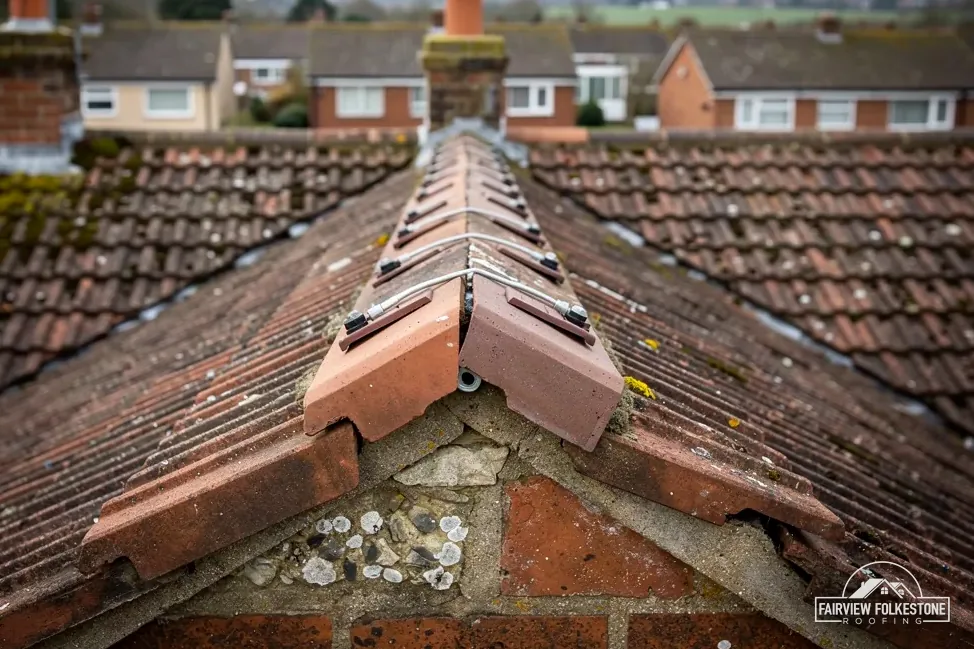
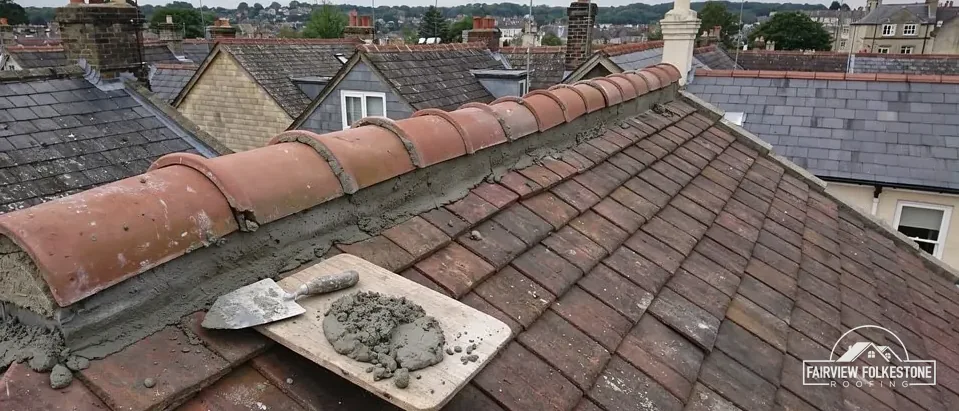
Hip tiles loose where the hip meets the ridge, rest tight
What it fairly needs
Re-bed and refix the hip end; the tiles below stay.
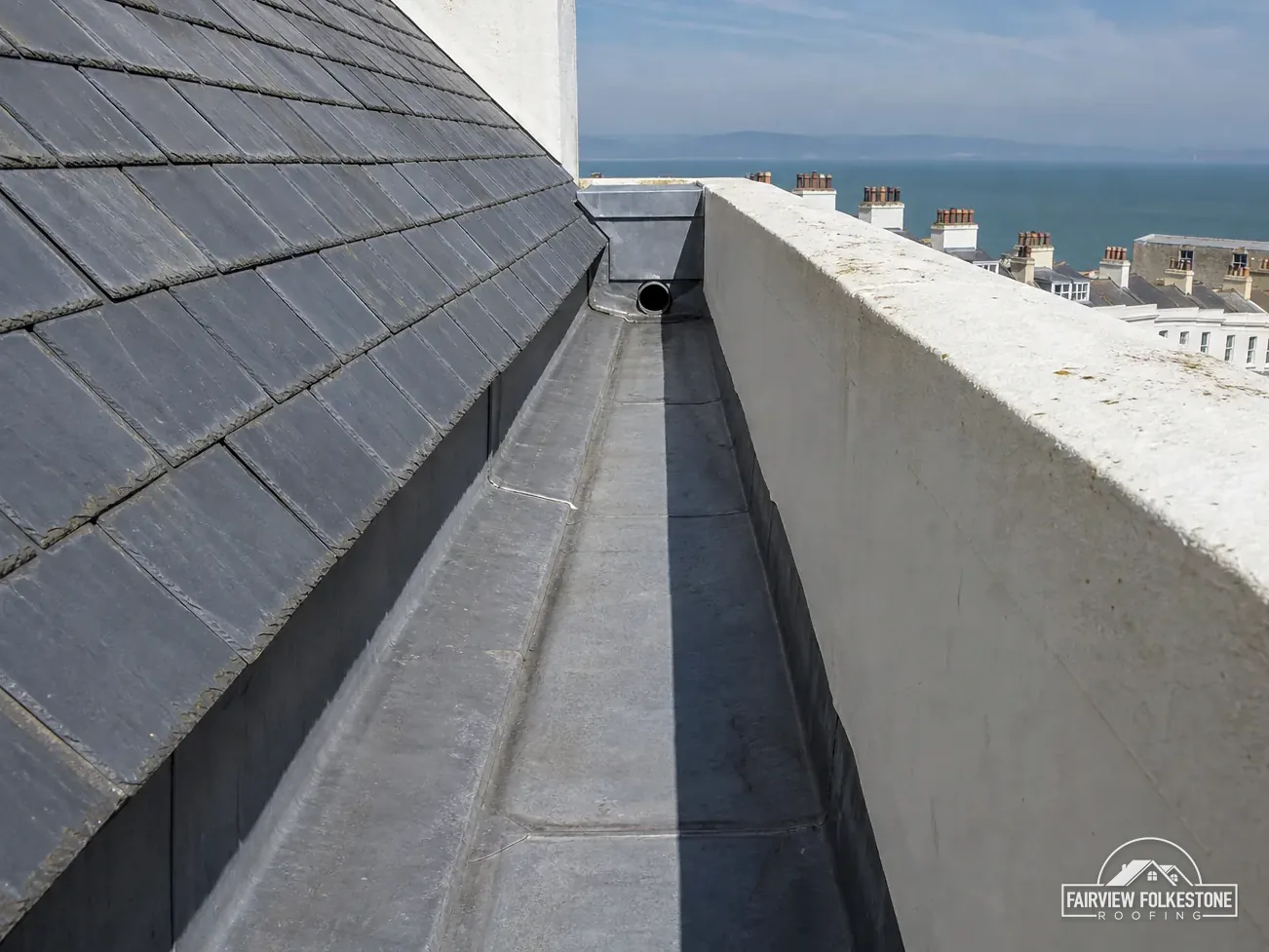
What we found
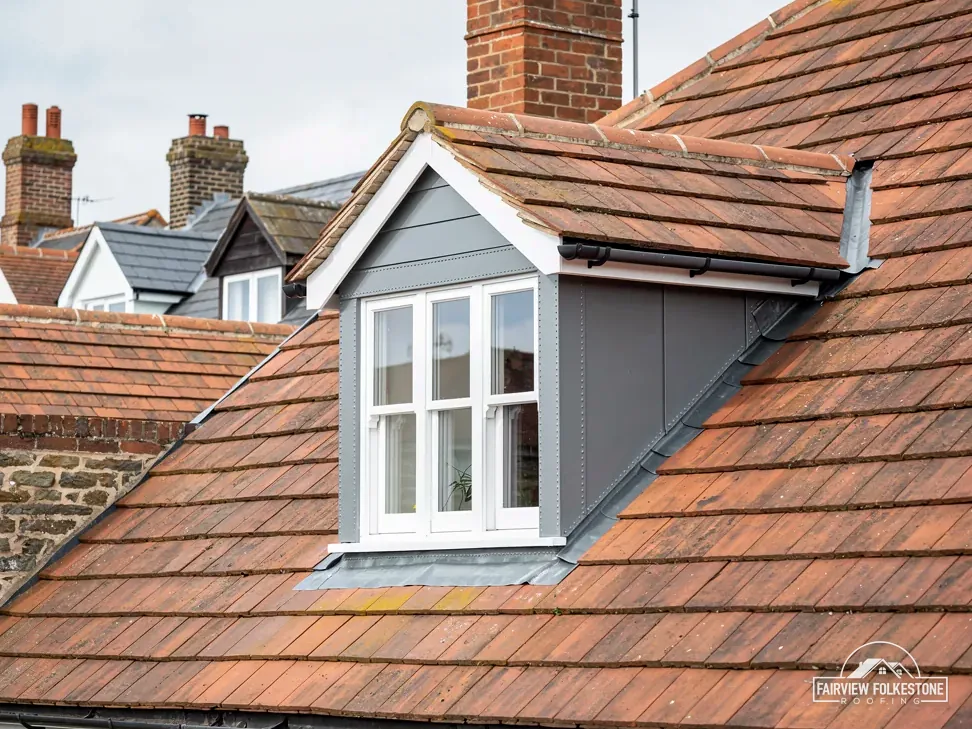
Damp stain along a ceiling edge, close to a valley
What it fairly needs
Open the valley first, then price the cure.
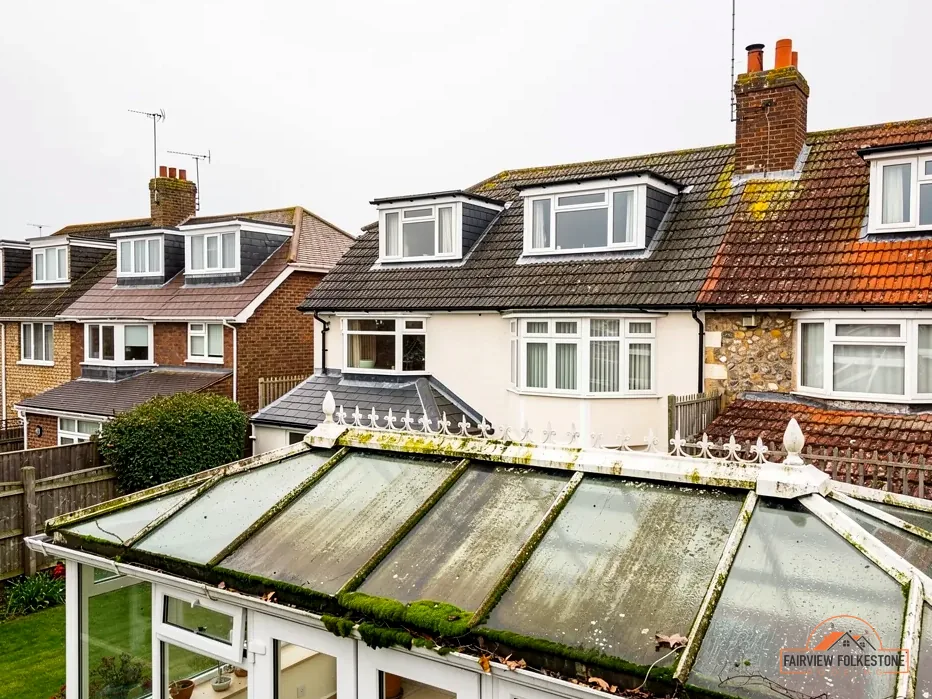
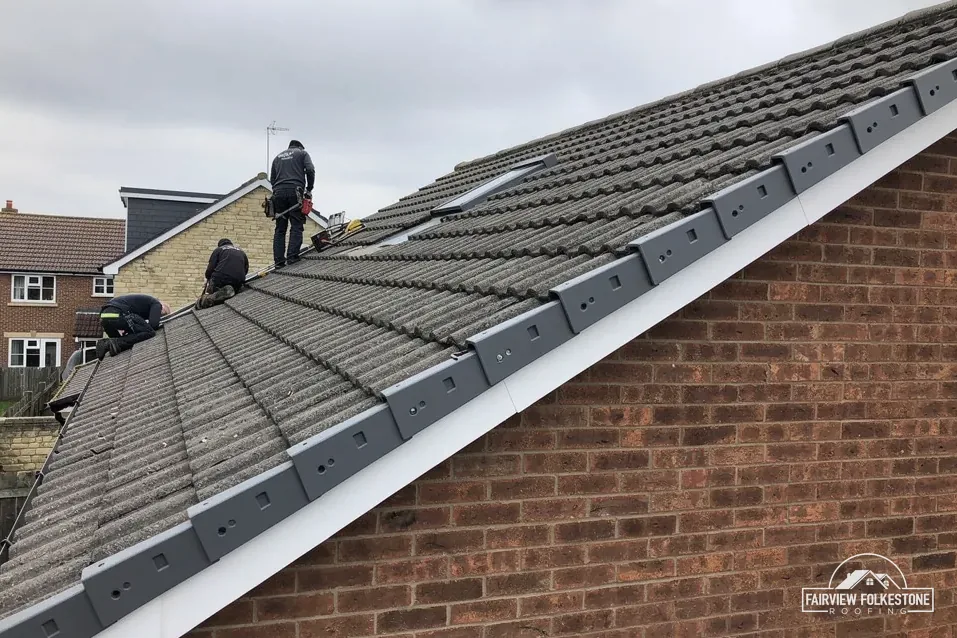
What we found
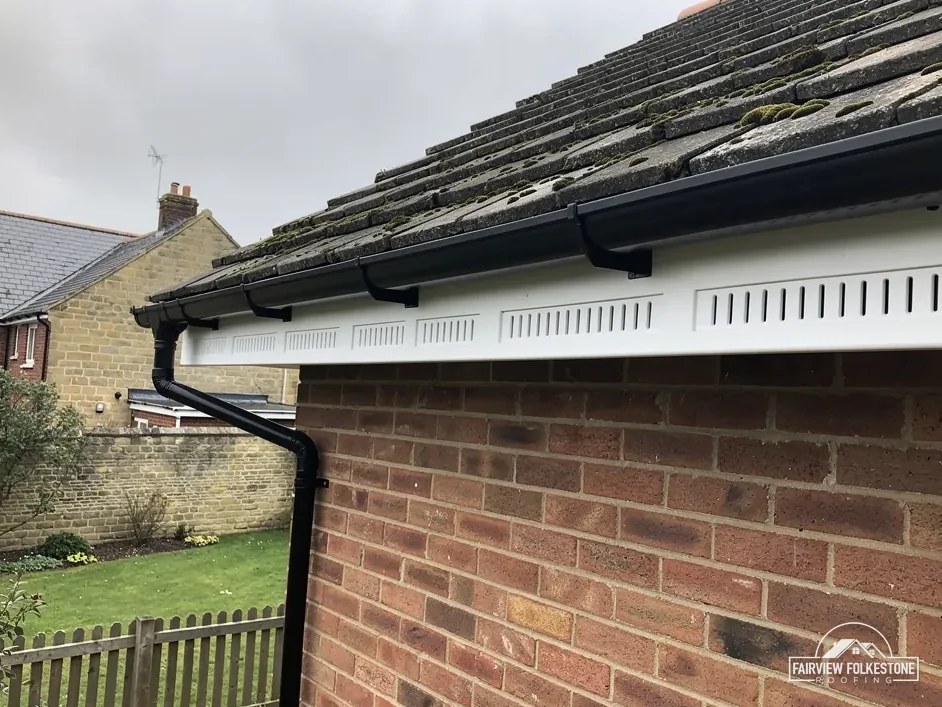
Soffit boards rotted and the eaves vents blocked
What it fairly needs
New soffit and fascia with vents, all fitted as one job.
The fair ledger
Church, farmhouse and barn: listings that shape a Northbourne roof
Northbourne has a Grade I church in use, a Grade II* farmhouse and barn, and a conservation area, and each one raises a different question before a roof is priced. Three stamped entries follow.
Entry 01Church and faculty
St Augustine's church and the roofs around it: which route applies
The Church of St Augustine is listed at Grade I and still in church use, so its roof works follow a route that a house roof never meets.
A faculty is not listed building consent
Historic England lists the Church of St Augustine at Grade I (list entry 1264324). As a Church of England church in regular use, it falls under the faculty system, the Church's own route for approving works to its buildings, and not under listed building consent from Dover District Council. A faculty is granted within the Church's own jurisdiction, never by the council.
A listed Unitarian or Quaker chapel, or a redundant church, is treated differently, because those buildings do need listed building consent. The route depends on the denomination and on whether the building is in use, which is why the first question is always what the building is, never what the roof is made of.
For a house in the parish the position is simpler. Its position is assessed by its own address, whether or not the church stands close. Our roof inspections page shows how a survey is carried out, and our planning permission guide covers anything that goes beyond a plain re-cover. A listing attaches to a building, and it does not spread to the houses around it. If you are unsure whether your own house is listed, the National Heritage List answers to an address search, and we make that search for every Northbourne quote before any price is set.
Myth: Any listed church must ask the council for consent before roof work.
Fact: A Church of England church in use takes the faculty route; Unitarian, Quaker and redundant churches are the ones that need listed building consent.
Who decides on work to St Augustine's roof?
The Church of England's faculty system, because the church is used for Church of England worship. That is not a decision for us, for Dover District Council or for a neighbour, and we take no part in it. Our survey stays on the houses, and where a neighbouring roof needs work, the church is a separate conversation.
Entry 02Farm buildings
Vine Farmhouse and a Grade II* barn: roofs that carry a listing
Vine Farmhouse and a barn north of Northbourne Court are both listed at Grade II*, so any roof work on either begins with what the listing protects.
What a Grade II* listing asks of a roof
Historic England gives both buildings Grade II*: Vine Farmhouse is list entry 1237301, and the barn about 20 metres north of Northbourne Court is list entry 1237002. Listed building consent is needed for any works affecting a building's character as one of special architectural or historic interest, and that applies to a roof as much as to a doorway.
A listed home keeps the rights it had for roof jobs, so the real question is whether the work touches the character that earned the listing. A repair that puts back what was there is a different job from a change of covering, and the council decides where that line falls, not the roofer.
On a listed roof the survey records what is up there before anything is touched: how each course is laid, how the ridge is finished, what the flashings are made of. Our lead work page covers the metalwork. The quote then sets out the repair to be made and the consent asked for, in the order the council will want to read them. The two buildings share a grade, but they are separate list entries with separate questions, and a roof that was fine on the survey day can still be asked about again once the consent reply arrives.
Listed roof, three different marks
Slipped course on a listed barn
Consent, then repair
Cracked flashing on an unlisted porch roof
Replace the flashing
Failed valley lining on a rear wing
Lift and relay it
Grade II*
the listing grade Historic England gives both farm buildings
list entries 1237301 and 1237002
Two questions for one council
Dover District Council's building control team names "replacement of roof coverings on pitched and flat roofs even if this is just like for like" among work that needs approval. Northbourne lies in its district, so a re-cover here is raised with the council before a date is set. The Planning Portal's national guide sets less than 25 per cent of the building envelope and less than 50 per cent of the roof as its test, which stays in the background here.
The conservation area is the second question. Dover District Council publishes 57 of them across its district, and whether your house sits inside the Northbourne one is a matter for the boundary, not a guess from the street. Ordinary re-roofing is normally permitted development in a conservation area, but an Article 4 direction can remove further rights. Only Dover District Council can confirm if one covers your road, so check with the council. Its conservation areas page has an online map that can be searched by postcode or street name.
A re-cover reaches the eaves, where the underlay meets the gutter, and the survey reads that detail before the price is set. It looks for fascia boards that have rotted, a gutter run that has dropped away from its falls, and underlay that stops short of the gutter, since each of those changes what a re-cover involves.
Entry 03Council ground rules
Northbourne's conservation area, and Dover's rule on new coverings
A conservation area lies close to the middle of Northbourne, and Dover District Council also wants approval before a covering is replaced, so both go to one council.
What sets the price
- Whether the council asks for approval
- How much of the eaves is rotten
- Reach for the scaffold
- How much covering is replaced at the edge
One written total price
The eaves a re-cover reaches
- Fascia board
- Gutter along the edge
- Underlay lapping into it
- Soffit with its vent
The eaves are where a covering meets the gutter, so they are read first.
Is your Northbourne roof a question for the church, the farm list or the council?
Send the address with a photograph. We find out which route applies, give each part a repair, replace or check verdict, and put one written price on paper afterwards.
Along to Northbourne
A drive from Folkestone to Northbourne takes about 25 minutes, 16.4 road miles to the north-east. The 2021 Census counted 727 usual residents in the parish, so a survey day here is planned around a handful of neighbouring roofs, with the loft and the guttering seen in the same visit and the findings talked through at the door. Questions about a quote can go by phone, WhatsApp or the form.
Tiles, valleys and roof lights: Northbourne questions
Plain answers for a parish with a church, a farmhouse and a barn.
Can slipped tiles on a Northbourne house be refixed without stripping the slope?
That works when the battens under them are firm and the rest of the covering is tight. The survey checks how each tile is held, lifts the slipped ones, and refixes them on new clips or nails. Broken ones are swapped for matching tiles. Where the battens have gone soft, a strip is the fairer answer, and the photographs come to you before any decision. A refix costs less than a re-cover, so the quote states which of the two this roof needs.
Who sorts out scaffold permission for a Northbourne roof job?
We arrange it with our scaffolder. Highways in Kent are Kent County Council's responsibility, and its guidance adds that the skip or scaffolding company should submit the application. Kent County Council charges £52 per week for 2026 to 2027, for each permit of 7 calendar days, and applications including renewals are expected 5 working days before the start, so the dates are settled early and the licence is in hand before the scaffold arrives.
Does Northbourne's conservation area change how a roof is re-covered?
Ordinary re-roofing is normally permitted development even in a conservation area, but an Article 4 direction can take away further rights, which is why the address is checked. Dover District Council has the last word on whether a direction applies to your road. Dover also wants approval for a replaced covering, so the council is asked once, about both, and its reply is written into the quote beside the price. You get both answers together.
Why does a Northbourne roof survey include a look inside the loft?
The underside of a covering shows what the top cannot. Daylight through the slope, damp staining on the timbers, soft battens and a lifted underlay all show from inside, and a sagging rafter shows against a straight edge. The outside survey covers ridge, hips, valleys, flashings and gutters, and the loft visit confirms or corrects what was seen from the ladder, so the price rests on the whole roof and not on one side of it. A sagging line is photographed and shown to you.
How is a leaking valley on a Northbourne house put right?
The valley is opened up first, because the leak may come from the lining beneath, the board under that, or the cut tiles at either side. A failed lining is replaced and the tiles are relaid over it, while a sound lining with a displaced tile is simply refixed. Lead valleys have their own survey, and lead flashing that is correctly installed can last for over 80 years, MyJobQuote says, so sound lead is kept. A rotten valley board is replaced at the same time.
Do roof lights in Northbourne need approval from Dover?
Dover District Council counts the fitting of roof lights as work needing approval, as it does the replacement of roof coverings. For a Northbourne address that means building control is asked before a roof light goes in, and the structure around the opening is checked as part of the same enquiry. Our planning permission guide covers the separate planning questions, so the two are not muddled together, and a quote follows only once both are clear, with the council's answer printed beside the price.
What is your Northbourne roof doing? Tell us
A photograph from the garden or a note about the stain on the ceiling is enough to start. You'll get one written total price.