
Deal · north-east of Folkestone by 18.7 road miles
Roofers in Deal
A seafront town of 20,342 residents, with conservation areas along the front and behind it, Article 4 directions in some of them, and listed buildings from a Grade II* church to Queen Anne House. We read the designations for your street before pricing any roof work, and we fix to the exposure. Nothing is priced until that is settled.
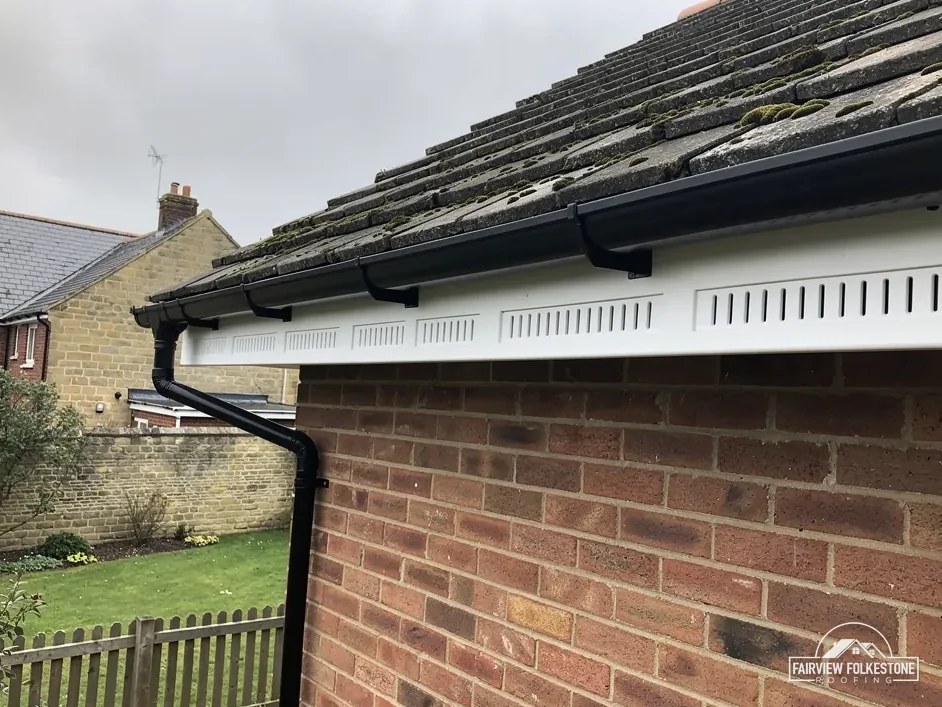
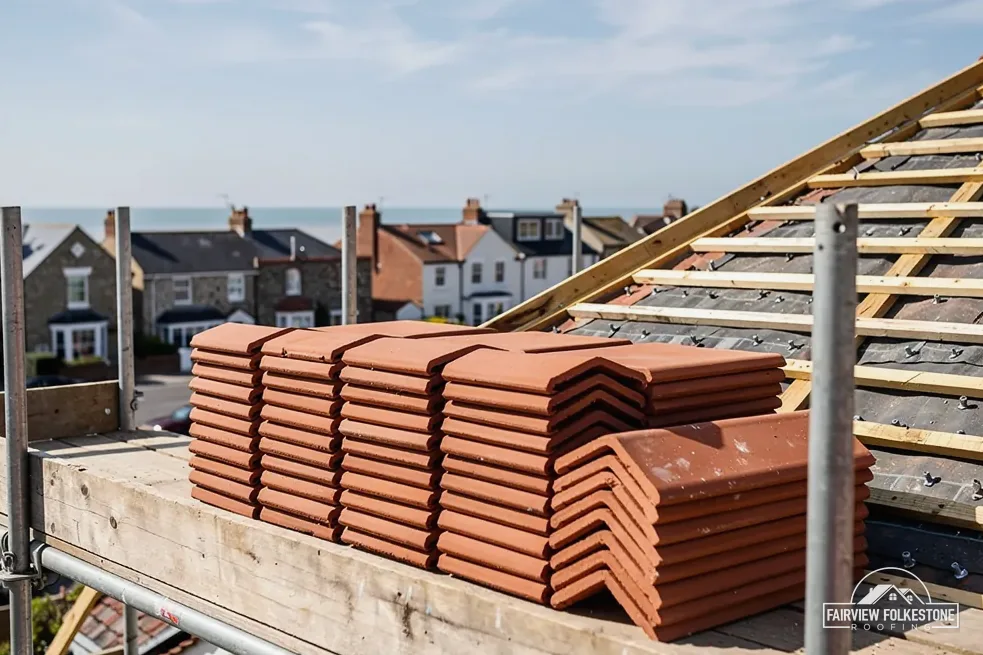
- Front and town-centre areas
- Middle Street, Nelson Street, Victoria Road and Wellington Road, Walmer Seafront and more, held by Dover District Council
- Article 4
- Directions recorded for Nelson Street and Middle Street; check your address with Dover District Council
- Approval for a Deal re-roof
- Dover District Council's building control team, not a partnership
- Kerbside scaffold permit
- Kent County Council; we arrange it with our scaffolder
What Deal's survey notes could say, with a verdict apiece
What we found
A house on a street with an Article 4 direction
What it fairly needs
Ask Dover before any price is fixed.
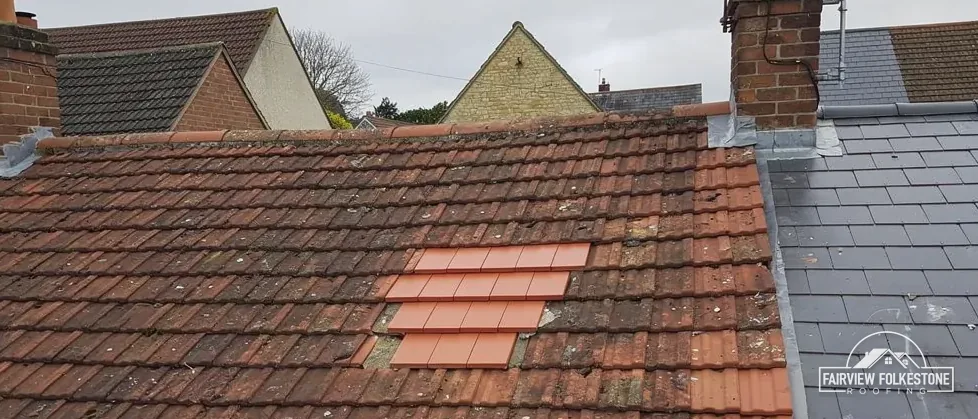
What we found
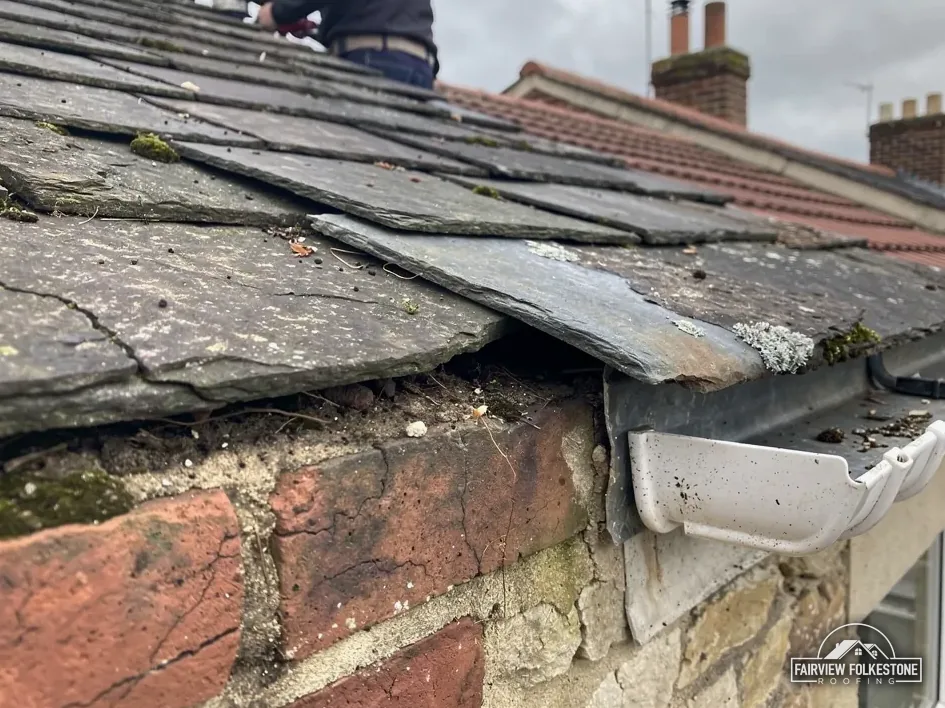
Slipped tiles along an exposed edge
What it fairly needs
Refix with the right fixings, then recheck.
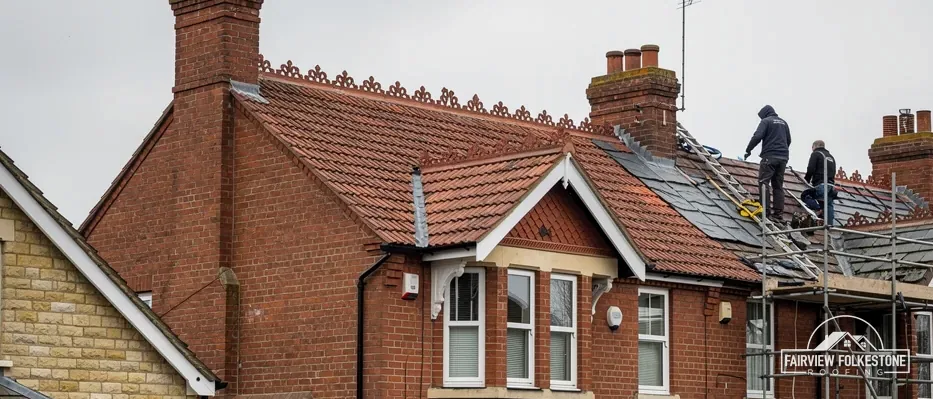
What we found
Battens soft across a whole slope
What it fairly needs
Strip the slope and re-batten it.
The fair ledger
Deal's Article 4 directions, exposed fixings and a Grade II* church
Deal puts three questions to a roof: which of its conservation areas and Article 4 directions reach your street, how the fixings are specified for an exposed site, and whether a listed neighbour changes anything for you. Each entry ends on a verdict.
Entry 01Article 4
Middle Street, Nelson Street and the rest: Deal's directions and areas
Several Deal streets sit in conservation areas, and Dover District Council has recorded Article 4 directions for two of them. Whether yours is one is for the council to confirm.
Reading the list for your street
The conservation areas around Deal include Deal - Middle Street, Deal - Nelson Street, Deal - Victoria Road & Wellington Road, Walmer - Seafront, Deal - Princes Street Extension and Deal - Nelson Street Extension. Dover District Council says its district holds 57 conservation areas, and its list is where an address is confirmed or ruled out. A house two doors along can sit across a line.
Dover's list of Article 4 directions includes Nelson Street, confirmed on 13 December 2017, and Middle Street, Deal, an Article 4(2) direction confirmed on 1 March 2000. Dover explains that a direction may take in roof alterations to a dwelling, and that it applies to the parts of a house facing the street, a waterway or open ground the public can use. The page does not set out which classes each direction removes, so Dover District Council is the one to ask about your address.
Separately, Dover District Council's building control page says replacing roof coverings "even if this is just like for like" needs approval, as does "installing roof lights". A Deal re-cover therefore starts with a note to Dover's own team. Bigger alterations are in our planning guide, and a whole renewal is our roof replacement work.
What the street decides
Street named in an Article 4 direction
Dover's answer on the roof slope
Conservation area, no direction found
Ordinary rules, council confirms
Outside every named area
Standard route applies
Does an Article 4 direction in Deal stop me re-roofing?
It can change what needs an application, which is a different matter from stopping the work. A direction withdraws specified permitted development rights across the area it names, so a roof alteration that is normally allowed may then need the council's permission. The council confirms your address, and the survey write-up carries its reply.
What sets the price
- Which street and which direction
- How much of the slope faces the road
- Re-cover, repair or roof lights
- Access from the street side
One written total price
Entry 02Exposure
Fixing a roof for exposure, as the standard intends
Deal sits on the shoreline, and the roofs on its streets are graded for higher exposure. That affects how tiles, slates and ridges are fixed, not whether a roof can be repaired at all.
Why the fixing specification is worked out per site
Cupa, the slate maker, puts a site's environment first among the factors for fixing, with wind and rain its two main parts, and says hillside, sloping and coastal sites, like tall buildings, are graded as more exposed. Deal is a coastal town, so a roof here is graded that way, and the fixings are chosen to suit the grade rather than to match whatever happens to be on the house already.
BS 5534 is the British Standard for slating and tiling. Marley lists batten choice, fixing methods, uplift calculations and the working-out of a fixing specification among what it sets out. Marley adds that installing to BS 5534 is not required by law, but that mortar by itself can no longer be counted on as the only fixing for the covering. So the work is specified for the site and not copied from the neighbour, and the specification goes in your notes, so the next person to look at the roof can see what was fixed and how.
The survey checks the battens, the clips or nails in each course, and how the ridge and verge are fixed. A slipped tile on an exposed edge can be a fixing question and not a tile question, and a repair that only replaces the tile can leave the real fault where it was. Roof work of this kind is covered on our slate roofing and pitched roofing pages.
The build-up we check
- Slate or tile and its fixing
- Batten selected for the exposure
- Underlay beneath the battens
- Rafter carrying the whole build-up
Each layer is looked at before a fixing is chosen.
BS 5534
the British Standard covering slating and tiling work, with a calculated fixing specification
Not a law, as Marley notes
What sets the price
- The exposure grade for the site
- Fixings the battens need
- Ridge and verge details
- How we reach the edge
One written total price
One grade, two ways to get consent
Historic England's list gives the Church of St George as entry 1253171 and Queen Anne House as entry 1069827, both Grade II* and both first listed on 1 June 1949. They share a grade, and that is where the likeness ends. The church serves the Church of England as a place of worship, so the faculty system governs work on it, not the council.
Queen Anne House is a house, and a house is handled differently. Under section 7 of the 1990 Act, any work that alters a listed building's special character needs listed building consent from the council before it starts. A listing does not take away the right to do roof work under permitted development, though the consent is needed as well.
Standing next door to either puts nothing extra on your roof. Only an entry naming your own house does. We check the list at the survey, because a house can look listed without being so, or the reverse. Where there is an entry, the repair is kept as small as it can be and the council is asked first, so no work begins on an assumption, and the written total price reflects the answer. A listing is a fact about one building, and it is checked like any other fact.
Entry 03Listed neighbours
St George's church and Queen Anne House: two listings, two routes
The Church of St George and Queen Anne House are both listed Grade II*. A church in use and a house follow different consent routes, and neither route is yours unless you are named.
Myth: A house that looks old and grand must be listed.
Fact: Only an entry on Historic England's list makes a house listed. Looks decide nothing, so a search of the list comes before any assumption about consent.
Who gives the consent
Church in use, Church of England
Faculty system
Listed house, character affected
Listed building consent
Unlisted house, listed neighbour
Ordinary rules apply
What sets the price
- Whether your house has an entry
- What the covering has to match
- How much of the roof is touched
- Access from the street
One written total price
Does one of these Deal entries sound like your roof?
Send a few photographs, or book a visit; either one starts it. The verdict comes in writing first, then one written total price.
From Folkestone up to Deal
Deal lies north-east of Folkestone, 18.7 road miles away, about 29 minutes by road. At the 2021 Census Deal parish had 20,342 usual residents. Flood Zone 3 land lies close to the centre of Deal on the Environment Agency flood map, which describes the ground and sets no rule for the roof.
Deal householders' questions about roofs
Why do Deal roofs get a fixing specification worked out for the site?
Cupa says hillside, sloping and coastal sites, like tall buildings, are graded as more exposed, and Marley says BS 5534 sets out fixing methods, uplift calculations and a way of working out the fixing specification. A seafront town like Deal therefore gets a specification for the site. We check the battens and fixings at the survey and record what the roof has, so the repair matches the grade. It is a short check, and the answer is written down.
Does re-roofing a Deal house need Building Regulations approval?
Dover District Council's building control page says replacing roof coverings "even if this is just like for like" needs approval, as does "installing roof lights", so a re-roof in Deal goes to Dover's own building control team. The Planning Portal's guide for England sets a national test of under 25 per cent of the building envelope and under 50 per cent of the roof, while approval is needed for a covering 15 per cent or more heavier. The route is written into your notes.
Which Deal conservation areas have Article 4 directions?
Dover District Council's list of Article 4 directions includes Nelson Street and Middle Street. Dover says a direction may take in roof alterations to a dwelling, applying to the parts of a house that face the street, a waterway or public open space. Because a direction can remove further rights, check with Dover District Council about your own address before you plan any work, and ask us to put the reply in the notes. It is better to ask than to find out afterwards.
Does Flood Zone 3 change how a Deal roof is repaired?
Deal has Flood Zone 3 land close to its centre as the Environment Agency's map shows. That is a statement about the ground, and it does not set a rule for roof coverings, fixings or approvals, so the roof is repaired by the same steps as any other. A flood-risk question about your home is for the Environment Agency, and we would not guess at it. If the roof leaks or slips, the survey deals with that on its own terms.
Who licenses the scaffold on a Deal street?
The highway licence for a scaffold comes from Kent County Council, at £52 per week for 2026 to 2027. We arrange it with our scaffolder, which fits Kent County Council's advice that the skip or scaffolding company should apply, not the householder. In a street of terraces the position matters, so we agree it with you at the survey and carry the cost into the written total price. We confirm the number of weeks with you before the licence is booked, and renewals are made in good time.
Does St George's Grade II* listing affect a house nearby?
The church listing does not reach your house on its own. It sits on the church, which serves the Church of England and so goes through the faculty system. A neighbouring house is affected only if its own address is on Historic England's list, and then listed building consent is the step for work that alters its character. We search the list at the survey and put the result in your notes beside the council's name.
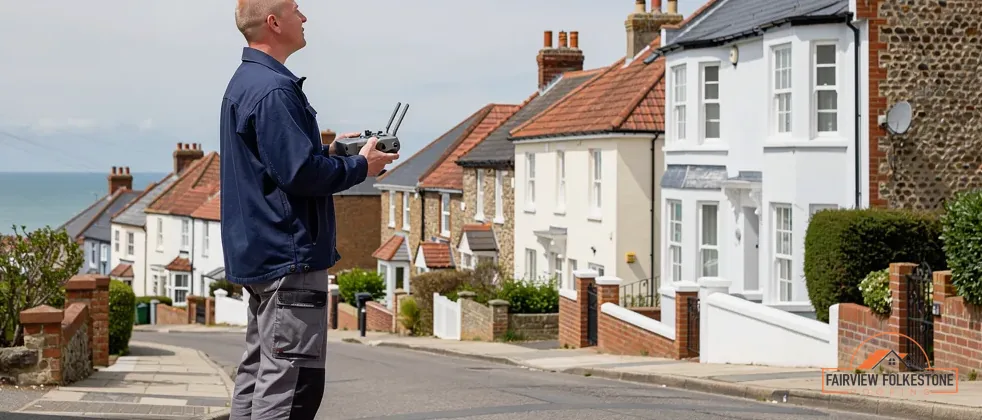
How does your Deal roof look from the street?
You'll get one written total price.