
Ringwould · 14.9 road miles north-east
Roofers in Ringwould
Ringwould has its own conservation area, two listed Grade II properties called Chain Cottages and the Old Bakehouse, and a Grade I church. A roof here is checked against each of them before it is priced. When the survey is done, one written total price arrives.
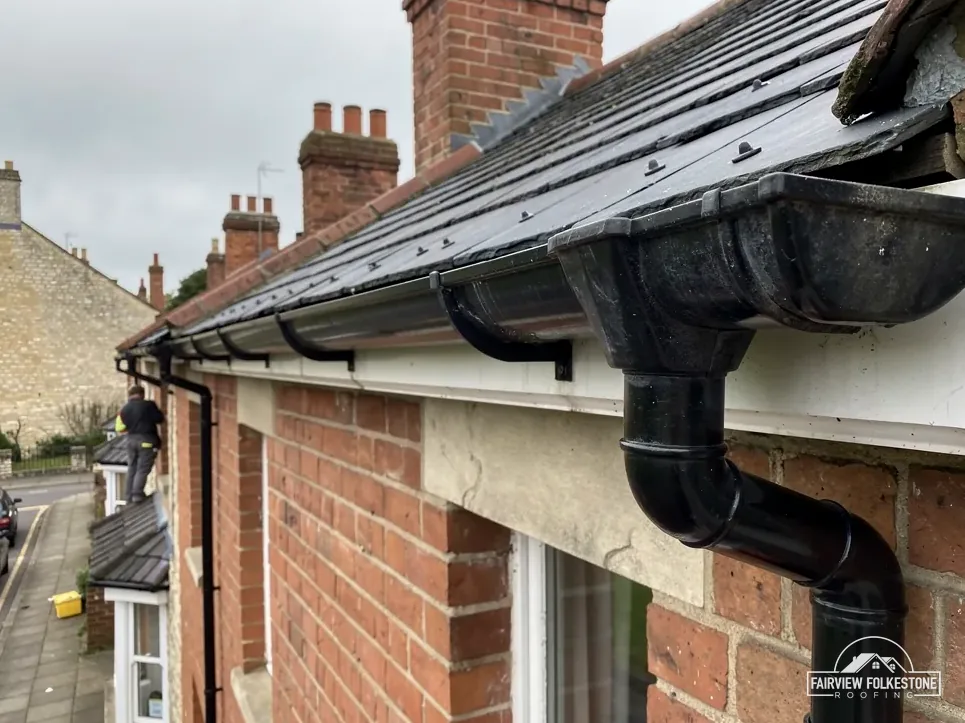
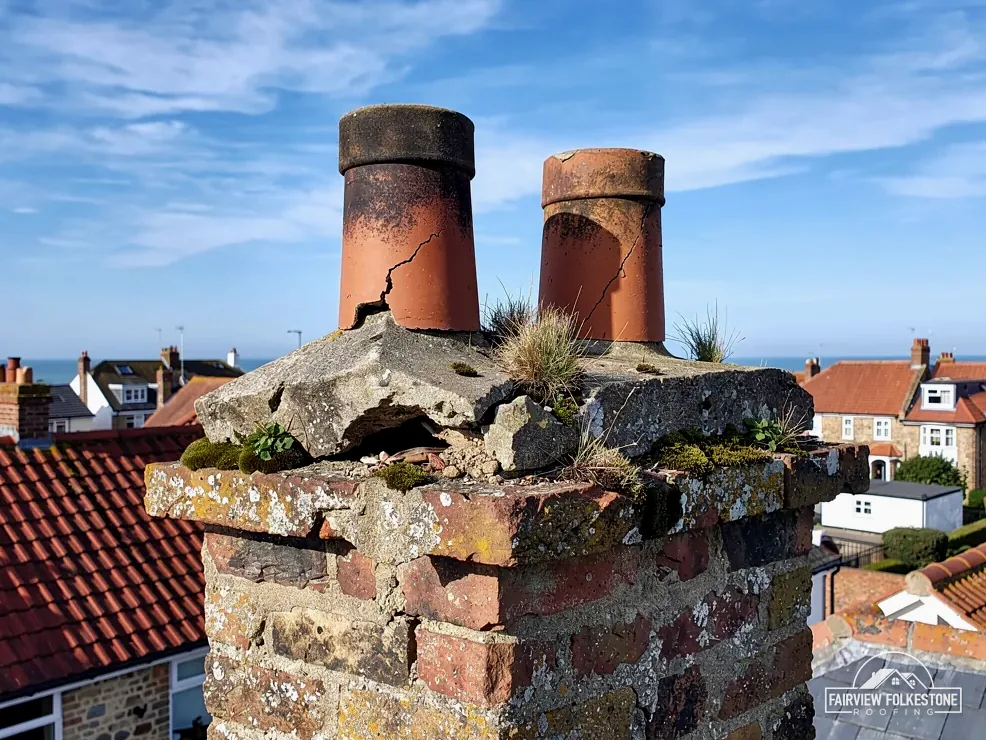
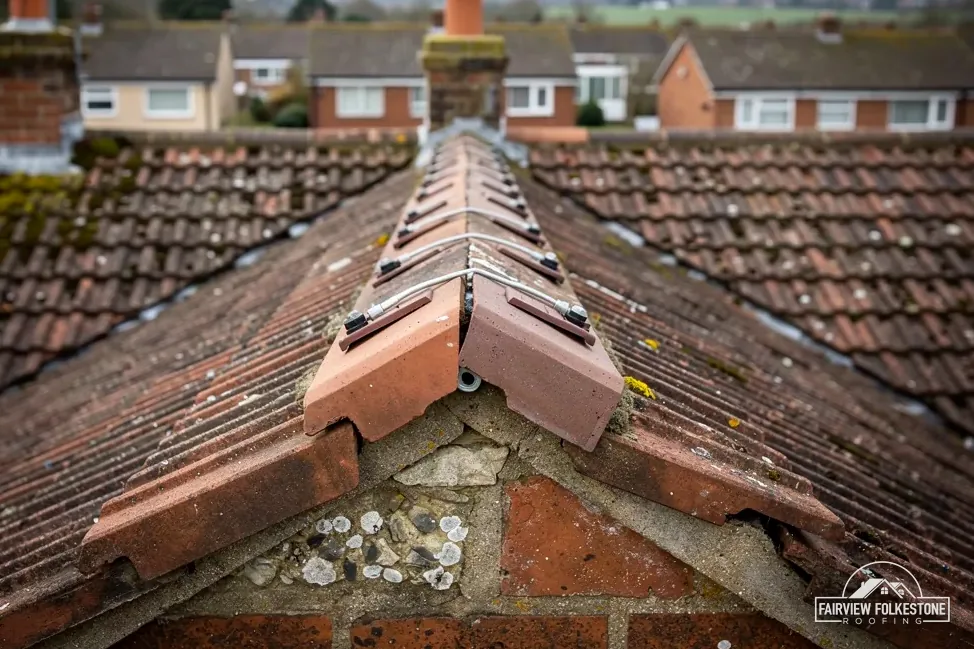
- Village designation
- Ringwould conservation area, looked after by Dover District Council
- Listed neighbours
- Chain Cottages and the Old Bakehouse, both Grade II
- Highway licence for scaffolding
- Kent County Council, £52 per week for 2026 to 2027
- Time from Folkestone
- About 23 minutes by road, 14.9 road miles
What Ringwould roofs show up, and what they need
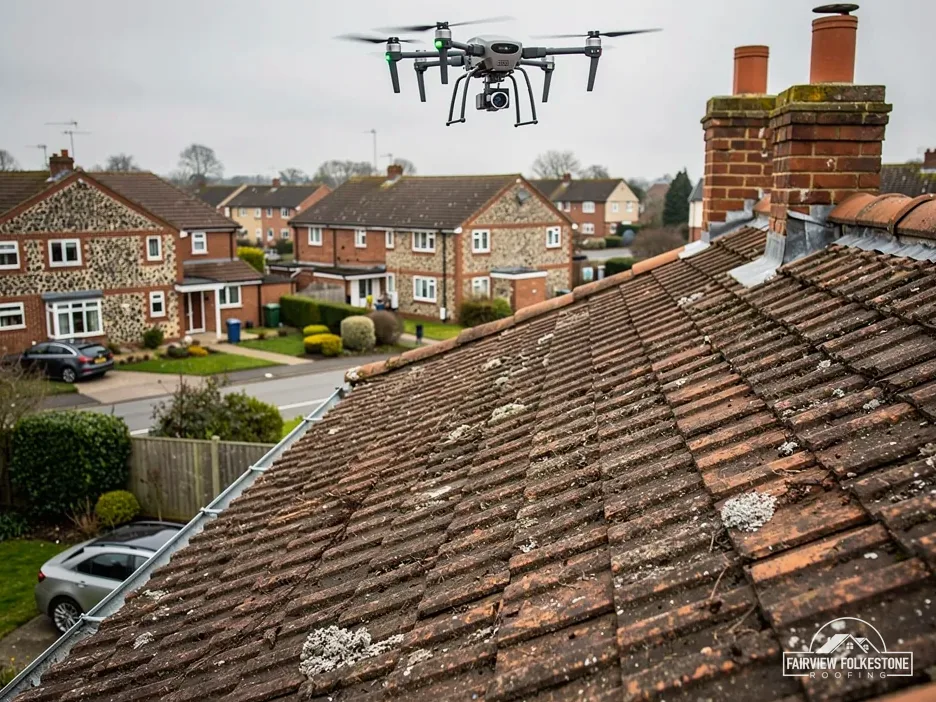
What we found
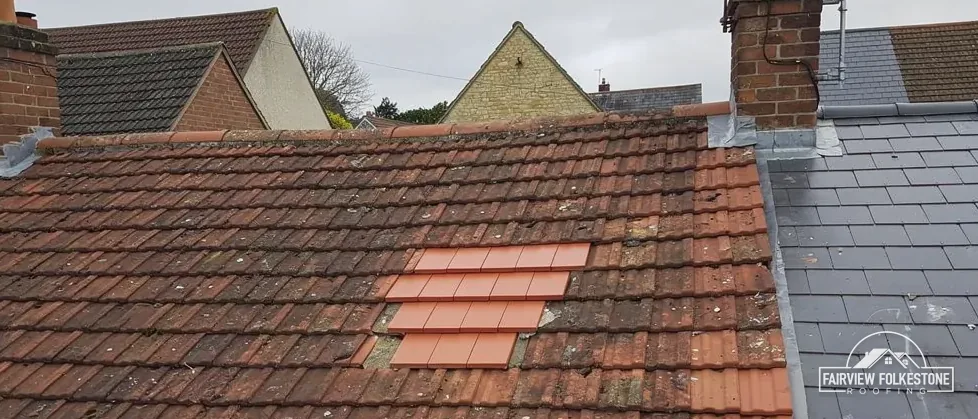
Flaunching cracked round a chimney pot
What it fairly needs
Re-make the fillet and check the lead.
What we found
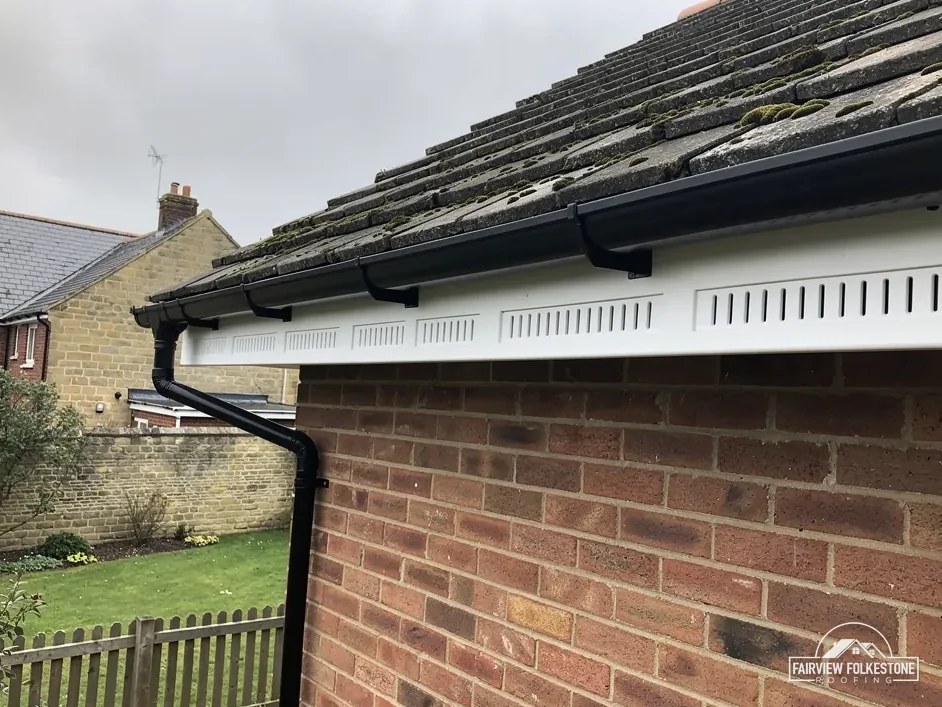
Worn roof on a listed cottage
What it fairly needs
Consent route, then a sympathetic repair.
What we found
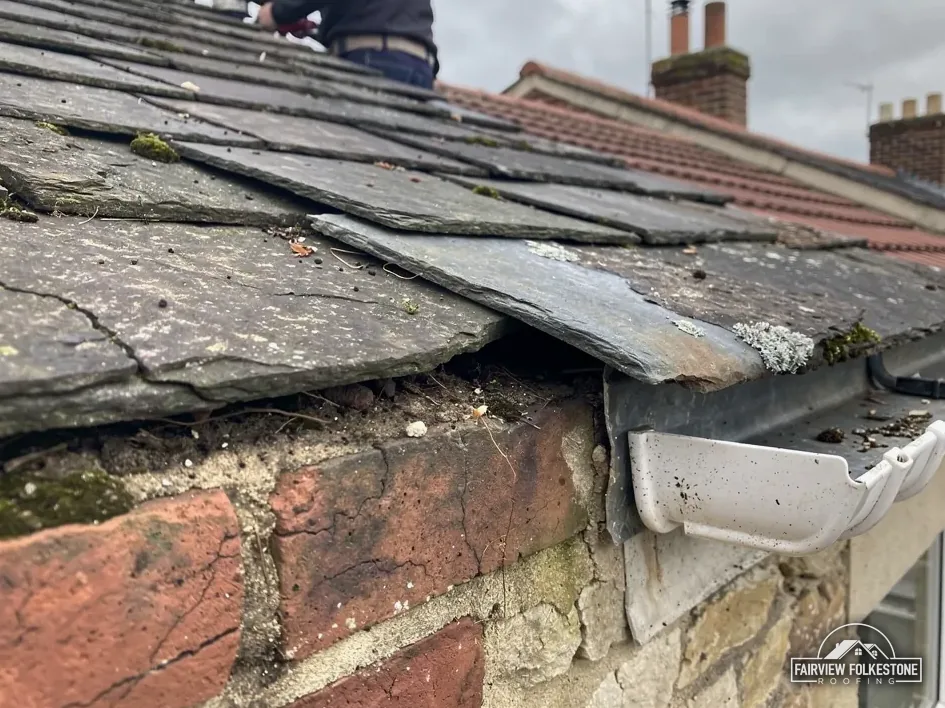
Soffit board rotten, rafter ends damp
What it fairly needs
New board, ventilation and a tidy eaves.
The fair ledger
Listed cottages, a Grade I church and eaves that can breathe
Ringwould's conservation area and its listed buildings decide the first questions about a roof. The entries take two listed cottages, the church's own consent route and an eaves re-cover, each ending in a verdict.
Entry 01Listed cottages
Chain Cottages and the Old Bakehouse: listed roofs in a conservation area
Chain Cottages and the Old Bakehouse are both listed Grade II, and Ringwould has a designated conservation area. Dover District Council is the authority to ask.
Listing, designation and the order of questions
Historic England holds both list entries. Chain Cottages is entry 1347903 and the Old Bakehouse is entry 1070063, and each was first listed on 23 April 1987. The Ringwould conservation area is a separate designation, kept by Dover District Council, which can confirm whether a particular address lies within it.
A listed house keeps its permitted development rights for roof work. Listed building consent is required in addition if the work could affect its character as a listed building. So we start with the entry number and a set of photographs, and we write to the council before pricing any repair that goes further than refixing a few tiles.
Where only a ridge or a few courses have failed, the repair is chosen to blend with the existing slope. Our pitched roofing page shows how a slope is surveyed, and the planning guide sets out how conservation areas change the planning side.
On a listed cottage
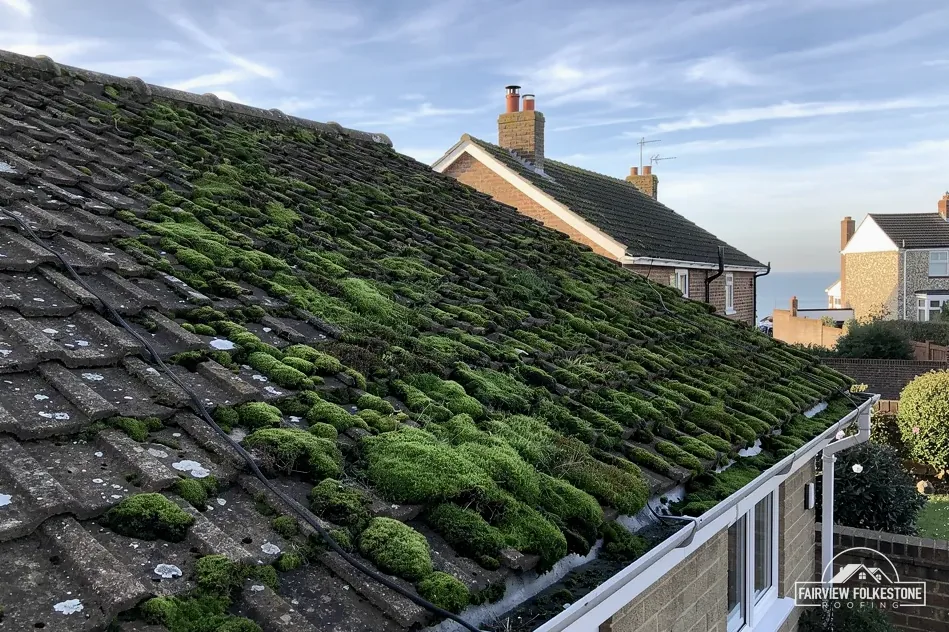
Ridge bedding failed, courses firm
Re-bed the ridge
Chimney lead lifting at one side
Re-dress the lead
Slope worn out end to end
Council before price
Why a light-touch repair comes first
- Fewer new materials go onto a listed roof, and so fewer questions reach the council.
- A repair keeps the roof's present character, which is what listing protects.
- A refix takes less scaffold time than a strip.
When a whole slope is spent, the verdict changes, and the council is asked before anything is ordered. Even then the old covering is photographed slope by slope first, so the council can see what it is being asked to approve. The same photographs show you what was there before the work began, which is useful if a question arises later about how a particular tile or ridge was treated.
What moves the price on an older cottage
- Size of the worn area
- Whether a consent request is needed
- Sourcing a close match
- Access for the ladders
One written total price
Entry 02Church
St Nicholas church and a consent route that is not the council's
St Nicholas is a Grade I church in use for worship by the Church of England, so its own roof goes through the faculty system.
A faculty is not listed building consent
St Nicholas church is list entry 1070060, first listed on 22 August 1966. Church of England churches still used for services sit within the ecclesiastical exemption, so works to the building go through the faculty system rather than listed building consent from Dover District Council.
That route belongs to the church alone. A house beside it is dealt with on its own record: if it is listed, listed building consent applies, and if it is not, the normal planning rules do. We assume neither. We look up the entry number first and put any doubtful point to Dover District Council.
Part of the area round Ringwould touches the Kent Downs National Landscape, though the village centre is outside it. The National Landscape is a designation, and Dover District Council still decides planning applications. The published Kent Downs boundary settles which side of the line a particular house stands. Ordinary re-covering of a house keeps to the usual rules even where a designation applies, and the planning guide explains what a designated area changes.
Myth: A parish church means the parish can approve my roof work.
Fact: The faculty system is the Church of England's consent process for the church building. A neighbouring home answers to its own listing status and to ordinary planning rules.
1070060
the list number for the Church of St Nicholas, Grade I
Historic England list entry
What we look for at a house beside the church
- Whether the house carries a listing of its own.
- Whether it sits inside the Ringwould conservation area.
- The state of the verge and the gutter run nearest the churchyard.
- Any shared boundary wall, since a party wall notice may apply.
- Chimney stacks that stand close to the churchyard side of the house.
The answers decide the order of the work, and they go into the written notes. When the notes are finished you hold a plain record of what the roof needs, in the order it should be done.
What the eaves have to do
The eaves carry the fascia board, the gutter run and the soffit, and a new underlay finishes there. Marley gives two figures for eaves ventilation where a high-resistance underlay lies over a cold roof: 25 mm for pitches of 15° or less, and 10 mm above that. Those are numbers to meet, not assumptions, so a re-cover includes measuring what is there. A gap that has been painted shut or packed with insulation has to be cleared, and the survey records whether that alone would deal with a damp rafter end.
Dover's list of work needing building control approval takes in a replacement covering, like for like or not, so the eaves detail forms part of what goes to the council's own team. A soffit that is rotten or a rafter end that is damp changes the verdict from repair to replace, because the timber has to be sound before the new covering is laid.
Our gutters, soffits and fascias service covers the full roofline, and one total is written for the job.
Entry 03Eaves
Eaves, soffits and ventilation when a Ringwould roof is re-covered
A new covering is the time to settle the eaves, and Dover District Council counts a replacement roof covering as work needing approval.
Can I re-cover my Ringwould roof without touching the eaves?
Sometimes, where the fascia, soffit and rafter ends are sound and the ventilation gap is already right. The survey checks all three, and if one has failed the repair is cheaper to do while the covering is off than afterwards. Dover District Council is asked about the re-cover itself either way.
The eaves, part by part
- Fascia holding the gutter
- Gutter carrying water away
- Underlay running into the gutter
- Soffit and its vent
Each of the four is looked at before a new covering is priced.
The four things checked at the eaves
- The fascia, for softness along its lower edge.
- The gutter, for sagging between brackets and for falls.
- The underlay, where it runs into the gutter.
- The soffit and its vents, for blockage and rot.
If the ventilation gap is missing, it is added at the same visit as the re-cover, so the scaffold only needs to go up once. Planned like this, the ventilation question is settled with a measurement, not a hope.
Which of the three entries sounds closest to your Ringwould roof?
Send pictures or request a survey, and the written reply gives each part of the roof a verdict, with the council's answer attached where one was needed.
Folkestone to Ringwould by road
Ringwould is a 23-minute drive from Folkestone, 14.9 road miles to the north-east. Ringwould with Kingsdown parish counted 1,966 usual residents at the 2021 Census, and that figure takes in more than Ringwould itself. A phone photograph starts the process, and the survey comes next, once we can see what the roof is doing. Include a wide shot of each slope as well as any close-up of the damage, because the wide view shows where the covering finishes along the edges and the top.
Ringwould roof questions, listing by listing
Do Chain Cottages in Ringwould need consent for new roof tiles?
Chain Cottages and the Old Bakehouse are both listed Grade II. Listed building consent is required where work could affect a listed building's character, and Dover District Council also puts a replacement covering on its approval list. A small repair chosen to blend in is treated differently from a strip and re-lay. We photograph the roof, quote the entry number and ask Dover before any price is given.
Is the Ringwould conservation area the same thing as a listing?
No. The conservation area is a designation over part of the village, kept by Dover District Council, while a listing attaches to a single building. A house can be inside the area and unlisted, or listed and outside it. The council confirms what applies to an address, and we ask about both before the written quote is prepared, so that nothing is assumed from the street name, and you receive both answers in writing.
What does the faculty system mean for the Church of St Nicholas?
The church is Grade I and in use by the Church of England, so changes to it go through the faculty system and not through listed building consent from the council. That route covers the church building only. A house next to it answers to whatever listing it carries and to the planning rules for its own address. If the house shares a wall with the church or its boundary, the survey notes that too, because a shared wall raises party wall questions as well.
Who looks after the scaffold licence for a Ringwould roof?
Kent County Council runs highway licensing and charges £52 per week for 2026 to 2027, and its householder page explains that the skip or scaffolding company should submit the application. We arrange it with our scaffolder. A scaffold kept within your boundary needs no highway licence at all, which the survey establishes before the price is fixed, so the figure you are given already allows for it.
Does a Ringwould house need extra eaves ventilation when it is re-covered?
The answer turns on the underlay and the pitch. Marley gives 25 mm of eaves ventilation for a high-resistance underlay at 15° or less, and 10 mm above 15°. The survey measures what is there, and any missing ventilation is added at the same visit as the re-cover, which Dover District Council is asked about first, so that the finished eaves are right.
Who inspects a re-roof at Ringwould?
Dover District Council's own building control team covers Ringwould, while a registered building control approver offers a different route. We ask Dover which route fits your work, because its list treats re-covering as approval work. The answer is written into your notes before a covering is ordered, along with who will inspect the finished roof and when. If the council asks for further detail, we supply it and pass its reply back to you in writing.
A Ringwould roof you would like looked at?
You'll get one written total price.