
St Margaret's at Cliffe · 13.7 road miles north-east
Roofers in St Margaret's at Cliffe
St Margaret's at Cliffe sits less than a mile from the coast, with conservation areas and a Grade I church close by. Each fixing plan is calculated to suit the exposure of the site, and consents are asked about before the price. After the survey, one written total price.
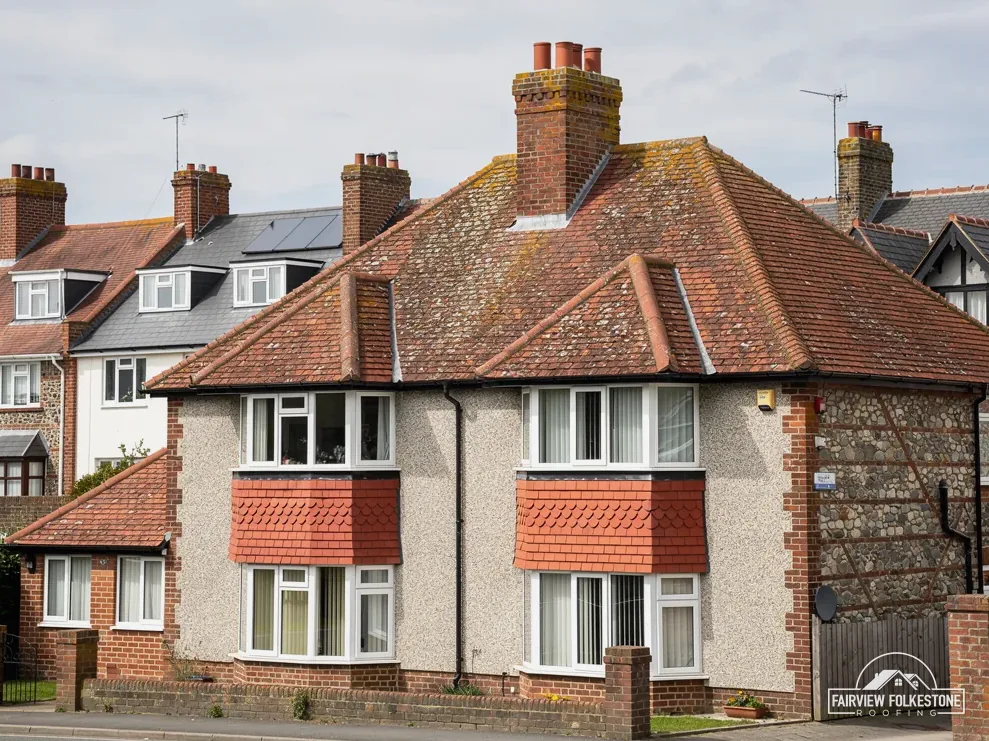
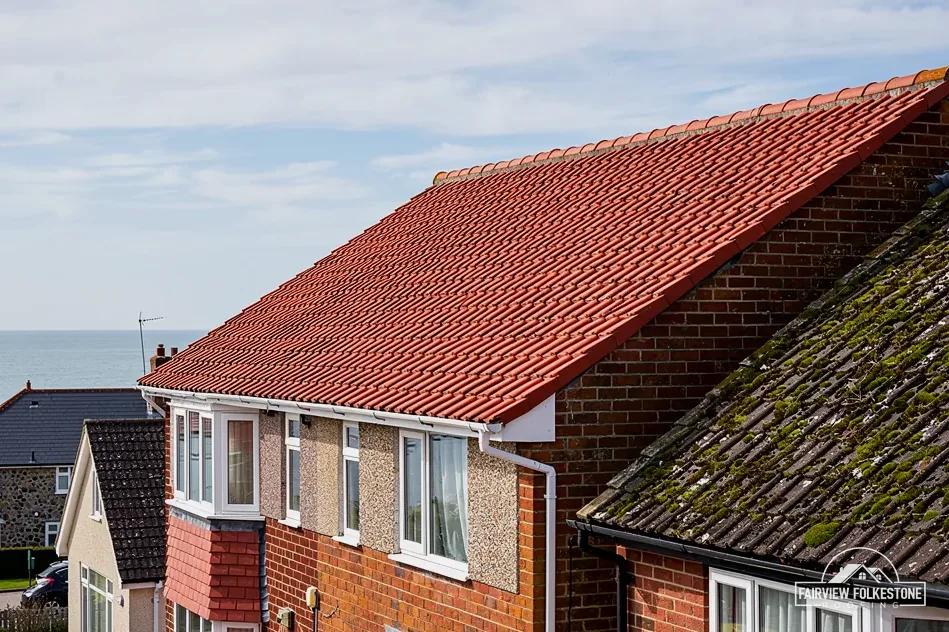
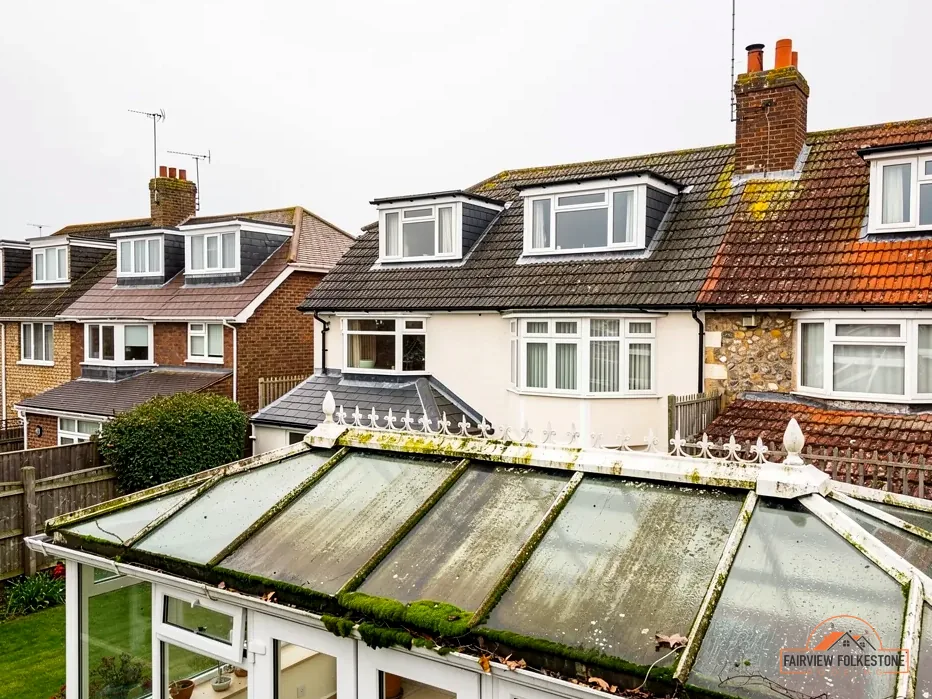
- Conservation areas
- St Margaret's Bay and St Margarets-at-Cliffe
- Church nearby
- Church of St Margaret, Grade I, in the Church of England faculty system
- Scaffold licence
- Kent County Council, £52 per week for 2026 to 2027
- Time from Folkestone
- About 21 minutes by road, 13.7 road miles
Roof faults at Cliffe, and what each one calls for
What we found
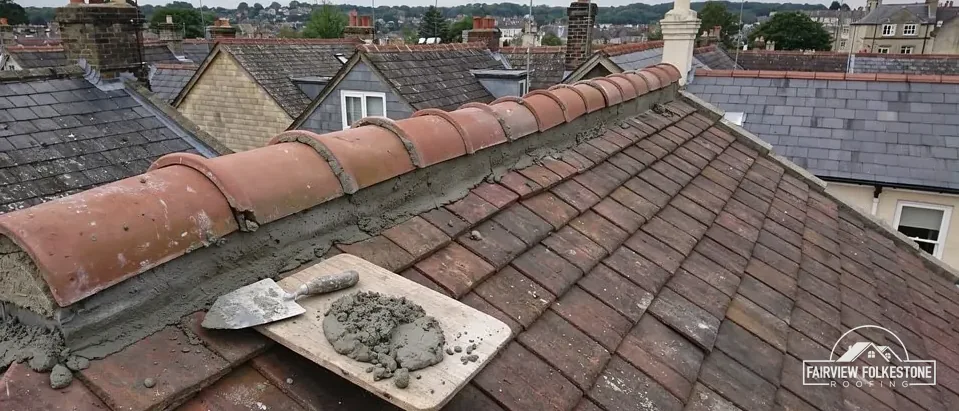
Ridge tile loose, mortar crumbling beneath it
What it fairly needs
Rebuild the ridge on mechanical fixings.
What we found
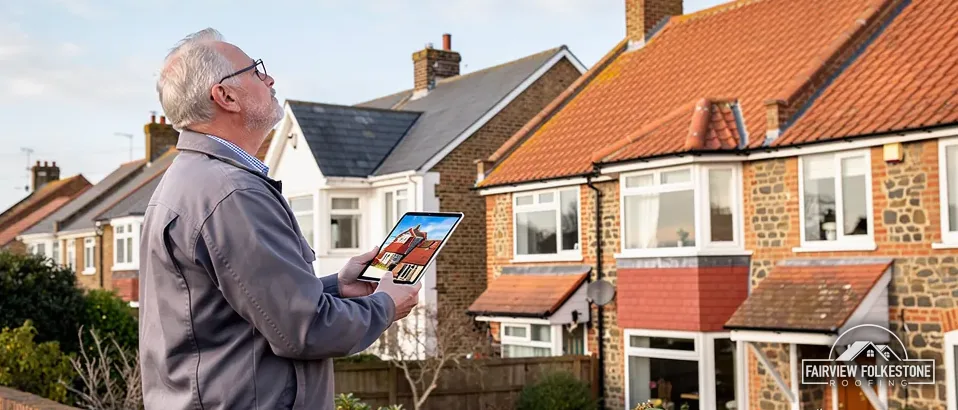
Worn roof on a house near the church
What it fairly needs
Listing and boundary checks, then the price.
What we found
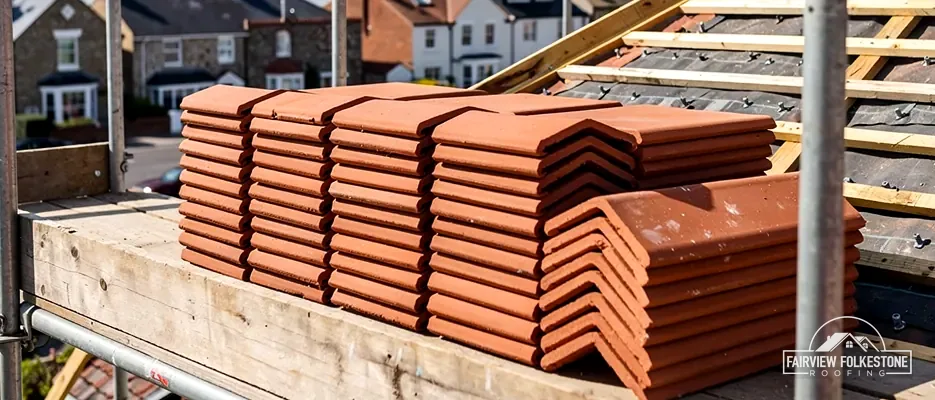
Slates lifting along a whole exposed slope
What it fairly needs
New battens and fixings worked out for the site.
The fair ledger
Exposed fixings, a Grade I church and the boundaries at Cliffe
A roof less than a mile from the coast is graded for exposure, and one near a Grade I church or inside a conservation area is asked about first. The entries take fixings, listings and boundaries, with a verdict on each.
Entry 01Exposure
Fixings for a roof less than a mile from the coast
Cupa, the slate maker, says a coastal area is graded as more exposed. At Cliffe that points to a fixing specification calculated for the site.
Why the specification is worked out
Exposure is the question. Cupa puts the two main environmental factors at wind and rain, and says coastal areas receive a higher exposure grade. St Margaret's at Cliffe lies 0.61 miles from the coastline, so a covering here is not specified by copying what a sheltered roof elsewhere carries. The calculation starts from the exposure of the site, and the result is a fixing schedule you can read.
BS 5534 sets out how slates and tiles are fixed, and it is the route to a plan that fits the site. Marley notes that installing to BS 5534 isn't required by law, and we still use its method to set the fixing schedule for each site. It adds that since the 2015 amendments, mortar on its own no longer counts as sufficient to hold a covering down, which is why a ridge is checked for mechanical fixings.
When we survey a slope we are looking for what has loosened already: slates or tiles that have shifted, nails that have pulled, clips that have worked free. Our slate roofing page shows how a slate roof is fixed and checked, and the written verdict tells you whether a few repairs are enough or the whole slope needs re-fixing.
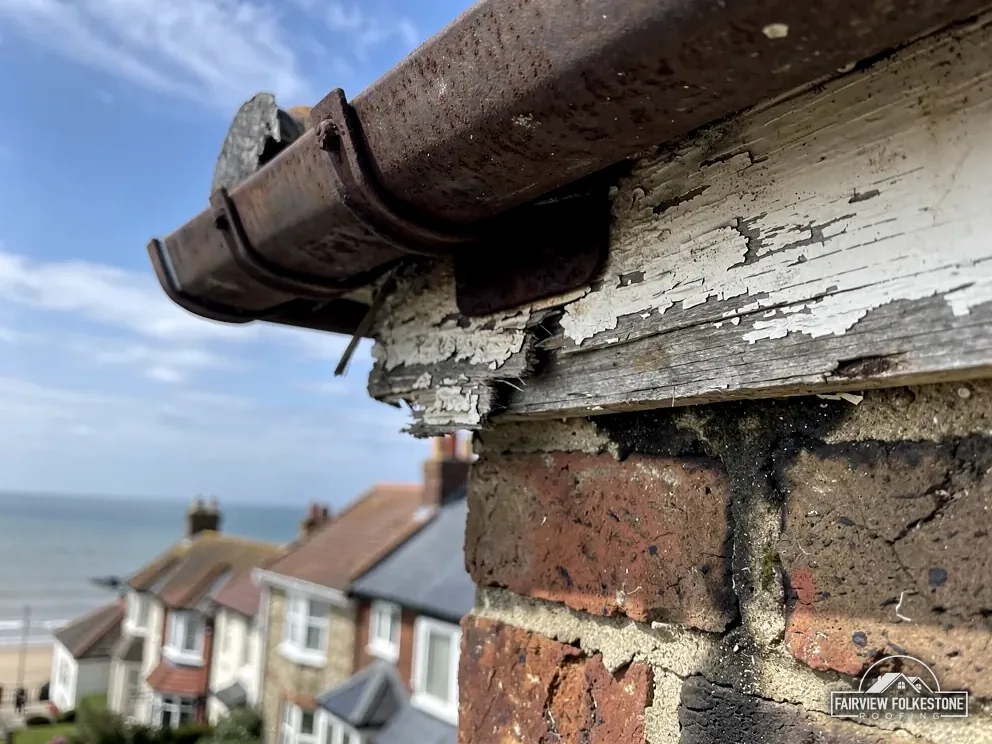
Where a slate is held
- Slate that has slipped
- Batten it is nailed to
- Clip that locks the edge
On an exposed roof each of these is checked slope by slope.
What the survey reads on an exposed slope
- Slates or tiles that have slipped or lifted at their lower edge.
- Nail heads and clips, for any that have worked loose.
- The ridge, and whether mortar alone is holding it.
- Verges and eaves courses, where a covering is most easily lifted.
- Battens, for rot or splitting around the fixings.
The result is a list of what has failed and where, so a repair is never larger than the fault. If the whole slope has loosened, the list shows that too, and the verdict moves from refixing to replacing, with the reason given in plain words and a photograph for each point.
BS 5534
the standard behind fixing plans for slate and tile, which Marley says is not a legal requirement
Marley's description
Entry 02Church and listings
Church of St Margaret, Holly Lodge, Cliffe Cottage: three listed roofs
The Church of St Margaret is Grade I, and Holly Lodge and Cliffe Cottage are Grade II. Each has a consent route to follow before roof work begins.
Two routes, one village
Historic England holds the list entries. The Church of St Margaret is entry 1101743, first listed on 22 August 1966. Holly Lodge is entry 1363363, listed the same day, and Cliffe Cottage is entry 1347921, first listed on 23 April 1987.
A church that the Church of England still uses for worship is decided through the faculty system, not through listed building consent from the council. That is the ecclesiastical exemption, and it covers the church building itself. The houses are different. A listed house still has permitted development for its roof, yet works "in any manner which would affect its character as a building of special architectural or historic interest" need listed building consent too, granted by Dover District Council.
If you live beside the church and are not sure which rules touch your roof, send us the address. We check the list entry first, then ask Dover District Council about the house before a price is written. Our pitched roofing page explains how a roof is read before any of that begins.
Does a house next to the church need the faculty system for its roof?
No. The faculty system covers the church itself. A house next door stands or falls on its own listing. If the house is listed, any work affecting its special character needs listed building consent, and if it is not listed, normal planning rules decide. We confirm which case yours is before quoting.
On a listed house
Ridge bedding failed, covering below sound
Re-bed the ridge
Lead lifting beside the chimney
Refit the flashing
Whole slope worn out
Council before price
What goes to the council with the request
- Photographs of every slope and the eaves, ridge and verge.
- The list entry number for the house.
- What the covering is today, described in words.
- The repair proposed, or the reason a new covering is needed.
A clear file saves a round of questions and gets an answer sooner. Where the council wants a sample of the covering or a sketch of the ridge detail, we supply those as well, and nothing is ordered while a reply is awaited.
Who decides, and on what
Dover District Council is the planning authority at Cliffe. For building control, Dover District Council treats a replacement roof covering as approval work whether or not the new covering is a match, so a Cliffe re-cover starts with a question to its own team. The Kent Downs National Landscape, formerly an AONB, is a designation, not a planning body. Its role is advisory, and the district council makes the decisions.
Part of the area round St Margaret's at Cliffe touches the National Landscape, though the middle of the village itself lies outside it. The published Kent Downs boundary shows on which side a given house stands, and we never assume the answer. Straightforward re-roofing falls under the usual rules. The planning guide lists what a designated area alters.
Article 4 directions are recorded close to Cliffe. What they cover is not something we can state for your street, and a direction can strip away further rights, so ask Dover District Council before relying on any assumption about your own roof.
Entry 03Boundaries
Conservation areas, a landscape designation and Dover's re-cover rule
St Margaret's Bay and St Margarets-at-Cliffe are conservation areas, the Kent Downs National Landscape reaches into the area round about, and Dover District Council decides throughout.
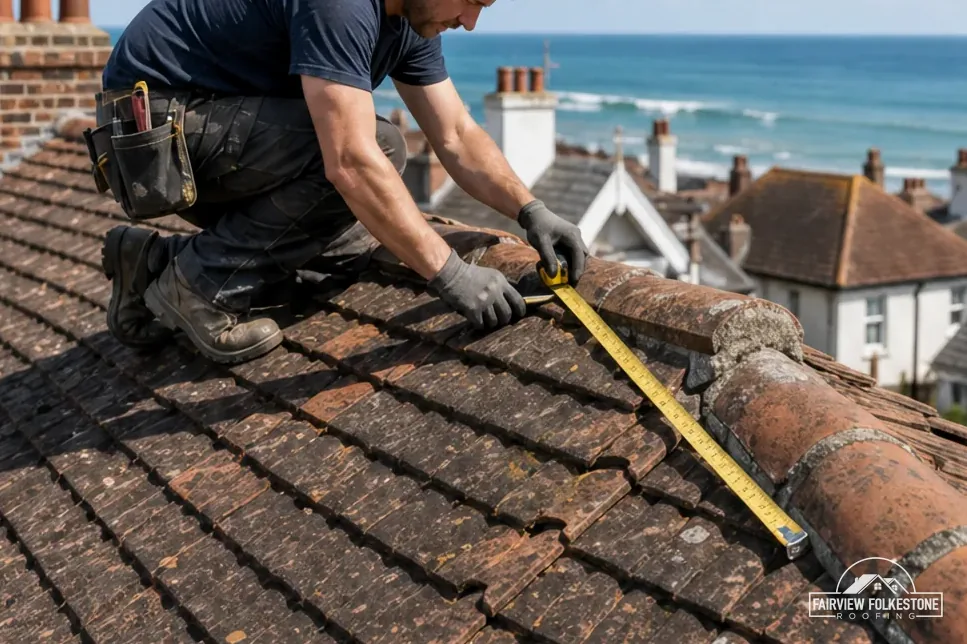
Myth: A landscape designation means a separate body signs off my re-roof.
Fact: The designation is advisory. Planning applications are for Dover District Council to decide, while a straightforward re-roof follows the everyday rules.
What sets the price near the boundary lines
- Extent of the worn covering
- Consents the address needs
- Access to the exposed slope
- Matching the existing roof
One written total price
Questions in the order they get answered
- Is the house in St Margaret's Bay or St Margarets-at-Cliffe? Dover District Council can confirm.
- Is it inside the National Landscape boundary? The published boundary shows it.
- Does an Article 4 direction reach it? Check with Dover District Council.
- Is the covering finished, or only damaged in places? The survey decides, and Dover District Council is asked first.
Which of these three checks fits your roof at Cliffe?
Send photographs or arrange a survey, and the written reply will say whether the roof needs a repair, a replacement or a consent first.
North-east from Folkestone to Cliffe
Allow about 21 minutes for the drive to Cliffe, which is 13.7 road miles north-east of Folkestone. St Margaret's at Cliffe parish had 2,625 usual residents at the 2021 Census. Begin with a picture taken on your phone, and a survey follows before any price is given.
Cliffe roof questions, from fixings to faculties
How are roof fixings chosen for St Margaret's at Cliffe, so close to the coast?
In Cupa's account coastal areas carry a higher exposure grade, and the village stands 0.61 miles from the coastline. The fixing plan is therefore calculated for your site under BS 5534, and we do not carry one over from a sheltered house. Since mortar by itself is no longer relied on to secure a ridge, the survey checks each ridge for mechanical fixings and records what it finds.
Which conservation areas cover parts of St Margaret's at Cliffe?
St Margaret's Bay and St Margarets-at-Cliffe are the conservation areas near the middle of the village, both looked after by Dover District Council. The council alone can confirm if your own house falls within one of them. Designation brings extra questions about design, and the planning guide for roof work shows how those differ from plain re-covering. We ask before we quote, and you read the council's reply in full.
Does the Church of St Margaret's listing change anything for a neighbouring roof?
Not directly. The church is Grade I and still holds Church of England services, so its own works are decided through the faculty system. Your house is assessed against whatever listing it has itself. Holly Lodge and Cliffe Cottage are listed Grade II, so listed building consent applies to work on those, and we ask Dover District Council about any listed address first.
Who licenses scaffolding on a road at St Margaret's at Cliffe?
The licence comes from Kent County Council, at £52 per week for 2026 to 2027, and Kent County Council tells householders that the firm putting up the scaffold should make the application itself. We arrange it with our scaffolder. Scaffolding contained entirely within your boundary requires no licence, and the survey notes which case applies, so no surprise arrives with the bill.
Does the Kent Downs National Landscape affect re-roofing at Cliffe?
Part of the area round the village touches the National Landscape, though the middle of the village is outside it, and the published boundary shows which side a specific house is on. The designation is advisory only. Applications are decided by Dover District Council, straightforward re-roofing falls under the usual rules, and the planning guide covers what a designated area alters. If your house is right at the edge, the written notes record it.
Does a like-for-like re-cover at Cliffe need Dover's approval?
Under Dover District Council's list, replacing a roof covering needs approval whether or not the new covering is a match, and that list applies to Cliffe addresses. A covering that has simply been repaired is a separate case, which the survey identifies. Before a covering is priced, its own building control team is asked which route applies. The Planning Portal publishes a national test, but Dover's wording is the one that counts here, and the council's reply goes into your written notes.
A roof at Cliffe that needs a proper look?
You'll get one written total price.