
Temple Ewell · 7.9 road miles north-east
Roofers in Temple Ewell
A Grade II* church, a conservation area at the heart of the village and Article 4 directions covering land nearby: a Temple Ewell roof comes with questions about paperwork as well as tiles, and an owner is entitled to the answers before any money changes hands. We read both, side by side, and put one total price in writing once the survey is done.
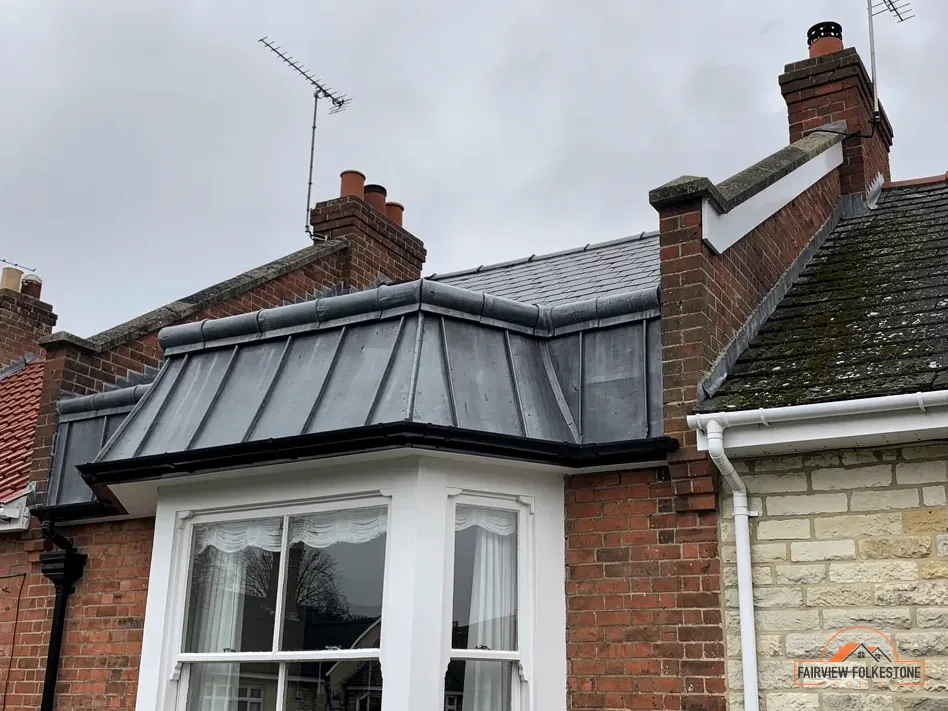
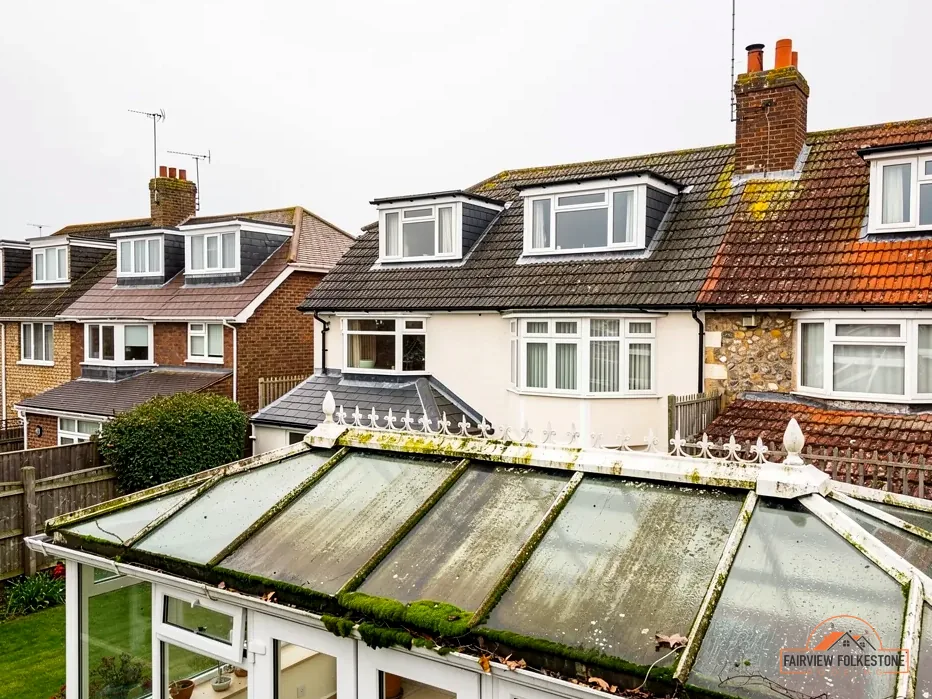
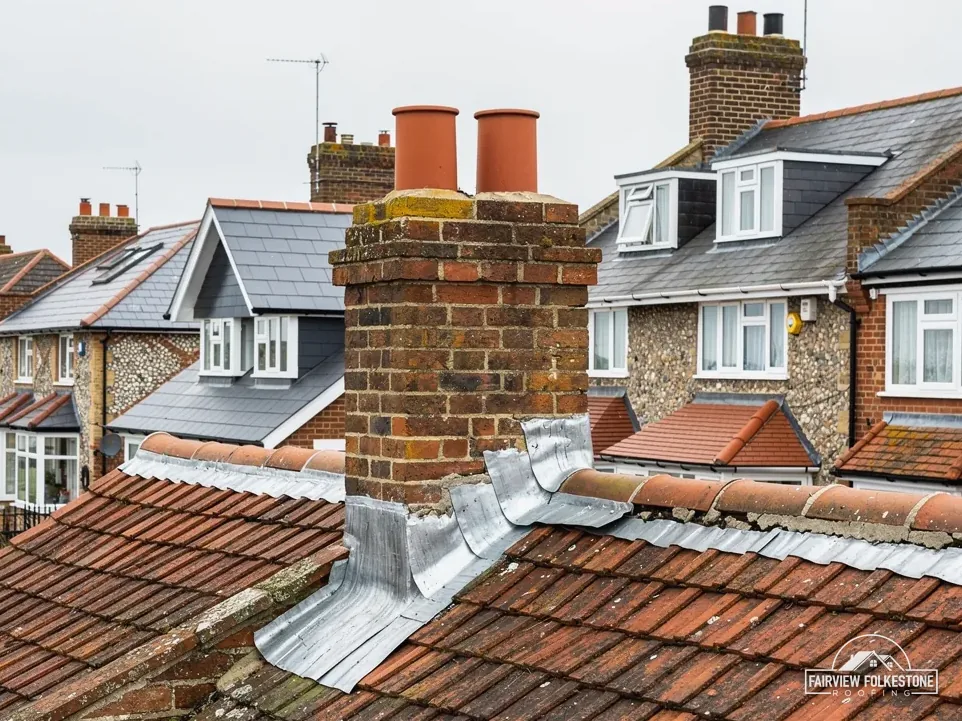
- Village church
- Temple Ewell's Grade II* church of St Peter and St Paul, still in Church of England use
- Article 4
- Dover District Council directions cover land near the village, so the council is asked before any quote
- Scaffold permit
- Kent County Council, £52 per week for 2026 to 2027
- Flood risk on nearby ground
- Environment Agency Flood Zone 3 land close to the village centre, shown for information only
Valleys, eaves and a church: three Temple Ewell verdicts
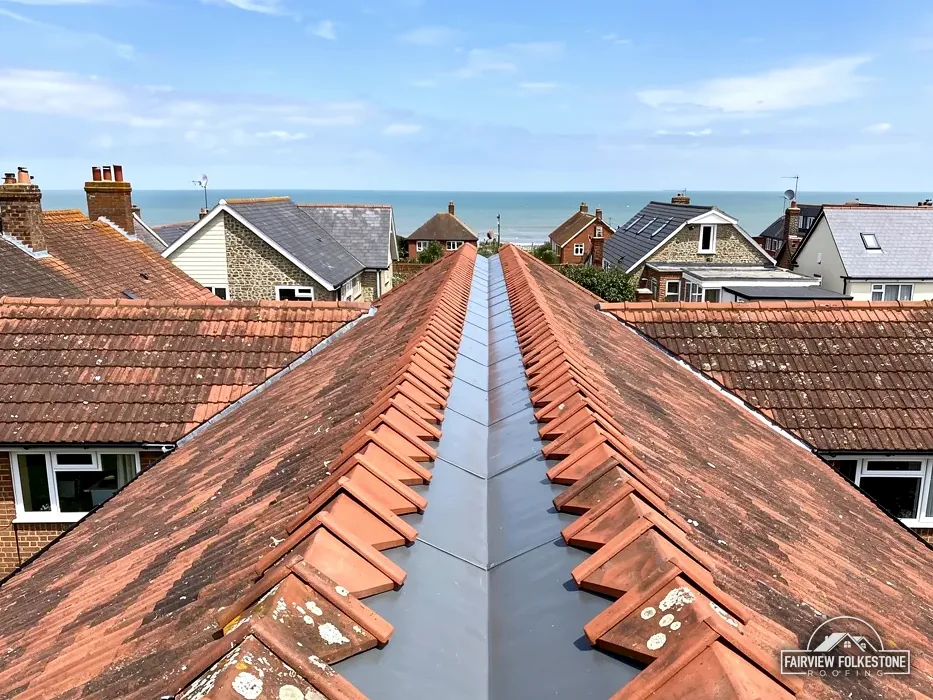
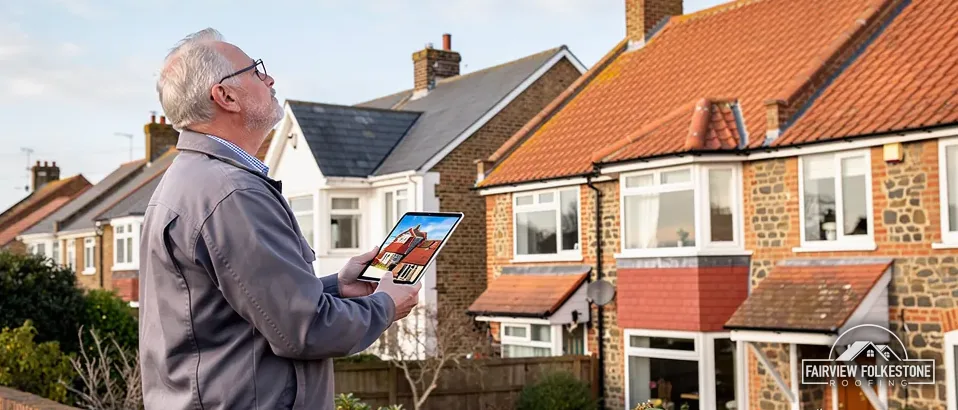
What we found
Cracked lining where two slopes meet
What it fairly needs
New valley lining, slopes left in place.
What we found
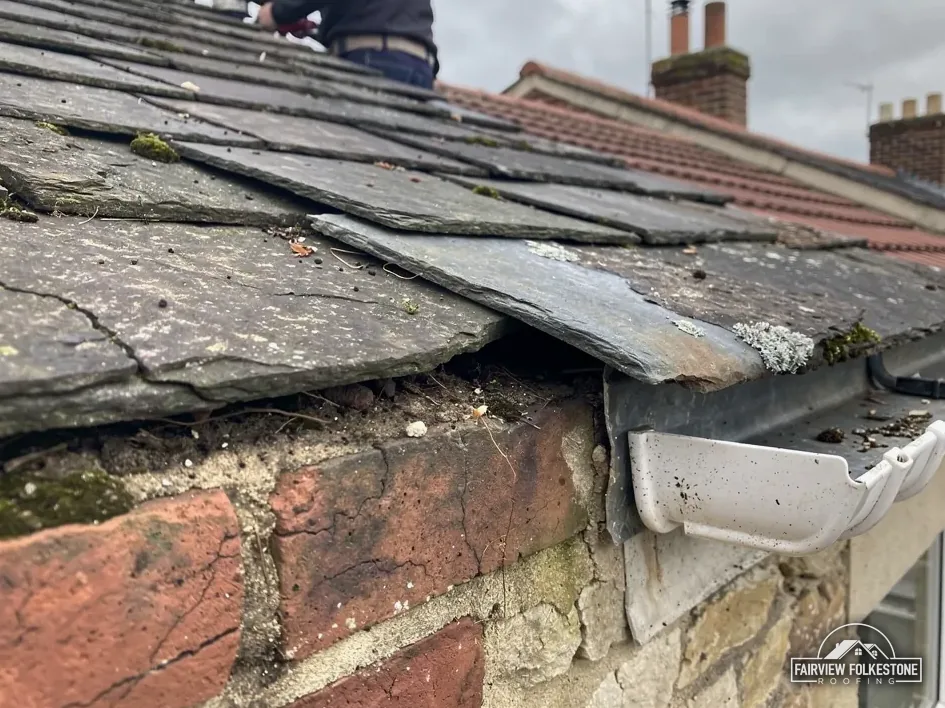
Road-facing slope near an Article 4 area
What it fairly needs
Council's answer in writing first.
What we found
Soaked underlay along the eaves
What it fairly needs
Renew underlay and eaves gap together.
The fair ledger
A church in use, nearby Article 4 directions and valleys that leak
Three entries for a Temple Ewell roof: how the Grade II* church is treated, what nearby Article 4 directions mean for a house nearby, and why a valley gets its own check. Each entry closes on a verdict: repair, replace, or check first.
Entry 01Village church
A Grade II* church in use, and the route its roof takes
Temple Ewell's Grade II* church, St Peter and St Paul, never meets the consent a listed cottage would. The reason lies in how churches in use are handled.
Why a church and a cottage differ
Grade II* is the grade Historic England gives Temple Ewell's church, St Peter and St Paul (entry 1357572, first listed on 22 August 1966). Worship goes on there under the Church of England. The Ecclesiastical Exemption (Listed Buildings and Conservation Areas) Order 2010 keeps church buildings inside the Church of England's faculty jurisdiction out of listed building consent, so work on the church is authorised through the faculty system instead.
That arrangement belongs to the church and no other building. A Temple Ewell house with an Historic England entry of its own needs listed building consent before work alters its special interest, and a house without an entry needs neither route. What the church is graded says nothing about the roof beside it.
The Temple Ewell conservation area takes in ground near the village centre; Dover District Council holds the details for all 57 conservation areas in the district. If your address falls inside one, we ask the council what it expects, and what it would want to see, before a scaffold is booked, so the covering we propose is one that the council has already considered. The survey notes each ridge, verge and length of eaves in photographs, because those are the details a planning officer or building control surveyor asks about first.
Does living beside the church change what my roof needs?
No, because a listing belongs to the building its entry names, and your house is looked at on its own merits. Anyone can look an address up on Historic England's online list, so we do, report what it shows, and say whether any consent applies before the price is set.
Near a listed building
Loose ridge tiles on a plain house
Refix the ridge
Worn covering on a house with its own entry
Consent route first
Entry 02Article 4
Article 4 directions near Temple Ewell: ask Dover first
Dover District Council has Article 4 directions covering land near the village. Which one reaches your address, and what it removes, is for the council to say.
What a direction can take away
An Article 4 direction allows a local planning authority to remove particular freedoms to build without applying, inside a boundary it draws. Dover District Council explains that its directions can reach the "alteration to the roof of a dwelling", and can apply to the faces of a house that overlook a road, a waterway or open public land. Nothing in a postcode tells you whether one touches your house.
So the question goes to Dover District Council before any figure is written. Dover District Council's building control pages add a separate rule: exchanging one covering for another needs approval "even if this is just like for like", and installing roof lights is caught as well. Both questions go to the council early, and the replies reach you in writing.
When the front slope faces the road, we photograph it and send the picture with our enquiry. A rear slope can fall under different rules, and keeping the existing covering through a repair raises fewer questions than renewing it. Our roof replacement page explains how a larger job is quoted. Whatever the council says, the reply is attached to the written total, so you can see which part of the price follows from it and which part does not.
Does a direction near the village mean I cannot re-roof?
Not on its own. A direction removes particular rights within a defined area, so the effect depends on the one that covers your address. We ask Dover District Council, and its answer, rather than a guess, decides how the work is planned and what goes into the price.
Myth: An Article 4 direction means no roof work at all.
Fact: A direction removes particular rights within its boundary. The council says which, and every other rule carries on as before.
What sets the price
- Which direction covers the address
- Whether the slope faces the road
- Matching the existing covering
- Scaffold access
One written total price
Three parts under one line
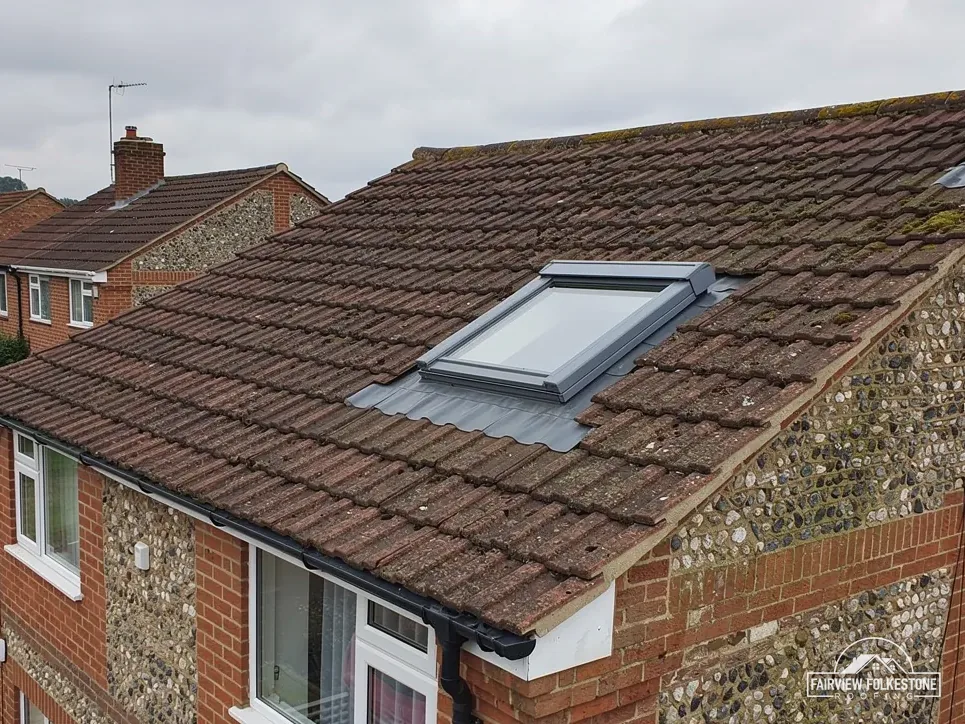
In a slated or tiled valley, three parts work as one. The lining runs along the bottom, the valley board gives it a firm base, and the cut slates or tiles on either side shed water onto it. A leaking valley is traced to whichever of the three has failed before anything larger is suggested.
A cracked lining is a repair: the covering on each side is lifted, a new lining is laid and the covering goes back. A valley choked with leaves or moss needs clearing, and then a look at what the blockage has done underneath. A soft board is a bigger job, because the board and the lining are renewed together.
For a valley in lead, Royston's cast-lead brochure lists codes 4 to 8 for a pitched valley gutter, with the specification choosing the code for each detail. Replacing a valley means lifting part of two slopes, so access and scaffold shape the price more than the lining does. The covering lifted on either side is reused where it is sound, and any broken pieces are replaced to match, which keeps the repair to what the valley itself needs. Our lead work page covers leadwork in general.
Entry 03Valleys
A Temple Ewell valley: lining, board and the cut edges either side
A valley carries the run-off of two slopes along a single line, which makes it a busy part of any roof. When it leaks, the fault may be small, and then the repair can be small too.
Myth: A leaking valley means the whole roof needs replacing.
Fact: A failed lining can be renewed on its own, and the remaining covering is disturbed only where the valley demands it.
Codes 4 to 8
lead sheet codes listed for a pitched valley gutter in Royston's brochure
the specification sets the code
- Valley lining
- Board beneath it
- Cut slates either side
The three parts are checked in order, from the lining up.
Does your Temple Ewell roof fit any of these three entries?
Tell us how the roof is behaving and attach a few pictures; the reply in writing names the verdict, whether that is mend it, replace it, or check with the council first.
From Folkestone out to Temple Ewell
Temple Ewell is 7.9 road miles north-east of Folkestone, around a quarter of an hour by road. Ladders and scaffolder arrive together, and where the scaffold stands is decided at the survey, leaving the road outside open for your neighbours, with the dates known in advance.
Roof questions from Temple Ewell
Short answers for Temple Ewell, each with its reason attached, so you can check our thinking.
How is a Temple Ewell roof checked where two slopes meet?
We follow the valley from the eaves up to the ridge, examining the lining, the board beneath it and the cut edges on each side, and we rule out a blockage before blaming the materials, since debris can hold water against the lining. From the loft we check the timbers under the valley for damp. The report names the part that has failed, with photographs, and the written price covers only the work that part needs, nothing beyond it.
Should flood risk near Temple Ewell worry me when re-roofing?
Environment Agency mapping puts Flood Zone 3 land not far from the middle of Temple Ewell. Zone 3 is a flood-risk category and no roofing requirement attaches to it, so fixings and gutters are specified in the normal way for the roof's own site. Roof and drainage are what we survey. For the ground, the drains or the rooms below, ask Dover District Council, and we will share what the roof survey showed.
Do I need approval to re-roof a Temple Ewell house?
Under Dover District Council's building control guidance, a fresh covering needs sign-off "even if this is just like for like", and fitted roof lights are caught too. The route is cleared with that team before the first tile is lifted. The Planning Portal's percentage test is a national one and sits beneath it, so a Dover address follows the council's line. If the work stays a repair, we still ask, because the council can say where a repair ends and a replacement begins.
Who applies for a scaffold licence in Temple Ewell?
Kent County Council licenses scaffolding on the highway at £52 per week for 2026 to 2027, and the council expects the scaffolding company to be the one that applies for it. A permit covers 7 calendar days, and renewals go in 5 working days ahead. We arrange it with our scaffolder. The position of the scaffold is settled at the survey, so you know in advance which dates it covers, how much of the pavement or lane it takes, and where the neighbours can still pass.
Is Temple Ewell inside the Kent Downs National Landscape?
The Kent Downs National Landscape, formerly an AONB, comes within reach of the village without taking in its centre, so check the Kent Downs map for your own address. The label describes the landscape and makes no planning decisions: Dover District Council does that, with advice from the Kent Downs team. Re-covering a house is judged by the ordinary rules, while dormers have their own, set out in our planning guide. If a boundary runs near your house, the council's answer settles it.
Is my Temple Ewell house in the conservation area?
The Temple Ewell conservation area lies close to the village centre, but a postcode cannot say whether your house is in it, so look at what Dover District Council publishes. An Article 4 direction can take away more rights; Dover District Council has directions covering land near the village, so check with it. The same question goes to the council at the survey, and we pass its answer on in writing, with the photographs that went with the enquiry.
What is the Temple Ewell roof doing? Tell us.
You'll get one written total price.