
River · 8.1 road miles north-east
Roofers in River
The village of River has its own conservation area, Grade II houses such as Ivy Cottage and Weeford, a Grade II church and Article 4 directions covering land nearby. Before a roof here is priced, we sort out which of those touch your address. Then the work, and the single total for it, go down in writing. No tile is lifted before then, and nothing is guessed.
- Designated area in the village
- River, a short distance from the village centre
- Listed Grade II
- Ivy Cottage, Weeford and the Church of St Peter, each listed at Grade II
- Scaffolding permit
- Kent County Council permit, £52 per week for 2026 to 2027
- Flood Zone 3 ground
- Environment Agency Flood Zone 3 land near the centre
Chimneys, listings and directions: three River verdicts
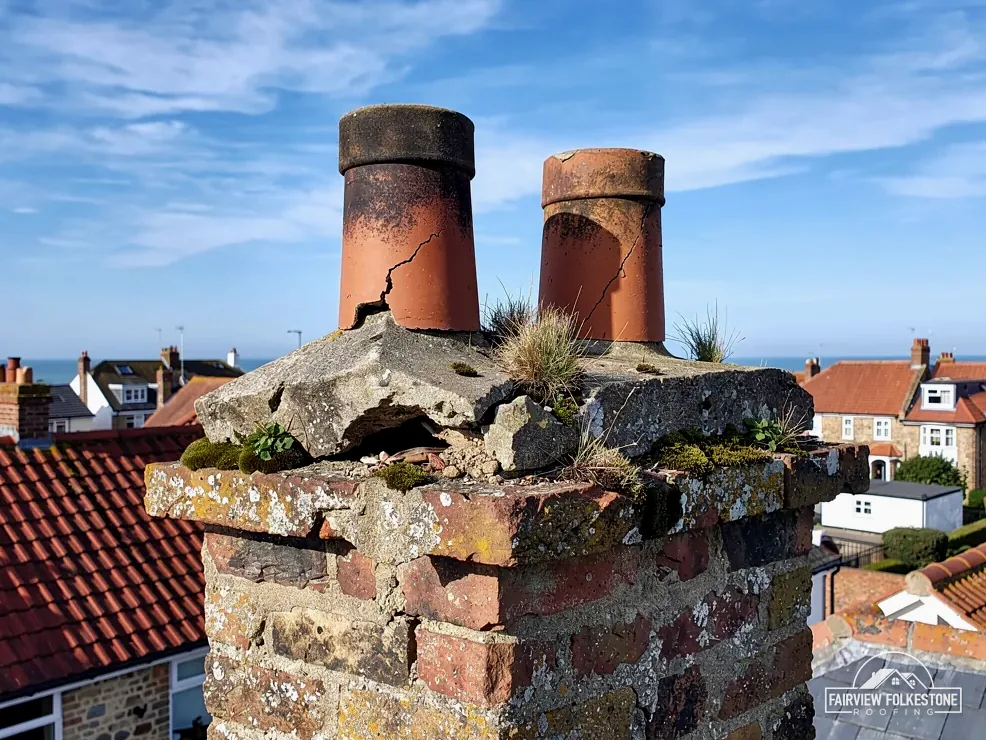
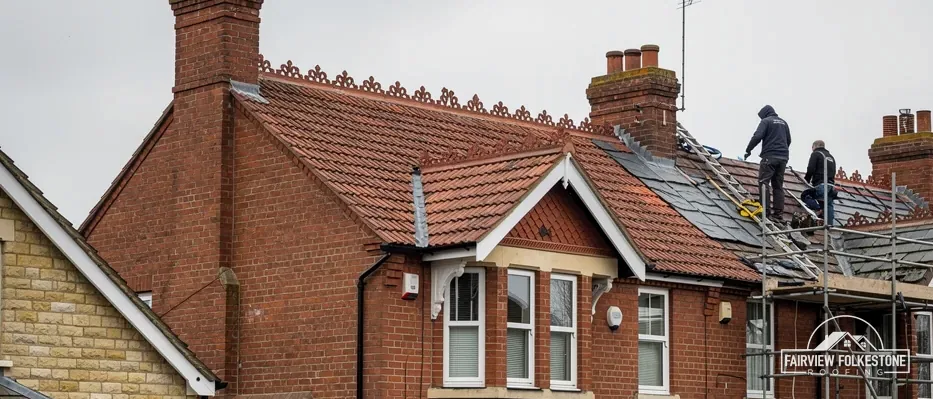
What we found
Flaunching crumbling on a chimney top
What it fairly needs
Re-form the flaunching, keep the stack.
What we found
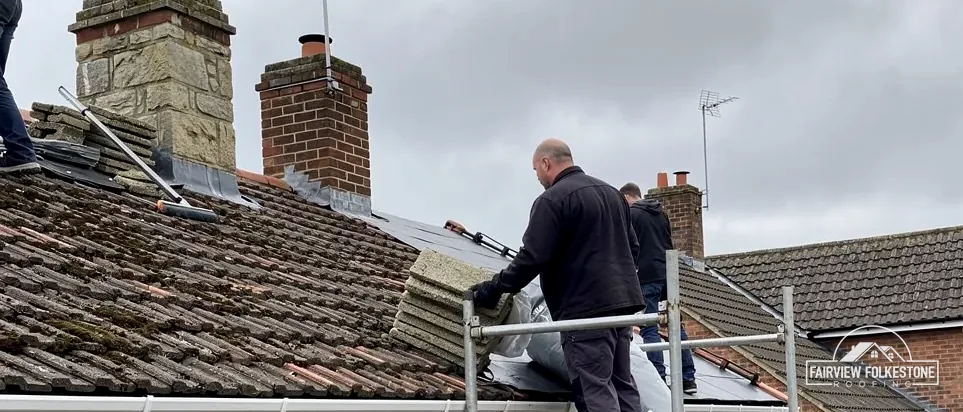
Worn tiles on a house with a Grade II entry
What it fairly needs
Consent settled before any scaffold goes up.
What we found
Slope worn through, battens soft beneath
What it fairly needs
Strip, re-batten and re-cover the slope.
The fair ledger
Nearby directions, listed houses and the lead round a chimney
Three entries for a River roof: what the conservation area and nearby Article 4 directions mean for a re-roof, how listings and a Grade II church are handled, and why chimney lead gets its own survey. Each closes on a verdict.
Entry 01Conservation area
The River conservation area, and the Article 4 directions nearby
River has a conservation area close to its centre, and Dover District Council has Article 4 directions covering land near the village. Both sit in front of a re-roof.
Where a conservation area leaves the roof
Ordinary re-roofing of a house is judged by the normal planning rules, even inside a conservation area. The extra care comes from design: Dover District Council has 57 conservation areas, and its page sets out which works need permission there. Dormers are treated differently there, so our planning guide covers them in full.
An Article 4 direction is the other piece. It lets the council remove particular rights to build without applying, inside a drawn boundary, and Dover says its directions can reach roof alterations on the faces of a house that look onto a road or public land. Dover has made directions covering land near River. What each one covers is for Dover District Council to confirm for your address.
Then comes Dover District Council's own building control rule: a replacement covering needs approval "even if this is just like for like", and installing roof lights does too. An apparently simple re-cover therefore begins with a question to the council. We ask early, in writing, and the reply is filed with your quote so that nobody has to remember what was agreed. If the council wants a particular detail at the verge or the ridge, that goes into the specification before we price it.
Which slope matters most for a direction in River?
Dover's page says its directions can reach the road-facing side of a home, or a side facing water or public open space, so a slope like that is photographed first and sent with our question. The council tells us, in writing, what the direction at your address covers, and we pass that on before any price is written.
Near a direction area
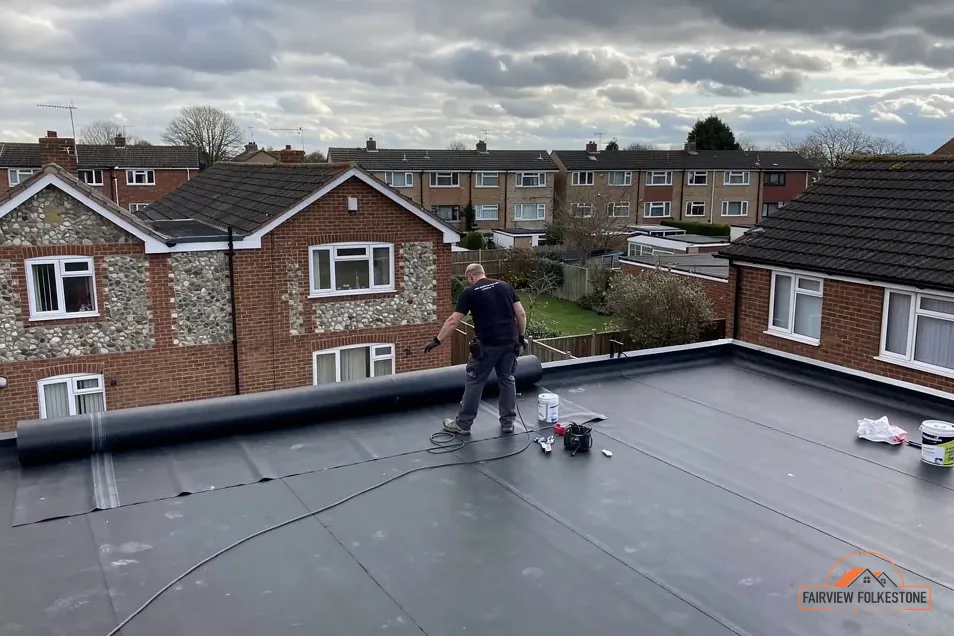
Slipped tiles on the rear slope
Refix, ask the council
New covering planned for the road side
Direction checked first
Entry 02Listed buildings
Ivy Cottage, Weeford and St Peter's: three Grade II entries, two routes
Ivy Cottage, Weeford and the Church of St Peter are among River's Grade II entries. The houses call for consent from the council, while the church, being in use, takes a different road.
Consent for the houses, faculty for the church
Historic England holds the entries: 1069531 for Ivy Cottage, first listed on 17 December 1973, 1069530 for Weeford, first listed on 30 June 1949, and 1363230 for the Church of St Peter, first listed on 17 December 1973. A listed house keeps its permitted development rights for roof work, yet section 7 of the Planning (Listed Buildings and Conservation Areas) Act 1990 calls for listed building consent where work would affect the building's special character.
St Peter's is in use for Church of England worship, and the 2010 Ecclesiastical Exemption Order places such churches outside that consent regime. Work there goes through the faculty system instead. Neither route reaches anyone else's roof, and neither is a ban on repairs: an unlisted house in River needs neither, and a neighbour's listing leaves it alone.
For a house with an entry, our first visit is photographic: tiles, ridge, verge ends and flashing, all recorded so that a consent application has evidence behind it. A small repair is matched to the surrounding covering. A slope worn out completely is a talk with the council before any order is placed. Our pitched roofing page describes the repair work, and roof replacement the larger job.
Myth: A Grade II church roof and a Grade II house roof follow one route.
Fact: A church in Church of England use goes through the faculty system. A listed house needs listed building consent from the council.
Who can tell me if my River house is a listed building?
Historic England publishes the list online, where a house is found by its name or street. If your house has an entry, consent comes into the plan from the start, and the survey is shaped around it. If it does not, being near Ivy Cottage or the church changes nothing about what your roof needs, and the quote carries no consent step.
The weatherproofing at a chimney base
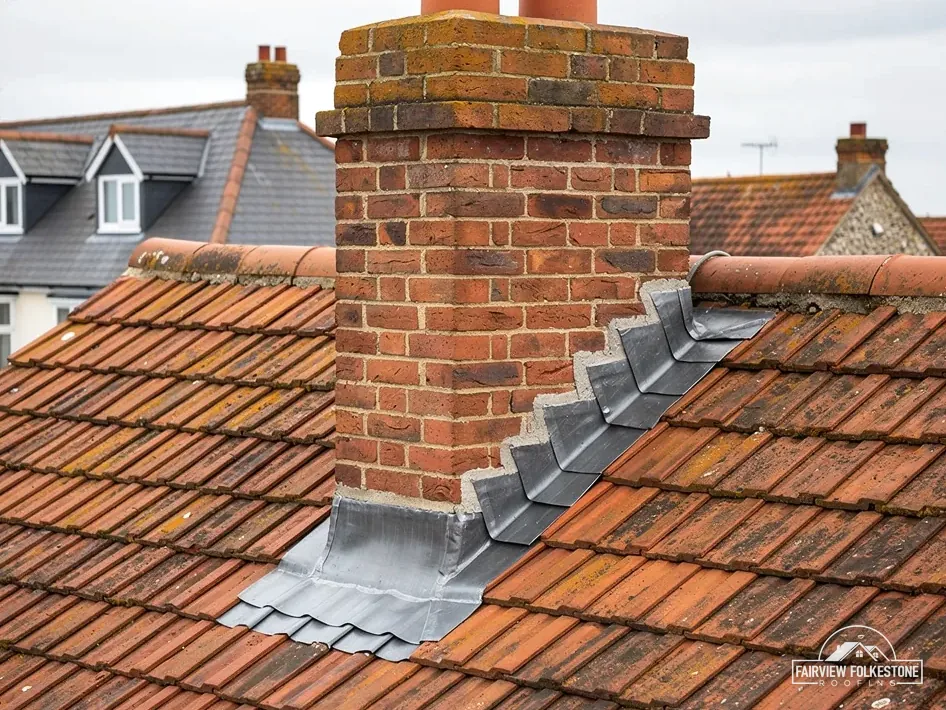
Four pieces make a chimney watertight where it rises through the slope: stepped lead up the side of the stack, the cut joint that holds that lead's top edge, soakers laid under the covering, and the mortar cap on the stack's crown, called flaunching. The cap sends rain towards the pot, and the other three carry it down onto the slope.
Damp near a chimney has four possible starting points, so the survey follows the damp rather than assuming. Lead that has lifted, a joint that has opened and a cap that is crumbling are each repairs, and none of them argues for taking the stack down. Correctly installed lead flashing can last for over 80 years, according to MyJobQuote, which is a good reason to keep sound lead and fix only what has failed.
Where the brickwork itself is leaning or flaking, the job moves to our chimney repairs work, and the leadwork is done on the same visit. Before any of it, we start in the loft, directly under the stain, looking for darkened timber, and trace the damp upwards, so no lead is lifted that was doing its job. Beside a stack, the slates or tiles beneath the lead are also checked for slips, and the gutter below it is checked for blockage.
Entry 03Chimney leadwork
Where the chimney meets the slope: four parts to trace
When damp shows on a chimney breast, the stack takes the blame. The lead round its base deserves the first look, because it is cheaper to renew than a stack is to rebuild.

Over 80 years
how long correctly installed lead flashing can last, per MyJobQuote
can last, never a promise
Can a leaking chimney be fixed without taking the stack down?
Yes, where the brickwork is sound. Renewing the lead, resetting the joint and re-forming the mortar cap deal with a leak at the base, and the stack stays. If the stack itself is unsound, the survey shows you the photographs before a larger job is suggested, and you decide what happens next.
- Stepped flashing
- Joint raked into the stack
- Soakers under the covering
- Flaunching on top
Each numbered part gets its own look before the stack is blamed.
Which of the three entries describes your River roof?
Tell us the trouble and attach a few pictures; the answer in writing says whether to mend the roof, renew it or check the paperwork before anything else. You decide what happens next.
The road from Folkestone to River
North-east of Folkestone by 8.1 road miles, River is about 13 minutes away by road. Ladders and scaffolder turn up as a pair. Where the scaffold goes is decided at the survey, with room left in the street and the dates given to the neighbours. Parking for the van is arranged with you beforehand.
Roof questions from the village of River, answered
River's roof questions, each answer followed by its reason.
What makes a chimney leak in River hard to pin down?
Several details can let rain in beside a chimney: the lead, the joint it sits in, the mortar cap or the pot itself. A ceiling stain can sit some way from the point of entry. So we start in the loft, follow the damp timbers uphill, and open up only the spot that is failing. The report names that part and shows it in photographs, and the written price covers that part alone, so a leak at the base never turns into a stack rebuild. Photographs go with it.
Does Flood Zone 3 near River change a roofing job?
Environment Agency mapping shows Flood Zone 3 land close to the centre of River. We treat that as flood-risk information about the ground, not as a rule for roofs, so fixings and gutters are specified as usual for the site. Our survey stays with the roof and the way it drains. Questions about the ground or the lower floors of a house go to Dover District Council.
Do I need approval to re-cover a roof in River?
A like-for-like swap still counts here. Dover District Council's building control page puts a replacement covering among the jobs that need approval "even if this is just like for like", as well as installing roof lights, so we settle the route with that team before work starts. Beneath that sits the Planning Portal's percentage test, a national measure that Dover's own line tightens. Even for a repair we ask, since the council can say where repair ends and replacement begins.
Who sorts out the scaffold licence for a River roof?
Highway scaffolding falls to Kent County Council, which publishes the permit at £52 per week for 2026 to 2027 and says the company that puts up the scaffolding is the one to apply. We arrange it with our scaffolder. The survey decides where the poles go, how long the permit must run and what the scaffold means for parking outside. A longer job means a renewal, which is also arranged ahead of time.
Does the Kent Downs landscape reach my River house?
A corner of the Kent Downs National Landscape, formerly an AONB, comes near River without covering the village centre, and the Kent Downs map settles any single address. The landscape label does not decide applications: Dover District Council does, taking advice from the Kent Downs team. A new covering on a house follows the standard rules, and dormers are covered in our planning guide. If your house sits near the line, the council's reply is what counts.
Is Weeford's listing a problem for the roof next door?
No. Weeford is listed Grade II, but a listing belongs to the building in its entry and does not spread to neighbours. Your own house is covered only if Historic England's list gives it an entry. If it does, listed building consent is needed for work affecting its character, and we bring that up before pricing, with the photographs the council would ask to see. The consent route is then part of the plan, not an afterthought, and the quote reflects it.
Describe the roof you have in River.
You'll get one written total price.