
Woodnesborough · north-east of Folkestone by 17.6 road miles
Roofers in Woodnesborough
A parish of 1,241 usual residents at the 2021 Census, with a Grade II* church, listed monuments in its churchyard and the Ash conservation areas a short way off. Before pricing work of any size we learn which council rules belong to your address, because the answer changes what the job involves.
- St Mary the Virgin in the churchyard
- St Mary the Virgin, Grade II*, a working Church of England church
- Designations beyond the village
- Ash's areas, The Street, Street End and Guilton, on Dover District Council's list
- Who approves a Woodnesborough re-cover
- Dover District Council's building control service
- Highway licence for the poles
- Kent County Council; we arrange it with our scaffolder
Three things a Woodnesborough survey can turn up, each with its verdict
What we found
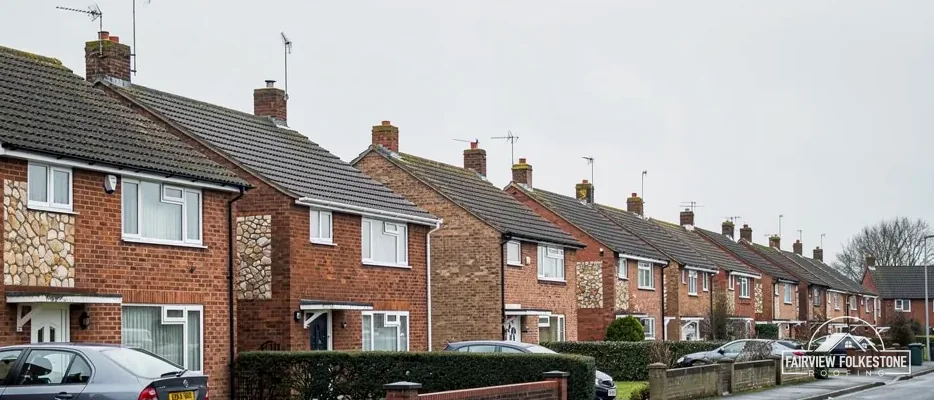
Lead at a chimney lifted at the joint
What it fairly needs
Re-point the joint and re-dress the lead.
What we found
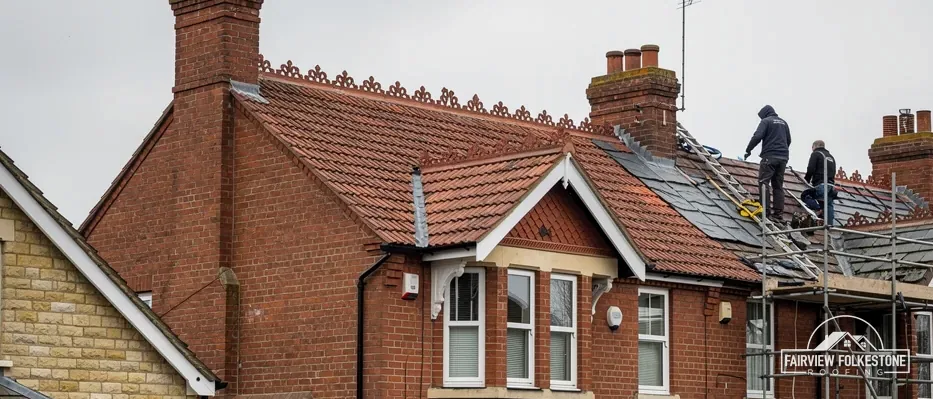
A house named in a list entry
What it fairly needs
Ask the council before any price is fixed.
What we found
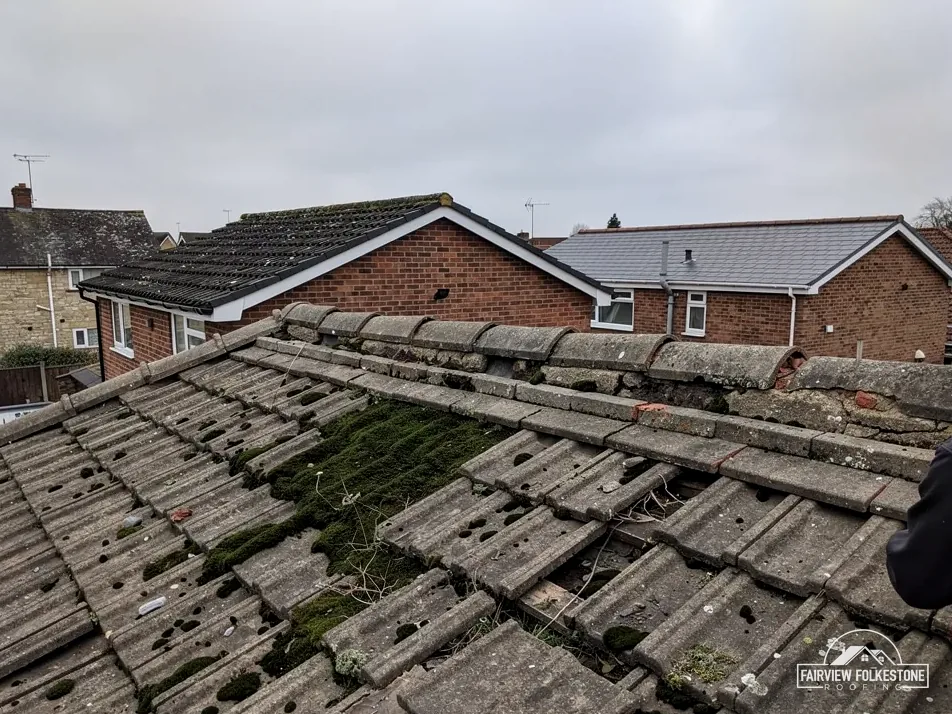
Battens spongy across one slope
What it fairly needs
Take that slope back and re-batten it.
The fair ledger
A churchyard, the Ash designations and a chimney's lead: three Woodnesborough entries
Three questions shape a Woodnesborough roof job: whose consent a listed neighbour needs, what Dover District Council's own rules say about re-roofing, and whether the lead at the chimney is sound. Each entry closes on a verdict.
Entry 01Churchyard
St Mary's churchyard: a Grade II* church, a sundial, three tomb chests
Woodnesborough's church is listed Grade II*, and two items in its churchyard carry Grade II entries of their own. Each has its own consent route, and none of them is your roof.
Who agrees to work on what
St Mary the Virgin, the parish church, is entry 1281495 on Historic England's list, first listed on 11 October 1963. In the same churchyard the sundial about 15 metres north of the church is entry 1363310, and the group of three tomb chests north of the chancel is entry 1070109. Both are Grade II, both first listed on 26 November 1987. Neither of them is a house.
St Mary's still holds Church of England services, which places its fabric under the faculty system rather than council consent. A listed house is another case. Section 7 of the Planning (Listed Buildings and Conservation Areas) Act 1990 requires listed building consent for works that alter what makes the house special, and Dover District Council is where that consent is sought. Living beside a listed building puts nothing extra on an unlisted roof.
So the first question we settle here is plain: is your house on the list? If so, we keep the repair as small as the roof allows and put the question to the council before pricing. If not, it is ordinary pitched roof work, and our planning guide sets out the limits.
Where the consent sits
Church in use, Church of England
Faculty, not council consent
Listed house, character affected
Council consent first
Unlisted house, listing nearby
Standard rules apply
Does a listed churchyard monument affect my Woodnesborough roof?
No. A listing rests on the structure named in its list entry, not on the houses around it. A house is affected only when it is itself named, and the list can be searched in minutes. We run that search during the visit and note what it shows, so no quote rests on a guess.
What sets the price
- Whether your house is on the list
- Which consent route applies
- How much of the roof is involved
- How we reach the work
One written total price
Entry 02Ash designations
Ash's conservation areas, and Dover's rule on like-for-like re-roofs
The conservation areas nearest the village are at Ash, a short way off, and Dover District Council writes the rules for them. Its building control page also reaches every re-roof here.
Reading Dover's two sets of rules
Dover District Council holds the list for the nearest conservation areas, those at Ash called The Street, Street End and Guilton, and it counts 57 conservation areas in its district. Its list is how an address is checked, because a postcode is not enough and a boundary that looks close on a map can sit on the other side of a field or a lane. Ordinary re-roofing is normally permitted development even in a conservation area, but we still ask before promising anything.
An Article 4 direction is a separate matter. Rights that normally apply can be taken away for an area, and only Dover District Council can say whether your road is in one. We raise that question at the survey and pass on the reply, so you hear it from the council and not from a roofer's guess.
Building control is a different rule again. Dover District Council's building control page says replacing roof coverings "even if this is just like for like" needs approval, as does "installing roof lights". So a re-cover in Woodnesborough begins with the question to Dover's own building control staff. A full strip-and-relay is covered by our roof replacement service, and the planning guide takes anything larger.
57
conservation areas in the Dover district, the count Dover District Council gives
Ash's three are among them
Myth: Putting the same covering back means nobody has to approve it.
Fact: In Dover District Council's area approval is sought even for a re-cover that copies what was there before, because the council's building control page says so, and we confirm the route first.
What sets the price
- Whether the address needs a council answer
- A re-cover or roof lights
- Which building control route applies
- How we reach the slope safely
One written total price
Reading the lead at a stack
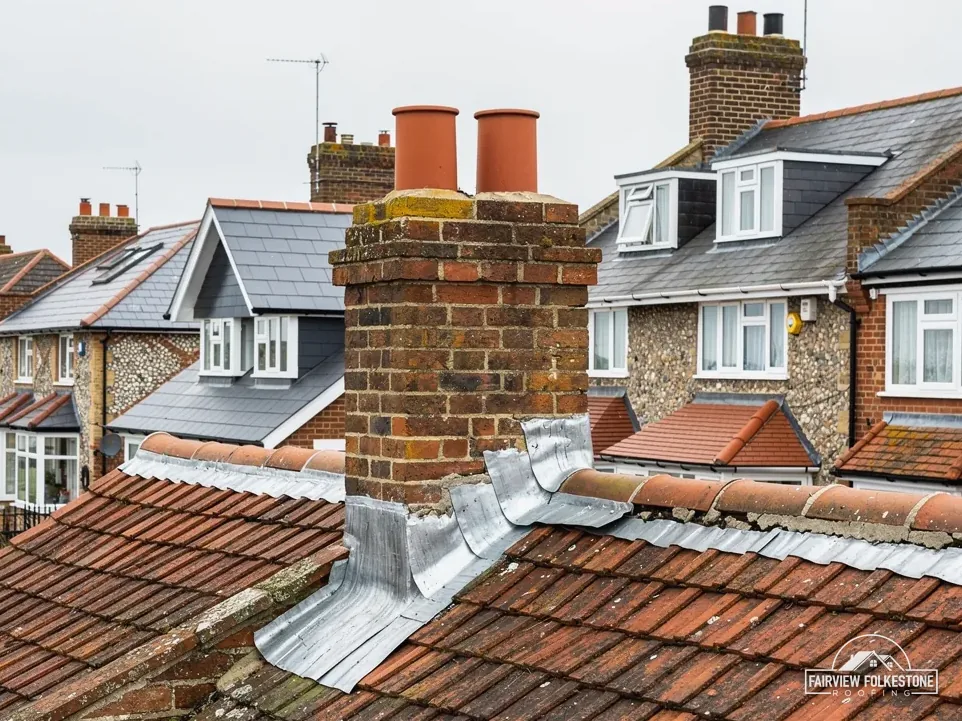
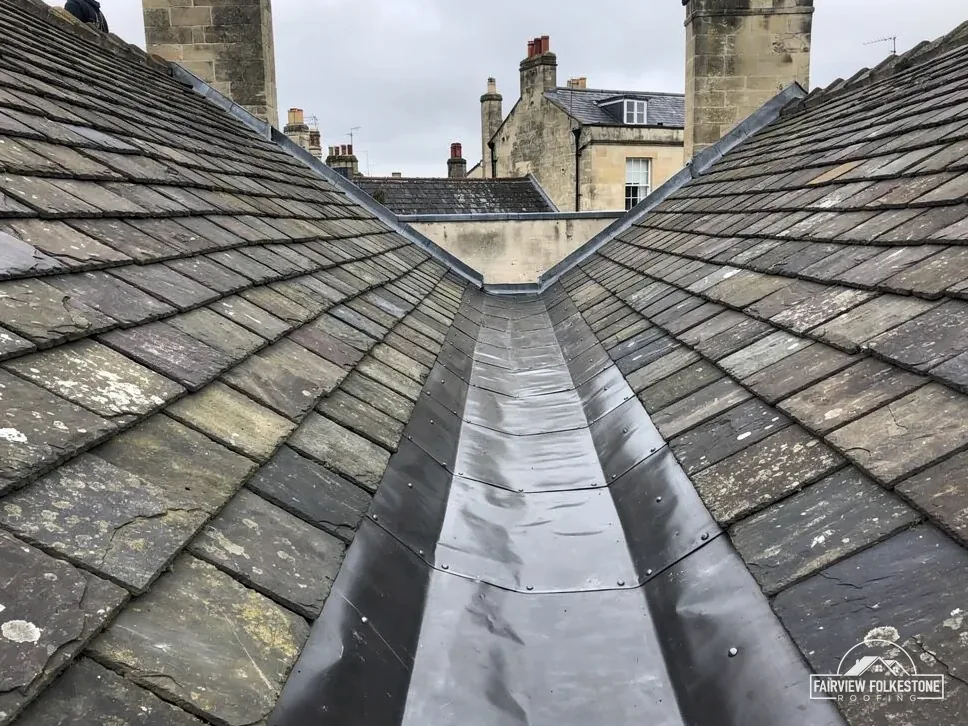
Lead at a stack is dressed over the joint where a slope meets the chimney, stepped up the side of the stack where the brickwork rises through the tiles. On the day the stepped pieces are examined, then the joint cut into the brickwork, then the soakers: small lead sheets lapped under each tile course beside the stack. We also note whether the mortar fillet along the edge has cracked, and whether the lead has lifted, split or stretched out of shape.
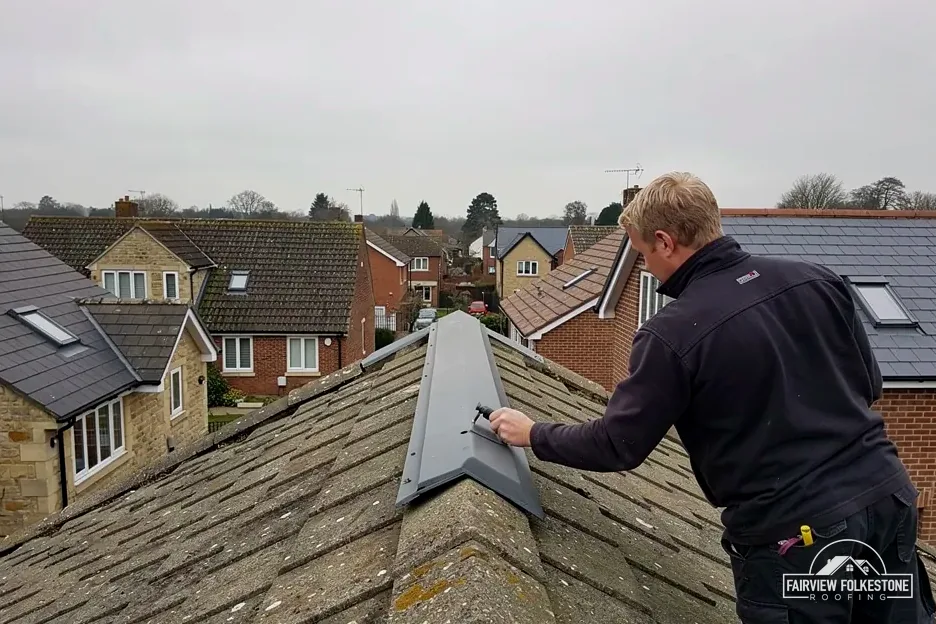
MyJobQuote says correctly installed lead flashing can last for over 80 years, so an old strip is not condemned for its age alone. If the lead is sound and the joint has failed, the repair is a re-pointed joint and a re-dressed strip rather than a stripped slope. If the lead has split, a new strip is cut and dressed to the stack. Photographs of each part go into your notes, so you see what we saw before agreeing to anything, and the written price names the work in plain words. The written price then covers exactly that work and no more, whichever of the two it turns out to be. Our lead work page shows the detail.
Entry 03Chimney lead
Lead at the chimney: what we weigh before calling it a repair
A flashing is the strip that seals a roof to a stack or wall. A tired one can be renewed without disturbing the tiles around it, so the survey looks closely at each part. Lead is judged part by part.
over 80 years
how long correctly installed lead flashing can last, MyJobQuote's figure
A guide, never a promise
Is a lifted flashing always a reason to re-roof?
No. Lead is cut and dressed as a separate strip, so a failed flashing is renewed as a repair and the tiles around it stay where they are. We re-roof only when the covering or the battens under it have failed over a wider area, and the survey photographs show which case applies.
The four parts we look at
- Stepped flashing up the stack
- Joint cut into the brickwork
- Soakers under the tile courses
- Mortar flaunching round the pots
Each numbered part is covered in the survey note.
Which of these Woodnesborough entries sounds like your roof?
A photograph or a booked survey both make a start. The verdict is delivered on paper before the price, and the price is one figure.
The run out to Woodnesborough
Woodnesborough is 17.6 road miles from Folkestone, heading north-east, about 26 minutes by car. At the 2021 Census the parish had 1,241 usual residents, and every roof is looked at individually, with the findings photographed and written up before a price is given. Notes and photographs go to you.
Questions Woodnesborough householders put first
Can the lead at a Woodnesborough chimney be repaired without stripping tiles?
Yes, if the lead itself has stayed sound and just the joint or the soakers have failed. The survey checks the stepped flashing, the brickwork joint and the soakers beneath the tile courses, and names the part that needs work. Correctly installed lead flashing can last for over 80 years, according to MyJobQuote, so age alone is not a reason to replace it. Where it has split, a new strip is cut and dressed, and the tiles around it stay put. The tiles are left alone wherever possible.
Does re-roofing a Woodnesborough house need Building Regulations approval?
Dover District Council's building control page says replacing roof coverings "even if this is just like for like" needs approval, as does "installing roof lights", so a re-roof here goes to Dover's own building control team. The Planning Portal's national guide, less than 25 per cent of the building envelope and less than 50 per cent of the roof, follows only as a guide. A new covering 15 per cent or more heavier needs approval as well, and we note the route in writing before you agree to any work.
Do I need consent to work on a house beside St Mary's churchyard?
Only if your house is itself named in a Historic England list entry. In that case listed building consent comes first for work that changes how it looks and what it is, and we put the question to Dover District Council before pricing. St Mary's itself holds Church of England services, which puts its fabric under the faculty system. An unlisted house next door follows the ordinary rules, whatever stands beside it. We say which case your house is before we price.
Which conservation areas are closest to Woodnesborough?
Those at Ash: The Street, Street End and Guilton. Dover District Council says its district holds 57 conservation areas, and it keeps a list you can check an address against. If your house stands near an edge, we check that list at the survey and write the answer into your notes, with the council's name beside it so you know exactly who said what and when it was checked. It is a short check, and it is done before pricing. The result stays on file with the photographs.
Who licenses scaffold on a Woodnesborough road?
The licence for scaffold on the highway comes from Kent County Council, priced at £52 per week for 2026 to 2027, and Kent County Council advises that the scaffolding company should put in the application for you, not the householder. We arrange it with our scaffolder, as on every job. Before work starts we settle the scaffold's footprint and its duration with you, because a long job needs renewing in good time and the licence runs weekly.
Might an Article 4 direction limit work on my Woodnesborough roof?
In the government's description, a direction is a way for the local planning authority to take away named permitted development rights over a set area. Check with Dover District Council whether one reaches your road. We raise the question at the survey, and the council's reply goes into the survey write-up ahead of any price, so the single price rests on a confirmed answer and nothing is assumed.
Tell us what the Woodnesborough roof is doing
You'll get one written total price.