
Storms and leaks
Dealing with a roof emergency: safe quick fixes and what to leave to a roofer
A roof that lets go in a storm needs two jobs: keeping the house dry tonight and repairing the roof properly afterwards. Some of that you can safely do; the rest belongs to a roofer.
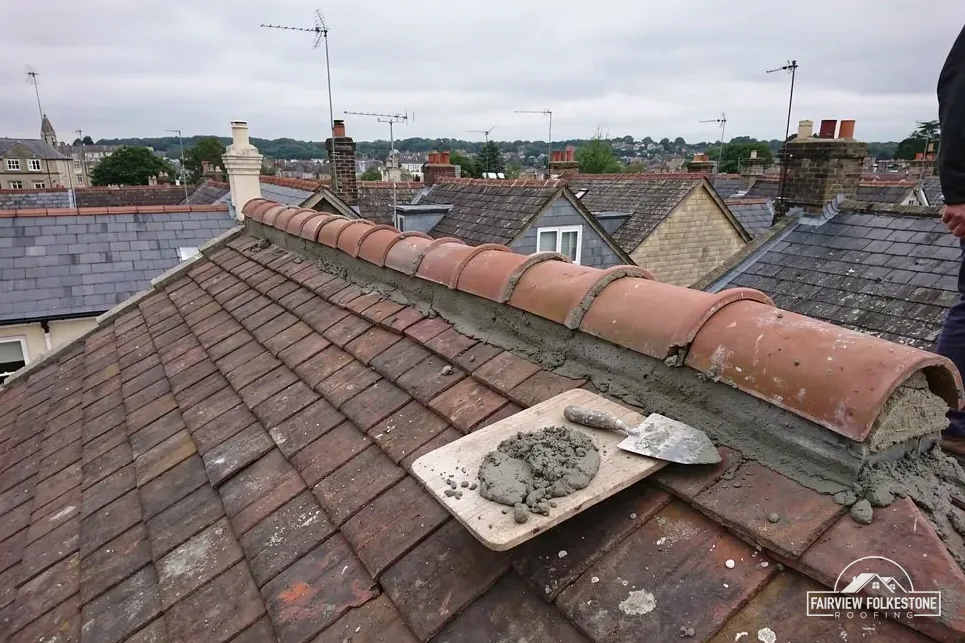
When a gust lifts tiles off the ridge or rain starts dripping through a bedroom ceiling, the urge is to get a ladder out and fix it. Please don't. The roof emergency quick fixes worth doing happen inside the house and from the ground: catching the water, protecting the electrics, recording the damage and getting the roof made safe by someone with proper access.
Wind can do real harm here. On the Met Office's Great Storm of 1987 page, near Folkestone a Channel ferry was blown ashore, and winds hit Force 11 (56-63 knots) across many of south-east England's coastal regions. You do not need a storm of that size to lose a tile, though. A slate that has already slipped, or a ridge tile sitting on tired mortar, can go in an ordinary autumn gale.
What follows is the order we would want any household to work through: the first hour indoors, what you can safely check from outside, how a roofer makes a roof safe, how a storm claim works, what the visit and the repair are likely to cost, and the checks that make the next emergency less likely.
01Key points
The first hour: protect the inside of the house
Water coming through a ceiling looks alarming, but the first jobs are simple and none of them need a ladder or a trip onto the roof.
- Put a bucket or bowl under each drip, with an old towel in the bottom to stop the splash.
- Move furniture, rugs and electrical items out of the wet area, and lift anything stored on the floor.
- If water is running near a ceiling light, a socket or the fuse box, switch the electricity off at the consumer unit and leave it off until an electrician has looked.
- If a ceiling is sagging with water above it, keep everyone out of that room: wet plasterboard can come down without warning.
- If it is safe to go into the loft, take a torch, step only on the joists and lay a tray or plastic sheet under the drip.
- Take photos and short videos of every wet patch, inside and out, before you clear anything up.
Once the water is contained, ring a roofer and describe what you can see: where the drip is, whether it started with wind or with rain, and whether anything has fallen into the garden. That helps us bring the right materials on the first visit.
A leak does not always show directly below the damage: it can run along a rafter or across the top of the plasterboard first. Our page on water coming through the ceiling goes further into the indoor side, including how to tell a fresh leak from an old stain.
02In brief
Stay off the roof: what you can safely check
A wet roof in a strong wind is a dangerous place for anyone. Tiles and slates are slippery when wet, a gust can catch a person on a ladder like a sail, and a loose tile you lean on can slide away under your hand. A roofer working on a damaged roof uses access equipment chosen for that roof; a householder on a borrowed ladder has none of it. No leak is worth a fall.
Quick fixes and storms: your questions
Can I put a tarpaulin over my roof myself after a storm?
We would ask you not to. Fitting a sheet means working at height on a wet roof in a wind, and a tarpaulin that is not fixed down can lift and pull more tiles away. A plastic sheet or tray in the loft under the leak, a bucket below the drip and photos of the damage are safer steps until a roofer arrives.
What you can do safely, from the ground or from a window:
- Look at the roof from across the street, or with binoculars, for slipped or missing tiles, a gap along the ridge or a lifted flashing.
- Check the garden, drive and pavement for fallen pieces, and keep children and pets away from the ground under the eaves.
- Gather broken tile, ridge or mortar only once the wind has dropped, and keep the pieces: they help us match the covering and help an insurer see the damage.
- Note any gutter that is overflowing or any downpipe that has pulled away from the wall.
- If something heavy is hanging over a path, keep people clear of it and say so when you call.
Tarpaulins deserve a word of their own. Sheeting a roof yourself means a ladder, a high edge and a sheet that behaves like a sail in the same wind that caused the damage. A tarpaulin that is not fixed down properly also lifts and flaps, and it can drag more tiles off as it goes.
Indoors, a plastic sheet in the loft under the leak does the same job for now with none of that risk.
03Choosing a roofer
How a roofer makes a damaged roof safe
A make-safe is a temporary repair. It stops the water and secures anything loose until the permanent work can be done properly, in decent weather. The table pairs typical storm faults with the temporary fix and the lasting repair.
A temporary fix keeps rain out; it is not the repair, and it should come off once the permanent work is done. When we come back, we tell you whether a repair is sound or whether the roof needs more, and we explain why.
For the repair itself, approval may not be needed at all. Folkestone & Hythe District Council's building control page says "You also don't need approval for most repairs, replacements, and maintenance work." If storm damage turns a repair into a re-roof, the Planning Portal's guide says a building regulations application is not normally required when the work touches less than 25 per cent of the building envelope and less than 50 per cent of the roof, though a new covering 15 per cent or more heavier does need approval. At Dover district addresses, Dover District Council lists replacing roof coverings, even just like for like, among the work needing approval.
| Damage | Make-safe | Permanent repair |
|---|---|---|
| Slipped or missing tiles or slates | Refixed where sound, or the gap sheeted and battened | Matching tiles or slates fixed back; underlay checked |
| Loose or fallen ridge tiles | Loose pieces lifted off; the gap sheeted | Ridge re-bedded and fixed, or a dry ridge fitted |
| Lifted lead flashing | Dressed back down and secured | Refixed into the joint, or replaced |
| Torn flat roof covering | A patch over the tear | Repair or new covering, judged on the deck |
04Storms · Insurance
Storm damage and your home insurance
If the damage came in a storm, speak to your insurer before any permanent work starts. The order that keeps a claim straightforward is plain:
The Financial Ombudsman Service's storm damage guidance explains how disputes are weighed. A storm does not have to mean wind alone: it says "Rain, hail or snowfall by itself can constitute a storm." It also notes that some insurers treat wind as storm-force only beyond a set level on the Beaufort Scale. On evidence, the ombudsman says "we'll usually look at expert reports and photos", and that the insurer will normally get a surveyor's report of its own. Turn-downs based on a policy exclusion put the burden on the insurer: the Financial Ombudsman Service says it has to prove that the exclusion applies.
- Tell your insurer what happened and when, and ask how they want the claim made.
- Have a temporary repair fitted to make the roof safe, so the damage does not spread to ceilings and walls.
- Keep photos of the damage, the fallen pieces and the make-safe, with every receipt.
- Leave the damaged area as it is until the insurer says otherwise, if they want their own surveyor to see it.
Think a refusal is unfair? Take it up with the insurer before anything else. The Financial Ombudsman Service says a business has up to 8 weeks to consider most complaints, and you then have 6 months from the date of its final response to bring the case to the ombudsman on 0800 023 4567.
We can photograph and describe what we find on the roof for you to pass on. The claim itself, and its outcome, sit between you and your insurer.
Does home insurance pay for a temporary roof repair?
That depends on your policy and on whether the damage counts as storm damage, so ask your insurer before any work starts. Hold on to the make-safe invoice and photos of the roof before and after. Photos and expert reports are what the Financial Ombudsman Service says it will usually weigh if a storm claim ends up in dispute.
05Repairs · Costs
What the visit and the repair are likely to cost
The cost turns on the damage, the height of the roof and the access the work needs, so published figures are a guide rather than a price.
A call-out figure covers attending, not the make-safe itself. Which? says prices are "likely to be at the upper end" of its range in London and the South East, and Kent and East Sussex both sit in the South East. There is more on this in our answer on what an emergency roof repair costs.
Our own figure for the permanent repair is one written total, given once we have been up and looked. Whoever you use, make sure their quote states whether VAT and the scaffold are in it.
One point of consumer law catches people out. Signing at home after a survey gives you a 14-day cancellation period, and work begins inside it only at your written request. Regulation 28(1)(e) of the Consumer Contracts Regulations 2013 takes that right away where you specifically asked a trader round for urgent repairs or maintenance. For advice on a dispute, the Citizens Advice consumer helpline is 0808 223 1133.
| Work | Figure | Source |
|---|---|---|
| Emergency roofer call-out | Typically £150 to £300 | MyJobQuote |
| Extensive storm damage repairs | Can cost £1,200 or more | MyJobQuote |
| Replacing 1 to 6 broken or missing standard tiles | £75 to £400, excluding VAT | Which? Trusted Traders, November 2025 |
| A roof repair, on average | Around £650 in 2026 | MyJobQuote |
06Emergencies
Checks that make the next emergency less likely
No roof is storm-proof, but a fault found early is a planned repair rather than a night with buckets.
Fixings matter on an exposed house. According to slate maker Cupa, coastal, hillside and sloping sites "will be graded with higher exposure". BS 5534 gives a way to calculate the fixing specification, so a coastal roof gets fixings worked out for its own site. Marley points out that BS 5534 "isn't required by law", yet since its 2015 amendments mortar is no longer relied upon as the only fixing, which makes old mortar-only ridges worth a look.
Where the permanent repair needs scaffold on the road or pavement, it needs a licence. Kent County Council's page says "the skip or scaffolding company should submit the application for you", and its fee for 2026 to 2027 is £52 per week. In East Sussex, the East Sussex Highways fee table shows £127 for 28 days, so check the current fee. We arrange the licence with our scaffolder.
If you are unsure whether something is urgent, our page on when to call an emergency roofer sets out the signs, and our roof repairs page covers the work itself.
- Look over the roof from the ground in autumn and after any strong wind: slipped tiles, gaps at the ridge, cracked mortar along the verges.
- Clear the gutters and check the downpipes, so overflowing rain is not running down the wall or back under the eaves.
- Go into the loft with a torch after heavy rain and look for damp patches, stained timber or daylight through the covering.
- Check the lead at the abutments, the joints where a roof runs into a chimney stack or a house wall; lead that has lifted lets rain in there.
- On a flat roof, watch for a puddle still sitting there a day or two after rain, and for any blister or split.
Is a temporary roof repair enough to get through the winter?
A temporary repair is there to keep rain out until the permanent repair can be done properly, not to stand in for it. How long a sheet or patch holds depends on the weather and on the damage underneath, so book the permanent work once the roof is safe and the weather allows a roofer to do it well.
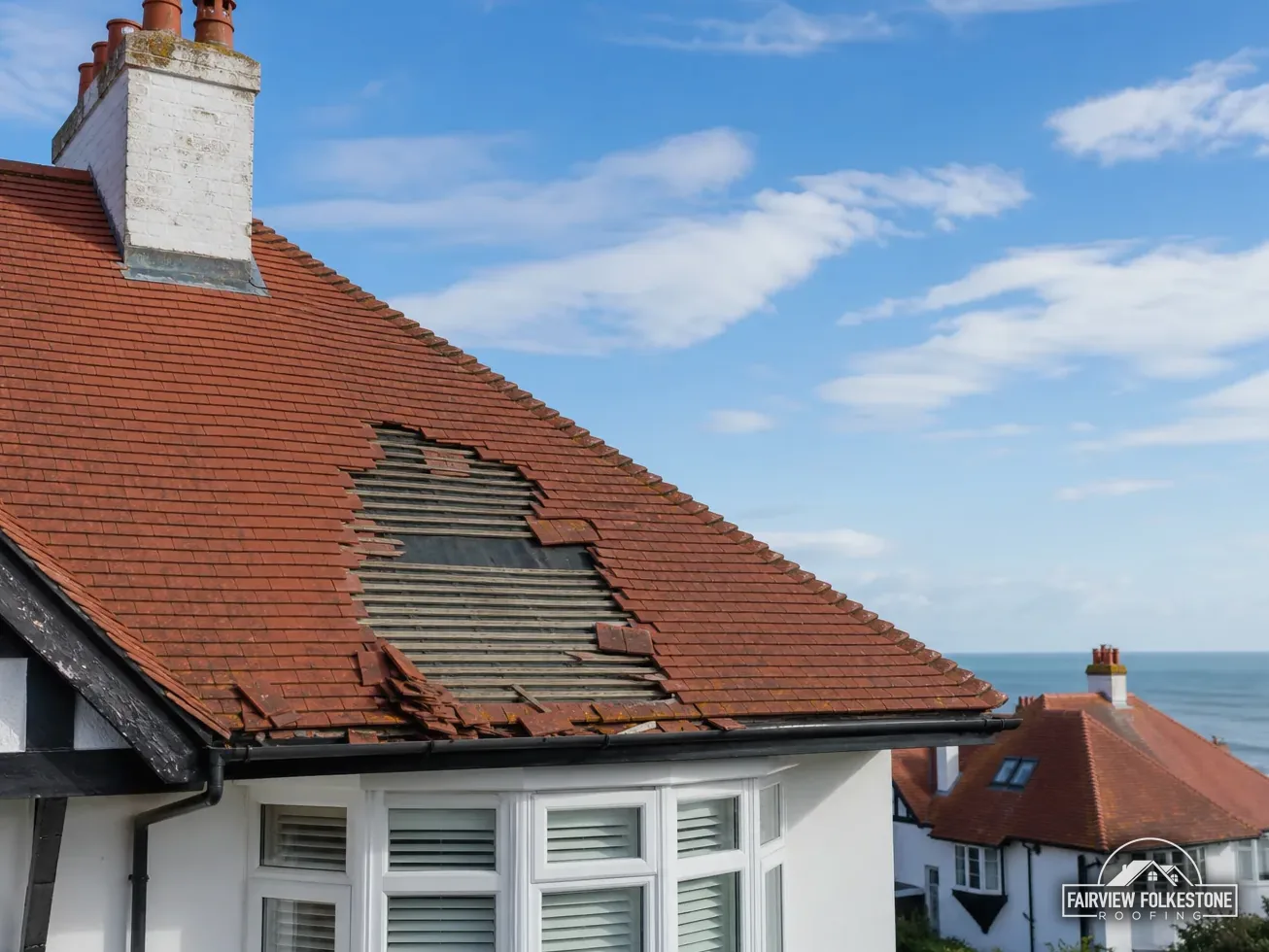

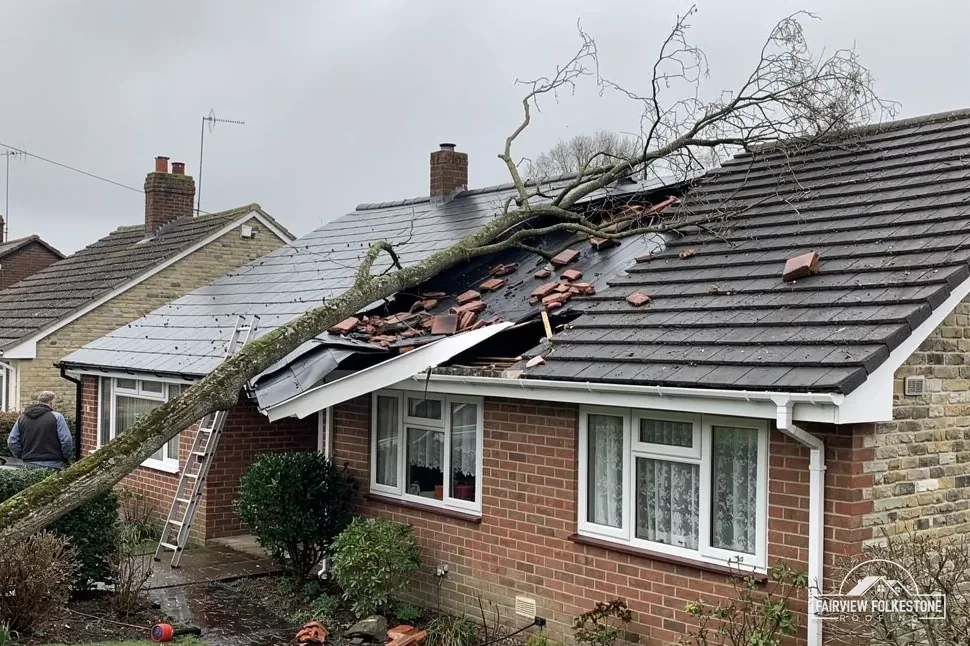
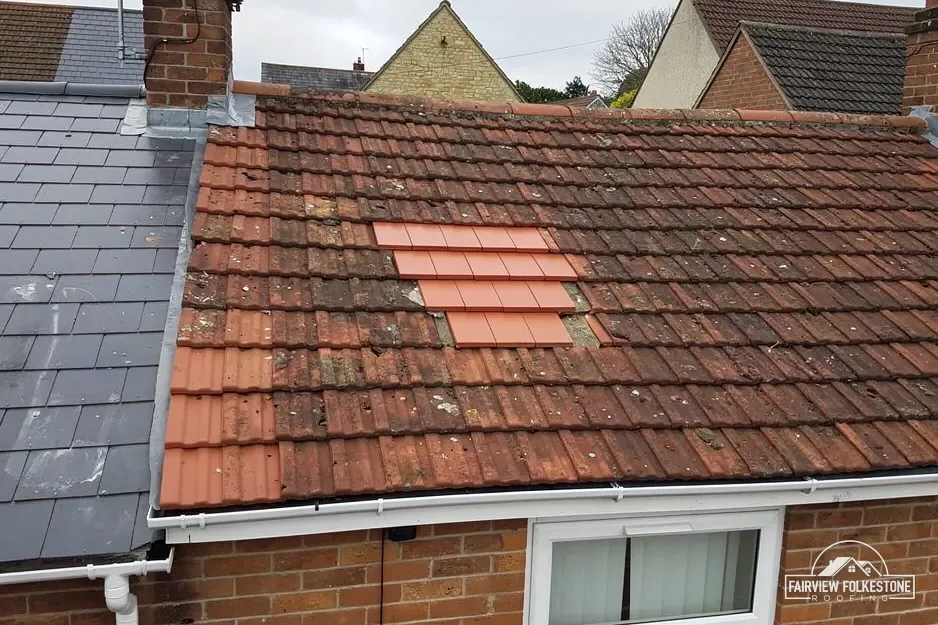
Tell us what's wrong with the roof.
You'll get one written total price.