
Hiring a roofer
How to find a good roofer, and how to spot a dodgy one
A dodgy roofer relies on you not asking questions, and a good one is glad to answer them. This post lists what to ask for, what to check and which answers should make you stop.
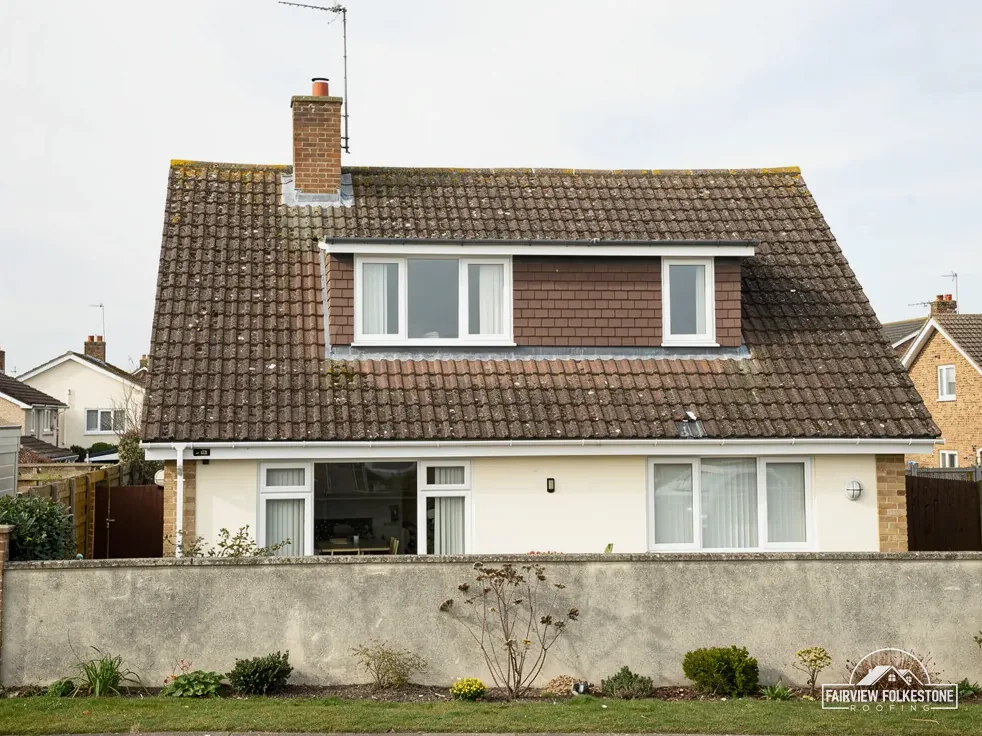
Roofing is a job done where you cannot see it, at a height you will not climb, so you are taking the roofer's word for much of what happens up there. That is why the checks matter. None of them needs technical knowledge. They need a written quote, a few phone calls and the nerve to say you will think it over, which any decent firm will accept without a fuss.
The sections below follow the order in which a job unfolds: the quote, the business behind it, the pressure at the door, the payment, the rules the work must meet and the signs on the roof itself. Each ends with something you can check without taking anyone's word.
The advice applies to any roofer you are thinking of hiring, including us. We would rather you asked every question here of us as well as of everyone else on your shortlist, and compared the answers on paper. If you want to see the kinds of work a Folkestone roofer covers before you start, our roofing in Folkestone page lists them. Print this post if it helps, and tick each point off as the answers arrive.
01Key points
Ask for one written total, with the extras named
The first test is the quote. A sound one arrives in writing after someone has been up to look at the roof, and it gives one total price for the whole job. A dodgy one is a number said on the doorstep, a price that changes when the scaffold goes up, or a figure that depends on how you answer.
Ask the same three things of every quote you receive.
- Does the price include VAT, and if it does not, what will the VAT come to?
- Is scaffold included, and who arranges any licence it needs?
- What happens to the old tiles, slates and waste, and is taking them away part of the price?
A rough sense of scale helps you spot a figure that is out of line. Which? surveyed Trusted Traders in November 2025 and found a whole-roof replacement on an average three-bedroom house at £7,000 to £21,000 before VAT, and said that South East prices, Kent's and Rye's among them, are likely to be nearer the upper end. MyJobQuote's UK average for a new roof is around £5,250. Two guides give two answers, so a quote well outside both needs an explanation, whichever side of them it falls.
A low figure is not proof of a bad roofer, and a high one is not proof of a good one. What matters is whether you can see what you are getting. Our page on what a roofing quote should include sets out the contents in more detail.
02Quotes
Check the business behind the quote
A name on a van door is not a business you can find again. Before you accept a quote, get the firm's trading name, a landline or mobile number that is answered, and an address where letters reach someone. If a firm will give only a first name and a mobile number, that is worth noticing. Ask for the quote itself to carry the name, address and phone number, so the paper shows who you are dealing with.
Spotting a poor roofer: your questions
Is a very low quote a sign of a dodgy roofer?
Not on its own, but it is a reason to compare what each quote covers. Check whether the low figure includes VAT, scaffold and waste removal, and whether it names the materials. A figure far below both the Which? and MyJobQuote ranges for the same kind of job needs an explanation you can accept in writing.
You can check a few things for yourself in ten minutes.
- Search the trading name and the postcode together and see whether the two lead to the same place.
- Ask for photographs of finished jobs of the kind you need, and ask the roofer to say where they were taken, so you can look at one from the road.
- Ask whether the firm will be doing the work itself or passing it to a different team, and who will be on site each day.
- If waste leaves your property in the firm's vehicle, ask whether it is a registered waste carrier. The GOV.UK register splits carriers into upper tier and lower tier, and you can search it.
Be wary of claims you cannot check. Logos on a leaflet, a membership number missing from the body's own site or a certificate with no name on it prove nothing until the issuing body confirms them. Our page on whether roofers need qualifications explains what the law does and does not ask of someone who works on roofs.
None of these checks takes long. A firm that does the job properly will have answers ready, and will not mind you checking them.
03In order
Doorstep pressure and your 14 days to cancel
The classic sign of a dodgy roofer is urgency. A man at the door says tiles are loose on your roof, that he has materials in the van, and that the price is only good today. He may be right about the tiles. The way to find out is to say no, take photographs from the ground, and ask a second firm to look.
- Tell the roofer you will decide inside the 14 days.
- Get any request to start early in writing.
- Keep a copy of everything you sign.
The law gives you some protection after you sign. Signing the contract at your own address once the survey is done makes it off-premises under the Consumer Contracts Regulations 2013. You may cancel within 14 days, with no reason needed, and the period ends at the end of 14 days after the day you made the contract, so note the date. Work can start inside that window only if you ask, and a signed form or an email is the way to ask.
One exception catches people out. That right does not extend to a trader you rang out for an urgent repair. Citizens Advice puts the same point as a business you invite into your home for urgent repairs or maintenance.
If a roofer wants work to start straight away, ask yourself whether the job is urgent in fact or only in the roofer's telling. A leak into a bedroom is urgent. A mossy ridge is not.
04Side by side
Deposits, stage payments and the final bill
Payment terms are worth settling early, so decide before you sign how and when you will pay, and in what stages. No rule fixes a standard deposit, so the right amount is whatever is agreed in writing and feels fair to you for the stage of work it covers.
A firm that asks for the whole price in advance, or for cash in an envelope before the scaffold arrives, is asking you to carry all the risk. Our page on whether to pay a roofer upfront goes through the options.
Whatever you pay, keep the receipt and the quote together. If the work is poor, the Consumer Rights Act 2015 says a service must be performed with reasonable care and skill, and that gives you something to point to when you complain.
The work must also match what was quoted: if the scope changes mid-job, ask for the change and its price in writing before anything more happens.
Look at how a payment plan is written.
| Term | Reasonable | Question it |
|---|---|---|
| Start | Agreed sum for materials, in writing | Cash only, no receipt |
| During | Payment tied to a stage you can see | Payment for work not begun |
| Finish | Balance after you have looked at the work | Balance demanded before you have seen it |
| Receipt | Invoice naming the work and the total | Handwritten note with no business name |
How long do I have to change my mind after signing at home?
You have 14 days from the day the contract is made to cancel, without giving a reason, if the contract was signed at your house following a survey. Before the 14 days end, work begins only if you ask in writing. The right does not apply to a repair visit you specifically asked for because the job was urgent.
05In brief
Ask how the job meets the rules
A good roofer can tell you which rules apply to your job and what happens next. A dodgy one waves the question away. You are the one who answers to the council afterwards, so ask each of these before the work starts.
- Building Regulations: the Planning Portal's test is that no application normally follows when less than 25 per cent of the building envelope and less than 50 per cent of the roof is involved; a heavier covering, 15 per cent or more, is a trigger. Dover addresses are stricter, because Dover District Council's building control page treats any like-for-like swap of roof coverings as work that needs approval.
- Who signs it off: approval comes from the council's own team or from a private approver on the Building Safety Regulator's register. Folkestone & Hythe District Council's building control team is on 01303 853538.
- Asbestos: HSE's advice is to presume it is present where the building went up, or was refurbished, before 2000. A roofer who strips old cement sheets without a word about it is a worry.
- The paperwork: under CDM 2015 your duties as a householder pass to the contractor, and every job needs a construction phase plan. Ask to see it.
Our planning guide goes into when the council is involved. A roofer who has to be told about any of these, rather than raising them, is not one to hire.
One practical check remains. Scaffolding that obstructs the public highway needs a licence issued by the highway authority under section 169 of the Highways Act 1980, and we get the licence arranged with our scaffolder. Ask any roofer how it is being handled.
06The short list
Signs on the roof that something is off
Once a roofer has been up, ask what they found and ask to be shown it. A good roofer takes photographs of the problem areas and explains them in plain words: this tile is cracked, this lead has lifted, this ridge is loose. A dodgy one gives a verdict with no evidence behind it.
The opposite problem exists too. A roofer who fixes a symptom with a patch of sealant, when the real fault is a failed flashing or a broken batten, is selling a short wait for the next leak. Ask what caused the damage, not only where the water came in.
Be cautious of three patterns, each of which you can see in the paperwork.
- Every problem needs a full replacement, even when the photographs show a few slipped tiles that a repair would cure.
- The roofer will not show you any photographs, or shows pictures that could be of any roof.
- The diagnosis changes between the survey and the quote.
Fixings matter on exposed roofs. Cupa, the slate manufacturer, writes: "Buildings positioned on slopes, hills or coastal areas as well as tall buildings will be graded with higher exposure." BS 5534 then supplies a way of working out a fixing specification for a given site. Ask a roofer how the fixings are chosen for your house. An answer that mentions the site is a good sign.
When the work ends, walk round the property with the roofer, look at what has been done and check the site has been left clean. If something is wrong, say so then, in writing, with photographs. For help with a dispute, the Citizens Advice consumer helpline is 0808 223 1133.
Who can I complain to about a roofer?
Start with the roofer, in writing. For advice, call the Citizens Advice consumer helpline on 0808 223 1133. Trading Standards does not advise individuals, though Citizens Advice can pass information about a complaint on to it. Keep the quote, invoices, photographs and messages together, because they are what any complaint rests on.
More from the blog
All guides and posts
Tell us what's wrong with the roof.
You'll get one written total price.