
Gutter care
Keeping gutters clean: how and how often
A gutter does one job, which is to carry rain from the roof edge to the drain. Keeping it clear is simple work, but the access is what makes it risky, so the method matters.
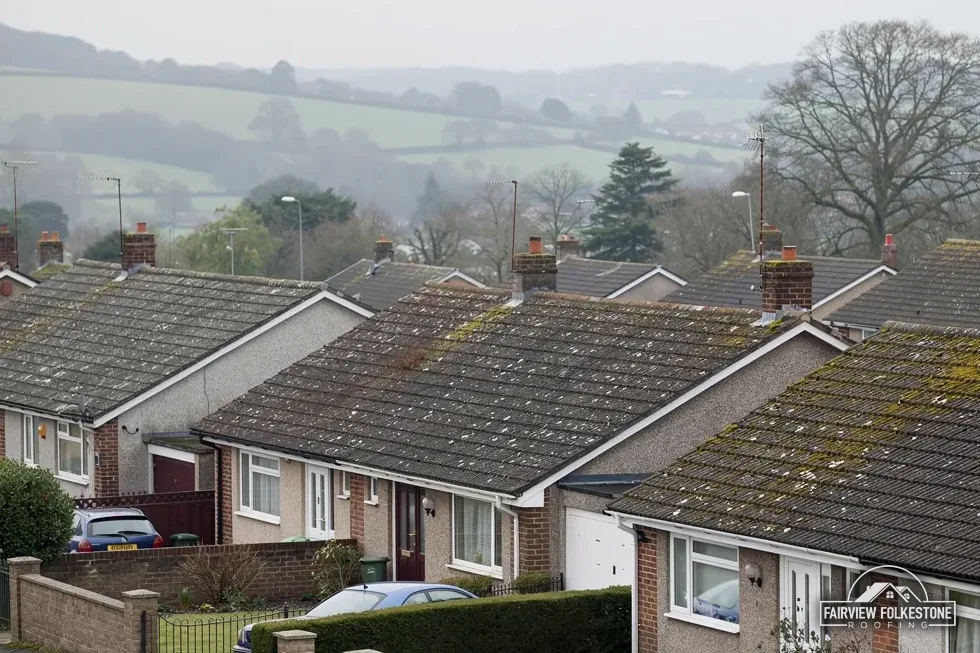
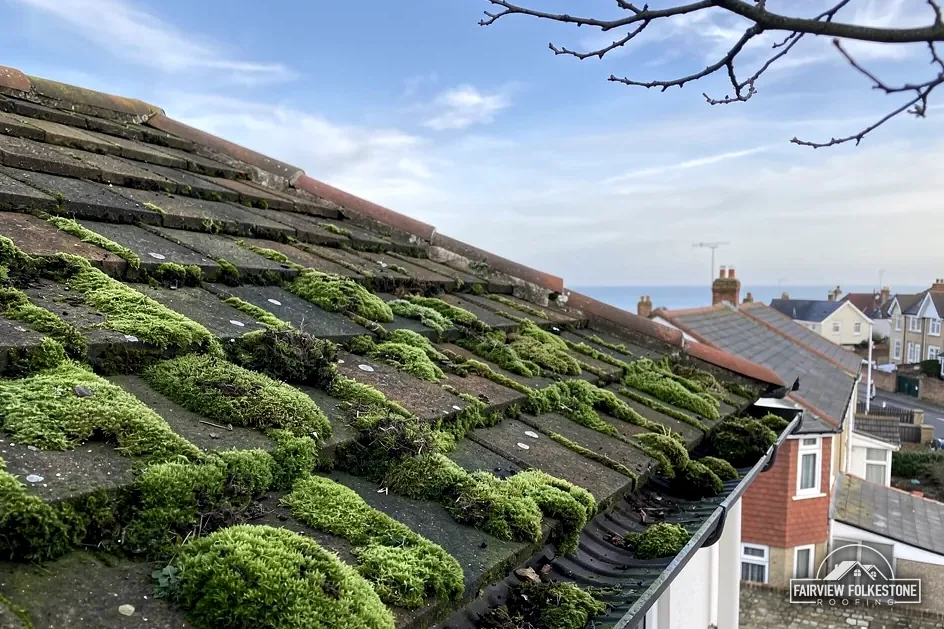
Most gutter trouble starts small: a handful of leaves over an outlet, a bit of moss washed down from the slope, a joint that has begun to drip. None of it looks urgent from the garden. Left alone, though, the water has nowhere to go but over the edge, down the wall and into the brickwork and the ground below.
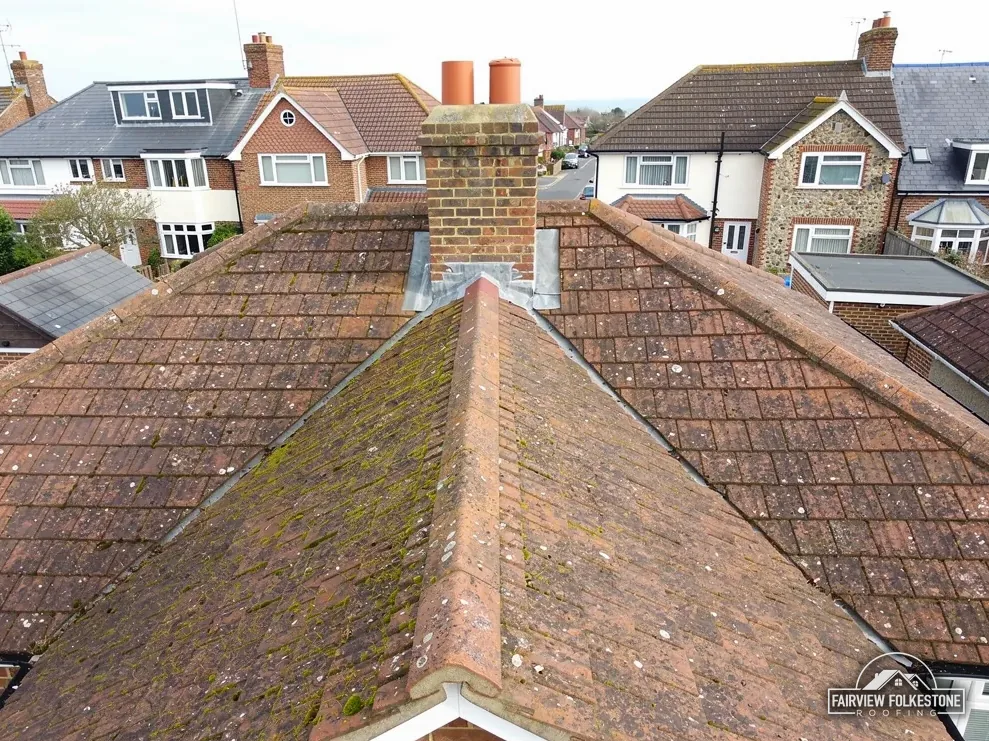
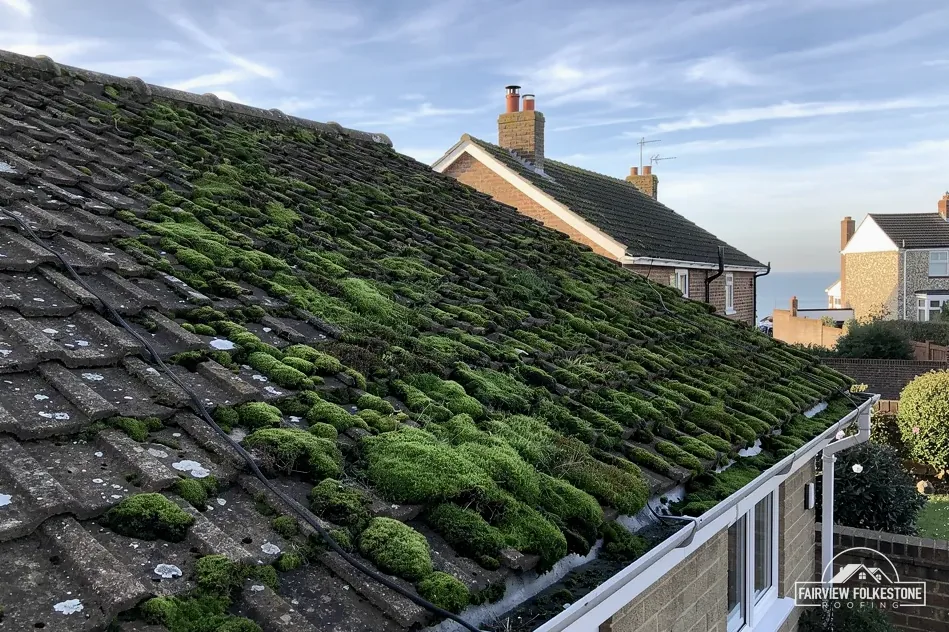
Gutters sit directly under the part of the roof that sheds the most debris, which is why gutter clearing belongs with a roof clean. Whatever comes off the tiles lands in the gutter, and a clean roof with a full gutter has only moved the problem down a few feet.
This page covers how to tell when a gutter needs attention, a safe way to clear one, what overflow marks tell you, how a gutter is meant to slope, the older materials that need care, and how to judge between a clear-out and a repair. For the wider job, see our roof cleaning and moss removal page.
01Key points
When to look, and what to look for
No set number of clear-outs a year suits every house, and a fixed schedule would only be a guess. A better habit is to look at the moments that predict trouble, because a blockage can follow something that has just happened: a storm, a leaf drop or a roof clean.
- After the leaves have come down from nearby trees.
- After a strong wind, which brings down twigs, nest material and loose moss.
- After a heavy downpour, when you can watch where the water goes.
- Whenever a roof has been cleaned, since the debris lands in the gutter.
- When the weather turns after a dry spell, because dust and dried moss wash down together.
The best test costs nothing. Stand outside during steady rain and look up. Water should run along the gutter and drop into the downpipe. If it spills over the front lip, pours out of a joint or runs down the wall behind the pipe, something is wrong.
Look at the gutter in dry weather too, from the ground or from a bedroom window. Plants growing out of the gutter, a sagging run, a gap where two lengths meet, or tile fragments sitting in the trough all tell you something. A gutter that droops between brackets is holding water or debris, and it will hold more next time.
Moss is the debris people forget, and the timing of its removal is the subject of our post on the best time to remove moss from a roof. If you can see the problem, you can describe it, which helps a roofer decide what to bring. Our page on why gutters overflow sorts the usual causes.
02Gutters
How to clear a gutter safely
The risk in gutter cleaning is the fall, not the dirt. A ladder resting against a plastic gutter can crack it or slide sideways, and leaning out to reach the next stretch is how people come off. If the gutter is above a single storey, or you cannot reach it from a stable stance on firm ground, leave it to someone with proper access.

For a low gutter that you can reach safely, the sequence is straightforward.
- Put the ladder on firm, level ground, with the top resting against the wall or a ladder stand-off, never against the gutter itself.
- Wear gloves, because gutters hold sharp tile fragments and old nest material.
- Scoop debris out by hand into a bucket, hooked on the ladder, rather than dropping it to the ground.
- Work towards the outlet, and clear the outlet last, so loose material does not wash into the downpipe.
- Flush the run with a hose and watch where the water goes, noting any joint that drips.
- Look along the run from the ladder before you come down, because a loose bracket or a hairline crack is easier to spot when the trough is empty.
Never wash debris down a downpipe, because it will lodge at the first bend. If a downpipe is blocked, our page on a blocked downpipe describes how it is cleared.
Stop at once if birds are using a nest, because the Wildlife and Countryside Act treats "intentionally" harming a nest as an offence while that nest is in use or being built. Leave that stretch alone until the nest is empty, and carry on elsewhere. A roofer will come back for it once the nest is empty, rather than clearing it out early to save a visit.
Gutter cleaning questions
How often should gutters be cleaned?
No fixed interval fits every house, because it depends on overhanging trees, the roof above and the weather. A sensible approach is to look after leaf fall, after strong winds and after any roof clean, and to clear the gutter when it overflows in steady rain.
03Side by side
What overflow marks are telling you
A blocked or leaking gutter leaves a record on the house. Learning to read it saves guessing.
| What you see | Likely cause | First step |
|---|---|---|
| Streaks below a joint | The seal has failed or the joint has dropped | Check the joint and the bracket either side |
| Wet patch under the outlet | Outlet clogged, or the pipe has pulled off the wall | Clear the outlet, then test the pipe |
| Green growth on the wall | Water has been running down it for a long time | Find where it escapes, then clean the wall |
| Stained fascia board | Water spilling over the lip, or back into the roofline | Clear the run and check the fall |
| Hanging plants or seedlings | Silt has built up and is holding water | Clear the trough down to the bare surface |
| Damp ground beside the wall | A leaking joint or broken gully is feeding the same spot | Look at the joint above it |
That last row matters more than it looks. Water that is allowed to run onto the same spot every storm soaks the wall beneath it, and it can stain internal plaster as well. A gutter fault is cheap to fix before the wall is wet and dearer afterwards.
Not every mark means a repair. A run that has clogged with leaves often just needs clearing. The test is whether the marks stop once the gutter flows freely. If they persist, a joint or bracket is at fault.
04In brief
Fall, joints and brackets: what a sound run looks like
Clearing a gutter only helps if the gutter is hung properly. A run has to slope gently toward the outlet, or water sits in the trough and silt builds up. Brett Martin, a guttering manufacturer, advises a fall of 1 mm for every 600 mm towards the outlet. The slope is barely visible to the eye, so one slipped bracket or a sagging stretch can undo it without anything looking wrong from the ground.
Can I clear gutters from a ladder myself?
You can if the gutter is low and you can place a ladder on firm ground with the top against the wall, not the gutter. Above a single storey, or where you cannot keep three points of contact, leave it to a roofer who has the access equipment.
A sound run has these features:
- Brackets that are firm and evenly spaced, with no sag between them.
- Joints that are dry in rain and not packed with old sealant.
- An outlet that sits at the low point, not above it.
- A downpipe fixed tight to the wall, with a clean connection at the top and the bottom.
Clearing will not cure a sagging run. If water pools in the middle after the gutter is clean, that stretch needs its brackets reset, and that is a roofer's job, not a bucket-and-trowel one.
Joints are the other weak point. Where a joint leaks, a roofer will check whether the gutter has dropped, whether the seal has aged or whether the section itself has cracked. For one joint that is all it takes, and our page on a leaking gutter joint sets out the options.
Where a run has dropped in several places, resetting the brackets along the whole length is often the answer, rather than patching each joint in turn.
05Gutters · Asbestos
Older gutters: cast iron and asbestos cement
Not every gutter on an older house is plastic. Cast iron is heavy and long-lived, but it rusts at joints and hidden backs. Treating it means scraping, priming and repainting, not just clearing. If a joint has failed or a section has cracked, the repair is different from a plastic gutter's.
Asbestos cement is the case that needs a warning. HSE puts asbestos cement products, roof sheeting and rainwater goods included, in its non-licensed category when they are carefully removed and not broken up. Its advice for a building built or refurbished before 2000 is to presume asbestos is present. So if your gutters or downpipes are grey, rigid and old, treat them with care.
Handling is non-licensed only where the material is carefully removed without breaking it up, which is a reason to leave it to someone who knows the rules for waste and disposal.
The same caution applies to the soffits and fascias behind the gutter. Boards of asbestos insulating board were used there, and HSE treats most work on that material as licensed.
If you are unsure what you have, the safe route is a roofer's survey, and our page on cast iron gutter repair covers the metal ones.
- Do not scrub, scrape, drill or pressure wash them.
- Do not break a section to get it out of the way.
- Ask a roofer to identify the material before any work starts.
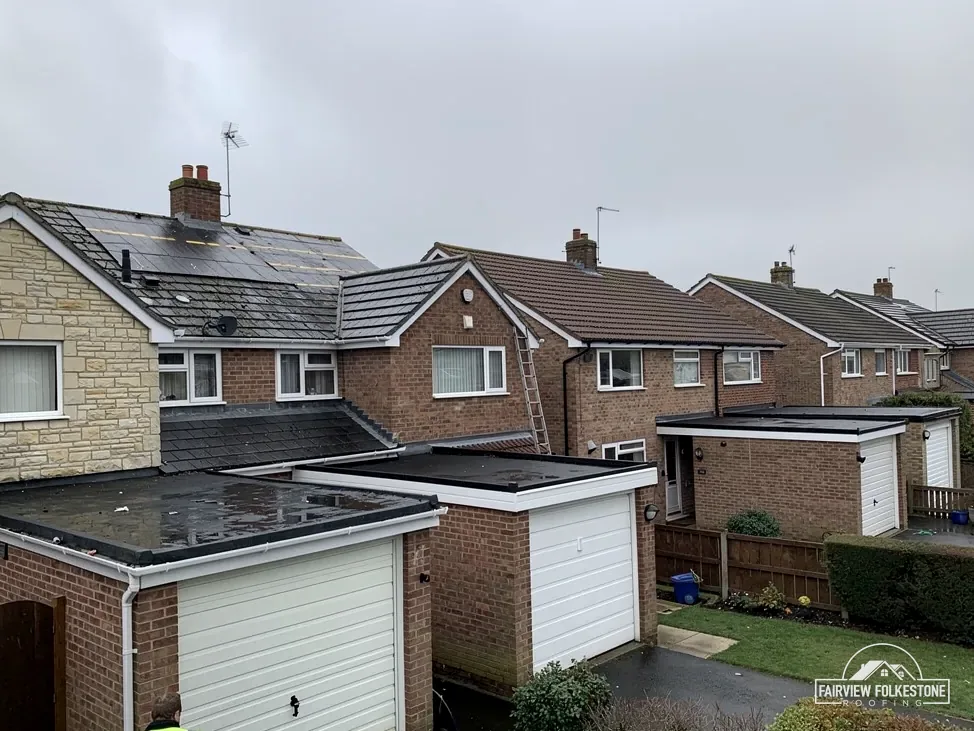
06Repairs
Clear it, repair it or replace it
Cleaning is the right answer when the gutter is sound and only clogged. It stops being enough when the fault is in the gutter itself. Here is how we weigh it.
On cost, Which? Trusted Traders puts a clear-out of every gutter on a house at £75 to £350 (November 2025, excluding VAT). For replacement, MyJobQuote's UK average is around £1,000 to £1,600. Those are different jobs, so do not set one beside the other.
For a replacement, uPVC is the material that comes to mind first. A retailer says that when installed correctly it can typically maintain performance for between 20 and 40 years, which is a typical range and not a promise. Our page on how long roof cleaning lasts gives the same kind of honest range for the roof above.
| Condition | Step |
|---|---|
| Sound but full of debris | Clear it |
| One dripping joint, run otherwise firm | Repair the joint |
| Sag in the run, brackets loose | Reset the brackets |
| Cracked, brittle or split in several places | Replace the run |
The price we give for any of this is a single written total once the roof and gutters have been looked at. A short run reached from a safe stance may be a quick visit; a tall one needs access equipment, and the quote covers it. Repair comes first wherever the gutter is sound, and if it is not, we explain why.
If gutter work lands at the same time as a roof clean, doing both from one set-up is simpler and saves a second visit. Whether the clean is worth doing at all on your roof is the question in is roof cleaning worth it.
Does a blocked gutter cause damp in the house?
It can, because an overflowing gutter lets water run down the wall instead of away from it, and a wet wall can show internally. Clear the gutter, then see whether the marks stop. If they carry on, a leaking joint or loose bracket is the likelier cause.

Tell us what's wrong with the roof.
You'll get one written total price.