
Renting and roof repairs
Renting in Folkestone and Hythe? Who fixes the roof, and where to get help
A leaking roof is a shock when you rent, because you cannot just book a roofer and pay. What you do in the first day shapes how smoothly the owner gets the repair arranged.
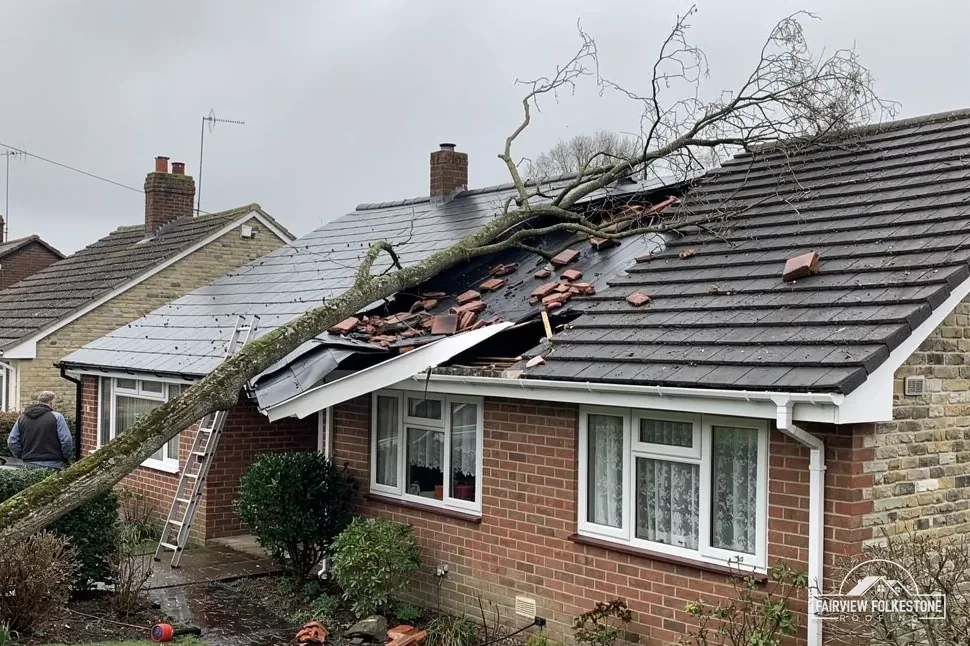
If you rent a home in Folkestone, Hythe, Sandgate, New Romney or one of the villages around them, a damp patch on the ceiling raises a different set of questions to the ones an owner asks. Whose roof is it? Who pays? Are you allowed to call someone out? And what if the landlord goes quiet?
We are roofers, not housing advisers, so this page does not try to settle anyone's legal rights. Those depend on your tenancy agreement and your landlord, and the places to check them are Citizens Advice and the housing team at Folkestone & Hythe District Council. What we can describe is how it looks from the roofer's side of the job: the reports that get a repair moving quickly, the evidence that helps, the mistakes that cost tenants time, and what a landlord or agent will want to know before they send anyone.
It covers working out who to tell first, how to write the report, what you can do inside the home while you wait, the difference between a private landlord, a council landlord and a shared roof, the question of grants, and what a roofer's visit looks like for the person who owns the building.
01Side by side
Work out who owns the roof first
The person who fixes a roof is the person who owns it, or who manages it for the owner. As a tenant you are not that person, so your first job is to identify them.
Your tenancy agreement should name the landlord and say how to report a repair. If you rent through an agent, the agent is the contact, but the repair is the owner's decision, so ask who has authority to approve it.
If you are unsure whether the leak comes from the roof at all, you do not need to settle that before you report it. A stain on a ceiling can come from the roof, a gutter, a pipe or condensation, and a roofer can tell them apart on a visit. Telling condensation from a roof leak is covered elsewhere on this site, so read it before you write your report and you can describe what you see.
Whatever the answer, report it on the day you spot it. Water damage spreads while people debate who is responsible, and a landlord who hears about a drip in the first week is in a better position than one who hears about a collapsed ceiling in the sixth.
| Your home | Tell first |
|---|---|
| Private tenancy, house | Your landlord or letting agent |
| Council home | The council's housing repairs team |
| Flat in a shared block | The managing agent or freeholder, and your landlord |
| Housing association home | The association's repairs line |
02In order
Reporting the fault so it cannot be ignored
A phone call is quick, but it leaves no record. Make the call if the leak is active, then follow it up in writing, by email or text, so there is a dated trail.
Renting and roof leaks: your questions
Can I get a roofer in myself if my landlord will not respond?
Be careful. The roof belongs to the owner, and work done without their written agreement may leave you with the bill and a dispute. Chase in writing first, keep the dates, and ask Citizens Advice or the council's housing team what your options are before you commission anything.
- Say where the water is coming in, which room and which floor, and when you first saw it.
- Say whether it followed rain, wind or a long wet spell, and whether it is dripping now or has stopped.
- Attach photographs of the stain, the drip and anything outside that you can see from the ground, such as a missing tile or a hanging gutter.
- Ask for a date on which someone will look at it, and ask who will be in touch.
- Keep a copy of everything you send, and a note of every call, with the name of the person and the time.
Be specific about access. Offer times when you can be in, and say whether pets or a tricky stair will affect the visit. A roofer cannot inspect a roof from inside a locked house, and a missed appointment can add a week.
If there is an immediate danger, such as water near wiring, a bulging ceiling or a hanging chimney pot, say so in the first line. Switch off the affected circuit at the fuse board and keep people out of the room beneath. Those steps are covered on our page about dealing with roof emergencies.
Keep your tone factual. A report that sets out the date, the place, the cause and the photographs is much harder to put aside than an angry message, and it will be the first thing an insurer or housing adviser asks to see.
03Key points
What you can safely do while you wait
You are entitled to limit the damage to your own belongings, and doing so also limits the repair the landlord has to pay for. None of it involves the roof.
- Put buckets and bowls under every drip, with a towel in the bottom so the water does not splash.
- Move furniture, bedding and electrical goods out of the wet area, and photograph the room first.
- Isolate the electrics near any wet ceiling light, and leave them isolated until an electrician has checked.
- Keep a list of anything damaged, with a photograph and a rough value, for a claim on your own contents insurance if you have it.
- Do not take down a wet ceiling or paint over a stain, because either removes the evidence.
Contents insurance, where you have it, and a landlord's buildings insurance cover different things, so ask whose policy applies to what. If your possessions are damaged, your own policy is the place to start, and photographs count for a lot if a claim is ever contested.
A word on what not to do. Do not climb onto the roof, and do not put a tarpaulin over it, whatever a neighbour suggests. A ladder on a wet day is the way a small leak becomes a hospital visit, and a roof you do not own is not yours to alter. Equally, do not hire a roofer yourself and send the landlord the bill unless the owner has agreed in writing, because the owner has not agreed to pay it.
If a make-safe is offered
Ask for the date and let them in. A temporary patch that keeps the rain out is worth accepting, even if the permanent repair follows later.
04The detail
Council homes, housing associations and shared roofs
Each type of landlord has its own route, and the report you write should go to the right one.
If you rent from the council, your landlord is the council, and repairs go through its housing service. Folkestone & Hythe District Council covers Folkestone, Hythe, Sandgate, New Romney, Lydd and Dymchurch. Outside that district, a council tenant reports the leak to whichever council or housing provider is named as landlord on the tenancy. Check the number on your tenancy paperwork rather than guessing, and ask for a repair reference so you can quote it on every call.
Is there a grant to help me fix a leaking roof?
Whether a grant exists depends on who owns the home and where it is, so ask the council's housing team in writing. Any scheme sits on a council or government website. Be wary of anyone who offers a free roof by phone or on the doorstep and asks you to sign or pay up front.
Housing associations and blocks of flats
A housing association has its own repairs line and its own reporting process. Use it, and keep the reference number.
A flat in a shared building is the trickiest case, because the roof belongs to the building rather than to your flat. The freeholder or managing agent arranges the repair, and your lease or tenancy sets out who contributes. A leak into your home from the roof above is reported to the managing agent, with a copy to your landlord if you rent.
Our page on shared roof repairs on a terrace explains why a repair that touches a neighbour's side of the roof needs agreement from both owners, and the same logic applies to a block.
If you are not sure who the managing agent is, check the service charge paperwork or the notice in the entrance hall. It is the same person who arranges the stair carpet and the communal lights.
05Costs
Help with the cost: grants and who pays
Whether a grant exists for a roof is a fair question from a tenant. For a rented home, the answer turns on the owner and the address, and it is a question for the council rather than for a roofer.
For the repair itself, three published figures show the range owners meet.
- MyJobQuote puts the average roof repair at around £650 in 2026.
- Which? Trusted Traders gave £75 to £400, excluding VAT, for one to six standard tiles replaced, in November 2025.
- MyJobQuote says emergency call-out costs typically range from £150 to £300.
Do not assume a grant is paid to a tenant. Any help with a repair to a rented home may be aimed at the person who owns it, or run through the council's own housing programme. Before you rely on one, ask the council's housing team in writing whether a scheme exists for the address, what it covers, and who may apply. A written answer is better than a rumour.
Be wary of cold callers and leaflets offering a free or subsidised roof. A genuine scheme is listed on a council or government website. If anyone asks for payment up front, or presses you to sign on the doorstep, close the door and ring the council.
None of these is a price for your roof, and none of them is yours to pay if the owner is responsible. Our page on roof repair cost explains what moves a figure up or down.
06Choosing a roofer
What a roofer's visit looks like for the owner
It helps to know what happens once the landlord, agent or managing agent does call a roofer, because you may be the one letting them in.
A visit from our roof repairs team covers the roof from outside, the loft if there is access, and the stain inside. They are working out whether the fault is a slipped tile, a failed flashing, a blocked gutter or something else, and whether a repair is sound or the covering needs more. We tell the owner which, and why, and when a repair covers it, that is what we advise.
The owner gets photographs and a plain description of what was found, to pass to an insurer or a managing agent. After the visit comes one written total price, and it pays to check that it spells out whether VAT and scaffold are in.
Will my contents insurance cover water damage from the roof?
Your policy wording decides, so read it or ring your insurer. Take photos of the damage before anything is moved. If a storm claim is contested, the Financial Ombudsman Service says it usually weighs surveyors' reports and photos, and a spell of rain alone can count as a storm.
Three points matter to a landlord who is deciding whether to repair or replace.
- The Planning Portal's test is that re-roofing normally needs no building regulations application when less than 25 per cent of the building envelope and less than 50 per cent of the roof is touched by the work.
- The same guide requires approval where the new covering is 15 per cent or more heavier, so the owner should ask the roofer about the weight of the covering.
- A listed building or a conservation area adds checks, and the council is the place to ask.
For you as the tenant, the useful outcome is simple: a date, a repair and a dry ceiling. If a visit goes ahead, ask what was found and what happens next, and note it in your record. Where a roofer has a view on the cause, request that it goes to the owner in writing.
When the permanent repair is done, check the ceiling in daylight after the next rain and tell your landlord if the stain grows.

Tell us what's wrong with the roof.
You'll get one written total price.