
Roof window makes
Velux, Keylite or Fakro: comparing roof window makes honestly
Velux, Keylite and Fakro all make roof windows, and a roofer can fit any of them. This post compares them on what a data sheet and a written quote can show, not on brand claims.
Search for a cheaper alternative to Velux and you will find plenty of opinions and very little to check. One maker's brochure praises its own glazing, another's praises its own flashing, and a forum thread claims a third is just as good for less. None of that helps you decide what goes in your roof.
So this post does something different. It does not rank the three makes, and it does not repeat any maker's claims about itself, because a claim in a brochure is not something we have tested here. What it gives you is a list of the things that can be checked: the figures the building rules set, what a maker's data sheet has to tell you, how to read a quote, and what published prices do and do not cover.
That list works whichever name is on the box. Roofers do fit Velux windows, and they fit other makes too, so the useful question is not which badge but whether the window suits the roof, the room and the budget, and whether the quote says what is in it. The sections below take those points in turn, and the last one gives you questions to ask.
01Key points
What the rules ask of any make
The Building Regulations do not care which maker's name is on the frame. They set the same figures for every roof window fitted into an existing home in England. AD L 2021 Table 4.2 gives a limit of 1.4 W/m²K, or Window Energy Rating Band B, for roof windows, and 2.2 W/m²K for rooflights. That applies until 24 March 2027, when AD L 2026 takes effect.
The same goes for escape. If a loft room needs an emergency escape window, AD B para 2.10 sets the size tests for whatever product is used:
- an openable area of at least 0.33 m²
- at least 450 mm high and 450 mm wide
- 1100 mm as the greatest height of the openable part's lower edge above the floor
So the first filter is simple. A window you are offered either meets those figures for your use or it does not, and the maker's data sheet should say. A make that cannot show you its figure for the glazing is not one to pick. If it does show one, check that it is the figure for the exact glazing option in the quote, since makers list several.
Planning does not depend on the make either. Class C of the permitted development rules covers an ordinary house, with limits on how far the unit can protrude from the slope. The same limits apply to every make, and flats and listed buildings follow different routes whichever window is chosen.
02Side by side
The data sheet checklist
A data sheet is the maker's own page of figures for a given window. It is the one document where the three makes can be compared on the same footing. When a fitter proposes a window, ask for the sheet for that exact size and glazing, and read these rows.
Print or save each sheet, and keep the copies with the quotes, since the figures you were shown on the day are the ones to hold the fitter to. Then write down the numbers from each make's sheet, side by side. Where two makes give the same figure for the same size, the difference is not in that row. Where they differ, the sheet tells you which way, and you can judge whether it matters in your room.
Treat any claim that is not on a sheet with some caution. Praise in a brochure describes a maker's marketing, not your roof. We repeat none of it here, and we would ask you not to buy on it.
| Check | Why it matters | Compare with |
|---|---|---|
| Glazing figure | Sets the heat loss through the glass | 1.4 W/m²K or Band B |
| Pitch range | The window must suit your slope | Your measured roof pitch |
| Flashing kit | Must match your covering | Your tile or slate type |
| Opening style and size | Decides the view, the reach and any escape use | The 0.33 m² and 450 mm tests |
Comparing roof window makes: your questions
Do roofers fit Keylite and Fakro windows as well as Velux?
Roofers fit roof windows by the maker's instructions, whichever make is chosen. What matters is that the kit matches your covering and the window suits your pitch. Ask for the data sheet for the exact model and for the kit to be named in the quote.
03Pitch · Flashings
Pitch, covering and the flashing kit
Two of the rows above decide whether a window can go in your roof at all, and they apply to every make.
The first is pitch. Each window is made for a range of roof pitches, and the data sheet gives it. Measure your pitch rather than guessing, since an old roof may not match what you assume. A window outside its range is the wrong window, whatever the badge.
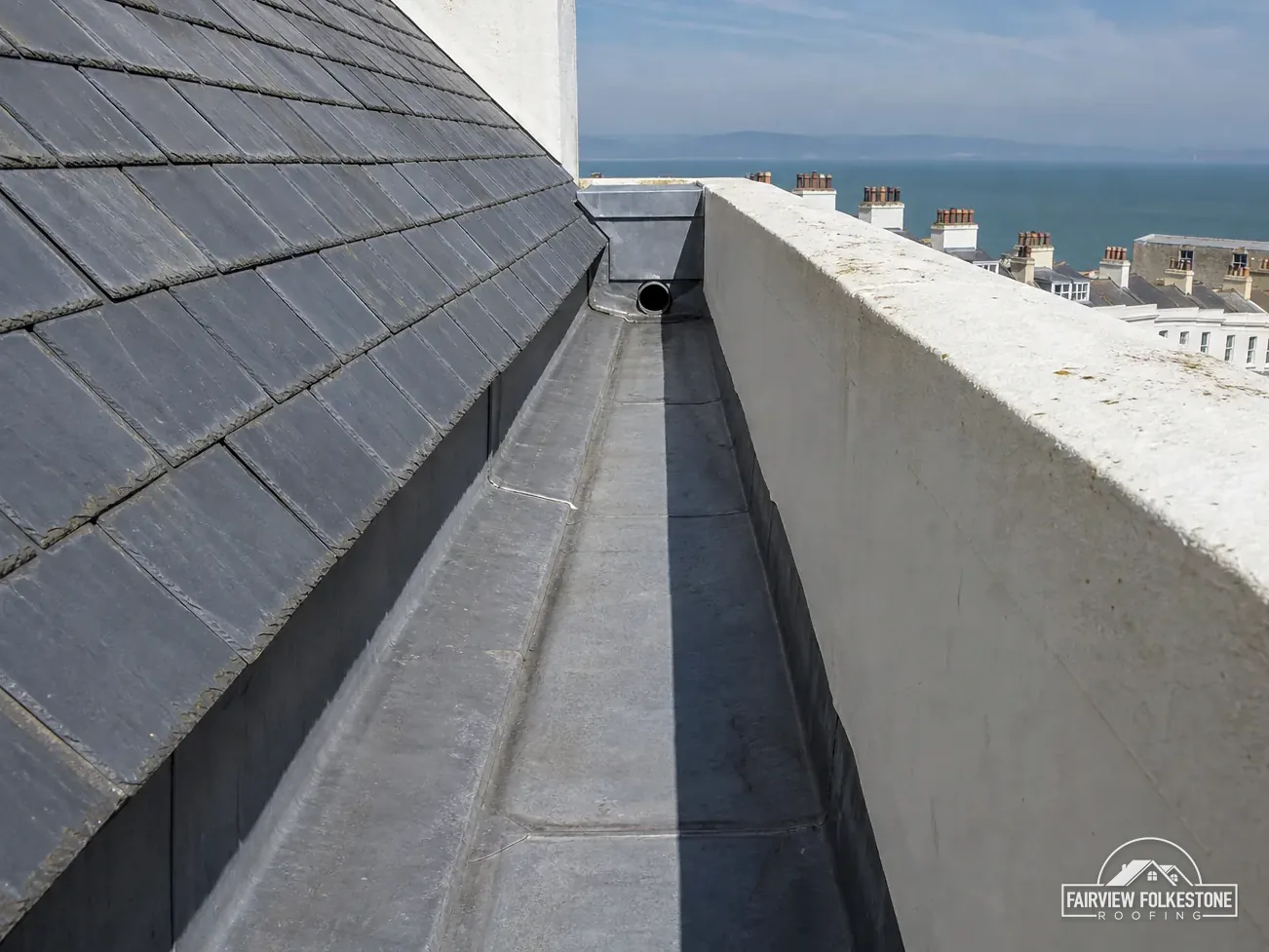
The second is the covering. The flashing kit that seals the frame into the slope is sold for a type of covering, so a window that is right for a flat slate roof needs a different kit from one for a deep-profile tile. Makers publish their kits by covering, and a quote should name the kit. Our post on roof window installation and sealing explains each of the parts that make the seal.
- Ask which kit is quoted and for which covering.
- Ask whether it comes from the same maker as the window.
- Ask whether the insulation collar and the lining are in the price or listed as extras.
If you have an existing window of one make and want to swap it, the size of the opening matters. A like-for-like replacement is easier when the new unit is made to fit the opening that is already there. MyJobQuote says a straightforward swap costs around £100 less than a new window, because the opening is already in place. Whether another maker's size matches your opening is a question for the survey, measured on site.
04In brief
Opening style, size and the room
Windows differ in how the sash moves and where the handle sits, and that changes how the room feels. Some tilt on a pivot near the middle, others hinge at the top or open outwards. Those details are on the sheet, and they affect what you can reach, how far you can lean out, and where a blind or curtain can hang.
Is there a cheaper alternative to Velux?
Nothing published compares prices between makes, so we cannot say. The published figures name Velux as their example. The fair way to test it is to ask for the same size and glazing in more than one make, with the same parts listed, and compare the written totals.
The size is the other half. A small window in a landing may be fine; a loft bedroom that is meant to have an escape window has to meet the AD B tests above, and a window that opens only a little may fail them. Read the opening dimensions rather than the overall frame size, because the openable area is smaller than the frame.
Ask the fitter to hold up or mark out the size against the opening in the room, not only on paper. A window that looks generous in a brochure can feel small once the rafters and the lining take their share.
- Check the clear opening against 0.33 m², 450 mm by 450 mm and the 1100 mm height.
- Check you can reach the handle from where you would stand.
- Check the blind or curtain fitting, since it adds to the cost.
- Check the colour and finish of the frame against the room.
A larger or taller window gives more daylight, but it also means a bigger opening in the roof and more structural work. A bigger hole means more rafters to cut and trim, so the price goes up with the size as well as the make.
Where a house is in a conservation area or is listed, or the room is in a flat, the planning position can change what is allowed, so the council is asked before the order is placed.
05Price
Price: what is published and what is not
This is where "a cheaper alternative" claims fall apart. The published cost data is thin and is not split by make. Among its repair rates, Checkatrade shows rooflight replacement (a Velux, say) from £1,000: a starting point, not an average.
Both sources name Velux as their example. Neither gives an average for Keylite or Fakro, and nothing published sets the three side by side, so we will not say one is cheaper. If a fitter or a website says it is, ask for the figure and its date.
| Source | Figure | What it is |
|---|---|---|
| MyJobQuote | £1,100 | Average for a standard mid-range Velux |
| MyJobQuote | Around £100 less | A straightforward swap into an existing opening |
What the published numbers show is a starting point for a Velux-type window, before any structural work or scaffold. What moves a price in practice is the size, the glazing, the kit, the lining and the blind, the height of the roof, and how much of the structure has to change. Two quotes for two makes can only be compared if they are for the same size, the same glazing and the same list of parts.
The way to test the market is simple: ask for the same window, same size and glazing, in more than one make, and compare the written totals. Ours is a single price after a survey, with scaffold in it where needed. Our page on Velux window installation cost goes into the drivers.
06In order
Choosing between them: a short list of questions
With the rules, the data sheet and the price in view, the choice can be made on facts. Put these questions to anyone quoting.
A fitter who can answer all six has done the survey. One who cannot has quoted a badge.
Keep the sheets and the written quotes together, so the answers can be set side by side. If the answers are the same across the makes, the choice is yours on look, handle position and the price quoted. If they differ, you now know which way. Whichever you choose, fitting it into the slope is the part that keeps the rain out, so the quote should be judged on how the window is sealed in as much as on the window itself.
Where a window you own is letting water in, the make is not the first place to look. Our answer on why a Velux window leaks covers where to start. For the wider service, see roof windows and skylights.
- Which make and model is this, and can I see its data sheet for this size and glazing?
- What is the glazing figure, and does it meet 1.4 W/m²K or Band B?
- Is my roof pitch inside the pitch range on the sheet?
- Which flashing kit is quoted, and is it made for my roof covering?
- Are the collar and the lining in the price?
- If this window is meant for escape, does its opening meet 0.33 m² and the 450 mm and 1100 mm tests?
Can I swap my old roof window for a different make?
Sometimes, if the new unit's size and pitch range suit the opening and the right flashing kit exists for your covering. A like-for-like swap into an existing opening is the simplest job. Only a survey, with the opening measured, can confirm whether another maker's size fits.

Tell us what's wrong with the roof.
You'll get one written total price.