
House wall junction
How should a conservatory roof meet the house wall?
At the house wall, rain arrives from two directions at once. This explains the flashing that deals with it, the lead codes used and the signs it has failed.
The short answer
With a lead flashing set into the house wall and dressed down over the roof covering, and soakers where the covering runs up a slope. Rain running down the wall lands on that line, so the join has to be a formed lead part tucked into the brickwork, not a bead of sealant on the surface. Royston Lead's brochure lists Codes 4 to 6 for flashings, and MyJobQuote says correctly installed lead flashing can last for over 80 years. We check the wall behind it as well.
4 min read · Part of Conservatory roofs
Why this line takes the most punishment
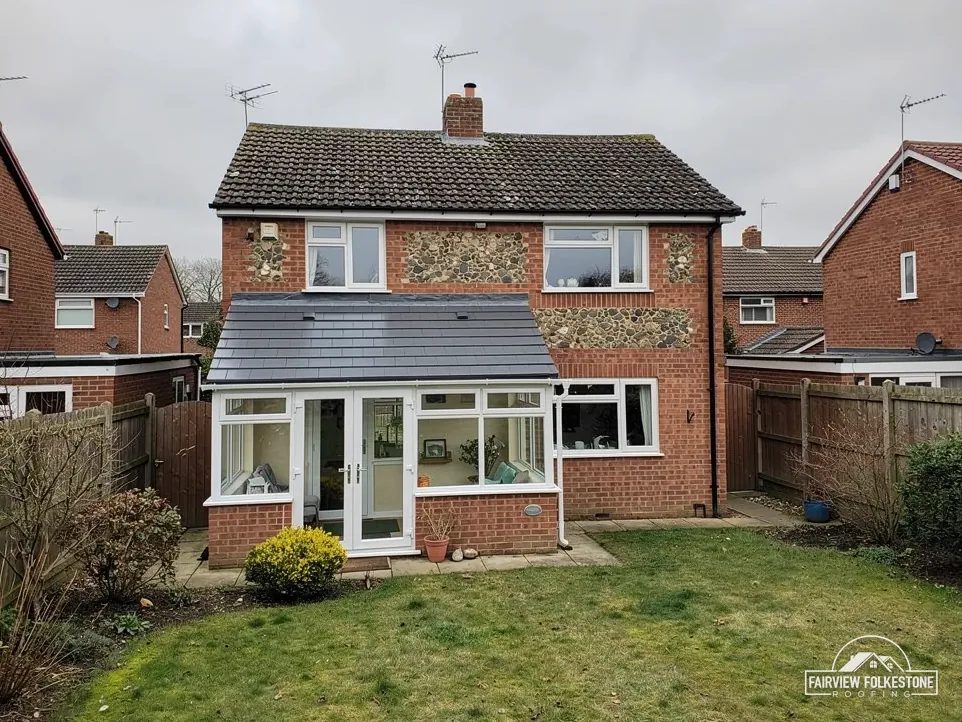
A conservatory leans against the house, so the house wall stands above the roof along one whole side. Every drop of rain that hits that wall runs down it and arrives at the junction, in addition to the rain that falls on the roof itself. The join has to cope with both, at the same point, for as long as the roof lasts.
It also has to cope with movement. A conservatory sits on its own base beside the house, so the two can shift by small amounts with the seasons or with settlement, and a rigid seal at the junction can part where a formed metal flashing will flex. This is why the abutment, the trade word for a roof butting against a taller wall, is a detail built from metal and not simply filled with mortar or mastic.
A glazed roof follows the same principle with different parts. On a solid tiled roof the metal used is lead, and the next section explains how it is built up, piece by piece, from the wall downwards.
How the lead flashing is built
A lead flashing does two jobs: it goes into the wall at the top and lies over the roof covering at the bottom, so water coming down the wall is carried out over the tiles. Where the roof slopes up against a wall, the flashing is stepped to follow the brick courses, and soakers, which are small pieces of lead laid between the tiles, carry the water out at each step.
The pieces of the junction, from the top down:
- the upper edge, turned into a cut in the brickwork and pointed
- the body of the flashing, dressed down flat over the covering
- the steps, one for each brick course along a sloping side
- the soakers beneath, interleaved with the tiles
| Part | Codes in the Royston brochure |
|---|---|
| Soakers | Code 3 and Code 4 |
| Flashings | Code 4, Code 5 and Code 6 |
Within those ranges, the code for each detail on your roof is set in the written specification, and it is chosen once the wall and the covering have been seen, never assumed from a list.
How long a lead flashing lasts
MyJobQuote says lead flashing that is correctly installed can last for over 80 years, and that higher lead codes can reach over 100 years with minimal maintenance. The hedge matters. It is a published figure for correct installation, not a promise, and it describes the lead itself. The life of a given junction also depends on the wall behind it.
A wall that is damp, or pointing that has crumbled around the chase (the cut the lead is set into), can let water behind the lead however good the metal is. So the brickwork and the mortar are examined before the flashing is judged, because a leak that appears at the wall is not always the lead's fault.
When lead fails early there is a visible reason to look for: a wrong code for the detail, laps that are too short, a step that has lifted or a chase that was never pointed properly. Each of those can be put right on a survey, and each is easier to deal with when the roof is being renewed than when it is working.
Signs the junction has failed
You can check some of the signs from the garden and the rest from inside the room. Look for these:
- a dark stain on the plaster or lining along the line of the wall
- lead that has lifted away from the brickwork, or has been bridged by a bead of sealant
- pointing along the top edge of the lead that is cracked or missing
- a step in the flashing that has slipped or been dented
Where lead has lifted along one edge, or the pointing has a gap, a repair is the fair answer, and that is what you will be told first, with the reason. A flashing that has split, or has been patched repeatedly, or was the wrong thickness from the start is better renewed along its whole length. Our guide to conservatory roof leaks places the wall junction among the other places a leak can start, and the answer on the conservatory box gutter covers the edge on the other side. The conservatory roofs page sets out the whole job, and the quote that follows a survey is one written total.
More questions
Can sealant do the job of a lead flashing at the wall?
A bead of sealant can close a small gap for a while, but it is a stopgap, not a flashing, and it leaves the cause in place. The junction needs a formed lead part tucked into the wall so that water is carried out over the roof covering.
Can the flashing be renewed without stripping the roof?
Sometimes. If the tiles are sound and the timber beneath is dry, the flashing can be renewed along the wall without lifting the whole roof. Where the junction has leaked for a long time, the edge has to be opened up to find what the water has reached.
More on conservatory roofs
All guides and posts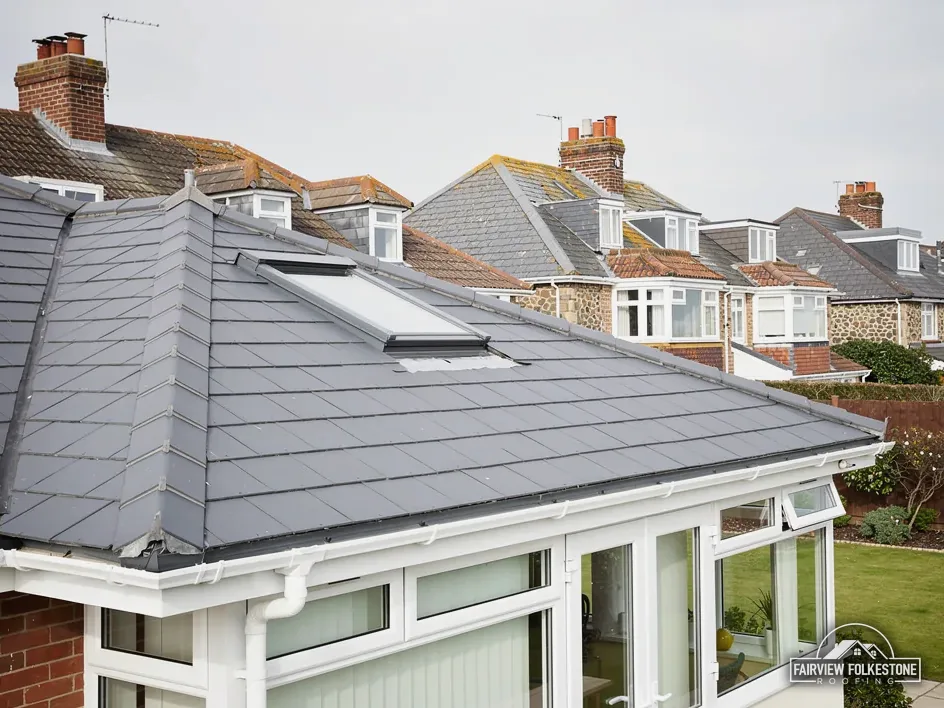

Tell us what's wrong with the roof.
You'll get one written total price.