
Conservation areas
Can you change a conservatory roof in a conservation area?
A conservation area does not bar a new conservatory roof, but it adds checks. This explains what changes, what each council publishes and what we ask before choosing a covering.
The short answer
Yes, in normal cases. Ordinary re-roofing stays permitted development inside a conservation area, although dormers do not, and an Article 4 direction can take further rights away. On a listed home, any work touching the building's character needs listed building consent as well. Building regulations are a separate duty and the designation never lifts it. So the order is simple: find out whether your address is covered, ask the council how the rules read for a conservatory roof, then choose the covering.
4 min read · Part of Conservatory roofs
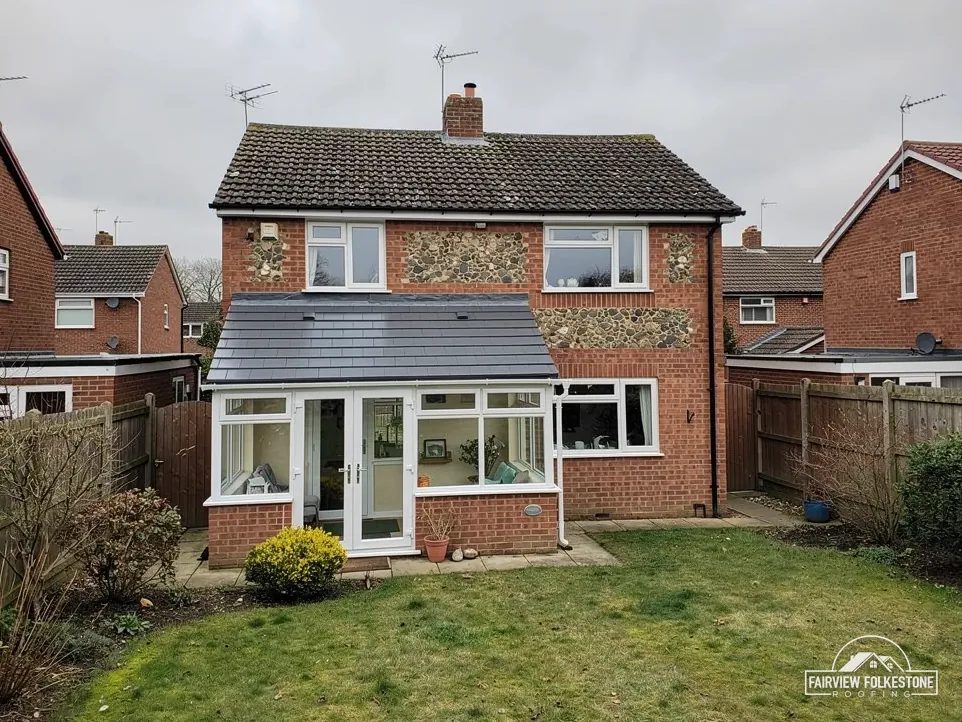
What a conservation area changes
A conservation area is land the council has designated for its character, and it counts as article 2(3) land in the permitted development rules. That designation removes the right to build roof dormers without permission. It does not, by itself, remove Class C, the class covering any other alteration to the roof of a dwellinghouse, because Class C has no article 2(3) exclusion.
Two further things sit on top of that. First, the government's guidance describes an Article 4 direction as a power for the Secretary of State or the council to withdraw named rights from the permitted development list across a defined area. So a direction can remove a right that the national rules would otherwise leave you with. Second, designation shapes how the council judges design. Folkestone & Hythe District Council says that in a conservation area, new developments must be appropriately designed, with traditional natural materials given as one example of how.
That wording is the council's own, and it is written about new developments. We treat it as a reason to ask before we order a covering, never as a rule we can apply ourselves from the roadside.
Checking your own address
Each council in our area publishes something different, so the check is made address by address. The table shows what each one says and what we do next, starting from the fact that there is no single list covering the whole radius.
| Council | What it publishes | Next step |
|---|---|---|
| Folkestone & Hythe | A map to search; no total given | Search the map, then ask about Article 4 |
| Dover | 57 conservation areas and a list of Article 4 directions | Read the list, then ask what each covers |
| Canterbury | 97 conservation areas and a map of Article 4 areas | Look for your road on the map |
| Ashford | 43 conservation areas on an interactive map | Search the map, then ask about Article 4 |
| Rye and Camber | Details come from Rother District Council | Ask Rother District Council directly |
Where a direction exists, the council's own wording decides what it covers. We ask the planning team and never guess from a neighbour's experience, because two directions in the same town can remove different rights.
Listed homes and their conservatories
A listed house keeps its permitted development rights where roofs are concerned, but the work also needs listed building consent where it affects the building as a place of special architectural or historic interest. Canterbury City Council states the point in its own words: you will need listed building consent for any changes which affect the building's character. The test is the building's character, not the size of the job, so a small change can need consent where a bigger one on an unlisted house does not.
A conservatory joined to a listed house is the kind of case where we stop and ask before pricing. The council's planning team or conservation officer can say whether a new roof on the conservatory would be seen as touching the listed building. If it would, consent has to be in place before any work starts, and the covering we are asked to price may need to change to suit.
Flats are different again. They have no permitted development rights at all, so for a conservatory built onto a flat or maisonette, planning permission is the starting point and not the exception.
What we do on the survey
The planning check is part of the survey, not an afterthought, because it can decide which covering you are able to use, and because a question asked first is easier to answer than a problem put right afterwards. The steps are the same on every job:
- we look up the address on the council's own map, or ask the council where it publishes none
- we put a question in writing to the planning team about a conservatory roof at that address
- we file the council's answer with the survey notes, so the covering you choose rests on it
- we ask building control separately, since building regulations apply to a new conservatory roof whatever the area
You are welcome to make the first enquiry yourself. Our guide to planning permission for roof work covers the full set of rules, and the page on planning permission for a conservatory roof deals with the wider question. The conservatory roofs page shows where this check sits in the whole job, and the written quote follows once the council's answers are in, with one total for everything.
More questions
Can a conservation area stop me choosing tiles for the roof?
It can shape the choice. Ordinary re-roofing stays permitted development there, but an Article 4 direction can withdraw rights, and Folkestone & Hythe District Council says new developments in a conservation area must be appropriately designed, including traditional natural materials. Ask the council before ordering any covering.
Do building regulations still apply in a conservation area?
Yes. Planning and building regulations are separate systems, and a conservation area is a planning matter. The Planning Portal says a new conservatory roof has to meet building regulations on structure, energy and ventilation, wherever the house stands, so building control is asked as well as the planning team.
More on conservatory roofs
All guides and posts

Tell us what's wrong with the roof.
You'll get one written total price.