
Planning permission
Do you need planning permission to replace a conservatory roof?
The Planning Portal treats most roof alterations as permitted development, but a solid roof is deeper than glazing and some addresses carry extra rules. Here is how we check.
The short answer
Often not, but confirm it first: the Planning Portal says permission may be required if the change significantly alters the roof's structure or appearance. Class C limits how far a new roof sticks out and how high it rises, though the council may test a conservatory under Class A, the extension class, instead. A solid roof is deeper than glazing, so we measure it against those limits. A listed home, a flat or an Article 4 direction can change the answer, and building control is a separate question.
5 min read · Part of Conservatory roofs
The permitted development test
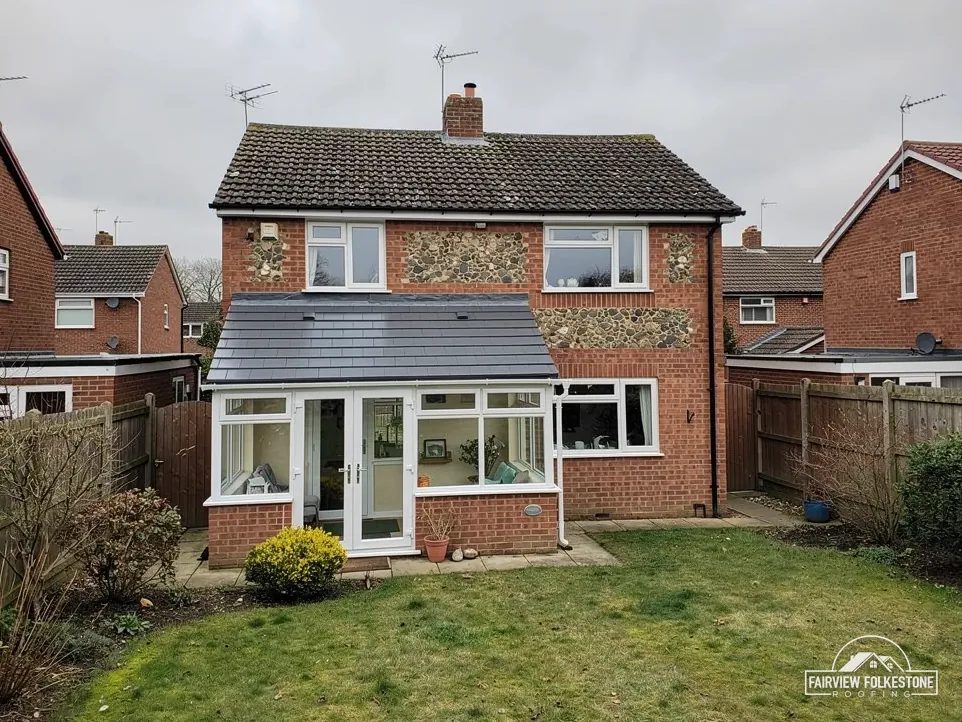
Planning permission is needed when a job falls outside permitted development, the national grant of permission for common work. Class C of Schedule 2, Part 1 of the General Permitted Development Order 2015 deals with roof alterations to a dwellinghouse, and it is the class that takes in re-roofing. We use it as the first test for a conservatory roof, and ask the council to confirm how it reads for yours. In England it carries no condition that the new covering must resemble the old one.
It does set limits, and three of them bear on a conservatory:
- the alteration may not stand proud of the original roof slope by more than 0.15 metres
- its highest part may not rise above the highest part of the original roof
- it may not include a chimney, flue or soil pipe, or solar panels
Our planning permission guide for roof work sets out every Class C limit in full. For a conservatory the first two are the ones to measure, because tiles, battens and insulation make the roof deeper than the glazing bars and panes it replaces. We take those measurements on the survey and record them on the survey sheet before any price is worked out.
Where the answer changes
The permitted development test is only the starting point, and some addresses fall outside it. This table shows the situations that move the planning position for a roof change, and what each one does to it. Rye, Camber and the Kent towns are all covered, because the national rules are the same and the local layers differ.
| Situation | What changes |
|---|---|
| Listed house | Class C still applies, with listed building consent added for anything touching its character |
| Conservation area | Class C stays and dormers go; Article 4 can remove more |
| Flat or maisonette | No permitted development rights, so planning permission |
| Article 4 direction | Named rights withdrawn; the text of the direction decides |
Canterbury City Council says flats and maisonettes do not have permitted development rights, so a change to the outside appearance of a flat needs planning permission. Where a house stands in a conservation area, our answer on changing a conservatory roof in a conservation area shows where to look it up and what we ask your council.
Building regulations are a separate test
A job can pass the planning test and still need building regulations approval, because the two systems ask different questions. The Planning Portal's conservatory guidance says a solid roof must comply with building regulations, naming structure, energy and ventilation as the reasons. A ground-level conservatory of up to 30 m² has its own energy exemption, but only while a wall, door or window still separates it from the house and the home's heating is not extended into it.
Dover District Council words its building control line in its own way: some conservatories and porches are exempt, but they must be divided from the house by doors and can't be heated. That is Dover's wording, for Dover district addresses only.
Approval comes from the local council's building control team or from a registered building control approver. Folkestone & Hythe Building Control is on 01303 853538, and the East Sussex Building Control Partnership, which serves Rye and Camber, is on 01892 602005. We ask before work begins, so the approval route is known when you sign, and our page on solid conservatory roofs and building regulations goes into the detail.
How we check before we quote
The check takes a short time on the survey and prevents a costly mistake later. On every conservatory roof we work through the same list:
- find out whether the house is listed, in a conservation area or under an Article 4 direction
- confirm that the property is a house and not a flat or a maisonette
- measure the proposed roof against the projection and height limits
- ask the council's planning team to confirm the position in writing, wherever there is doubt
- put the new roof to building control as a separate question
If the answer to any of these is unclear, we tell you what has been asked and wait for the reply before the work is priced, because a roof built to the wrong rule is expensive to undo, and nobody wants to take down a roof they have just paid for. Photographs of the existing roof edge, the eaves and the junction with the house help us with the measuring. The conservatory roofs page shows how this check fits into the survey, and the price that follows is written as one total after the council's answers are in.
More questions
Does a tiled roof change the planning position compared with glass?
It can, because a solid roof is deeper than glazing, and Class C limits how far the new roof may project beyond the original slope and how high it may rise. We measure the proposed build-up at the survey and check it against both limits before pricing. Where the house is listed, listed building consent is a separate step.
Who do I ask about planning for a conservatory roof?
The planning team of the district council for your address: Folkestone & Hythe, Dover, Canterbury or Ashford among the Kent towns we cover, and Rother District Council for Rye and Camber. We can ask for you, or you can ask yourself. Either way, a written answer is worth having. We keep the reply with the job.
More on conservatory roofs
All guides and posts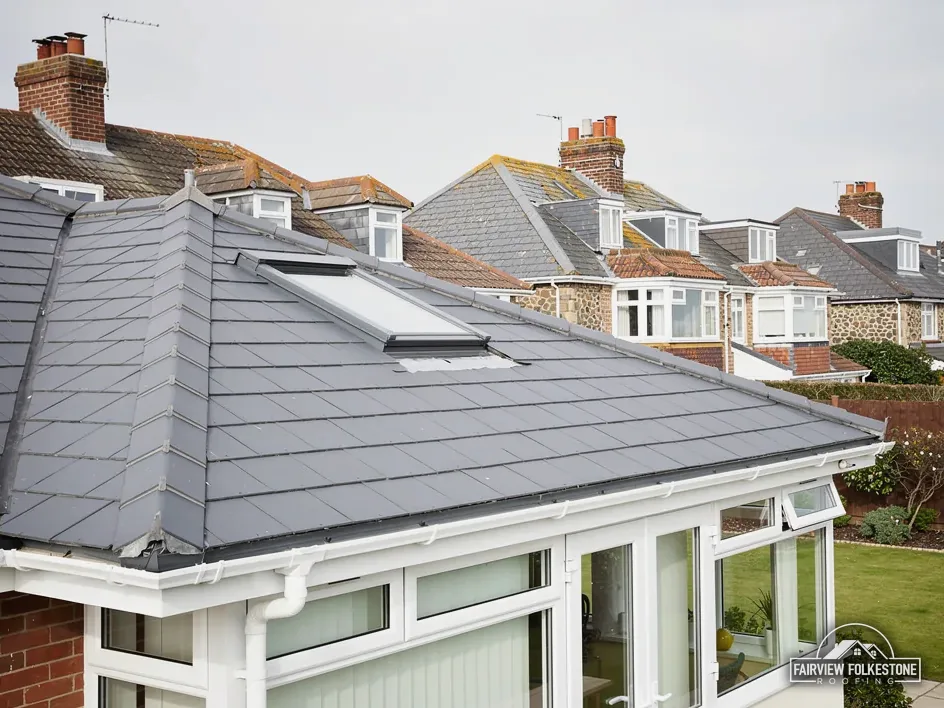

Tell us what's wrong with the roof.
You'll get one written total price.