
Conservatory roof guide
Why conservatory roofs leak, and what fixes them
A leaking conservatory roof is one failed link in a chain of bars, gaskets, gutters and lead. Finding which link let go decides between a repair and a new roof.
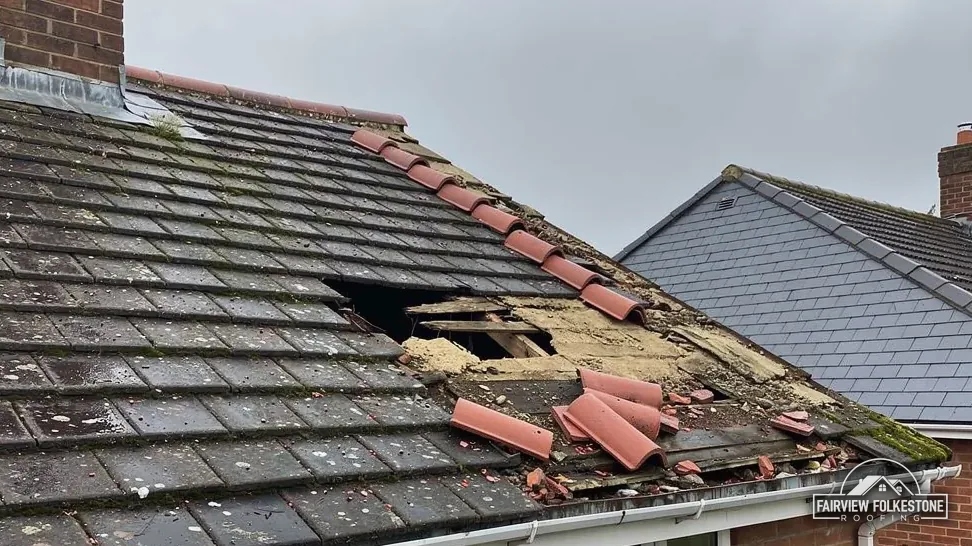
A conservatory roof sheds rain through a chain of small parts: the sheets or panes, the bars that hold them, the gutters that collect the run-off and the join where the roof meets the house. A leak is one link in that chain letting go. The drip on the sill often appears some way from the cause, so it is easy to replace sheets for a fault in the lead, or to reline a gutter when a bar gasket has shrunk. Either mistake costs money and leaves the leak where it was.
This guide covers the three places we check on every leaking conservatory roof: the glazing bars, the box gutter and the abutment, which is the join at the house wall. It explains how each one fails, how the fault is traced, when a repair is enough and when the roof itself has reached the end, and what moves the price. Wet patches that are not rain at all are dealt with separately, in our guide to condensation under a conservatory roof.
01Leaks
Tracing a leak from the wet patch back
Water does not always drop where it enters. It runs along a bar, under a cap or down a wall before it falls, so the wet spot inside is a clue and not an answer. We read the room first, then go up and test.
Make notes on a wet day before anyone climbs a ladder. Which bar drips, which corner, and how long after the rain starts does the first drop fall? A drip a few minutes into a shower can mean a gap close to where it lands, while one that begins long after the rain has settled can mean water travelling along the roof from further away. Photos of the stains and a note of the wind direction help us a great deal, and you can send them by WhatsApp before we visit.
The test itself is slow and methodical. With someone watching from inside, we wet the roof in sections, starting low and working upwards, so that a drip is tied to the section that caused it. Starting high would soak everything below and prove nothing. A leak that only shows in driven rain may need a few passes, and we say if the cause cannot be pinned down in one visit.
| What you see | Look at | Likely verdict |
|---|---|---|
| Drips along one bar in rain | Gasket and cap on that bar | Repair |
| Wet strip along the house wall | Lead or wall seal | Repair |
| Overflow at the front edge | Eaves gutter and outlet | Repair |
| Stain below a valley between roofs | Box gutter lining | Repair or replace |
| Crazed sheets and many drips | The sheets themselves | Replace |
02Key points
Glazing bars, gaskets and caps
Each sheet or pane sits between two bars, with a rubber gasket under its edge and a cap screwed over the top that squeezes the gasket tight. Rain is shed by that squeeze, not by sealant. When the gasket shrinks, splits or creeps out of its channel, or a cap screw works loose, the seal opens and water follows the bar down. The caps and end pieces at the eaves and the ridge are small parts, and a leak along a bar can start at either of them.
HomeBuilding gives polycarbonate a typical lifespan of 10 years. A roof near that age has sheets and gaskets ageing together, so a new gasket in a brittle sheet can leak again within a season. The sums are different for a young roof with one failed gasket.
Conservatory leak questions
Can sealant stop a leaking conservatory roof for good?
Not for long. Sealant hardens and shrinks, and the gap it covered opens again, often with the real fault hidden underneath. A leak is cured by the part that sheds water, whether that is a gasket, a cap or lead, so a tube of sealant is a stopgap while the repair is arranged.
- One bar leaking, sheets sound: refit the gasket, replace the cap and check every screw on that bar.
- Many bars leaking along their length: the gaskets have aged together, which points to a new roof.
- A bar that has bowed or corroded: the roof can no longer hold its seal, and it needs replacing.
- A glass unit with a failed edge seal: the unit is swapped, but several in one roof make a new roof the fairer spend.
The ridge and eaves ends deserve a close look. Where a bar meets the ridge beam, the cap, the gasket and a flashing piece all have to lap correctly, and a gap in any one lets rain run down inside the bar. At the eaves, the end cap and the gutter line have to agree, or the water that leaves the bar misses the gutter and runs down the frame.
A bead of sealant along a bar is a temporary measure. It hardens, shrinks and parts, and it hides the cause from the next person who looks.
03Gutters
Box gutters and eaves gutters
Where a conservatory roof meets a second roof, a parapet or the house, rain from both sides is gathered by a flat-bottomed channel called a box gutter. It carries a whole slope of water to one outlet, so a fault in it shows up fast. Leaves and moss dam the outlet, a joint opens, or the lining splits where it was folded. If the channel sits with too little fall, water stands against the joints.
Fall is a number we can check. BS 6229:2025 sets a minimum finished fall of 1:80 for a membrane-lined internal gutter, and IKO notes that a design fall of 1:40 is what the code of practice calls for if 1:80 is to be reached on site, since finished work never matches the drawing exactly. A lining in lead is a different material. Royston Lead lists Code 5 and above for box gutters, and Code 4 for flashings, not gutters.
The eaves gutter along the front matters as much. The gutter maker Brett Martin recommends 1 mm of fall for every 600 mm of run, heading for the outlet, so a gutter that has dropped on one bracket will hold water at the low end and overflow at the high end, soaking the frame below.
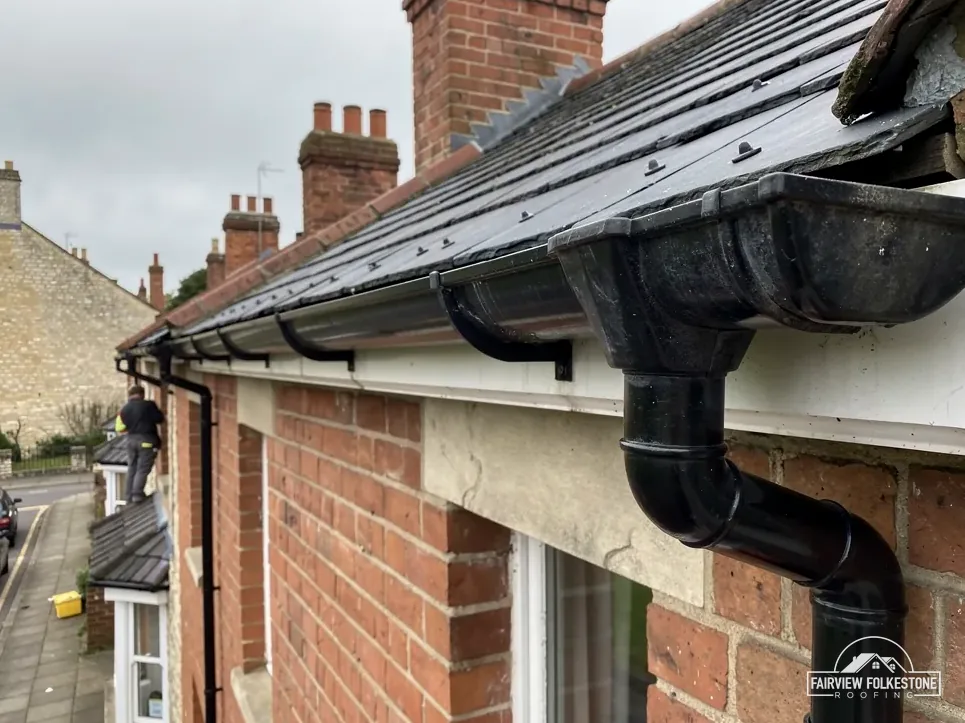
- Choked outlet: clear it, then water test the length.
- Opened joint: reline that length.
- Split lining or soft boards beneath: strip and renew the lining.
04The detail
The join at the house wall
On a glazed conservatory the join to the house is often a plastic wall plate with sealant along its top edge. Sealant ages, and rain running down the brickwork then slips behind it. A solid roof calls for lead instead. A groove is raked out of the brickwork a little above the tiles, the top edge of the flashing is wedged into it and pointed with mortar, and the lead is dressed down over the tile surface. On a rendered wall the groove has to reach sound brickwork behind the finish, and the render is repaired around the lead afterwards. Where the roof steps up a gable wall, the flashing follows it course by course, with soakers beneath, small L-shaped lead pieces that carry water out over the tile below.
Why does my conservatory leak only when the wind blows one way?
Rain driven sideways can get past a gasket that has shrunk a little, or round a flashing that has lifted, when the same rain falling straight down would run off. That points to a weak seal on the windward side, and a water test on that side is how we find it.
On lifespan, MyJobQuote says correctly installed lead flashing can last for over 80 years. Royston Lead lists Code 4 for flashings and keeps Code 3 for soakers only.
Two complications are worth knowing. If the damp comes through the brickwork above the roof line, new lead at the roof leaves the leak where it was, which is why the wall is checked before any lead is priced. And where the wall belongs to a neighbour, cutting into it for a flashing brings in the Party Wall etc. Act 1996. Section 2(2)(j) of the Act lets the building owner cut into the neighbouring owner's wall to put in a flashing, and the party structure notice is due at least two months beforehand (section 3). A neighbour's written consent allows the work to begin sooner.
Our answer on how a conservatory roof should meet the house wall covers each detail.
05Repairs
Repair, reseal or replace the roof
Where a repair is sound, it comes before any talk of replacing the roof. A single bar, one lifted flashing or a choked outlet is a short job, and there is no reason to price a roof for it. The roof itself is the answer when the faults are spread through it.
- Repair: one failed gasket or cap, one section of flashing, a blocked or dropped gutter, and a lining split that is confined to one length.
- Replace: sheets that are crazed or discoloured, bars that leak along most of their length, bars that have bowed, or a roof that has been patched more than once.
- Check first: a frame that has moved, a wall that is damp above the lead, and any roof where the leak has already stained the timber.
Whichever way it goes, you hear the reasoning. We show you the failed gasket, the split lining or the open joint, and say why it points to a repair or to a new roof. If the roof is sound and the fault is small, that is the end of it. If it is not, you can choose knowing exactly what is wrong.
If the answer is a new solid roof, the rules change. The Planning Portal's conservatory roof guidance says building regulations apply to the new roof, covering its structure, energy efficiency and ventilation, so building control is asked before work starts. Weight on the frame matters too: a new covering that adds 15 per cent or more to the weight needs approval under the Planning Portal's guidance, and a structural engineer or surveyor can check the frame first. Our guide on why conservatory box gutters leak goes deeper on the gutter side, and the conservatory roofs page sets out the full replacement.
06Price
What sets the price of a fix
A repair and a new roof are very different jobs, so third-party figures help only for scale. Checkatrade lists lead flashing repairs at £50 to £70 per metre in a table dated June 2026, and that excludes VAT and access equipment. They are a per-metre rate for repairs and not something to multiply into a total for your wall. For a whole replacement, MyJobQuote's 2026 figure for an average conservatory roof is £3,200 to £6,000.
The quote is one total price in writing once we have seen the roof.
On your own roof the cost turns on:
- how many bars, caps and gaskets have failed, and whether the sheets can stay
- the length and condition of the box gutter and its boards
- how much lead the wall needs, and whether the wall is rendered
- how the roof is reached, including scaffold on the footway
- whether a neighbour's wall means a party wall notice
A repair that starts small can change shape. If lifting a cap shows a bar corroded from inside, or lifting the lining shows soft boards, we pause, photograph it for you and put a revised total in writing before carrying on. Better that than finding it out on the invoice.
Access can add to the job. If the scaffolding has to stand over the pavement, the county's highway licence comes into it. Kent County Council's fee is £52 per week for 2026 to 2027, and for Rye and Camber, East Sussex Highways lists £127 for 28 days, though that fee is worth checking again. The licence is one we arrange with our scaffolder, and the cost sits inside the quote.
How long does lead last at a conservatory wall?
MyJobQuote says correctly installed lead flashing can last for over 80 years, which is far longer than a bead of sealant. The word correctly matters: lead needs to be chased into the wall and dressed down properly, and lead on a roof that is itself failing will not save it.
More on conservatory roofs
All guides and posts

Tell us what's wrong with the roof.
You'll get one written total price.