
Warm roof value
Is a warm roof on a conservatory worth it?
A warm roof makes a conservatory behave like a room of the house, but not every one needs it. Here are the rules, the cost range and a test.
The short answer
Yes, where the room is used through the year and the glazed roof is losing heat or running with condensation. A warm roof builds the insulation into the roof itself, so the room stays warmer in winter, and the Planning Portal cites thermal efficiency as why owners choose a solid tiled roof over polycarbonate. It is harder to justify for a room used for a few summer weeks, where shading and vents may do the job for far less.
5 min read · Part of Conservatory roofs
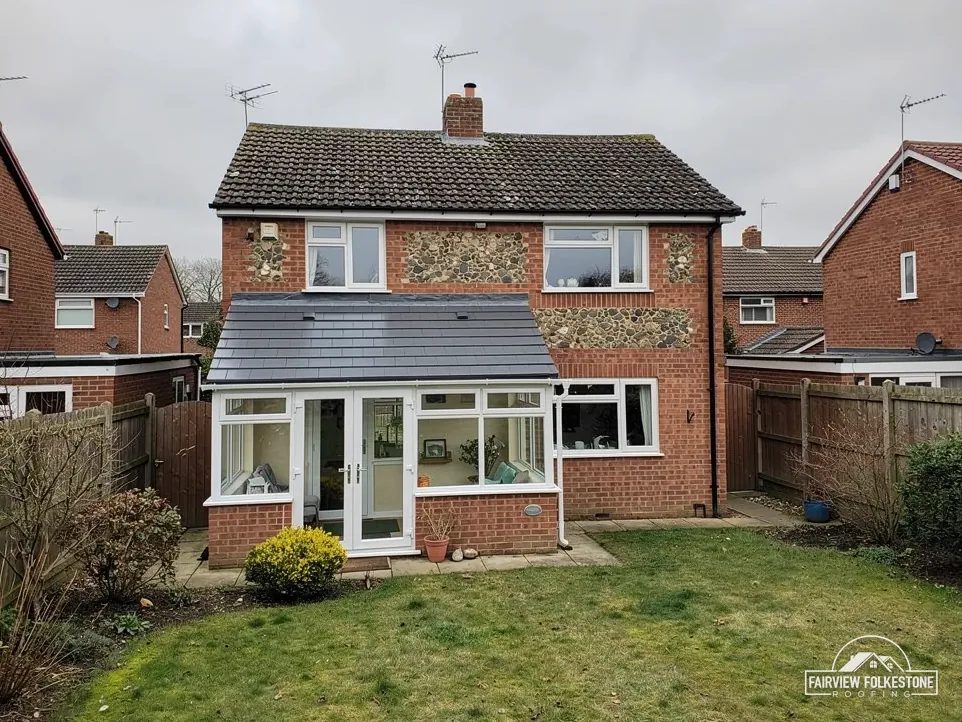
What makes a roof warm
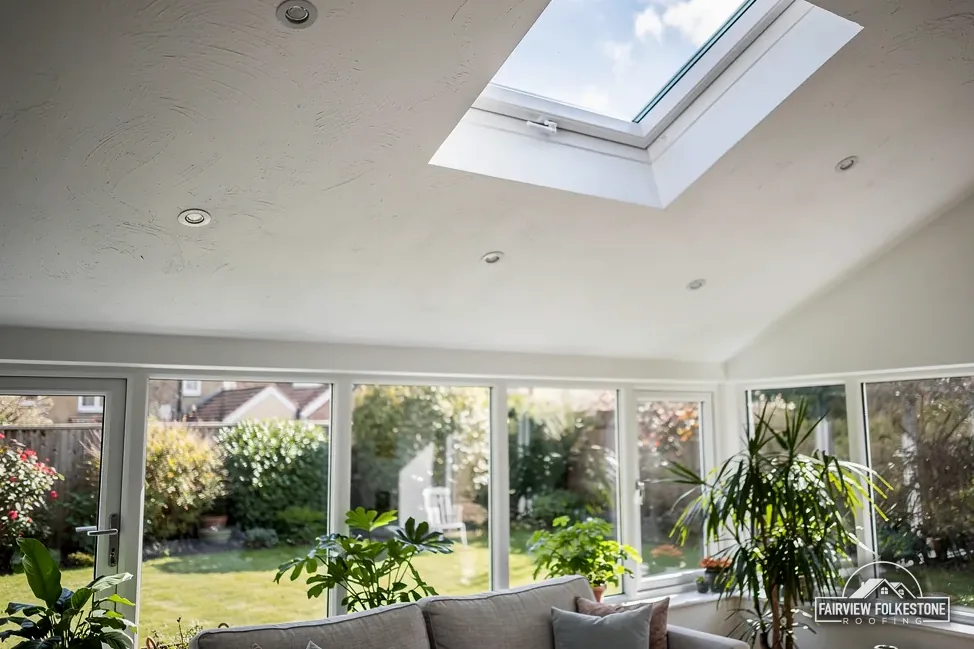
In a warm roof the insulation sits within the roof build-up itself, between or over the rafters, so the structure and the ceiling lining stay on the room's side of the insulation and stay warm. A glazed roof has no such layer. Its single thin skin is the coldest surface the room has, and warm air rises straight to it.
Roofs are rated by a U-value, a measure of how fast heat passes through. The lower the number, the better the roof holds heat in. Approved Document L sets limiting U-values for new and existing elements, and the next section gives the ones that matter here.
A warm roof is a build-up and not a product. It is made of the structure, the insulation, the layer that stops damp room air reaching cold timber, the battens and the tiles. Each layer has a job, and a warm roof that skips one of them can end up with the condensation it was meant to cure. The details count as much as the thickness of the insulation, and we describe the build-up to you in words before the price is written. Ask any firm quoting for a warm roof to do the same, so that two quotes can be compared on what they contain.
Where a warm roof pays and where it does not
The case rests on how you use the room, not on the roof alone. The table sets the main cases beside the alternative that may suit them.
| How the room is used | Case for a warm roof | Alternative to weigh |
|---|---|---|
| Lived in all year | Strong: heat held in, condensation removed | An internal lining, with limits |
| Used as a dining room or study | Strong: a steadier room to work and eat in | Heating and shading |
| Summer sitting room only | Weaker: little winter use to improve | Blinds, film, vents |
| Roof is sound, room is cold | Possible: a lining may be enough | An insulated lining |
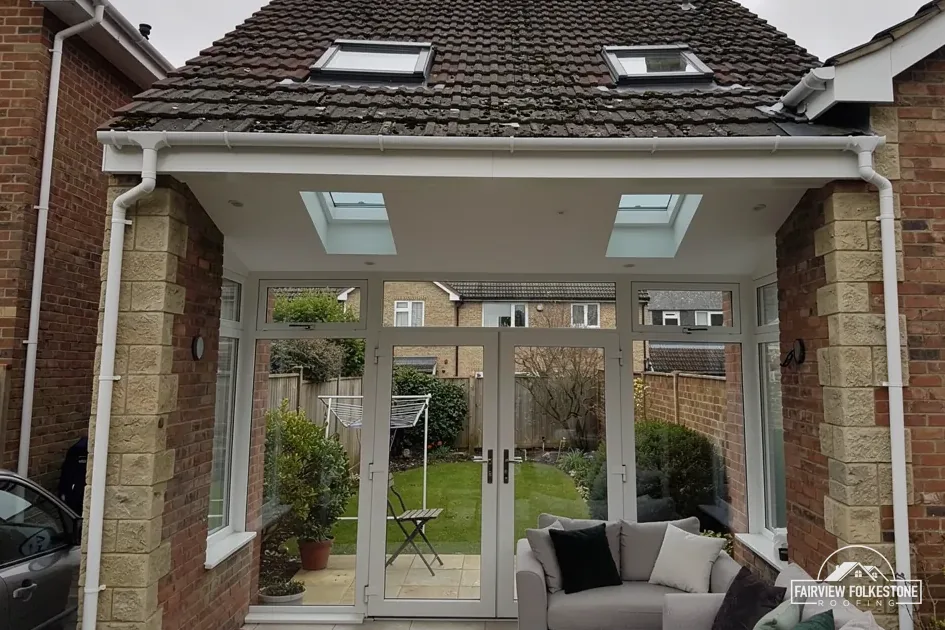
A warm roof also suits a conservatory whose old roof is worn out, because the roof is coming off regardless and the insulation joins that one job instead of becoming a separate project, with its own scaffold and its own disruption. Our post on how to insulate a conservatory roof compares the lining route with a solid roof in more detail.
The rules that come with a solid roof
The Planning Portal's conservatory guidance says the new roof must comply with building regulations. Separately, Approved Document L exempts a ground-level conservatory of up to 30 m² from the energy rules only while certain conditions hold: its glazing meets Part K, a wall, door or window still divides it from the house, and heating from the dwelling has not been extended into it. Extend the heating, or take out that separation, and the exemption is gone.
Where the energy rules do apply, Table 4.2 of AD L 2021 gives 0.15 W/m²K for a new roof, 1.4 W/m²K or Window Energy Rating Band B for roof windows, and 2.2 W/m²K for rooflights. AD L 2026 begins on 24 March 2027, and its tables are renumbered 3.2 and 3.3.
We therefore ask building control before we start, and we cover the point in our answer on solid conservatory roofs and building regulations. What the conservatory needs depends on how it is joined to the house, which is a question for the survey and not for a rule of thumb.
Cost, risk and the verdict
MyJobQuote's figure for the average conservatory roof replacement in 2026 is between £3,200 and £6,000, from a page updated in October 2026. It covers replacement in general, not warm roofs in particular, and it is no substitute for a quote. Where your conservatory lands depends on its size, its frame and the condition of the structure beneath it.
Before you decide, put three questions to the room:
- Do you use it in winter, and does it feel cold when you do?
- Does the roof drip with condensation on cold mornings?
- Is the roof already failing, with leaks or sheets that have turned brittle?
Two or more yes answers, in our view, make a warm roof a reasonable choice. A yes to the first alone may mean an internal lining is enough. A tiled warm roof also depends on a frame that can carry it, which we explain in the answer on whether a conservatory frame can take a tiled roof. The wider picture is on our conservatory roofs page, and your own written price arrives as one total after the survey, with the build-up described alongside it.
More questions
Will a warm roof stop condensation under the roof?
It takes away the cold glazed surface where the moisture settles, which is one cause. The build-up still has to be detailed so that damp room air cannot reach cold timber at the edges, so a warm roof that is badly finished can still collect moisture out of sight.
Can I insulate an existing glazed conservatory roof instead?
You can add an internal lining, and for a roof that is still sound it avoids a replacement. It leaves the old sheets, gaskets and bars as they were, so their age is still your problem. Our post on insulating a conservatory roof puts the two routes together so you can compare them.
More on conservatory roofs
All guides and posts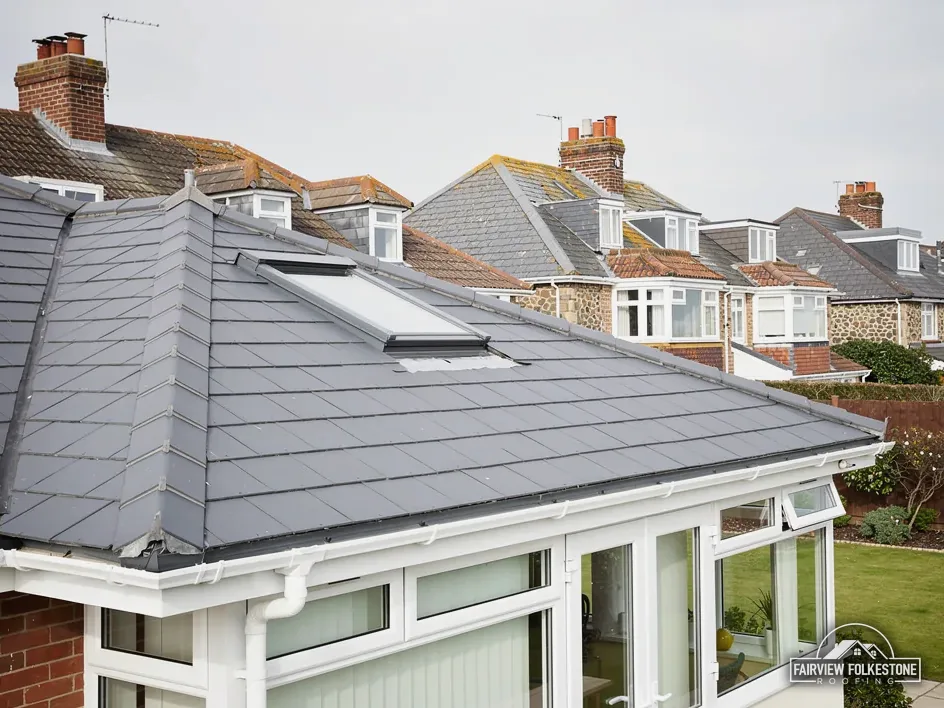

Tell us what's wrong with the roof.
You'll get one written total price.