
Winter flat roofs
Can a flat roof be laid in winter or cold weather?
A flat roof does not have to wait for summer, but it does have to wait for the right day. Below: what makes a good day, scaffold timing and booking.
The short answer
Yes, when the weather and the boards are dry and the maker's conditions for the chosen system are met. Each membrane comes with instructions covering the surface it goes on and the conditions it is laid in, and a roof that does not meet them waits. Winter shortens the working window and raises the chance of a delay, so the plan is built around the weather rather than the calendar.
4 min read · Part of Flat roofing
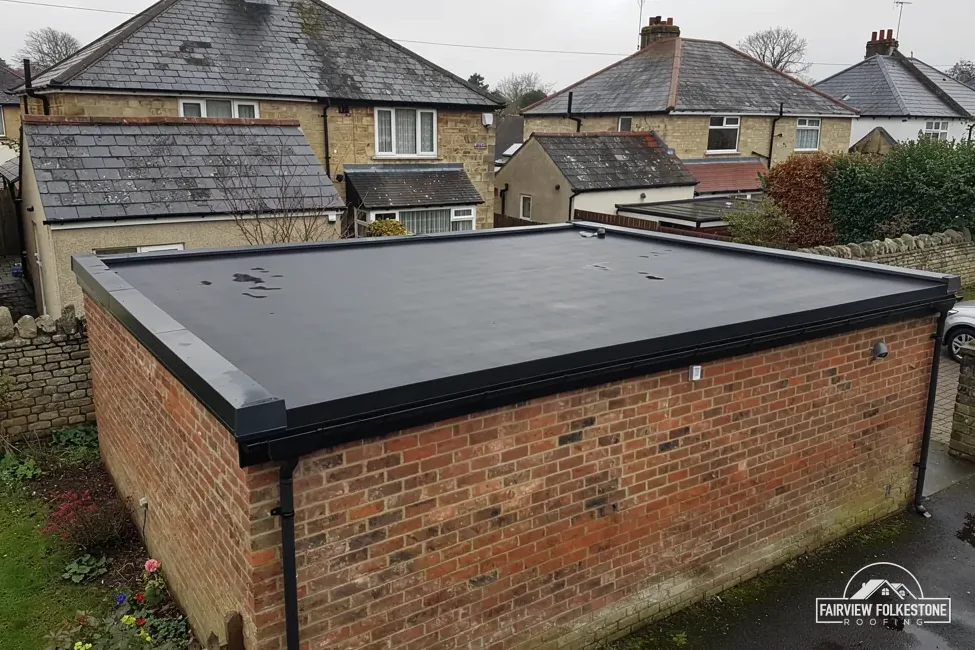
What makes a day fit to lay
No single date separates winter work from summer work. What counts is the day itself, and the maker's data sheet for the system on your roof sets the terms. EPDM rubber is laid cold, without a flame. Torch-on felt means a gas torch and a dry surface. GRP is resin and matting cured on site. Resin, adhesive and bitumen each respond to cold and damp in their own way, so we read the sheet for the one chosen before booking.
On the morning, we look at:
- whether the deck is dry on the surface and below it
- whether frost, rain or fog is forecast during the working window
- whether the roof can be made watertight before light fades, with temporary cover for anything left open
- whether the materials have stayed dry in the van or the store, because a damp roll or tin goes no further than a damp deck
Daylight is short in midwinter, which is one more reason to start only what can be finished. If any of them fails, the job moves to the next fit day. A membrane laid in poor conditions saves a day and can cost the roof.
The deck must be dry
Of everything in the conditions, a dry deck matters most. Laying a membrane over damp boards or damp insulation seals that moisture in, and it can lift the new layer into blisters or weaken the board beneath. Winter makes this harder because timber that has been wet for days dries slowly, and a roof stripped in the morning can be wet again by evening if cover goes on late.
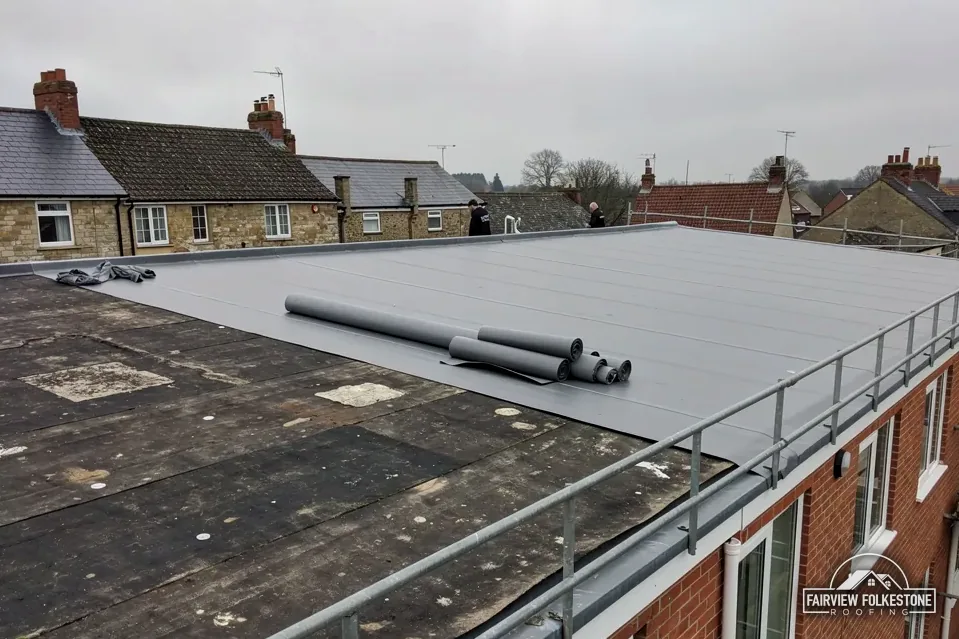
So the order of work is planned to match the weather. We strip only the area that can be dried, built up and covered before the weather turns. The old covering goes into a skip rather than lying on the roof. Insulation boards, where a warm deck is planned, stay off the ground and under cover until they are laid. If rain arrives sooner than forecast, the open area is sheeted down and the work stops for the day. A soaked deck, or boards that have gone soft, are found on the survey and in the strip, and the quote says what would change.
The same test explains why a second layer over wet boards is the riskiest combination of all, as our overlay answer sets out.
Scaffold, delays and the licence clock
A scaffold over the pavement or the carriageway needs a highway licence, and a weather delay can run past the period the licence covers. Both counties publish their terms:
- Kent County Council licenses scaffolding on the highway at £52 per week for 2026 to 2027, in permits of 7 calendar days, and asks for applications, renewals included, to arrive 5 working days beforehand.
- East Sussex Highways' fee table shows £127 for 28 days, and any extension has to be asked for at least 5 working days ahead of expiry. Check the current figure first.
We arrange the licence with our scaffolder in both counties, so a winter delay is a question of dates for us to manage, not paperwork for you. The two fees are published in different units, so they are not set against each other here.
A long wait for a fit day is also why the dates are agreed with the scaffolder before the licence application goes in. Agreeing a date range, rather than a single day, gives room to extend a permit in good time if the weather turns.
Booking a winter slot
A few points are worth settling at the survey rather than on the day:
- how the weather is handled, meaning who decides a day is unfit and when the new date is agreed
- whether the quote names the system, the build-up and the date range, with one total price
- what temporary cover the roof gets if the work is paused part-way
If you sign at home after our survey, you have 14 days to cancel, and work starts sooner only if you ask in writing. If the roof is leaking now, a temporary repair keeps the room dry until a fit day arrives, and the proper work is booked for the first one. Tell your insurer first if you may claim, and keep photos and receipts.
It also helps to ask what happens at the end of each working day. A roof that is watertight every evening is far safer in winter than one left half-open overnight, whatever the forecast says.
Our flat roofing page explains how the quote and the survey fit together, and what the verdict covers.
More questions
Can a leaking flat roof wait until spring?
It depends on how much is getting in. A small leak under a sound deck may wait behind a temporary repair, while a soaked deck or a bowing ceiling should not. The Financial Ombudsman Service notes that snowfall or rain by itself can count as a storm, so take photographs before anything is shifted.
Is a roof laid in winter worse than one laid in summer?
A roof laid within the maker's conditions is laid to the same instructions as in any other month. The risk lies in rushing a layer over a damp deck, which is why the dry-deck check comes first. If the day is unfit, the work waits, and the written quote still shows one total price.
Tell us what's wrong with the roof.
You'll get one written total price.