
Flat roof condensation
Why is there condensation under my flat roof?
Damp under a flat roof is not always rain getting in. Below: how condensation forms, how to tell it from a leak, and what stops it coming back.
The short answer
Warm, moist air from the rooms below is reaching a cold surface in the roof and turning to water there. That is a build-up problem, not a hole in the membrane, and it shows as damp timber, dark spots of mould on the ceiling, or drips with no hole above. The cure is to stop the moist air rising, or to keep the surface it reaches warm.
5 min read · Part of Flat roofing
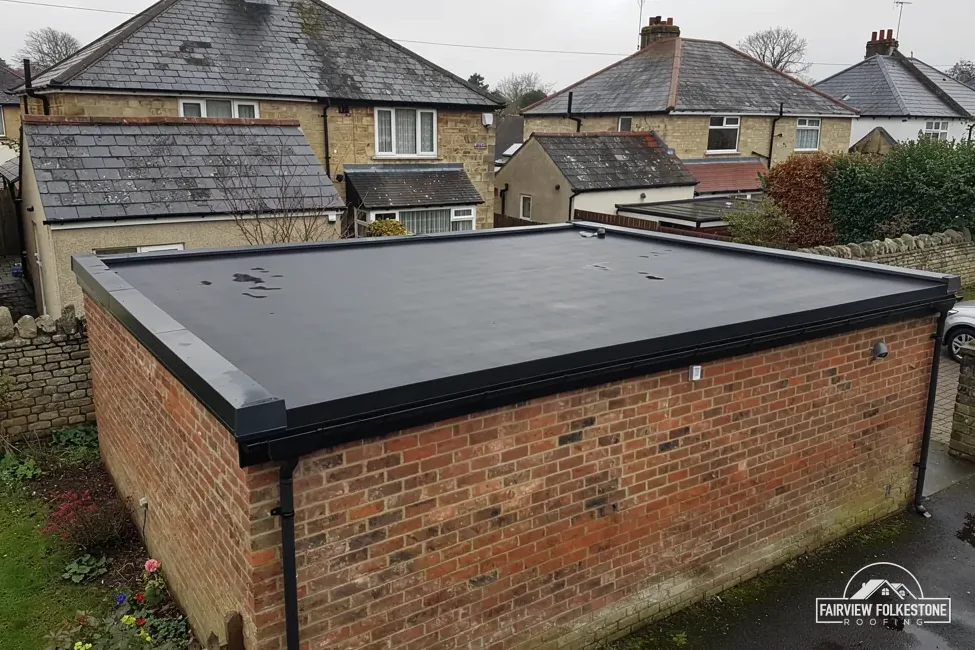
Telling condensation from a leak
Both leave a stain, and the membrane can look perfect in either case, so the pattern of when it appears is the best guide. A leak follows the rain. Condensation follows the heating, the cooking and the cold nights. Look for these signs:
- the stain or drip appears after a shower, a bath or a pan of boiling water, not after rain
- it returns in cold spells and fades when the weather warms up
- the ceiling carries a scatter of dark mould spots rather than one tide-marked patch
- the underside of the deck is damp when seen from the loft hatch or a lifted ceiling panel, with no hole in the membrane above it
- nothing changes after the roof is patched
Condensation and a leak can exist together, and either can soak a deck. The survey separates them by checking the membrane, the edges and the outlets first, then looking at the build-up from below. Our warm deck or cold deck answer compares the two build-ups side by side, which helps explain where each one is vulnerable.
How a flat roof makes its own condensation
Cooking, bathing, drying washing and simply breathing put moisture into the air of a home, and warm air carries more of it. If that air passes through the ceiling and reaches a surface cold enough, the moisture turns back to liquid. In a flat roof, the cold surface is the underside of the deck or the membrane itself. A room that is heated only now and then makes this worse, because warm, moist air from the rest of the house drifts into it and meets cold surfaces.
A cold deck keeps its insulation between the joists, with a ventilated gap over the top. Condensation forms there when the ceiling below leaks air, through gaps around downlights, loft hatches and pipe holes, or when the vents at the edges are blocked so the gap cannot clear.
A warm deck keeps the insulation above the deck, with a vapour control layer beneath it: a sheet that stops moist air passing up. A torn or poorly sealed layer, or a joint that was never lapped, lets the moisture through anyway.
BS 5250:2021 is BSI's standard on moisture, and its status is current and under review. Approved Document C, in its 2013 edition, cites an earlier edition of BS 5250 on condensation.
Fixes, from simple to rebuilt
The fix follows the cause, and the cheaper steps come first. The table shows how a finding turns into a job.
| Cause found | What follows |
|---|---|
| Gaps in the ceiling at lights, hatch or pipes | Seal them from below |
| Blocked vents at a cold deck edge | Clear or add vents |
| Cold deck with no way to ventilate | Rebuild as a warm deck |
| Vapour control layer torn or missing | Open up and renew it |
| Deck boards soaked and soft | Dry out or re-board |
Cutting a vent, fitting a fan or sealing a hatch can each be done without touching the membrane, so those come first. A rebuild comes last, and only when the survey shows the build-up cannot be put right any other way.
Where the cure is a rebuild, a re-roof is the moment for it. Under AD L 2021 para 11.2(d), a new waterproof layer over a flat roof is renovation, so the written quote then sets out the insulation and how moisture is kept out of the build-up. An extractor fan that vents outside, rather than into the loft, is the simplest improvement of all, and it costs little compared with a rebuilt roof.
What you can check safely from inside
Never walk on a flat roof to look. From inside the house there is plenty to learn without any risk:
- note the dates and times the damp appears, with a photo each time, so the pattern shows
- check that the kitchen and bathroom extractor fans run and that their ducts lead outside, not into the loft or the ceiling void
- see whether the loft hatch or ceiling hatch closes tightly
- shut the bathroom door while showering, so steam is not drawn into the cooler rooms
None of these repairs the roof, but a record of dates and photos gives the survey a head start. If the ceiling bows, sags or drips steadily, tell us at once and keep the room clear below it.
Mould spots on a ceiling are a symptom, not the fault. Cleaning them off is fine, but a coat of stain-blocking paint will not stop them returning while the cause is still there.
Our flat roofing page explains how we tell a patch from a renewal once the cause is known, and what the written price then covers.
More questions
Will a dehumidifier or extractor fan cure it?
They take moisture out of the room, which helps and costs little. They do not close gaps in the ceiling, clear a blocked vent or repair a torn vapour control layer, so they ease the cause without removing it. If damp keeps returning after the room is well ventilated, the build-up needs a proper look.
Can condensation rot the deck of a flat roof?
Damp that returns season after season can leave the deck wet, and boards that stay wet lose their strength. The survey presses along the deck from below where it can be reached and lifts samples from above, so a deck that has gone soft is found before it is covered again.
Tell us what's wrong with the roof.
You'll get one written total price.