
Overlay or strip
Can you lay a new flat roof over the old one?
A second layer saves the strip-out but hides what lies underneath. Below: what decides it, the weight and Part L questions, and when the old roof must come off.
The short answer
Yes, but only over a dry, firm deck and a sound covering, and only once the extra weight has been checked. A wet layer, a soft deck or a pond that will not clear rules it out, and only a survey shows which you have. The Planning Portal asks for approval where a new covering would make the existing roof covering 15 per cent or more heavier.
5 min read · Part of Flat roofing
What an overlay is and when it can work
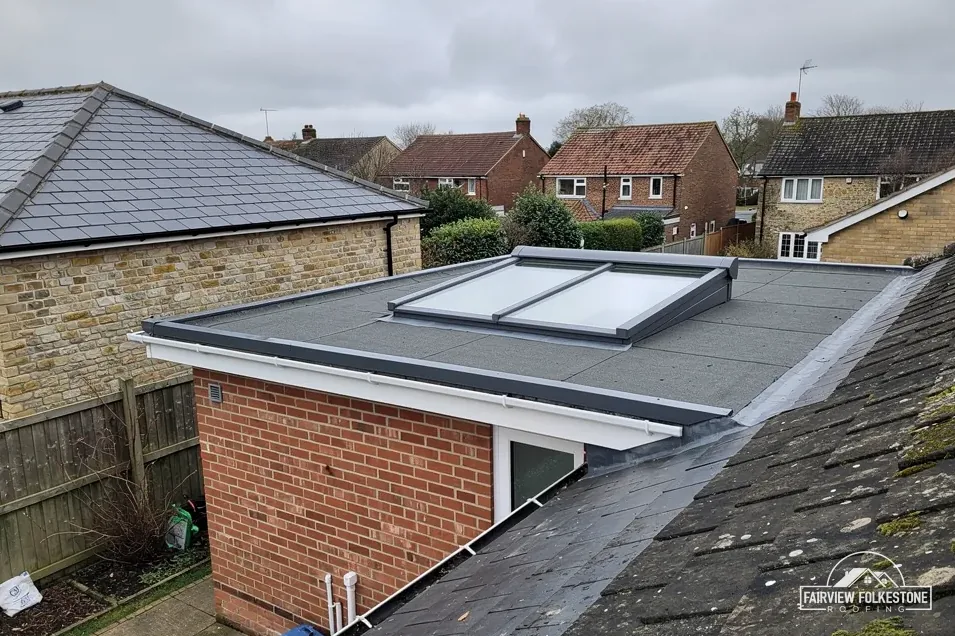
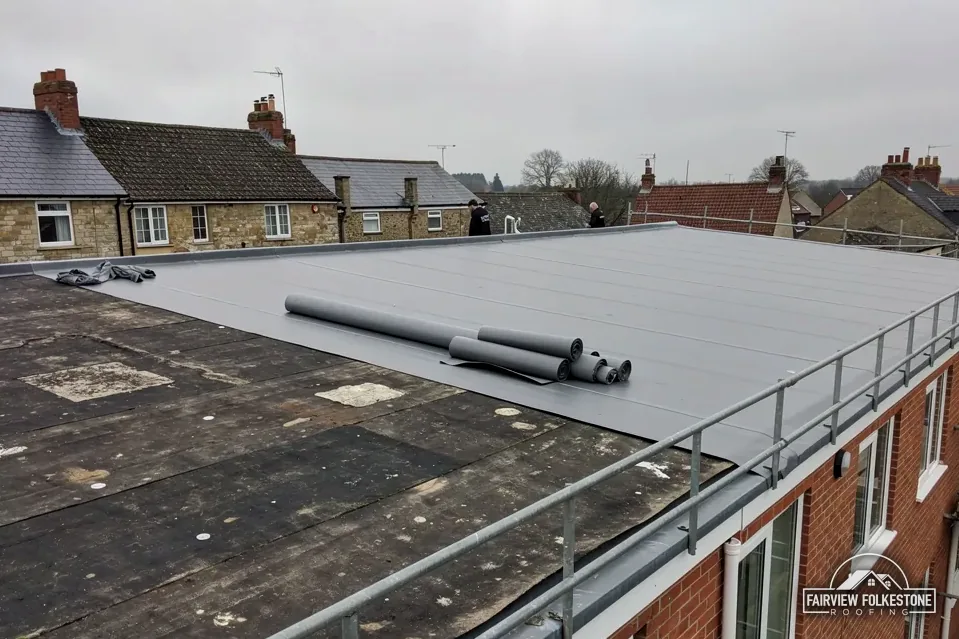
An overlay means a new waterproof membrane goes on top of the existing covering instead of the old roof being stripped off first. It saves taking the old layers off and carting them away, and the roof stays closed to the weather while the work goes on. Whether that is sound depends on what lies underneath, because the new layer inherits every problem the old one has.
On the survey, an overlay is only worth pricing where all of these hold:
- the deck is firm underfoot, with no springy patches or dips
- the old covering is dry all the way through, checked by lifting small samples in several places
- the ceiling below shows no stains that point to a wet roof build-up
- the maker of the new system accepts it over the surface that is there now
- the existing fall carries water to the outlet, so nothing ponds
If one of these fails, the verdict moves towards stripping back. A roof that has already had one overlay is a harder call, because two old layers hide twice as much, so we look for wear in the first before agreeing to a second.
Why wet felt and soft boards rule it out
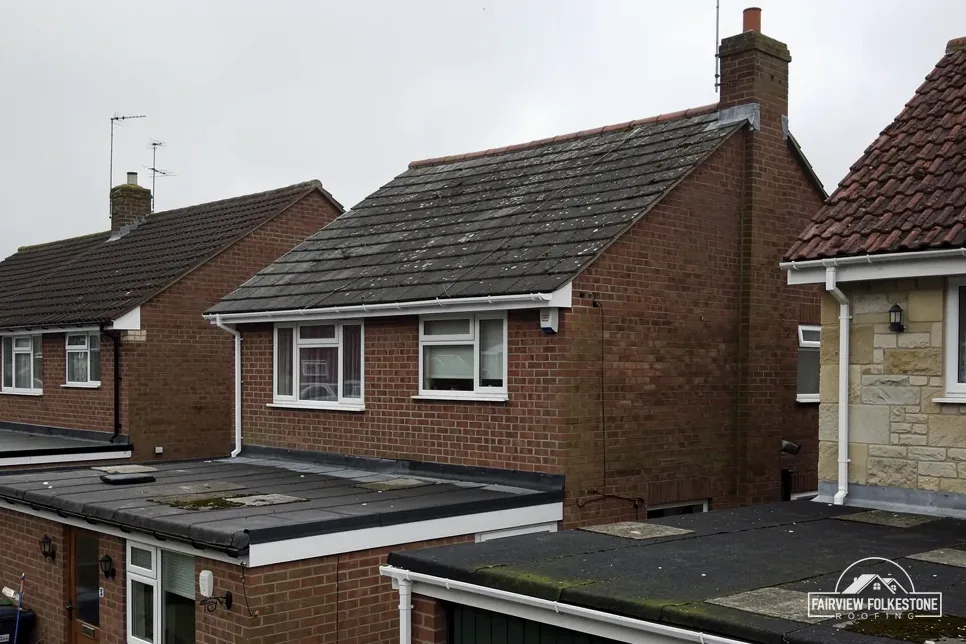
Trapped moisture is the problem an overlay cannot answer. A new membrane sealed over wet felt or wet insulation holds that moisture in, and the deck beneath stays damp. Timber that has sat wet for months weakens, so a deck can look tidy from above and still give way underfoot. Nothing laid on top will stiffen it. From inside, a ceiling that is stained or bowing says the build-up is wet, even where the surface of the roof looks neat.
Small samples settle the question. We lift a few at the places most likely to be wet: beside the outlets, along the upstands, under any pond, and over the stained part of the ceiling. A wet layer, or dark and crumbling board under it, means the answer is to strip back, check the joists and re-board.
Stripping to the deck has one more benefit, because it puts the joists in plain view. An overlay never shows them. Rot at the end of a joist, where it sits in the wall, is the kind of fault that stays hidden under two layers until a ceiling comes down.
Weight, Building Regulations and Part L
A second layer is extra covering. The Planning Portal asks for approval where the new material makes the covering 15 per cent or more heavier, and Approved Document A calls a load increase of more than 15% a significant change. So we compare the weights from the makers' data sheets, and the Portal's guide advises having an engineer or surveyor assess the roof before the work begins.
Part L, which covers saving energy, is the second question. Under para 11.2(d) of AD L 2021, stripping a flat roof and laying a fresh waterproof layer is renovation. Once renovation passes half of the roof's surface (more than 50%), the entire roof is held to the improved figure in Table 4.3, 0.16 W/m²K against a 0.35 threshold, wherever that is feasible. Whether an overlay counts as replacing the membrane is for building control to say, so we ask first. Extra insulation laid over an overlay lifts the roof at the wall and at the door thresholds, so we measure those as well.
At a Dover district address, Dover District Council puts re-covering pitched and flat roofs "even if this is just like for like" among the jobs needing approval, so an overlay goes to the council first.
How we decide between overlay and strip
The deciding facts come from the roof, not from a liking for one method. A survey sets out what the roof is doing now, and the table shows how the usual findings point.
| Finding | Likely route |
|---|---|
| Dry, firm deck, sound covering, good fall | An overlay is worth pricing |
| Wet layers in places, deck still firm | Strip the covering, keep the deck |
| Soft or rotten boards | New deck on checked joists |
| A pond that will not clear | Strip back and correct the fall |
The fall matters because a membrane laid over the old surface copies its dips. Our answers on flat-roof falls and ponding water explain what that means at the outlet.
Whichever route fits, the written quote names it with the reasons, as one total price. Where the answer is close, a route that looks cheaper on paper can cost more in the end, so the quote says why one was chosen and what would change it. If an overlay is chosen, the notes on the samples we lifted are kept with the quote. The wider picture of repair against replacement sits on our flat roofing page.
More questions
Can I fit EPDM or GRP over an old felt roof?
That depends on the maker's instructions for the surface underneath, so the data sheet for the chosen system is read before anything is named. Whatever the system, the old felt has to be dry, firm and free of blisters, which is why the survey lifts samples. If the maker will not accept the old surface, the felt comes off.
Is an overlay always cheaper than stripping the roof?
It can save the stripping and disposal, but only on a roof that passes the survey, and a roof that needs deck repairs or new falls first loses that saving. Any figure you read online describes a typical roof, not yours. Ours is one total price, in writing, set after the survey.
Tell us what's wrong with the roof.
You'll get one written total price.