
Moss and tiles
Does moss damage roof tiles?
Moss keeps a roof damp and can hide faults, but it is not a failed tile. Below: what moss does, where it matters, and when waiting is safe.
The short answer
Moss can harm a roof, though through what it holds and hides rather than by eating into the tile. It keeps the surface damp, packs the joints between tiles, blocks valleys and gutters, and covers cracks and slips until they become leaks. A roof with a little moss on a sound slope is a smaller worry than a roof with moss in the valleys. The deciding factor is what the moss is sitting on.
5 min read · Part of Roof cleaning

What moss actually does to a roof
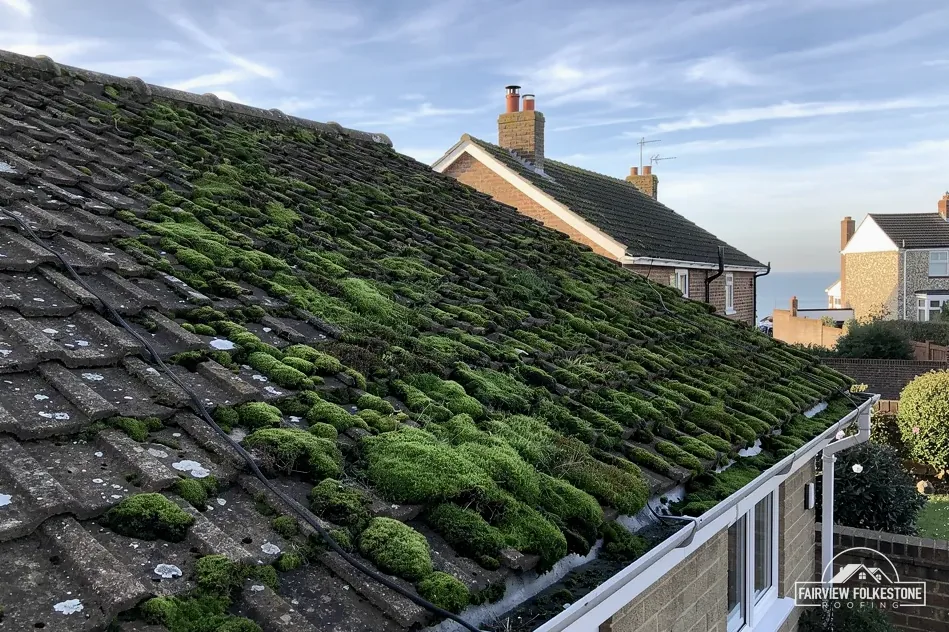
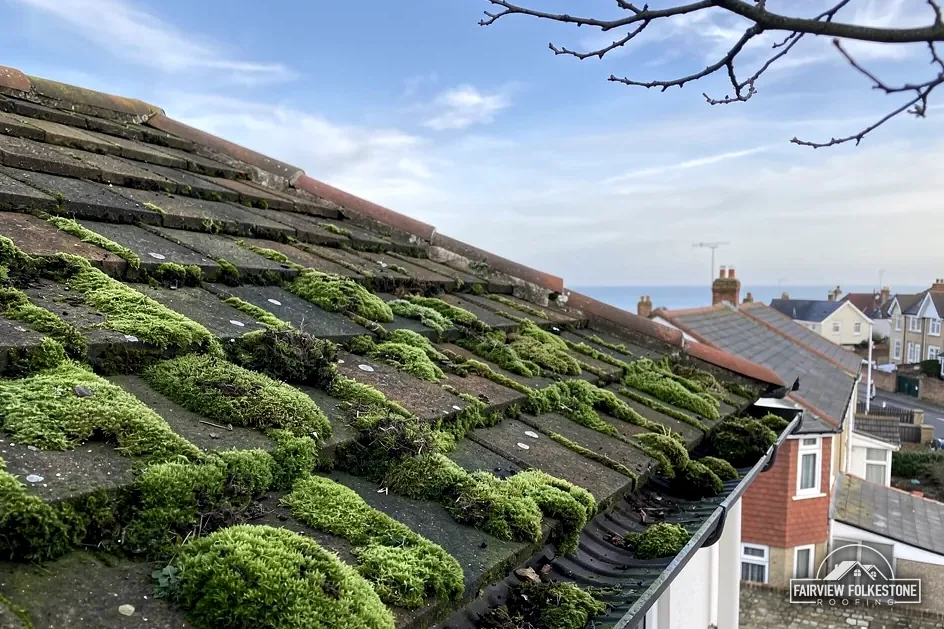
Moss settles on surfaces that stay damp, and once it is there it keeps them damp for longer. A cushion of it acts like a sponge against the tile, soaking up rain and releasing it slowly, so the slope under it takes far longer to dry.
That has knock-on effects that are easy to follow. Damp held against a tile for long periods is not good for the surface or the fixings around it. Moss also packs into the gap where one tile laps over the next, and it can lift a tile edge slightly as it grows, which spoils the lap. None of that is sudden, and none of it means a roof has failed.
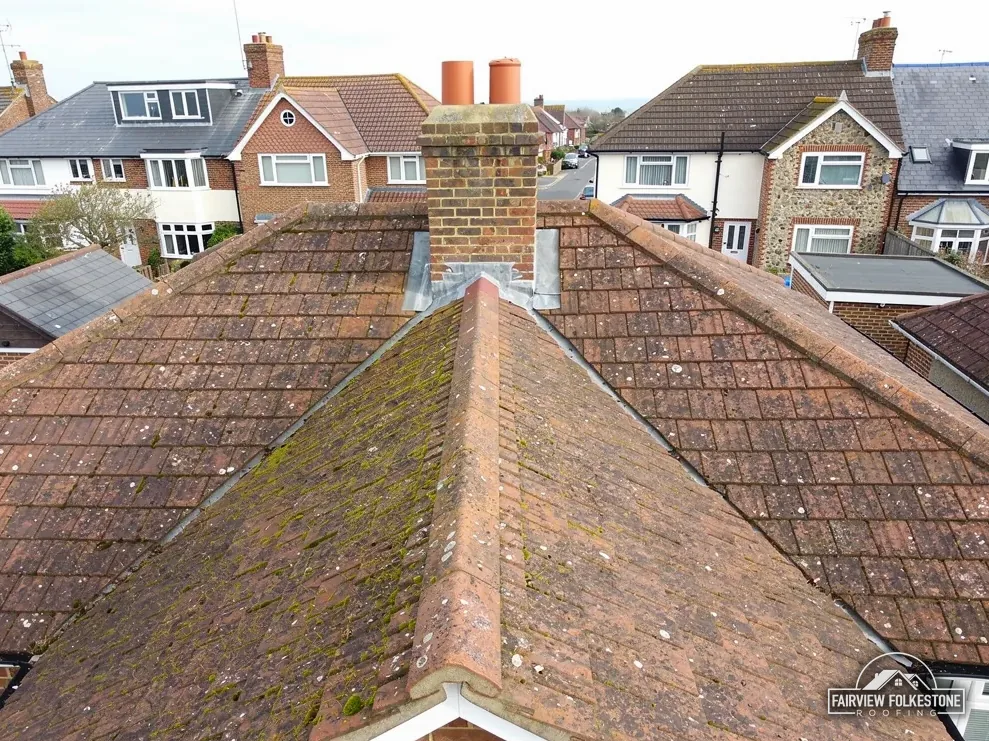
What moss does not do is announce the state of the tile beneath. A mossy slope can have sound tiles, and a clean-looking one can have cracks. So we look at the tiles themselves once the growth is lifted.
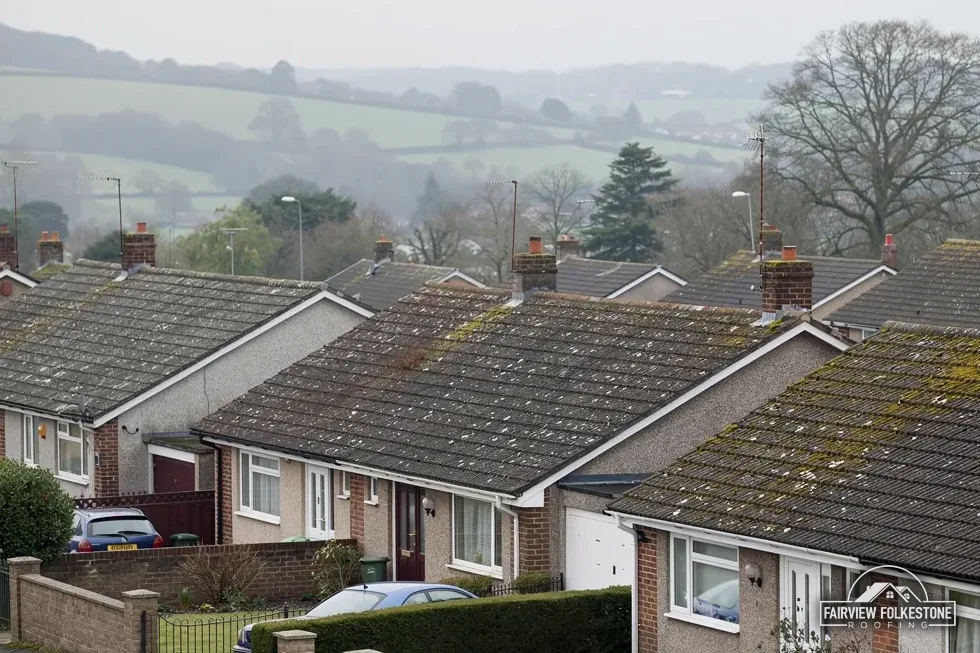
How fast this happens depends on the shade and the slope, which is why two roofs of the same age can look very different. An open slope that catches the sun can dry early in the day, while a shaded one can stay wet far longer.
Where moss does the most harm
Location matters more than quantity. A few clumps on a open slope are one thing, while moss in the places that carry water away is another.
| Place | Why it matters |
|---|---|
| Valleys | Blocks the channel between slopes |
| Gutters and outlets | Chokes the way water leaves |
| Tile laps | Holds damp in the joint |
| Around chimneys | Hides flashing and flaunching |
A valley packed with moss and leaves can send rain over the edge instead of down the channel, and a gutter full of cleared moss does the same at the eaves. These are the places we look at first, and the reason the gutters are always cleared at the end of a clean.
Slopes below a tree are a case apart. Leaves and seeds land on them and feed the growth, so the lower slope can carry more moss than the upper one, and the gutters carry a share of it away. The same goes for a slope that is lightly pitched: water leaves it slowly, and moss settles in the damp left behind. If you can see any of these from the ground, that tells you where to ask for the closest look.
What the moss may be hiding
Moss can hide faults beneath it. A cracked corner, a slipped tile or a rusted nail all look like a green patch from the pavement. When the growth comes off, we check each tile and report what we found, in photos, noting whether each one needs work.
- Tiles that have slipped down the slope
- Corners or edges that have cracked
- Bedding at the ridge that has loosened
- Flashing that has lifted at a chimney or wall
None of these is certain to be there. A mossy roof can prove sound once the surface is clear, and then the clean is the whole job. Where a fault is found, you decide what happens next, and the main roof cleaning and moss removal page explains how a clean and a repair fit together.
Photos taken from the ground with the zoom out can show tiles that have slid out of line, because the courses stop looking straight. We would rather see that than guess, so send a few if you can, with a note of which slope they show.
Clean now, or leave it for a while
A light covering on a sound open slope can wait, as long as the gutters and valleys stay clear. Moss in the valleys or gutters, or moss over a tile you suspect is damaged, is worth dealing with sooner.
When you do clean, the method matters. Because jet washing can harm slate and tile, as Marley warns, moss is lifted by hand and the surface is treated rather than blasted. Our answer on the roof biocide treatment explains the treatment step.
Timing also depends on the birds: where one is using or building a nest, the work near it waits, as the Wildlife and Countryside Act covers a wild bird's nest at that stage. Our post on the best time to remove moss covers it.
If you do not know the roof, a survey is the easiest way to settle it. We go up, look at the tiles, the lap joints, the valleys and the gutters, and give you photos and a plain view of whether the moss is cosmetic or working against the roof.
More questions
Will moss make my roof leak?
Not by itself. A leak comes from a fault such as a cracked tile, a lifted flashing or a blocked valley, and moss can cover or add to those. A roof with moss and no faults can stay dry, which is why we check the tiles once the growth is off, before saying what is needed.
Is a roof with a little moss on it a problem?
Not necessarily. A light covering on a sound, open slope can wait, provided the gutters and valleys stay clear. If moss is building up in the channels that carry water away, or over a tile you think is damaged, it is better dealt with sooner.
Tell us what's wrong with the roof.
You'll get one written total price.