
Lydd · 20.4 road miles south-west
Roofers in Lydd
A town of 6,345 residents in its parish, with a Grade I church, a listed Dorset House and a conservation area. Send a picture of the roof, and its fault and verdict come back in writing before a price is discussed.
- Church
- All Saints, Grade I, a Church of England church in use
- Conservation area
- Lydd, designated by Folkestone & Hythe District Council
- Environment Agency flood map
- Flood Zone 3 near the town centre
- Highways licence for scaffold
- Kent County Council, £52 a week
Lydd roofs, read one fault at a time
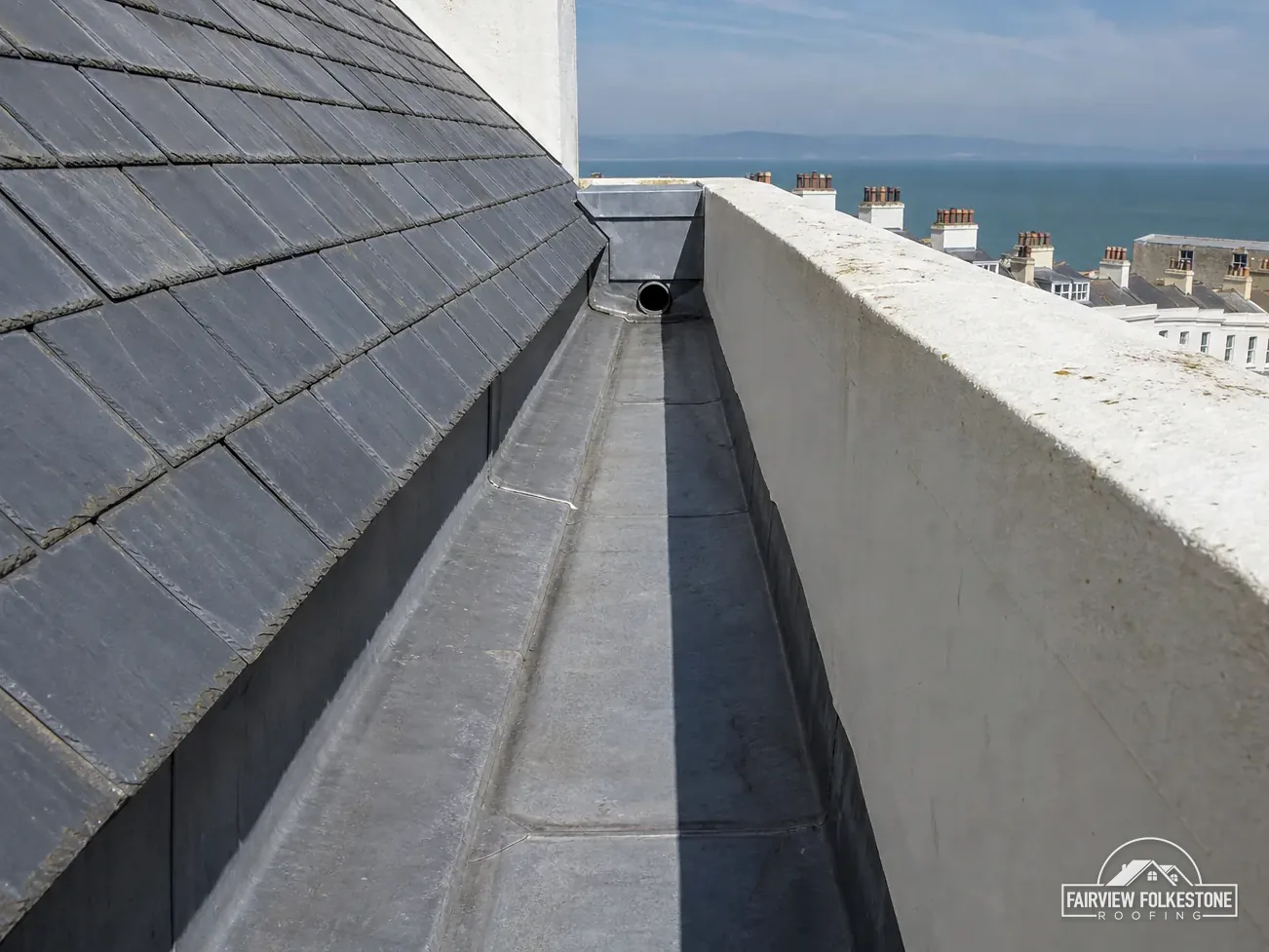
What we found
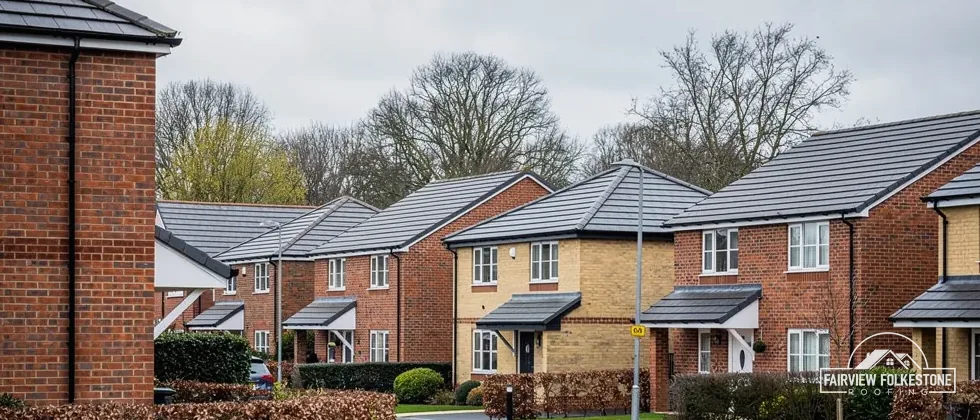
Step flashing lifting along a wall
What it fairly needs
Dress it back, or renew the lead.
What we found
Grade II house, worn covering
What it fairly needs
Ask the council before a price.
What we found
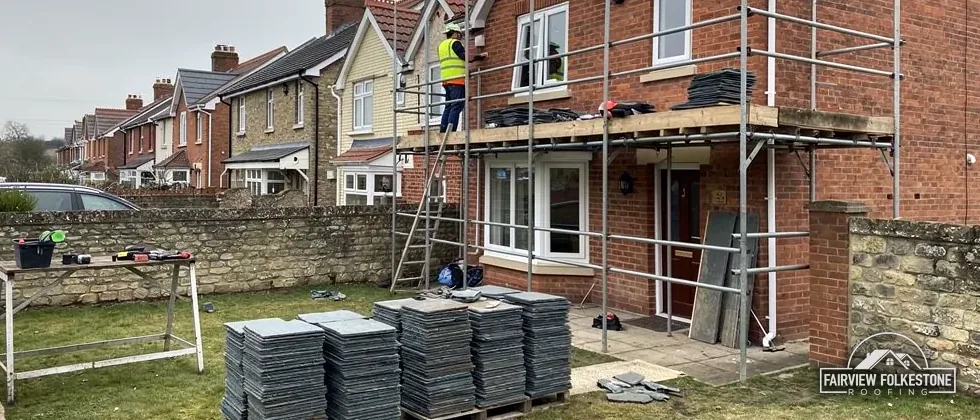
Slipped slates, battens soft and split
What it fairly needs
Strip and re-batten the slope.
The fair ledger
A listed house, a Grade I church and lead along a wall
Lydd has a conservation area, a listed Dorset House and a church whose roof follows its own rules. Three entries follow. Every entry reaches a verdict on the roof, once the consent question is settled.
Entry 01Listed house
Dorset House and the town's conservation boundary: what is asked first
Dorset House is listed Grade II, and the centre of Lydd lies in a designated conservation area. Either one can change the order in which a roof job is done.
Boundary, listing, then price
Lydd has a designated conservation area, and Folkestone & Hythe District Council keeps the map that shows where its edges run. Dorset House is a Grade II listing, number 1068935 on the National Heritage List, and the town carries other Grade II entries too, among them a K6 telephone kiosk. A kiosk has no slope for us to price, but its entry shows how far the list reaches into ordinary streets.
Listing does not strip a home of permitted development for roof work, though listed building consent is added when the job would alter the building's special character. A house that is merely inside the conservation boundary is in a different position: a new covering is normally permitted development, and our planning guide for roof work sets out where a dormer or an extension needs more. An Article 4 direction may take rights away from particular addresses, so the council is asked before we price.
Does a repair to a Grade II roof in Lydd need consent?
Work that alters what makes a listed building special needs listed building consent, and a repair can fall into that category. Give us the address and the plan goes to Folkestone & Hythe District Council ahead of any figure, so nothing starts on a guess.
Four questions for the council
Answers come back quickly when the question is specific, and they settle both the price and the order the work runs in.
- Is the address inside the Lydd conservation boundary?
- Is the house listed, or does it share a listing?
- Does any Article 4 direction touch the roof slope that faces the road?
- Does the planned covering fall within the Planning Portal's re-roofing limits?
The Portal's re-roofing limits answer that last question. Stay below 25 per cent of the building envelope and 50 per cent of the roof and an application is not normally required; go 15 per cent or more heavier on the covering and approval is required whatever the area. Folkestone & Hythe District Council's own Building Control team answers on 01303 853538.
Odd slipped tile, battens sound
Refix it
Listed house, covering failing
Council first, then price
Slope worn through along the run
Re-cover that slope
Entry 02Church
All Saints, Grade I: a faculty decides, not listed building consent
The Church of All Saints is Grade I and still holds Anglican services, so its repairs follow a route that no house shares.
Why a church roof is a separate question
Historic England's National Heritage List records the Church of All Saints as Grade I, list entry 1068932, first listed in November 1950. Because the Church of England still holds services there, it sits under the ecclesiastical exemption, and work on it is authorised through the Church of England's faculty system, never by listed building consent from the council.
The exemption is narrow. Apart from Church of England churches in use, it covers churches of only three other denominations, Roman Catholic, Methodist and United Reformed, plus those Baptist churches that a Schedule 1 trust corporation holds for the Baptist Union. A Unitarian or Quaker meeting house, a redundant church or a minister's house falls outside it and needs listed building consent. Anyone looking after a chapel in or near Lydd should therefore find out which route applies before asking for a price.
Myth: A church roof needs listed building consent from the council.
Fact: A Church of England church in use sits under the faculty system instead, while Methodist, Roman Catholic and United Reformed churches use exempt systems of their own, as do Baptist churches held by a Schedule 1 trust corporation.
Entry 1068932
the National Heritage List record for the Grade I Church of All Saints
Historic England's list
What this means for the house next door
Nothing in the church's route changes the rules for a neighbouring house. A roof beside a Grade I church is checked in the usual way: the listing status of the house itself, the conservation boundary, and any direction from the council. The church mainly changes where you look, since the National Heritage List is the first place to see whether a nearby building is listed.
Should the house itself be listed, the survey photographs do double duty. They show you the fault, and they show the council exactly what is proposed. A like-for-like repair of the failed parts is the verdict we give where that is what the roof needs, stated plainly in the write-up.
Steps, soakers and the joint at the top
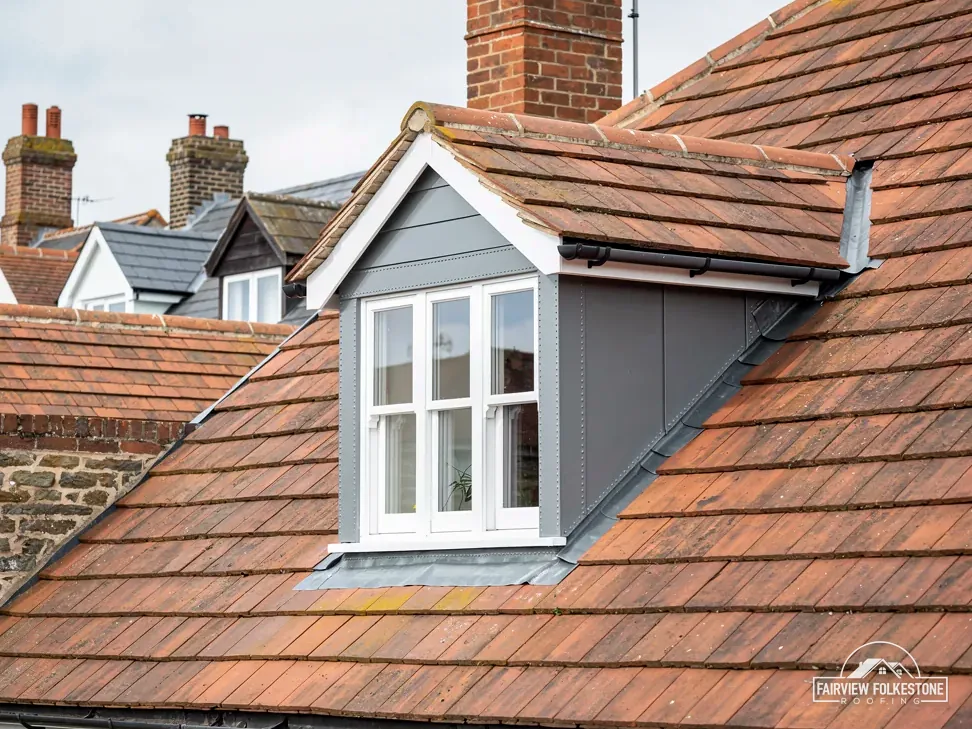
A flashing is more than one strip. A run of stepped lead runs up the wall, soakers sit under the covering at each course, and the top edge is tucked into a chased joint and sealed. Any one of them can be the part that has failed. A lifted edge on otherwise good lead can often be dressed back and re-fixed, while split or thinned lead along a run is better renewed in one piece.
MyJobQuote says correctly installed lead flashing can last for over 80 years, so age alone is no reason to take lead out. We look at the lead for splits, creases and tears, test the joint for movement, and tell you whether the verdict is a dress, a patch or a new run. The lead work page sets out the codes of sheet and how each detail is made.
We also check what the flashing is bedded into. A chased joint that has crumbled lets the lead pull away from the wall even when the lead itself is good, so the mortar or sealant gets the same attention as the metal.
Entry 03Leadwork
Lead along a wall: dress it back or renew the run
Where a slope meets a wall, a stepped flashing keeps the joint closed. When its edge lifts, we ask first whether the lead itself is still good, and then what it is fixed into.
What sets the price
- Length of the wall run
- Condition of the lead
- Whether scaffold is needed
One written total price
- Stepped flashing up the wall
- Chased joint at the top
- Soakers under the covering
- Flaunching round a pot
Access to a wall run
Reaching a flashing on a gable or party wall can mean a ladder, a roof ladder or scaffold. Where scaffold stands on the pavement, Kent County Council licenses it, and we arrange it with our scaffolder.
A long wall run is slower to reach than a single chimney stack, and the access it needs sits inside the written price rather than being added afterwards. The roof inspection page shows what we photograph on the first visit.
The road down to Lydd
Lydd lies 20.4 road miles south-west of Folkestone, roughly 33 minutes away by car. Lydd parish had 6,345 usual residents at the 2021 Census. Land close to the town centre is in Flood Zone 3 on the Environment Agency's flood map. Before any visit, two pictures help most: one of the whole roof and one taken close to the fault. Once we have them, a date for the survey is agreed. Every Lydd roof is judged on its own survey, never on what other roofs in the town are like. Our replies come with a few plain questions about the loft, the gutters and when the roof last leaked.
Roof questions from Lydd
Which listings should a Lydd owner look up before any roof price is given?
Start with your own house on the National Heritage List, because a listed home needs listed building consent for work that changes its character. Dorset House is Grade II and the Church of All Saints is Grade I, and neither listing alters the rules for the house next door. We check the address and put the plan to Folkestone & Hythe District Council before pricing, so the answer reaches you in writing. Whatever the council says, the answer comes to you before the scaffold is ordered.
How do I find out whether a Lydd roof lies within the conservation boundary?
Folkestone & Hythe District Council publishes the map for the Lydd conservation area, and the boundary line, not the town name, decides whether a house is in it. Rights can also be withdrawn by an Article 4 direction, so ask Folkestone & Hythe District Council as well. Pass us the address and we raise it with the council ourselves, then report its answer to you ahead of the quote.
Scaffold on a Lydd pavement: whose licence, and at what fee?
Scaffolding on a Lydd street needs a highways licence from Kent County Council, which charges at £52 per week for 2026 to 2027. Kent County Council's guidance tells householders that the skip or scaffolding company should submit the application for them, and we arrange it with our scaffolder, so you have no form to fill in. If a job overruns, the permit is renewed, and 5 working days is the notice Kent County Council asks for.
Does a new roof covering on a Lydd house need approval under Building Regulations?
The Planning Portal sets two limits: less than 25 per cent of the building envelope and less than 50 per cent of the roof affected. Approval is also needed where the weight of the covering rises by 15 per cent or more. Questions go to Folkestone & Hythe District Council's own Building Control team on 01303 853538, and our survey measures your job against both limits.
Is a Lydd flashing that has lifted a repair, or a sign the lead is finished?
That depends on the lead itself. A lifted edge on sound lead can be dressed back and re-fixed, while splits, creases or thinning along the run point to renewing it. MyJobQuote says correctly installed lead flashing can last for over 80 years, so we judge condition, never age alone. You get the verdict in writing with photographs of the lead and the joint beside it.
What turns up in a Lydd roof survey, and what do I receive afterwards?
Each fault comes to you photographed and stamped, repair or replace, with its reason; for a listed house or one inside the conservation boundary, the council's reply to our question is attached as well, word for word. The one written total price comes last, after all of that, and never before it. Nothing is taken apart or lifted during the survey itself.
A Lydd roof that needs a proper look?
You'll get one written total price.