
Conservation areas
Can you alter or remove a chimney in a conservation area?
Plain re-roofing keeps its permitted development in a conservation area, but a chimney is treated differently. Here is what to ask, who to ask, and how to check.
The short answer
Not without asking the council first. The permitted development rule for roof alterations, Class C, does not cover work that consists of or includes altering or replacing a chimney, wherever the house stands. A conservation area then adds Article 4 directions that can take further rights away, and a listed home needs listed building consent for work touching its character.
4 min read · Part of Chimney repairs

What a conservation area changes for a roof
A conservation area is article 2(3) land under the permitted development order. That status takes Class B, the dormer class, out of play, so a dormer in the area has to go through planning. It does not remove Class C, which covers other alterations to a roof, and that is why ordinary re-roofing is normally still permitted development inside the boundary.
Two things can still tighten the position. The first is an Article 4 direction, which GOV.UK describes as a direction under article 4 of the order letting the Secretary of State or the local planning authority withdraw specified permitted development rights over a defined area. The second is the home itself: a listed building follows its own consent rules, set out below.
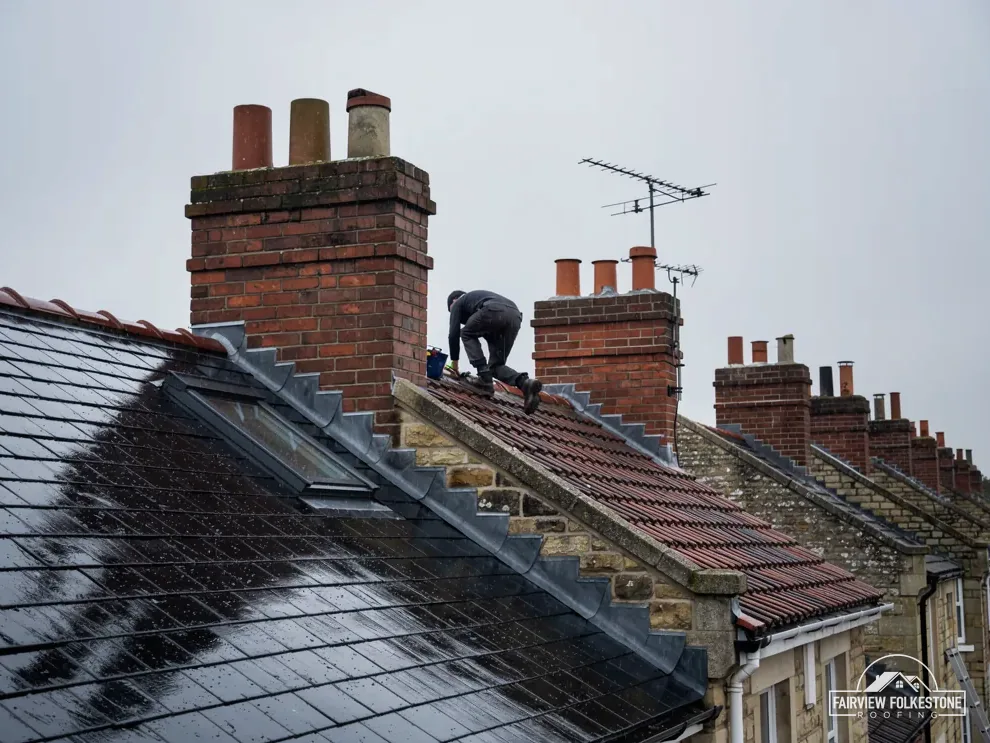
Chimneys sit awkwardly in all this because Class C has an exclusion of its own. It stops short of any roof alteration that involves a chimney, flue or soil and vent pipe being put in, changed or replaced. So the chimney question does not begin with the conservation area at all. The conservation area is a second reason to ask, on top of the chimney rule itself.
Which council to ask and what it publishes
The district council decides, and each one publishes something different, so check the right one for your address.
| Council | What it publishes |
|---|---|
| Folkestone & Hythe | An interactive map; no count given |
| Dover | 57 conservation areas; Article 4 areas named on its heritage page |
| Canterbury | 97 conservation areas; Article 4 areas on a map |
| Ashford | 43 conservation areas, on an interactive map |
| Rother (Rye and Camber) | Check with Rother District Council |
None of these pages says what a given Article 4 direction removes for chimneys, so the council has to tell you for your street. Send a short email with a photograph of the stack and your postcode, and ask whether the property is in a conservation area or under an Article 4 direction, and whether the job you are planning needs planning permission.
Keep the reply. It is the record you will want if the house is sold. If a neighbour shares the stack, tell them what the council said, since the work may reach their side.
What we put in writing for the council
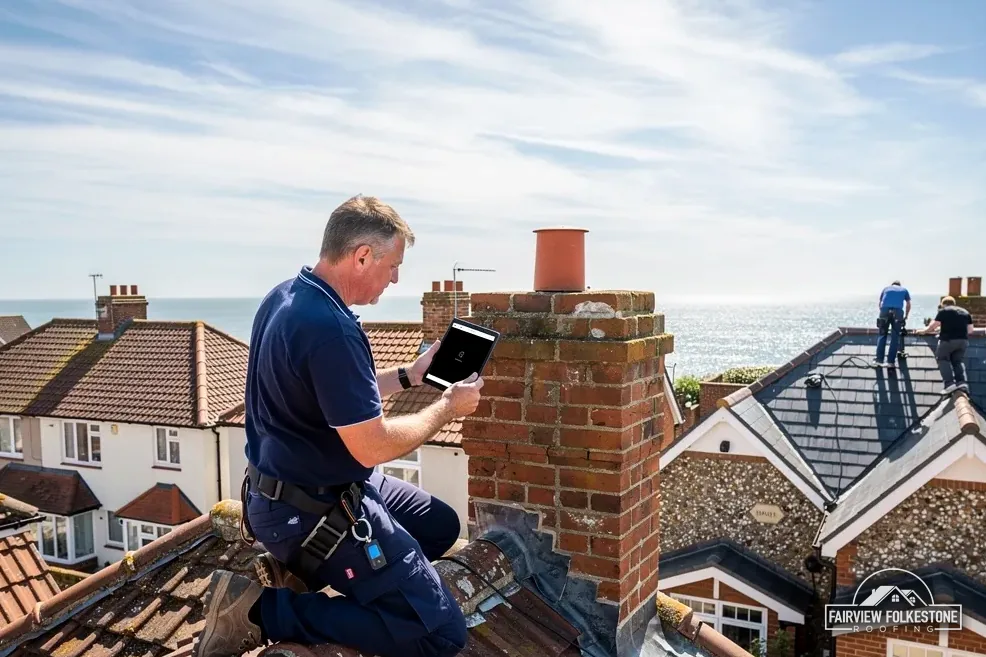
When a chimney job might need the council's say, the survey gives you what the council needs to answer quickly. The council makes the planning decision, so the aim is a clear note, not a guess.
The survey note covers:
- photographs of the stack from the roof, the pots and the flashing
- what is wrong with the stack, in plain words
- whether the work puts back what is there or changes its height, shape or pots
- whether the stack stands on a party wall, which brings in a neighbour's notice
Repairs that leave the stack as it stands are a different question from altering or removing it, and the planning team can confirm which one yours is. Where the answer is that no permission is needed, we go ahead on the written price you agreed, and the survey photographs go in your file. Where permission is needed, nothing starts until it is in your hands, and the written quote reflects the route chosen. See stack rebuilds if the stack must come down, and our chimney repairs page for the rest.
More questions
How can I check whether my house sits in a conservation area?
Use the interactive map on your council's website, and ask whether an Article 4 direction applies. Folkestone & Hythe, Ashford and Canterbury each publish a map. Dover says it has 57 conservation areas, and Canterbury says 97. For Rye and Camber, check with Rother District Council.
Does repointing a stack count as altering it?
Repointing puts fresh mortar into the joints and leaves the stack as built, so it is a different question from altering or replacing it, and a council can confirm that for you. In a listed home, ask the council anyway, because listed building consent covers works touching the building's character. Where no designation applies, our survey tells you which kind of job you have.
Tell us what's wrong with the roof.
You'll get one written total price.