
Chimney breast removal
Do you need building regulations to remove a chimney breast?
A breast is part of the structure, so taking it out is never casual. Here is who approves it, what a shared wall adds, and what becomes of the stack.
The short answer
Yes. The Planning Portal says building regulations approval will always apply when removing a chimney breast, because it forms part of the building's structure. If the breast sits on a party wall, a party wall notice is needed as well. The stack above the roofline raises a separate planning question, so settle that before any bricks come down.
5 min read · Part of Chimney repairs

Why the breast counts as structure
A chimney breast is the brickwork that projects into the room, and it carries the flue up towards the stack on the roof. Because the Planning Portal treats it as part of the building's structure, no size of job is too small for the rules to apply. Taking out the whole breast, or only the part in one room, still goes through building control.
Building control is carried out by the council's building control team or by a registered building control approver, a private firm listed with the Building Safety Regulator. If you choose the council, the right team follows the address:
- Hythe, Folkestone and New Romney addresses: Folkestone & Hythe Building Control, 01303 853538.
- Dover, Deal and Sandwich: Dover District Council's own building control service.
- Canterbury, Whitstable and Herne Bay: STG Building Control Partnership, 01634 331133.
- Ashford and Tenterden: Ashford Borough Council Building Control, 01233 330282.
- Rye and Camber: East Sussex Building Control Partnership, 01892 602005.
Ask the team what it wants to see before work starts, since the officer sets what goes in with the application. Ring first rather than sending a plan cold: the officer can say whether a drawing, a calculation or a site visit is wanted for your house.
The stack above the roof
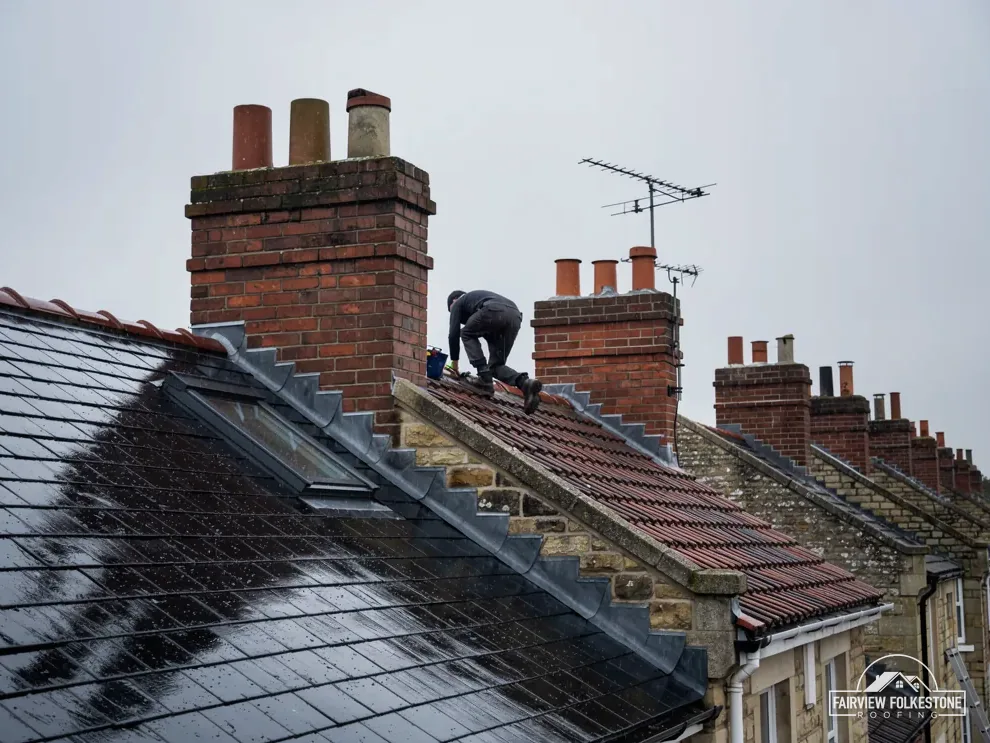
Taking out the breast inside does not mean the stack outside has to come down. If the stack stays, something has to carry it once the breast beneath is gone, and building control will want to see how that load is picked up. If the stack comes down, the outside of the house changes and the roof is made good where it stood.
Planning is the second test. The permitted development rule for roof alterations, Class C, does not permit an alteration that would consist of or include altering or replacing a chimney. So before a stack is altered or removed, ask your council's planning team what it expects. A listed home or a home in a conservation area adds further steps, and our page on a chimney in a conservation area covers them. The wider rules for roof work sit in our planning permission guide.
If you are weighing a full removal against a lower stack with a cap, we explain both routes at survey and give a written price for the one you choose. The roof, the loft and the neighbour all feed into it, so the choice is made at the stack and not from a table.
What it costs and what we survey first
MyJobQuote gives the average cost of removing a chimney breast as around £2,500, and the average price for removing the entire chimney stack with the breast as around £3,000 to £3,500. Those are third-party averages, with no VAT basis stated, and your own figure will turn on the house, how tall the stack stands and what it takes to reach it.
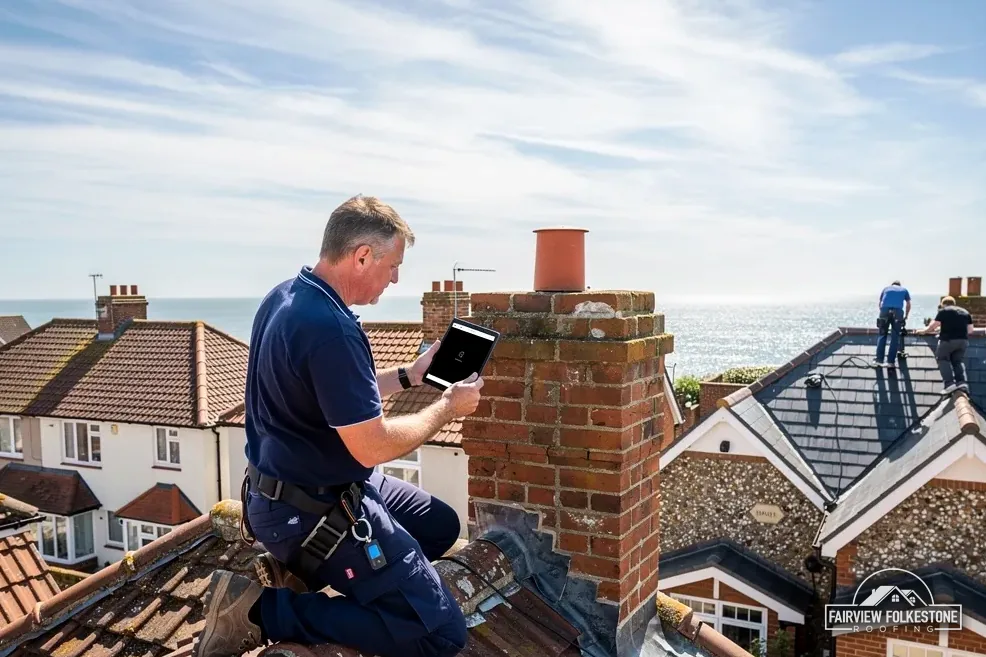
Before we put a price to anything, the survey covers:
- how the breast and flue run up through the house, floor by floor
- the state of the stack and its flashing where it leaves the roof
- how the stack would be carried if it stays
- access, including scaffolding and its licence
Once the survey is done you receive a single written total price, and the building regulations route is named in it, so there is nothing left to chase once the work is under way. A rebuild instead of a removal is a different job, and the stack rebuild page explains it. Everything we do on stacks, from repointing to a full rebuild, begins on our chimney repairs page.
More questions
Can my neighbour stop me removing a shared breast?
Not by staying silent. The Act deems a neighbour to have dissented if no consent is served within 14 days, and a dispute then goes to a surveyor, or one each. A neighbour can also agree in writing to an earlier start than the two months. A party wall surveyor can check the wording against your wall.
Is a registered approver as good as the council?
Both can carry out building control. The Building Safety Regulator's register covers private approvers, and the registration regulations came into force on 6 April 2024. Which route you take is your choice, and the survey we do is identical. Ask any firm for its registration details before you agree anything.
Tell us what's wrong with the roof.
You'll get one written total price.