Chimney insurance
Does home insurance cover chimney repairs?
A chimney is part of the roof line, so damage to it is judged on its cause and your policy's terms. Here is how to read the cover.
The short answer
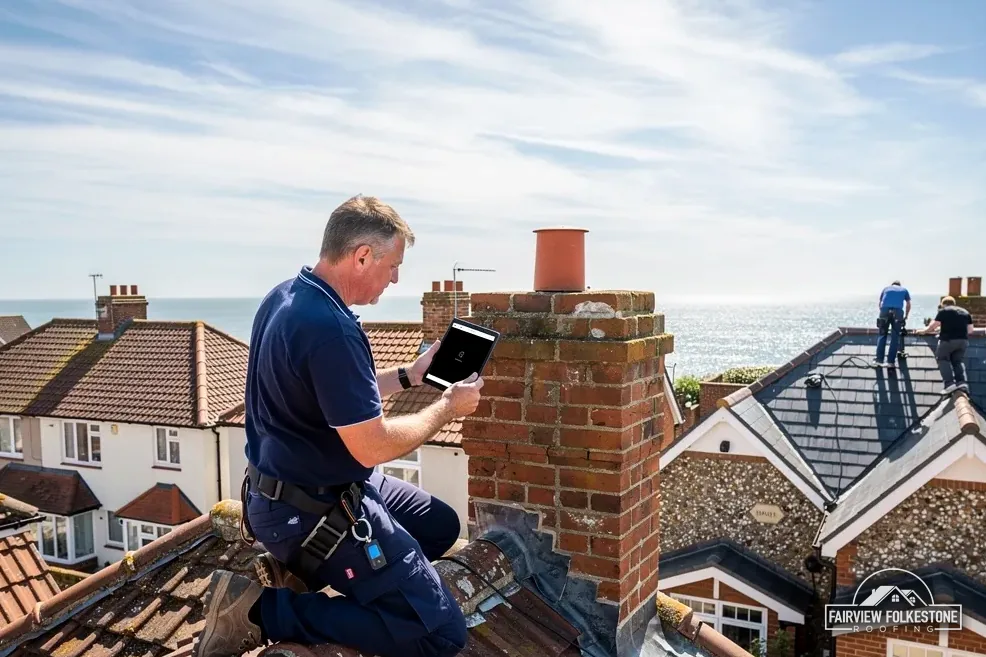
It can, when a storm or another insured event damages the stack, but the policy terms decide and slow deterioration is treated differently. Tell your insurer before the repair, make the stack safe, and photograph everything first. A survey note from a roofer describing what is on the stack can support what you send in.
4 min read · Part of Chimney repairs
Reading the policy for the stack
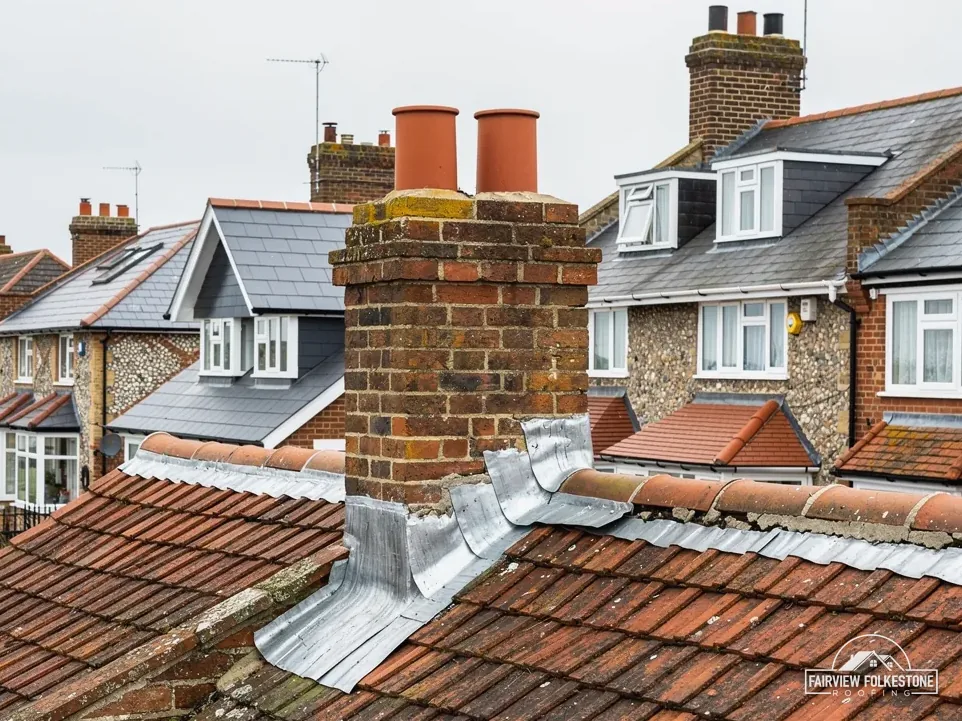
Where wind brought the stack down, the storm cover in your buildings policy is the part to read, and that wording varies from one insurer to the next. Read three things before you ring.
- How the policy defines a storm, and whether it sets a wind level.
- The exclusions, in particular any for wear and tear or gradual deterioration.
- The excess you pay on each claim, and whether the chimney is named or sits under the main building cover.
The Financial Ombudsman Service gives a guide to how it thinks about storms. In its view a storm normally means violent wind, normally with rain, hail or snow, but rain, hail or snowfall with no wind behind it can still be judged a storm. It weighs the Beaufort Scale too. An insurer may set its own bar at a given wind force on that scale, so your own wording carries more weight than any general rule, and a quick read of it now saves an argument later.
A roofer cannot say what your policy will pay. What we can do is describe plainly what is on the stack, so that what you send matches what is up there.
The order to do things in
Most of the trouble in a claim comes from doing the right things in the wrong order. This sequence is ordinary good practice rather than a rule from any one body.
- Phone or email your insurer before you book any repair, so the claim opens while the damage is as it fell.
- Stop further harm with a temporary repair to the roof and the room below, and keep people clear of the foot of the stack.
- Photograph the damage from several angles, including fallen bricks, pots and flashing, before any of it is moved.
- Keep a receipt for every temporary step.
- Wait for the insurer's instructions before a permanent repair begins.
When it judges a storm complaint, the Financial Ombudsman Service says it will usually look at expert reports and photos, and your insurer will normally ask a surveyor to write a report on the stack. A dated set of your own pictures is a good partner for that report. If bricks have already fallen, leave them where they landed until they have been photographed, then move them somewhere safe.
A stack that looks loose is a reason to ring the insurer today, not after the next blow.
Third-party figures for chimney and storm work
Your excess and any settlement depend on the policy. The figures that follow come from a third party and each one is a guide, not a price for your stack.
| Item | Figure and source |
|---|---|
| Emergency call-out | MyJobQuote: typically £150 to £300 |
| Extensive storm damage | MyJobQuote: repairs can cost £1,200 or more |
| Chimney lead flashing patch | MyJobQuote: typically around £200 |
| Full chimney lead flashing replacement | MyJobQuote: averages around £570 |
A call-out is attendance, not a make-safe, and the £1,200 figure applies to extensive damage only. MyJobQuote's pages state no VAT basis, so do not add or take off VAT from them. After a survey you receive one written total price for the stack, with the scaffold included, so your insurer sees a single figure rather than a pile of invoices, and the survey note can say which parts of the work answer the storm damage and which are separate maintenance. Our page on chimney repair costs explains what moves that price, and a firm written estimate is easier to set against a policy limit than a rough guess is.
When the insurer turns the claim down
A refusal is not always final. The Ombudsman says the insurer must prove that an exclusion applies, for instance with an inspection report, so ask to see the report that led to the decision, and check it against your own photographs. Then take the steps in order.
- Start with a complaint to the insurer itself, which has up to 8 weeks to look into most complaints.
- If you remain unhappy, the clock is 6 months from the date on the insurer's final response.
- The Financial Ombudsman Service helpline is 0800 023 4567.
Keep every letter and email, and note the date and name for every phone call. If you repair the stack meanwhile, keep the old pots and bricks until the insurer has said it does not need to see them, since a surveyor may ask to look at what came down.
A dangerous stack should not wait for the outcome. Make it safe, then arrange the permanent work when the reply arrives. For a stack that has moved, our leaning chimney page explains the checks, and every kind of stack work is listed under chimney repairs.
More questions
Should I repair a loose stack before telling my insurer?
No. Tell your insurer first, then make the stack safe with a temporary repair. A full repair done before the insurer has seen the damage can leave nothing for a surveyor to inspect. Photograph the damage where it lies, and hold on to the receipt for any temporary step you pay for.
How long does an insurer have to answer a complaint?
The Financial Ombudsman Service says a firm has up to 8 weeks to consider most complaints, and that the window for going to the Ombudsman is 6 months from the final response. Keep dated copies of everything you send, and note the date of every phone call and who you spoke to.
More on chimney repairs
All guides and posts
Tell us what's wrong with the roof.
You'll get one written total price.