
Chimney cost guide
How much do chimney repairs cost, and what moves the price?
Chimney repair prices swing with the job and the access. This guide sets out published figures with their sources, the scaffold licence fees, and what to check in a written quote.
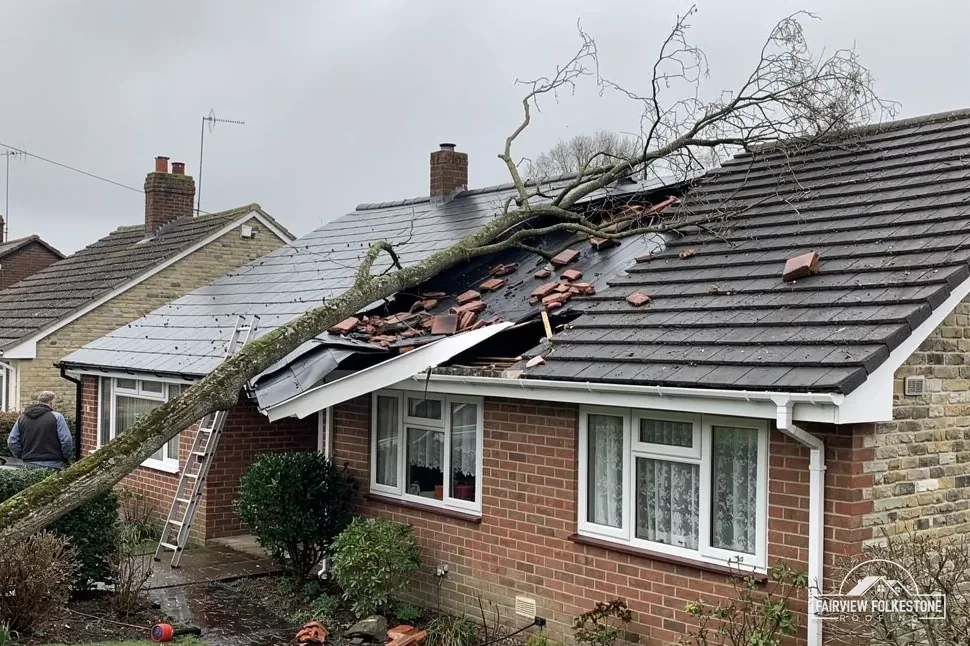
The word chimney covers jobs of very different sizes: a patch of lead, new pointing, a replaced pot, a rebuilt stack, a breast taken out of a room. A price for one says nothing about the others, which is why a single figure for chimney repairs would mislead you more than it helped.
So this guide works from the published figures that exist, names the source and the date of each, and says plainly which parts of a chimney job can only be priced by looking at the stack. The numbers are third-party typical ranges and not our prices. We quote one written total after a survey, and that total includes the scaffold the stack needs.
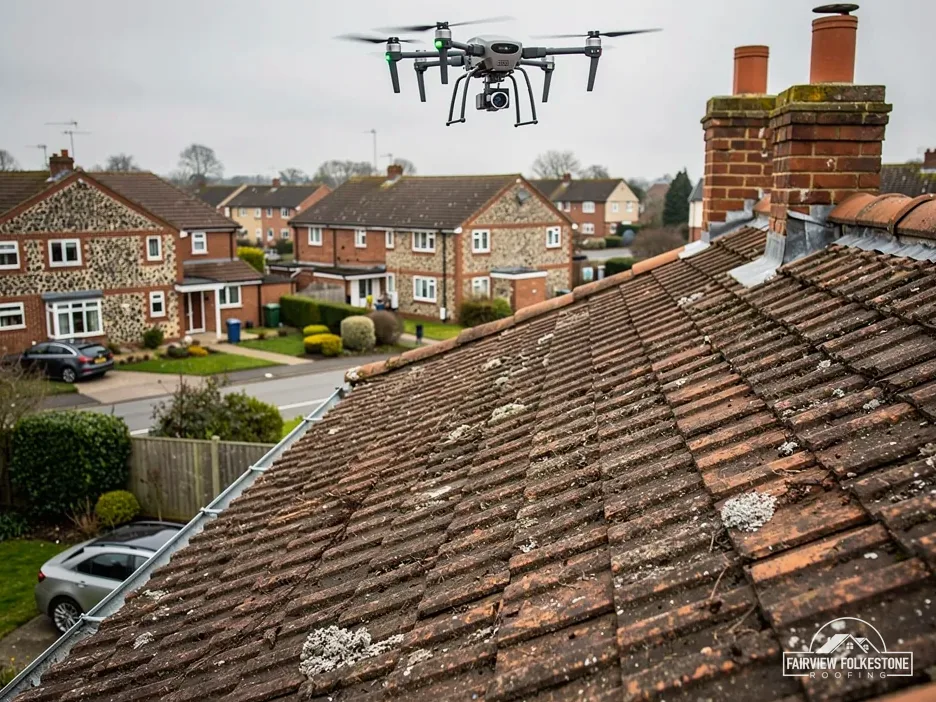
Scaffold is the cost people forget to ask about. A stack rises above the ridge, so reaching it safely shapes the whole quote, and on a street-facing house the scaffold can need a licence from the highway authority. The sections below take each part of the price in turn, then show how to read a quote when it arrives. The wider range of chimney work is set out on our chimney repairs page.
01Chimneys
What published guides say about chimney work
These are the third-party figures we can stand behind, each with its source and the date of its page. They show scale and nothing more, and every one is a typical or average figure and never a promise of what your own stack will cost.
| Job | Published figure | Source and date |
|---|---|---|
| Lead flashing, patch repair | Typically around £200 | MyJobQuote, 22 September 2026 |
| Lead flashing, full replacement | Averages around £570 | MyJobQuote, 22 September 2026 |
| Full leadwork replacement | £350 to £920 | MyJobQuote, 22 September 2026 |
| Chimney breast removal | Average around £2,500 | MyJobQuote, 3 November 2026 |
| Whole stack removed with the breast | Around £3,000 to £3,500 | MyJobQuote, 3 November 2026 |
Read the units before reading the figures. Checkatrade's repair rates, updated June 2026, show lead flashing repairs at £50 to £70 per metre; VAT and access equipment come on top, so the rate is not scaled up into a total for your stack. The MyJobQuote leadwork range comes with a useful clue: MyJobQuote adds that the range turns largely on whether scaffolding is needed. Access, in other words, can move a chimney price as much as the lead itself.
As a rough sense of scale, the figures suggest a patch sits nearer a few hundred pounds than a few thousand, while taking out a breast or a whole stack sits in the thousands. Your own stack's price still waits for the survey.
Where two pages from the same source give different numbers for the same job, we do not quote both side by side, and we prefer a range with its source over a single figure. Chimney work on a gable-end stack and on a stack rising through the ridge are different jobs to reach, which is why a survey records exactly where the stack stands.
02Chimneys · Survey
Pointing, pots and stack work are priced after a survey
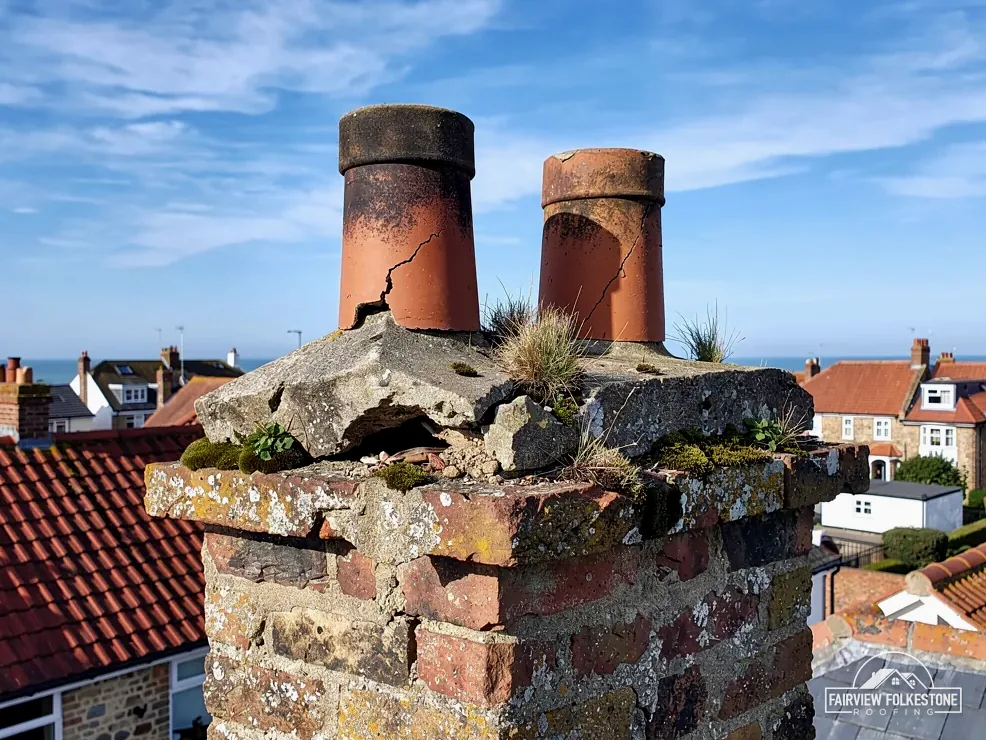
Several common jobs are priced only once the stack has been seen: repointing, replacing flaunching, fitting a pot or cowl, and rebuilding the top courses. A table of guesses would not help you, and a guess in a quote helps nobody.
Chimney cost questions
Why do two chimney quotes differ so much?
Chimney jobs vary from a patch of lead to a rebuilt stack, and access changes the price again. Check whether each quote includes scaffold and VAT, which parts of the stack it covers, and the lead code for flashings. Two quotes that look far apart can describe different jobs.
The price of that work turns on what the survey finds:
- how many faces of the stack are affected, and how far the mortar has gone
- how much brick has spalled, which decides whether bricks are replaced as well
- whether the flaunching and the pots are sound, or need rebuilding along with the pointing
- how tall the stack is and how it must be reached
- whether lead flashing falls due on the same visit
That last point is worth planning for. The scaffold is the same scaffold, so a stack that needs pointing and new flashing is cheaper to deal with in one visit than in two. Where we find both faults, the written price covers both.
Pots and cowls raise their own questions: whether the pot is cracked, whether it sits in sound flaunching, and whether a cowl is wanted at all. Our guides on chimney flashing repair and on repointing explain how each piece of work is done, so you can see what a quote is covering and what it is leaving alone.
Scaffold sits inside the written total, with the licence where one applies, and none of it is held back as a surprise for the end of the job.
03Scaffold
Scaffold and the highway licence
Scaffolding that obstructs a road or pavement needs a licence under section 169 of the Highways Act 1980. The county highway authority issues it, and the district council does not. Both counties we work in publish their fees.
The units differ, so the two are not compared: Kent charges per week and East Sussex per 28-day licence. Kent County Council's licence page says "the skip or scaffolding company should submit the application for you". East Sussex Highways does not say who applies, so for Rye and Camber, as for every address, we arrange the licence with our scaffolder.
| Authority | Fee and period | Notes |
|---|---|---|
| Kent County Council | £52 per week, 2026 to 2027 | Renewals go in 5 working days ahead |
| East Sussex Highways | £127 for 28 days | Check the current fee |
The conditions differ too. Kent's terms ask for "a minimum distance of 1.2 metre between the scaffold and carriageway for pedestrian access" on a walk-around scaffold. East Sussex wants pedestrians to keep a passage of 1.5 m at the least, plus a gap of 450 mm from the carriageway edge to the scaffold.
In Kent, applications, renewals included, are due five working days ahead of the licence's start date, so scaffold on the pavement cannot appear the moment a price is agreed. Both authorities can also charge for a site inspection if it is deemed necessary, at £78 in Kent for 2026 to 2027 and £68 in East Sussex. Those are the authorities' own fees. For a job with us, the licence and the scaffold sit inside the one written total.
04Quotes
Jobs that change the size of the quote
Some chimney work does not stay a repair, and the cost steps up with the job. Three situations change its size.
Does a chimney repair price include the scaffold licence?
Ours is one written total and the scaffold sits inside it. We arrange the licence with our scaffolder where the scaffold stands on the road or pavement, so it is never added later. When you compare quotes from anyone, check whether the scaffold and VAT are in each price.
- Taking out a chimney breast. A breast cannot come out without Building Regulations approval, which the Planning Portal says always applies because breasts form part of a building's structure. A breast built into a party wall brings a party wall notice to the neighbour too, served at least two months ahead of the start.
- Rebuilding or replacing a chimney. A roof alteration that includes the installation, alteration or replacement of a chimney falls outside Class C of permitted development, so the council is asked first. Our planning guide sets out the conditions.
- A listed or conservation area house. A listed house is a consent question first: work that touches its character needs listed building consent before anything is ordered, and a conservation area may add an Article 4 direction, so we check with the council before any chimney is altered.
The MyJobQuote figures for removal, around £2,500 for a breast and around £3,000 to £3,500 for the whole stack with the breast, show how far those jobs sit above a lead repair. They also hide a decision. A stack that is no longer used can sometimes be capped or taken down, and which is right depends on the roof and the rooms it serves, not on the price alone.
Whichever way it goes, we tell you what the stack needs and why, before you are asked to choose.
05Chimneys · Quotes
Reading a written chimney quote
A good quote lets you see what you are buying without turning it into a shopping list. These are the points worth checking in any chimney quote, ours or anyone else's.
- It gives one total price, and it states whether that includes VAT.
- It says whether the scaffold is inside the total, along with the highway licence when the scaffold is set up on the road or pavement.
- It names the parts of the stack being worked on: flashing, pointing, flaunching, pots.
- It says what happens if something worse turns up under the old lead or mortar.
- It states the lead code for flashings and soakers, so the specification is on paper.
- It lists any work that is not included, such as redecorating a stained breast inside the house.
On that fourth point, our rule is simple. If the old lead or mortar comes away to reveal rotten timber or crumbling brick, work pauses while you are shown the damage and given a revised written price.
Signing a contract in your own home after a survey gives you 14 days to cancel, and the work can start within that time only if you ask in writing. No such right covers a visit you requested for an urgent repair. If a problem arises that we cannot resolve together, the Citizens Advice consumer helpline on 0808 223 1133 is the place to start, because Trading Standards does not advise individuals.
06Storms · Insurance
Storm damage, call-outs and insurance
A chimney damaged in a gale is a different kind of bill, and the published figures separate it from planned repairs. MyJobQuote's emergency roofer page, dated 22 October 2026, puts call-out costs in a typical range of £150 to £300, and says extensive storm damage repairs can cost £1,200 or more. The call-out figure buys a visit, which is not the cost of making a stack safe or repairing it.
If you have home insurance, the order of events matters:
- Tell the insurer before arranging anything permanent.
- Arrange a temporary repair to make the roof safe, done by a roofer and never by climbing up yourself.
- Take pictures of the damage where it lies, and keep every receipt.
If an insurer turns down a claim you think is valid, put your complaint to it in writing first. The Financial Ombudsman Service may then step in, once the business has had its 8 weeks, in most cases, to consider the complaint. Whether a policy pays is a matter for the policy, so read its wording on chimneys, storms and wear. Ask your insurer what evidence it wants before the repair is done, because a repair carried out first can remove it.
Our answer on home insurance and chimney repairs sets out the steps in more detail. Staying clear of the roof and having it surveyed is safer than checking a stack yourself, and the survey findings are the kind of evidence an insurer's expert will look at.
Is repairing a chimney cheaper than taking it down?
A lead patch is a small job and removal is a larger one: MyJobQuote's averages are around £2,500 for a chimney breast and around £3,000 to £3,500 for the whole stack with the breast. Which is right depends on what the stack does for the roof, and we show you what we find first.
More on chimney repairs
All guides and posts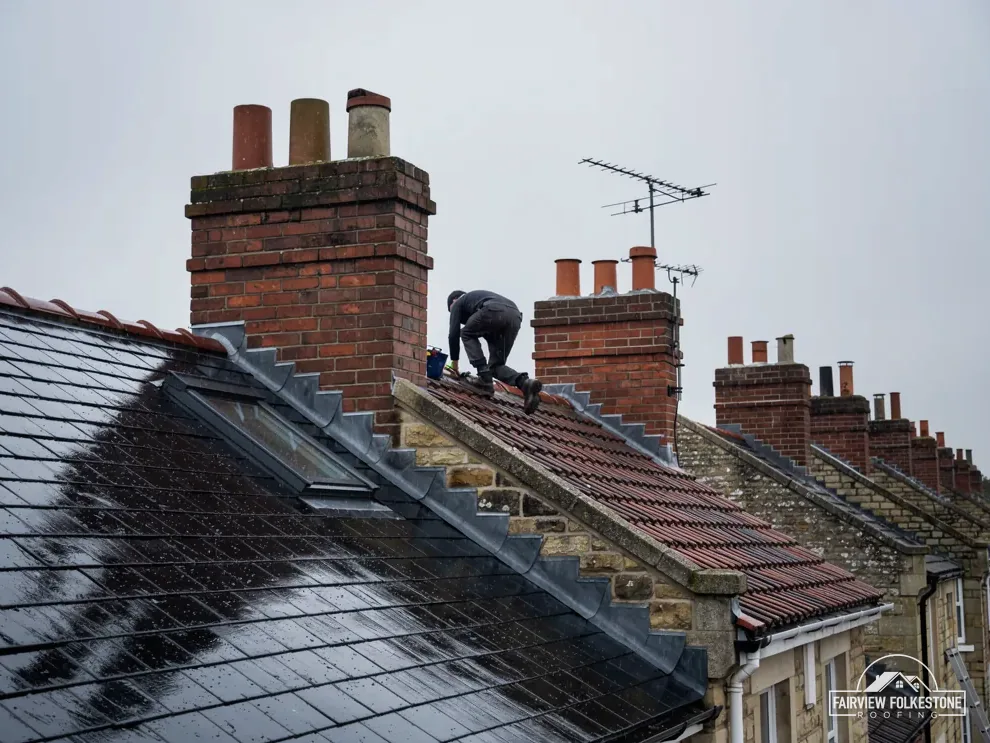

Tell us what's wrong with the roof.
You'll get one written total price.