
Leaning chimneys
Is a leaning chimney stack dangerous?
A stack that has moved no longer sits square on the roof. Here is how to keep people safe meanwhile and what the survey checks before a repair is chosen.
The short answer
Yes, it can be. A stack that leans has moved from where it was built, and bricks, pots or the whole top can come down onto the roof or the ground below. Keep people and cars away from the wall beneath it, do not stand a ladder against it, and have it surveyed. How far it leans decides the repair, not whether to act.
4 min read · Part of Chimney repairs
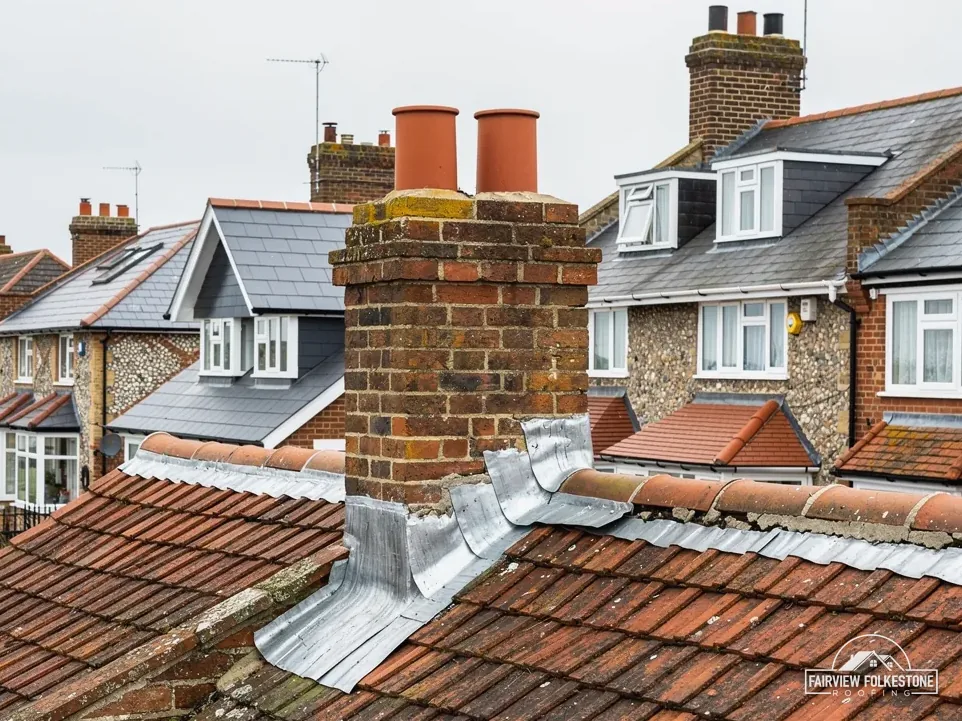
What to do on the ground today
You cannot judge a lean safely by climbing up to look, and a ladder against a moving stack is a risk of its own. What you can do from the ground is limited, and it is worth doing well.
- Keep children, pets and cars away from the wall and the path under the stack.
- Leave the fire or stove connected to that flue unlit until the stack has been checked.
- Photograph the stack from the same spot each week, so any change shows.
- Look for bricks, pots or mortar on the ground, in the gutter or on a lower roof.
- Check the ceiling and the chimney breast inside for new cracks or damp.
On Ashford Borough Council addresses, its building control page gives a dangerous structures line: 01233 330282 between 9am and 1pm, Monday to Friday, or 01233 331111 at any other time. For other councils, ring the building control team for your address and say that the stack looks dangerous; the number is on the council's website. If a piece has already fallen into the road or a neighbour's garden, tell them too, so nobody walks under it.
What the survey checks on a leaning stack
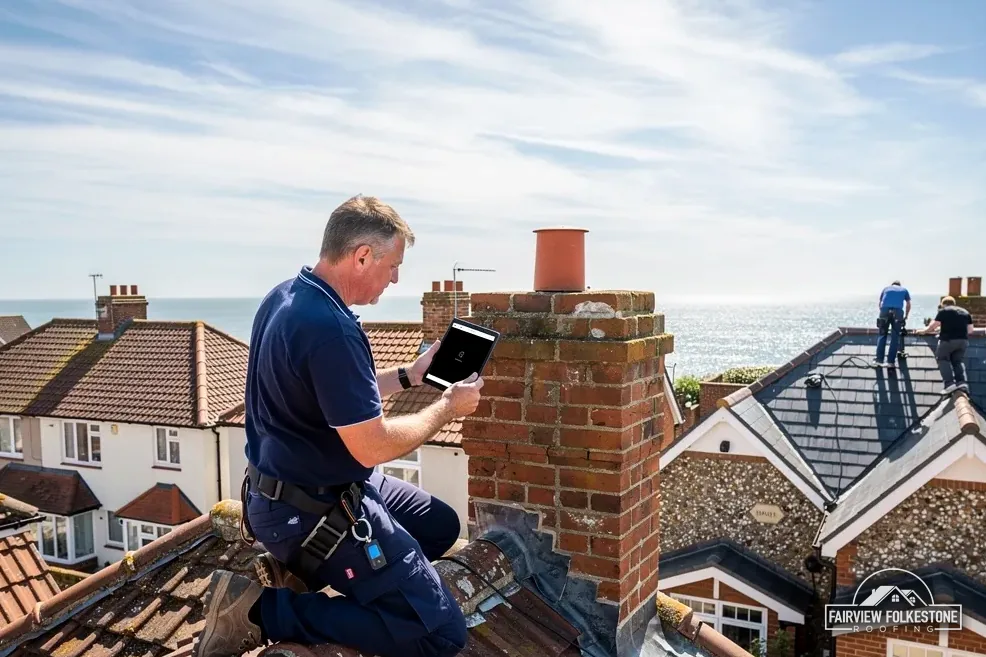
A lean is a symptom. The survey looks at the stack, and at what holds it up, to see where the movement started. The roof timbers beneath it are part of the picture, so the survey covers the loft as well as the stack, and the findings are written down, with photographs from the roof, so that you can see them for yourself rather than take our word.
| Part | What we look for |
|---|---|
| Pointing | Joints open or missing, mainly on the side it leans towards |
| Brickwork | Cracks, bulges and loose courses |
| Flaunching and pots | Cracked mortar at the top, tilted or loose pots |
| Flashing | Lifted lead or a gap where the stack meets the roof |
| Loft | Staining, damp brickwork and the timbers around the stack |
On a shared stack, we also note where the party wall runs, because a neighbour's notice may come into it. Our page on a shared chimney stack explains the steps. If you cannot get into the loft, say so, and we will plan the survey around that. A stack that backs onto a neighbour's loft may need their access too, so a word with them in advance helps.
Repair, rebuild or take it down
What the survey finds sets the work. These pairings show how the choice runs, and none of them is fixed until we have seen the stack for ourselves. A stack that is sound but leans slightly is a different case from one with open cracks, and only the survey can tell them apart. Where cracks run through the brick and not only the mortar, the choice moves towards taking the stack down; where only the pointing has failed, repointing may be enough.
| What the survey finds | Work it points to |
|---|---|
| Sound bricks, weak pointing, no movement | Repointing |
| Top courses loose, lower stack sound | Rebuild the top section |
| Movement running down into the stack | Take it down and rebuild |
| Flue no longer needed | Take it down and close the roof |
A stack is brickwork on mortar, so it is not pushed back upright. The leaning courses are taken down and built again, or the stack is reduced to a safe height, and the roof is made good around the base either way. Where the stack is rebuilt, our stack rebuild page explains the work in full.
Planning, scaffolding and the written price
Altering or replacing a chimney falls outside the permitted development rule for roof alterations, Class C, so ask your council's planning team before a stack is taken down or reshaped. Where the house is listed or stands in a conservation area, there are consent steps of its own.
A leaning stack needs a safe working platform, usually scaffold. If it stands on the pavement it falls under the highway licence rules, and we arrange the licence with our scaffolder. The fees differ between Kent and East Sussex and are set out on our scaffolding for chimney repairs page.
When the survey is finished you are given one written total price for the stack, scaffold included, and the building regulations and planning route is named in it. If the stack has already come down in a storm, photograph the damage where it lies before anything is cleared, and tell your insurer first, before any repair is booked. All our stack work is gathered on the chimney repairs page, from pointing through to a full rebuild.
More questions
Can a leaning chimney be straightened?
Not in the way the question suggests. A stack is brickwork on mortar, so it is not pushed back upright. The survey decides whether the leaning courses are rebuilt or the stack is reduced to a safe height. Either way, the loose top comes off first, and the written price covers the work.
Does rebuilding a leaning stack need building control?
The Planning Portal's rule that approval always applies is about removing chimney breasts. For a stack rebuild, we ask your council's building control team which route applies before we price the job, and we tell you whether a planning question sits alongside it, since altering a chimney is outside Class C.
More on chimney repairs
All guides and posts

Tell us what's wrong with the roof.
You'll get one written total price.