
Scaffolding and licences
Do chimney repairs need scaffolding?
A chimney sits at the highest point of the house, so how we reach it shapes the job. Here is when scaffold is needed and what a highway licence involves.
The short answer
Yes. Chimney work needs scaffolding or an equivalent safe working platform at the stack, and scaffolding that takes up part of the footway or the road needs a highway licence, issued by the county council. In Kent that is Kent County Council, at £52 per week for 2026 to 2027; in East Sussex it is East Sussex Highways. We arrange the licence with our scaffolder.
4 min read · Part of Chimney repairs
Why a stack needs a proper platform
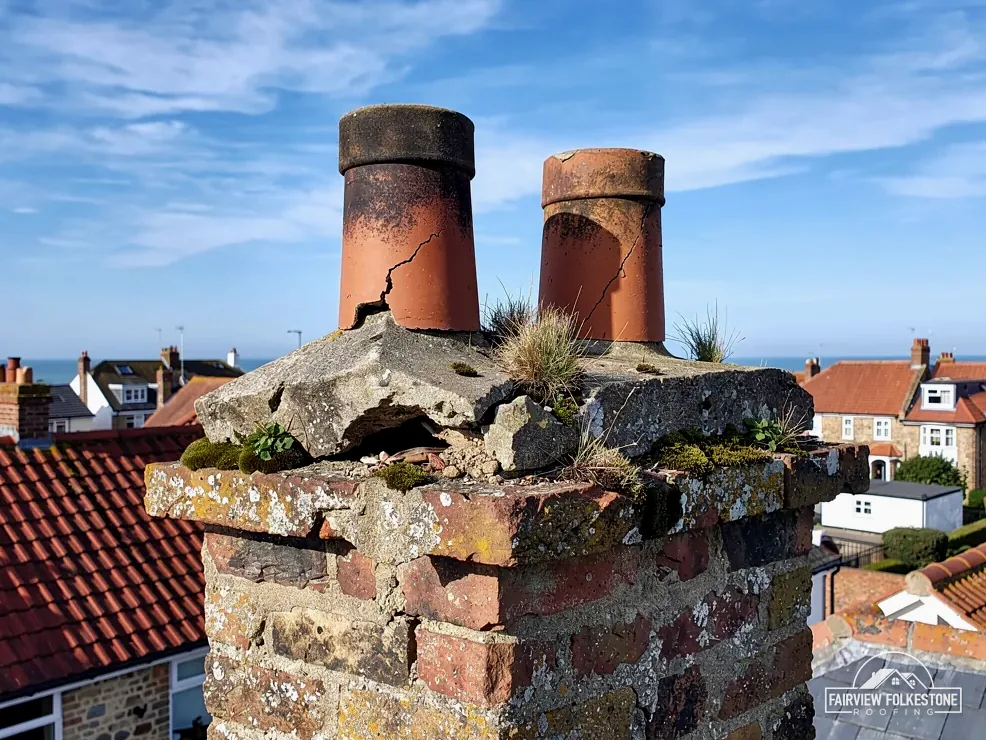
Chimney stacks rise above the ridge or the party wall, so the work happens beyond a ladder's safe reach and on or beside a slope. Repointing, replacing a pot, relaying the flaunching and renewing lead flashing all need two free hands and a firm place to stand. A platform at the stack gives that, and it gives somewhere to put materials and the old pots and bricks as they come off, instead of letting them slide.
The survey decides what the stack needs, from the roof, the pavement and the height, and not from a rule of thumb. The options we weigh are:
- a full scaffold up from the ground on the road or pavement side
- a lower scaffold or tower where the stack sits near an edge and the ground is level
- a working platform built at the stack where the job is small and the roof is safe to stand on
Your written quote names the one chosen, and the scaffold sits inside the one total price, so no separate scaffold bill turns up later.
How the highway licence works
Under section 169 of the Highways Act 1980, scaffolding that obstructs a highway cannot be erected or kept there without a licence. The licence for it comes from the county highway authority, never from the district council, and two authorities cover our area.
| Authority | Fee and period | Covers |
|---|---|---|
| Kent County Council | £52 per week, 2026 to 2027 | Every Kent address |
| East Sussex Highways | £127 for 28 days; check the current fee | Rye and Camber |
The units differ, a single week against a period of 28 days, so the two figures cannot be set side by side. Kent County Council's own licence guidance has the scaffolders lodge the application; East Sussex Highways does not state who applies. Whichever county you are in, we arrange the licence with our scaffolder, and you do not deal with the council yourself. Anyone in East Sussex who wants help filling out a licence form can ring East Sussex Highways on 0345 60 80 193, though with us that step is already taken care of.
Conditions that come with a licence
A licence carries conditions, and they are the reason a scaffold on a narrow pavement is planned rather than thrown up.
- Kent: if the scaffold is walk around, a minimum distance of 1.2 metre between the scaffold and carriageway for pedestrian access.
- Kent: vertical standards are to be painted white for a minimum of 2.5 metres from pavement level.
- East Sussex: a clear passage of at least 1.5 m for pedestrians, with at least 450 mm between the scaffolding and the carriageway edge.
- East Sussex: no scaffolding on the highway during the annual bonfire celebrations.
Both councils list a site inspection that can be charged if it is deemed necessary: £78 for 2026 to 2027 in Kent and £68 in East Sussex. East Sussex Highways takes its fee at the point of application, Kent County Council sends payment instructions once an emailed application arrives, and in both counties the licence must exist before the first pole is stood, so a job in a narrow street begins with paperwork and not with the scaffold. Our page on chimney repair costs gives third-party figures for the repair itself, kept apart from the scaffold.
Time on site and what to check in a quote
A licence covers a set period, so the plan for the work matters. Kent's permit runs for 7 calendar days, and East Sussex's for 28. Kent County Council wants every application, renewals included, in 5 working days before the planned start date, and East Sussex Highways asks for an extension to be applied for at least five working days ahead of expiry. Neither lists a separate extension fee, so an overrunning job is spotted early, not on the last day.
When you compare quotes for stack work, check that each says:
- whether the scaffold is included in the price
- whether the highway licence is included
- whether VAT is added on top
- who deals with an extension if bad weather stops the work
Ours is a single written total price following the survey, scaffold included, so each of these questions has an answer on paper before work begins, and the answers can be set against any other quote you hold. For what each stack job involves, see replacing a chimney pot and stack rebuilds; for everything else on stacks, the chimney repairs page. A scaffold on private ground alone involves no highway licence, and the survey records which case applies to your house, since a front garden, a side passage and a pavement are treated differently.
More questions
Who sends in the licence application for my road?
Under Kent County Council's licence guidance it is the scaffolders who lodge the application. East Sussex Highways does not state who applies. Either way we arrange the licence with our scaffolder, so you need not complete a form or deal with the council, and the licence cost sits inside the written price.
What if the job runs past the end of the licence?
Ask for an extension before the permit ends. Kent County Council says renewals should be in 5 working days before work begins, while East Sussex Highways wants an extension applied for no later than five working days prior to expiry. No extension fee is listed by either, so at survey we say how long the work should take.
More on chimney repairs
All guides and posts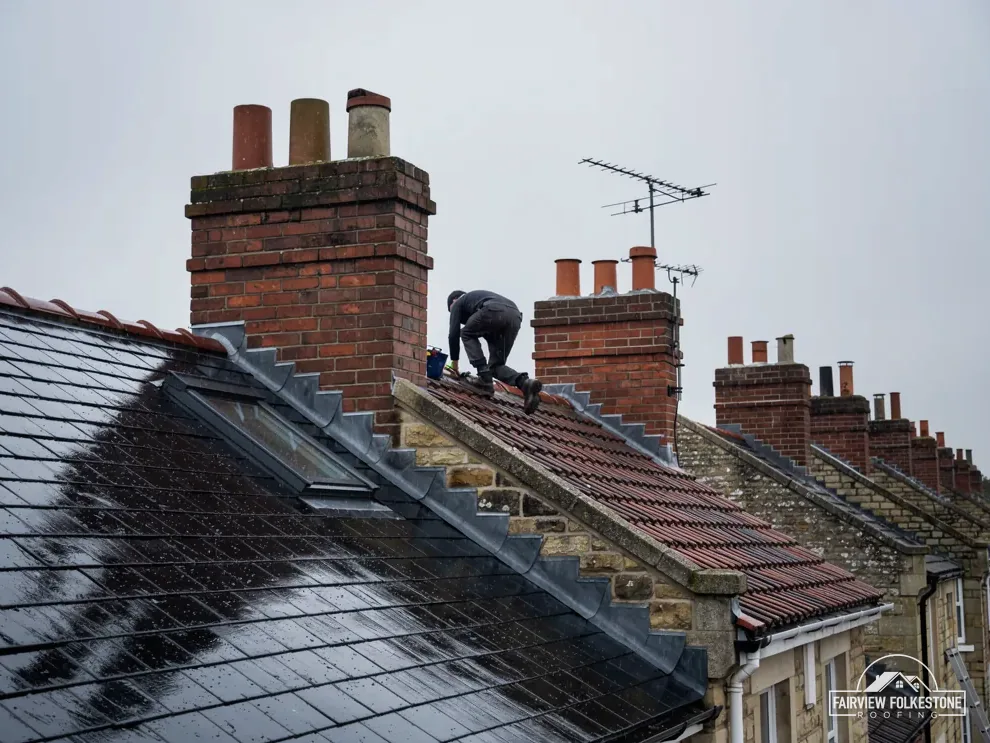

Tell us what's wrong with the roof.
You'll get one written total price.