
Chimney rebuild guide
Rebuilding a chimney stack: when repair is no longer enough
A stack is rebuilt when its brickwork can no longer be mended course by course. This guide covers the signs, the steps, the rules to check first and what moves the price.
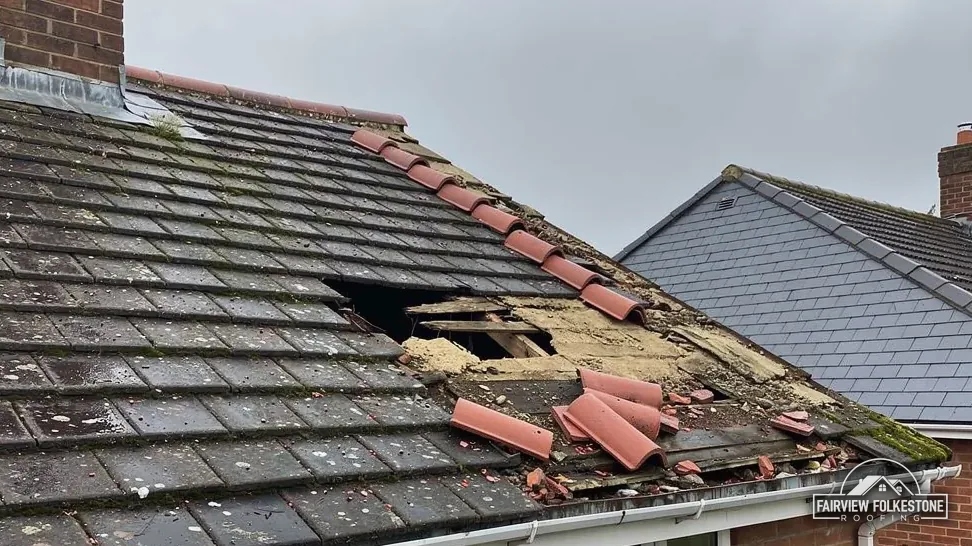
A chimney stack that has been repaired twice and still sheds brick is asking a different question from one with a single open joint. Repair mends a defect and leaves the structure standing. A rebuild takes the brickwork down and builds it again. It is a bigger job with more to check beforehand, so it should be the answer only when the stack itself has stopped being sound.
This guide sets out how we tell the two apart from the roof and from the loft, what happens once a stack comes down, which rules and neighbours come into it, and what moves the price. A rebuild is never where we start. We look for a sound course to repair from first, and either way you hear what we saw, so you can see the reason for the verdict and not just take our word for it. Photographs of the brickwork go with it where we can take them.
01Chimneys
What a stack is made of and where it fails
A stack is more than the brick chimney you see from the street. From the top down it has a pot or a cowl (the cover that sits over a pot), the flaunching, which is the mortar collar that beds the pots and sheds rain off the top, the brick shaft with its mortar joints, and the lead flashings where the shaft meets the roof. Below the roofline sits the chimney breast in the loft and the rooms underneath. Each part ages at its own rate, and a fault in one is not always a fault in the stack as a whole.
These are the places we look when a stack is in doubt:
- Joints weathered back, so the brick edges are no longer held at the face.
- Brick faces that have flaked or crumbled, exposing the softer body behind them.
- A shaft that has moved, shown by a lean, a step in the courses or a gap at the roofline.
- Flaunching that has cracked or lifted, leaving the pots loose.
- Flashings that have lifted or split along the brickwork.
- Staining and powdery deposits on the breast inside, which can point to water coming down the stack.
The first three belong to the brickwork itself, and they decide whether a rebuild is in question. The last three are repairs on a stack that may be otherwise sound, and they are covered on our pages about chimney flashing repair and in the wider chimney repairs work. Sorting one group from the other is the first job of the survey. A stack with sound brickwork and tired flaunching does not need to come down, whatever it looks like from the pavement.
02Repairs
Repair signs and rebuild signs
The deciding question is whether sound brick and sound bedding can be found within reach. If they can, the work is a repair from that point. If the fault runs down through the shaft, there is nothing firm to repair to, and the stack has to be taken down to wherever the firm brick begins.
The word "rebuild" covers more than one size of job. Where the damage stops a few courses down, only the top of the stack comes off and is built back, and the lower shaft stays. Where the whole shaft has moved or lost its bedding, the stack comes down to the roofline or to the first firm course below it.
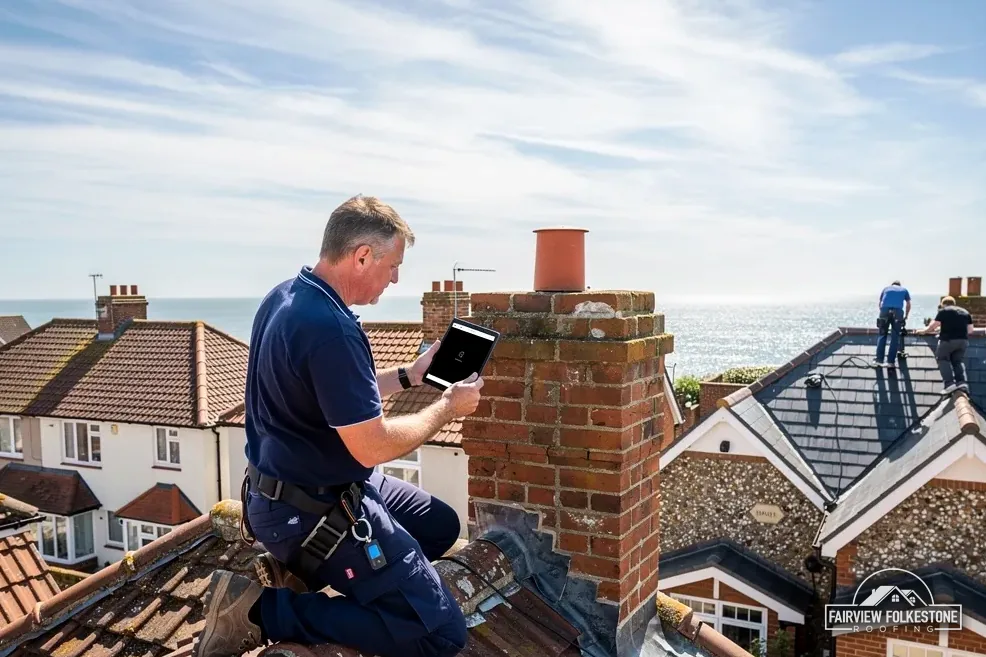
We look from the roof and also from inside, since the roof space shows what the street cannot. If you can reach the hatch, send us a photograph of the breast where it meets the roof. We can read a good deal from it before we come out, though the verdict is only given after a visit.
| Seen on survey | Likely cause | Verdict |
|---|---|---|
| Joints weathered, bricks firm | Pointing at the end of its life | Repair |
| A few faces flaking near the top | Damage in the upper courses only | Rebuild the top |
| Courses stepped or the shaft leaning | Movement in the stack | Check, likely rebuild |
| Bricks loose when pressed by hand | Bedding gone through the shaft | Rebuild |
| Cracked flaunching, firm shaft | A top that no longer sheds rain | Repair |
Stack rebuild questions
Can the old bricks go back into a rebuilt stack?
Sound ones can. Each brick is checked as it comes down and cleaned for reuse, which keeps the stack matching the rest of the house. Bricks that have flaked through their faces are replaced with a match in size and colour, chosen in daylight against the originals. Reusing what is good also keeps the quantity of new brick down.
03In order
What happens once a stack comes down
A rebuild is a sequence, and the order protects both the roof and the people below it.
- Scaffold goes up so the stack can be worked on from a safe platform, with the roof covering protected underneath it.
- The pots and cowls are lifted off and set aside, and any flue that stays in use is kept clear of falling debris.
- The brickwork is taken down course by course to the first sound course, and each brick is checked as it comes off.
- Sound bricks are cleaned for reuse. Any that have flaked through their faces are replaced with a match in size and colour.
- The shaft is rebuilt in fresh mortar, with the courses kept level and plumb so the stack stands true.
- New flaunching beds the pots, and the lead flashings are dressed against the new brickwork.
- We check the loft side, then clear the debris and leave the roof tidy.
Reusing sound bricks keeps the stack looking like the rest of the house, which matters on a street where the stacks run in a line. Where the originals cannot be matched by a new brick, the match is chosen by eye in daylight with the old brick beside it, not from a catalogue picture.
The flashings are renewed as part of the rebuild, not left from before, because they are cut into the brickwork and cannot be taken off and put back without disturbing the stack around them. Lead is what we use for them. MyJobQuote says correctly installed lead flashing can last for over 80 years, which is why the flashing is worth doing again properly the first time.
04Key points
Rules to check before the first brick comes off
A rebuild is not always a simple like-for-like repair in the eyes of the planning system, so we check the route before the scaffold goes up.
Will a rebuild mean new pots and flashings as well?
The flashings, yes, because they are cut into the brickwork and have to be dressed against the new courses. New flaunching beds the pots. Pots that are whole can be set back, and ones that have cracked are replaced. We show you what is sound before anything is thrown away.
- Class C of the permitted development rules covers other alterations to a roof, including re-roofing a house, but it stops short of work that consists of or includes the installation, alteration or replacement of a chimney, flue or soil and vent pipe. A rebuilt stack is therefore a question to put to the planning team at your council first.
- A listed house keeps its permitted development rights, and it also needs listed building consent for anything that touches its character. A stack can form part of that character, so the listing is confirmed before anything comes down.
- In a conservation area, or where an Article 4 direction removes rights, check with the council before you commit. What a given direction removes is a question for that council, not for us to assume.
- Birds can nest in a stack. Under the Wildlife and Countryside Act 1981, destroying an occupied or half-built nest on purpose is an offence, so a stack with a live nest in it waits for the birds to leave.
Taking a stack down for good is a different job. In the Planning Portal's words, approval under the building regulations always applies to removing a chimney breast, which counts as part of the structure. That is the subject of our page on chimney breast removal and building regulations, and a rebuild does not touch the breast.
If the stack is joint property with next door, a party wall notice may apply, covered in the next section.
06Price
What sets the price of a rebuild
Rebuild prices wait for the survey, so none appears here. The nearest published number belongs to a different job, taking a stack away: MyJobQuote gives around £2,500 for removing a chimney breast and around £3,000 to £3,500 for removing the whole stack with its breast. They are averages, and they are a reason to ask for a price on your own stack and not to guess at one.
Does my neighbour need to be told before the stack is rebuilt?
If the stack stands on a party wall and the work involves the party structure, yes. You serve the notice as building owner, giving two months or more where the party structure is being worked on. A neighbour who agrees in writing can allow an earlier start. Tell us when you book and we will say whether we think it applies.
What moves the cost of a rebuild on your own stack:
- How many courses come down, from the top few to the whole shaft.
- The number of pots and flues the stack carries.
- Whether the old bricks can be reused or a match must be sourced.
- Stack height, and the way the scaffold has to be set around it.
- New lead flashings, and how much brickwork they must be cut into.
- A party wall notice, and the time it adds before the start date.
The survey comes before the price, which is one written total. Whichever quote you hold, look for a line saying whether VAT and scaffold are in it. If the survey finds that only the top courses are the problem, you will hear that straight away, with the reason, because a smaller job is the fairer answer when the stack allows it.
Should lifting the top courses show a weaker shaft than the outside suggested, the work pauses, you see the brick for yourself, and a revised price follows before anything more is touched.
More on chimney repairs
All guides and posts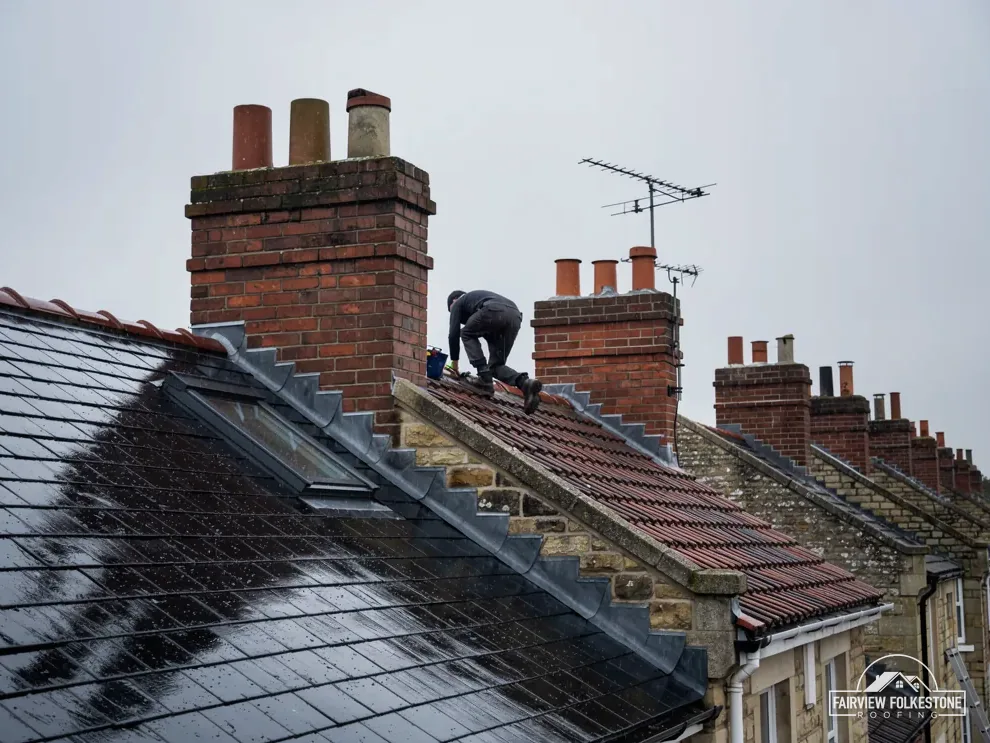

Tell us what's wrong with the roof.
You'll get one written total price.