
No scaffold needed
Can a roof be inspected without scaffolding?
Yes, for the inspection itself. Below: the three ways to reach the roof, what they cannot show, and when scaffold and its licence come into the job.
The short answer
Yes, a roof can be inspected without scaffolding. A ladder reaches the eaves and lower slopes, the loft shows the roof from beneath, and a drone covers high or steep areas. Together they answer the main questions about condition. Scaffold usually matters for the repair, not the inspection, and the survey tells you whether any will be needed.
5 min read · Part of Roof inspections
Three ways to reach the roof
A survey does not need a platform round the house to be thorough. Three methods, used together, cover the roof:
- a ladder at the eaves, with a roof ladder on the slope itself where the pitch and covering allow, for a close look at slates, tiles, verges and gutters
- the loft, which shows the underside: stained timbers, damp insulation and any chink of daylight
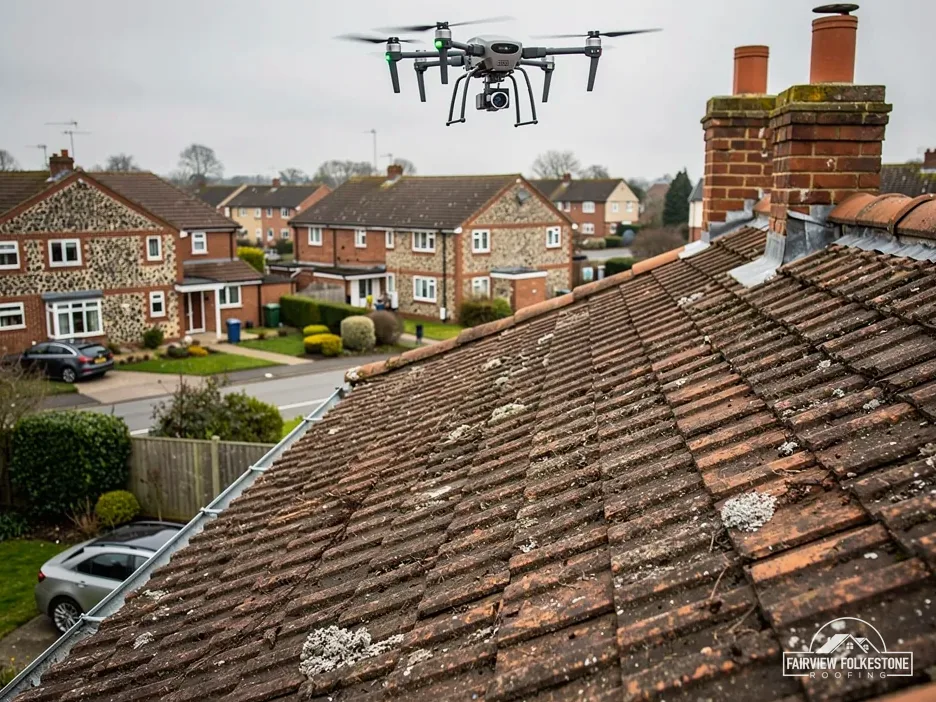
- a drone for the parts a ladder cannot safely reach, such as a high ridge, a rear slope or a chimney stack
Each method suits different faults. A slipped tile shows from the ladder. A gap that has let rain in shows from the loft as a dark mark on a rafter, which can sit well away from the tile that caused it. The drone settles whether a stack's pointing and flashings look sound before anyone climbs near it. Photographs from all three go into the report, each marked with its position on the roof.
None of these asks you to pay for scaffolding hire just to find out whether you need work. Our post on drone, ladder and loft inspections compares them, and the roof inspection checklist shows what each one looks at.
What these methods cannot show
Every method has limits, and a good report states them. From a ladder you cannot see the far side of a roof that is too steep or too tall to reach. A drone records images but cannot feel whether a tile is loose or press on a soft patch of lead. The loft cannot show anything hidden behind insulation that has been boarded over, and foam sprayed over the timbers hides them, as RICS notes in its consumer guide.
Asbestos is another limit. For a building built or refurbished before 2000, HSE tells owners to assume asbestos is there, and its A14 guidance calls asbestos cement roofs fragile in every case. An old cement-sheet roof is therefore never walked on: it is photographed from the ground and from the air.
So the findings should say what was reached, how, and what was left. If something could not be judged, the next step might be a closer look with access equipment, at a cost you can weigh against the risk.
That is the fair way round. You pay for scaffold only when a part of the roof calls for it, and the written findings say which part and why. Our roof condition report answer shows how limits are recorded.
When scaffold comes into the job
Scaffold is for repairs and replacements, where people and materials need a safe working platform. It might be needed for a chimney rebuild, a re-roof, or work at a high eave. The survey tells you if so, before anyone books it.
Where scaffolding stands on the highway, a licence is needed. In Kent, Kent County Council licenses it at £52 per week for 2026 to 2027, and its page says the scaffolding company should submit the application. In East Sussex, a licence comes from East Sussex Highways, which lists £127 for 28 days; confirm the figure with them, since the published table might lag behind the latest uplift. In Kent and in East Sussex alike, we arrange the licence with our scaffolder.
Kent also lists an optional site inspection at £78 if deemed necessary, and asks for applications, renewals included, five working days ahead. That lead time is one more reason to settle the scaffold question at survey stage and not on the day the work is due to start.
Scaffold is included in the written quote, which is one total price given after the survey. The scaffold itself is not a reason to delay an inspection.
Keeping yourself safe
Climbing onto a roof yourself is the riskiest way to inspect one. Slates and tiles can shift underfoot, wet surfaces are slippery, and a fall from roof height can do serious harm. Standing on a weak covering can also crack more of it than was cracked before.
There is plenty you can do safely. Study the roof from the garden and the street through binoculars. Look for plants growing in the gutters and for stains on the wall behind a downpipe. In the loft, a torch will show daylight, damp patches and dark timber. Photograph what you see and write the date on each shot: the Financial Ombudsman Service says it will usually look at expert reports and photos, so a dated set is worth having if you ever need to claim.
Then leave the roof itself to someone with the right equipment and a safe way up. A few minutes at ground level with a notebook gives an inspector a useful head start. Our roof inspections page explains what we check and how we report, and your own photographs are useful alongside it.
More questions
Is a drone survey as good as a ladder inspection?
They show different things. A drone is better at height and angle, and it keeps no one on a steep or fragile roof. A ladder gets close enough to see a hairline crack or test whether a tile is loose. The sensible plan is to use both, and then go into the loft to confirm what the outside suggests.
Who pays for scaffold if the survey finds work to do?
It is part of the work, so it sits inside the written quote, which is one total price. Ask any firm to say whether scaffold and VAT are included in its price. For scaffolding on the pavement, the licence is arranged with our scaffolder, and the fee is the highway authority's own licence charge.

Tell us what's wrong with the roof.
You'll get one written total price.