
Chestfield · 23.1 road miles from Folkestone
Roofers in Chestfield
A village with a conservation area of its own, a Grade II listed tythe barn and a centre 0.86 miles from the coastline. Show us the roof as it stands, from the ground or from the landing window, and we say what it fairly needs before any price is written.
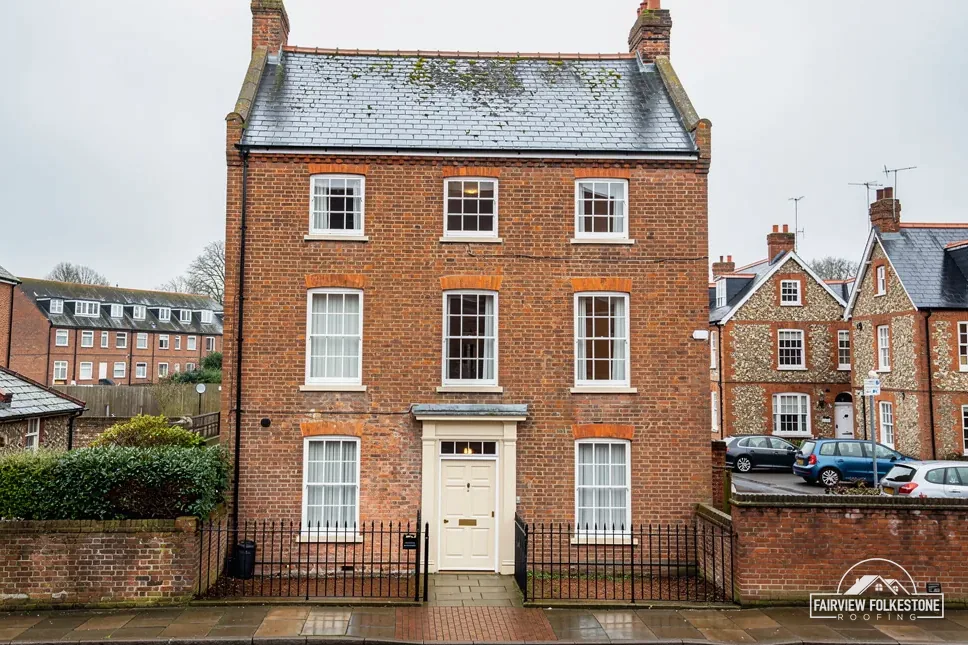
- Heritage designation
- The Chestfield conservation area, on Canterbury City Council's list
- Listed barn
- North and South Tythe Barn, Grade II, first listed in 1976
- From the coastline
- The centre is 0.86 miles away, so fixings are calculated for the site
- Scaffold permits
- Kent County Council, £52 per week for 2026 to 2027
Chestfield roofs: the verdicts a survey can hand back
What we found
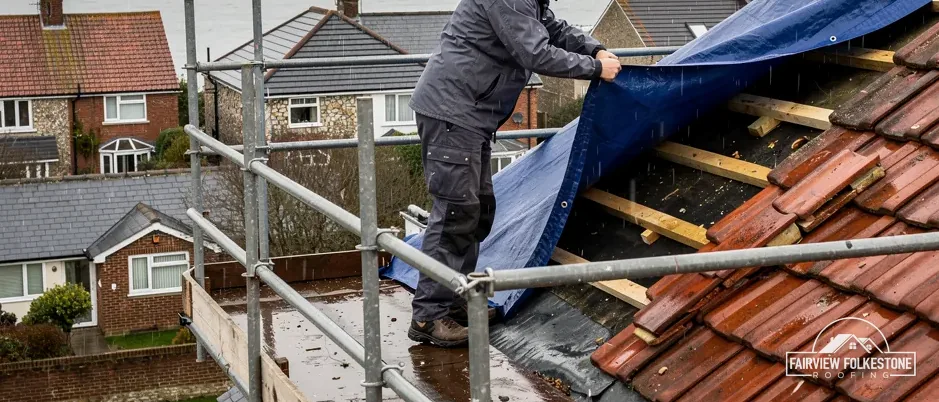
Slates slipping on an open slope
What it fairly needs
Rehang them on sound battens.
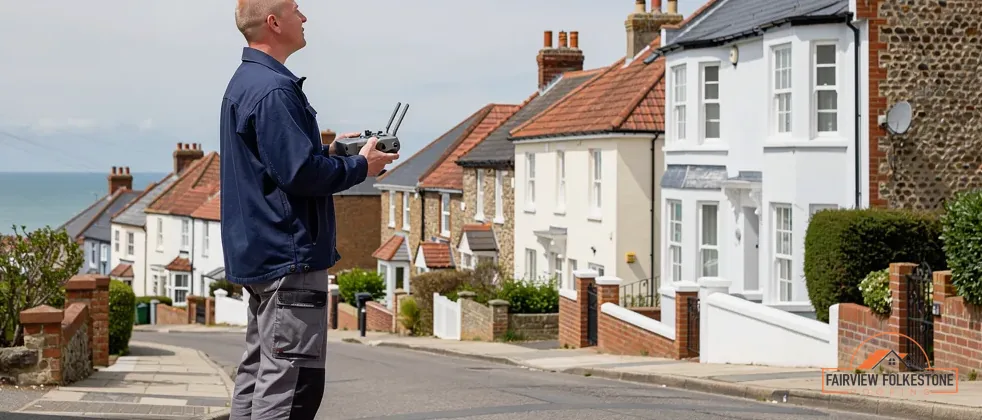
What we found
A roof near the listed tythe barn
What it fairly needs
Ask the council before pricing.
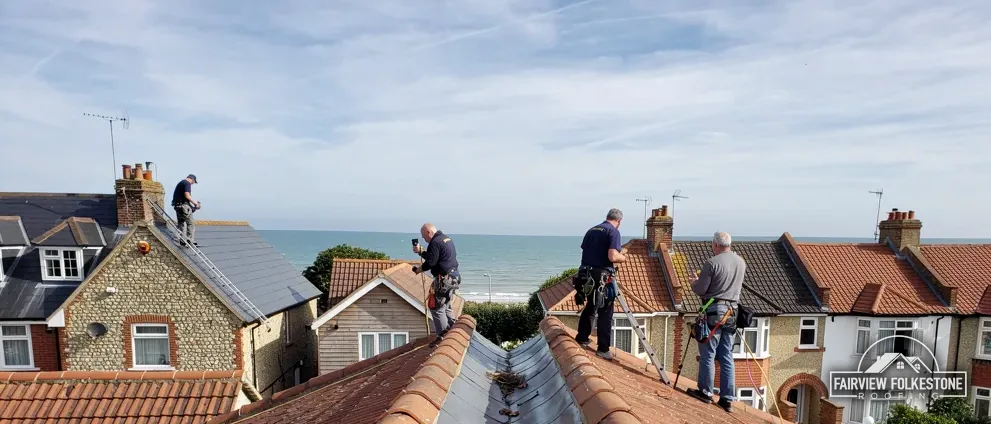
What we found
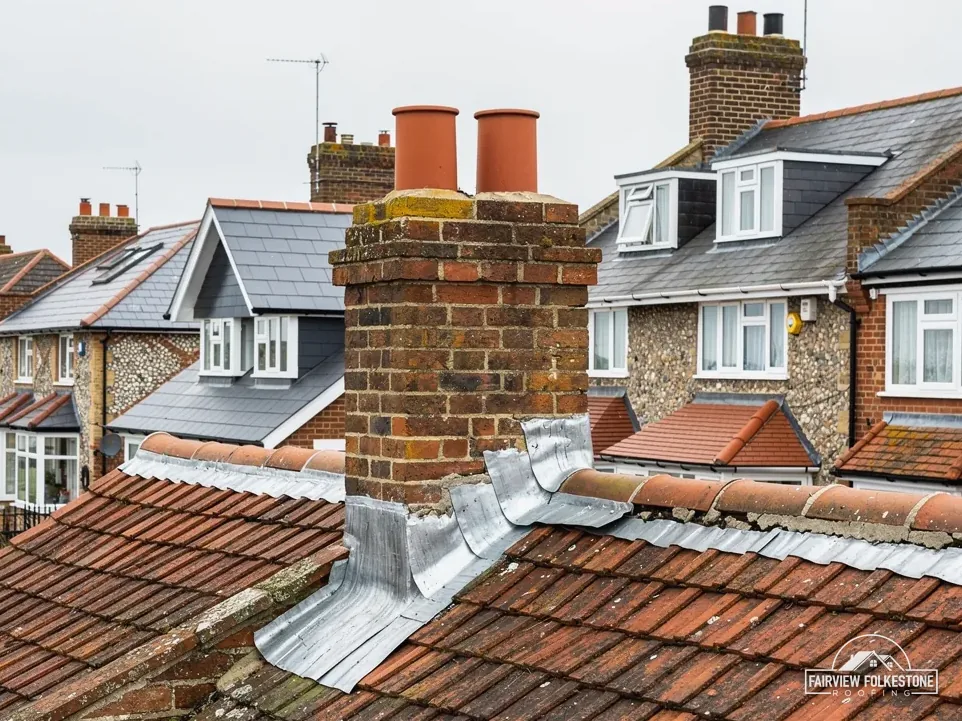
Chimney flashing letting damp in
What it fairly needs
Strip it and lay new lead.
The fair ledger
Exposed slopes, a listed barn and chimney lead in Chestfield
Chestfield's centre is 0.86 miles from the coastline, and its list entries include a Grade II tythe barn. The three entries below take exposure, listing and chimney lead in turn, and each closes on a verdict.
Entry 01Exposure
Slipped slates 0.86 miles from the coastline: fixings worked out per roof
Cupa, which makes slate, reports that a coastal building is graded for higher exposure. A slipped slate in Chestfield is therefore a prompt to check how the whole slope is held, not just to slot one back.
Wind and rain set the exposure
Cupa says the setting counts most when a slate roof is specified, and that wind and rain are its two main factors. Among the buildings Cupa says are graded with higher exposure are those on hillsides, those in coastal areas and tall ones. Chestfield's centre is 0.86 miles from the coastline, so the fixing specification for a roof here is calculated for the site under BS 5534, not copied from the roof next door.
Marley lists what the standard deals with: choosing battens, fixing methods, uplift calculations and working out the fixing schedule. Marley calls installing to it something that isn't required by law, yet since its 2015 amendments a mortar bed by itself has stopped counting as a fixing. Cupa also advises against hook fixings on slopes under 25 degrees, which is why each pitch is measured at the survey and never assumed.
None of this makes a Chestfield roof difficult. It means the number of fixings, and where they go, is a result of measuring, which also lets us explain to you why a particular slope needs more than another.
- Slate that has slipped
- Batten it hangs from
- Clip holding its tail
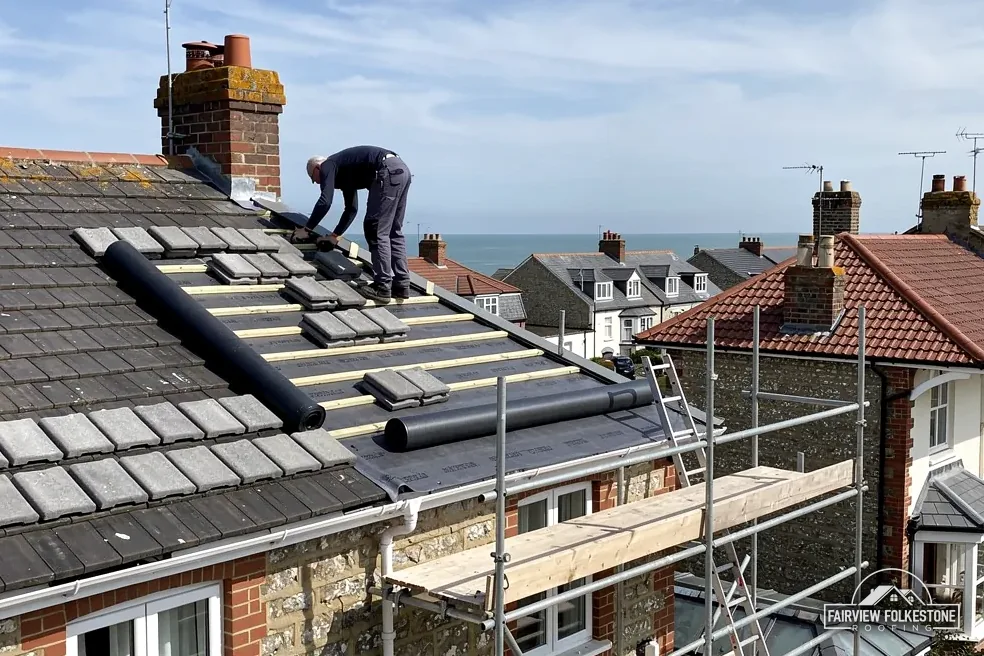
What we record on an exposed slope
- Which slates have slipped, and whether the clip or nail that held each one is still there.
- The battens behind them, checked for rot and for the spacing the covering needs.
- The pitch of each slope, measured with a level.
- Verges and eaves, where wind gets under the covering first.
- Anything loose in the loft: daylight at the underside, or an underlay torn at the batten line.
A handful of slipped slates on sound battens is a repair, and our slate roofing service starts there. A slope where battens or fixings have failed throughout is a different verdict, and the photographs sit beside it.
BS 5534
slating and tiling, the standard behind the fixing schedule
A code of practice, not law
Entry 02Listed barn
A tythe barn, a lamp column and a conservation area
North and South Tythe Barn (list entry 1084934) and the Gas Lantern and Column west of it (list entry 1336880) are both Grade II. Listing, the conservation area and any Article 4 direction each ask something different.
Three layers, asked in order
The barn was first listed on 2 August 1976 and the lamp column on 20 May 1977. A listed building keeps its permitted development rights for a re-cover, but works that affect its special architectural or historic interest still need listed building consent. Canterbury City Council states that you will need consent for changes affecting the building's character.
The Chestfield conservation area is a separate layer. Ordinary re-roofing is normally permitted development there, and dormers are covered by our planning guide for roof work. Article 4 directions are recorded around Chestfield, and where one applies it can withdraw further rights, which makes that a question for Canterbury City Council, asked address by address. Canterbury has 97 conservation areas, so its map is worth opening for your road.
Loose tiles on a listed outbuilding
Consent route first
Open joints in a plain gutter run
Reseal or refit them
The order we work in
- Look up your own address on the Historic England register to see whether the house is listed.
- Check your address against the conservation area on the council's map.
- Ask the council about any Article 4 direction on the street.
- Only then choose the covering and write the price.
Taking the steps in that order means the covering is chosen once, with the answers in hand, and not changed halfway through the job.
If the barn or the lamp column matters to your own roof, because the house stands close to them, say so when you send the first photographs. It tells us to open the council conversation before we price.
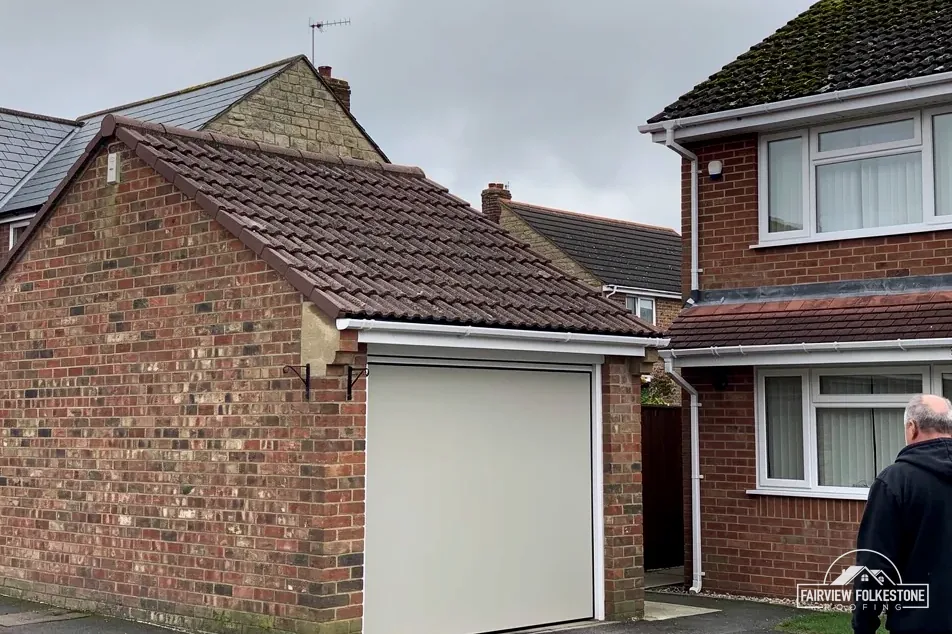
Who confirms whether a Chestfield building is listed?
The register kept by Historic England gives each listed building a number, a grade and a map reference, and an entry applies to the building it names. We never assume from the look of a house. If yours might be listed, the council is asked before pricing, and its reply goes in writing beside the survey.
Flashings, soakers and what each is for
Royston Lead's cast-lead brochure recommends code 3 lead for soakers only, the small pieces that lie under each course beside a wall, and lists flashings under codes 4 to 6. So the thin lead that suits a soaker is not the lead that suits a stepped flashing along a chimney, and a repair that mixes them up fails early.
At a chimney the survey looks at the stepped flashing on each side, the apron at the foot, the back gutter behind the stack and the flaunching on top of it, which is the mortar that holds the pot or cowl. Lead that has only lifted, and is otherwise whole, is worked back down against the brick, and the mortar joint holding its edge is repointed. Where it has split, thinned or been patched more than once, the verdict is a new flashing, laid properly with each step cut into the brickwork.
The lead itself is quoted by weight and code, and the thickness is written into the survey beside the photographs. If you would like a second opinion on a flashing you have already been quoted for, send us the quote and the photographs and we will tell you which verdict we would give.
Entry 03Chimney lead
Chimney and wall flashings: lead that sits on a line, soakers beneath
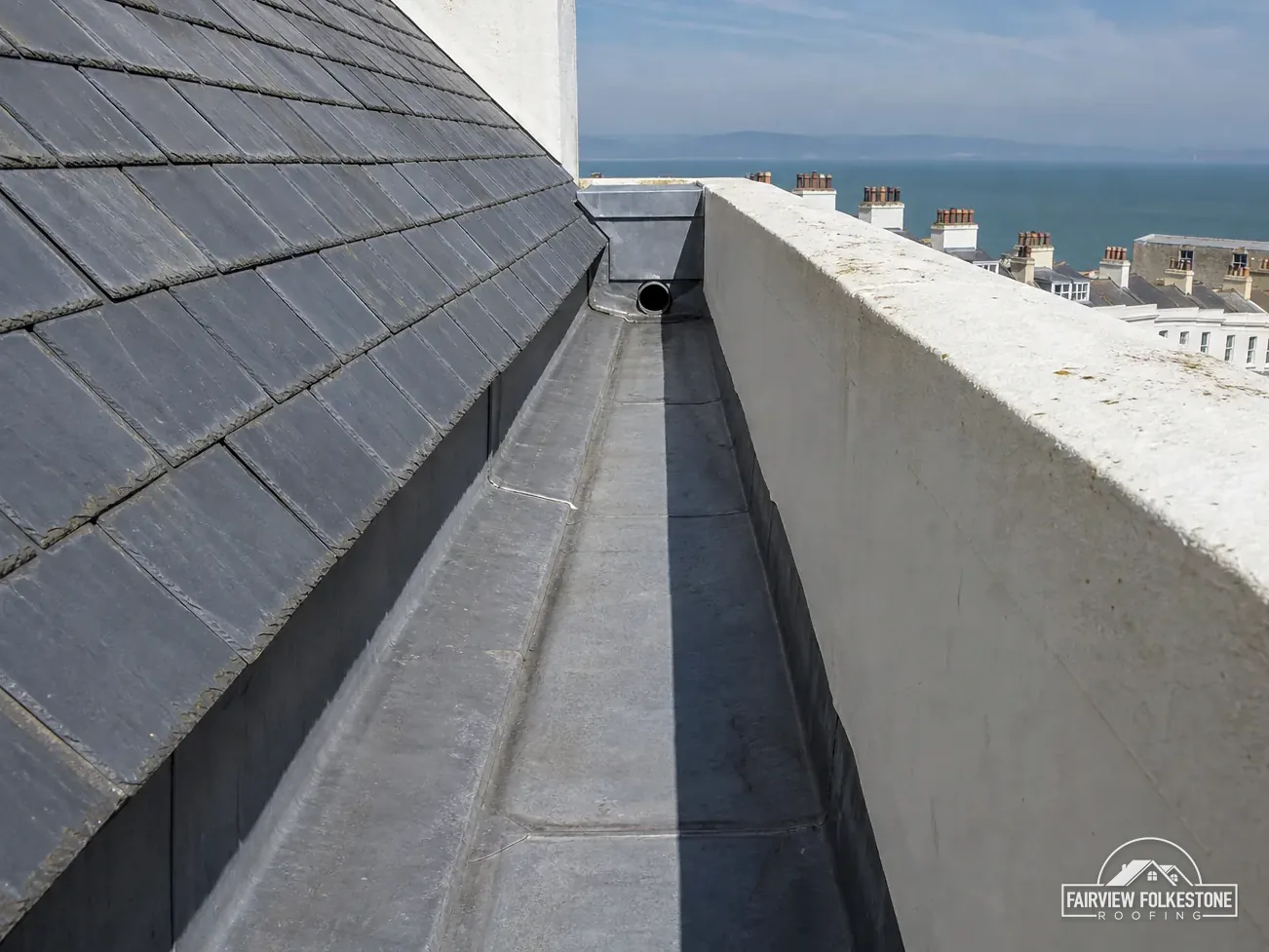
Where a roof meets a stack or a wall, lead holds the joint closed. A flashing that has lifted or split lets damp in at the one place the covering stops.
Myth: Lead flashings and lead soakers can use the same thickness.
Fact: Royston Lead recommends code 3 for soakers only and lists flashings under codes 4 to 6.
- Stepped flashing on the wall
- Joint cut into the brick
- Soakers under each course
- Flaunching on the stack
Marks that point to a flashing fault
- A brown stain on the chimney breast inside, below the roof line.
- Lead that has slid down the roof slope or curled away from the brick.
- Joints between lead and wall that are open, cracked or filled with sealant.
- Mortar on the stack crumbling at the edges of the lead.
Our chimney repairs service covers the stack itself as well as the lead around it. The scaffold is booked once, so the stack, the flashing and the nearby slopes are done on the same visit.
Which of these three sounds like your Chestfield roof?
Photograph the roof from the garden, or ring the office. The survey takes in slopes, flashings and gutters in one visit, and the verdicts come back in writing.
From Folkestone up to Chestfield
Chestfield is 23.1 road miles north of Folkestone, about 39 minutes by road, and the 2021 Census counted 3,132 usual residents in the parish. Photographs from the back garden, the top of the stairs and the loft let us give a first view of the roof before anyone travels, and they tell us what to bring to the visit. After the survey comes a single written price, and nothing is ordered until you have read it.
Exposure, a listed barn and chimney lead: Chestfield questions
Are fixings on a Chestfield roof calculated differently from an inland one?
The centre of Chestfield is 0.86 miles from the coastline, and Cupa reports that coastal buildings get a higher exposure grade. BS 5534 is the route for working out the fixings for each site, so each slope has its pitch measured, its battens examined and every course checked for how it is held, and the fixing schedule is set from those findings. Marley notes that installing to BS 5534 isn't required by law, though a mortar bed by itself has stopped counting as a fixing.
Is a house in Chestfield affected by the listed tythe barn?
Only a listed building needs listed building consent, and a list entry covers the building it names. North and South Tythe Barn and the Gas Lantern and Column west of it are both Grade II. A neighbouring house is not made listed by their presence, so look up your own address on the Historic England list. If it is listed, we put the work to Canterbury City Council first.
Does scaffold on a Chestfield road need a licence, and who gets it?
A scaffold that stands on or over the highway needs a licence, and in Kent it comes from Kent County Council, whose guidance says the skip or scaffolding company should submit the application for you. Permits from Kent County Council cost £52 per week in 2026 to 2027, and one covers 7 calendar days. We arrange the licence with our scaffolder. The survey notes whether the scaffold would reach the road at all.
Does re-roofing a Chestfield house need Building Regulations approval?
Two Planning Portal tests apply: less than 25 per cent of the building envelope and less than 50 per cent of the roof affected normally keeps a re-covering clear of an application, and a covering 15 per cent or more heavier needs approval regardless of area. For a Chestfield house, building control is run by STG Building Control Partnership for Canterbury City Council, on 01634 331133. STG is the body to ring.
How do you decide whether a chimney flashing in Chestfield is repaired or replaced?
By what the lead looks like up close. A flashing that has only lifted can be dressed back and repointed. One that has split, thinned or been patched several times is replaced, with a code chosen for the detail from Royston Lead's table. The photographs go to you with the verdict, so the choice between the two is made with the evidence on the table.
Is the Chestfield conservation area a problem for a re-roof?
A re-roof in the Chestfield conservation area normally still falls under ordinary permitted development. What changes the picture is an Article 4 direction, because a direction can withdraw rights and directions are recorded around Chestfield. Canterbury City Council lists 97 conservation areas and decides each address, so we put yours to the council before any price is written. Dormers are a planning-guide question, and the guide for roof work is linked above.
Show us the Chestfield roof and we will look
You'll get one written total price.