
Swalecliffe · 41 minutes by road, heading north
Roofers in Swalecliffe
A village whose centre sits 0.03 miles from the coastline, and which the Environment Agency's flood map gives Zone 2. Send a photograph taken from the lane or the garden, and the survey will say what the roof needs and why.
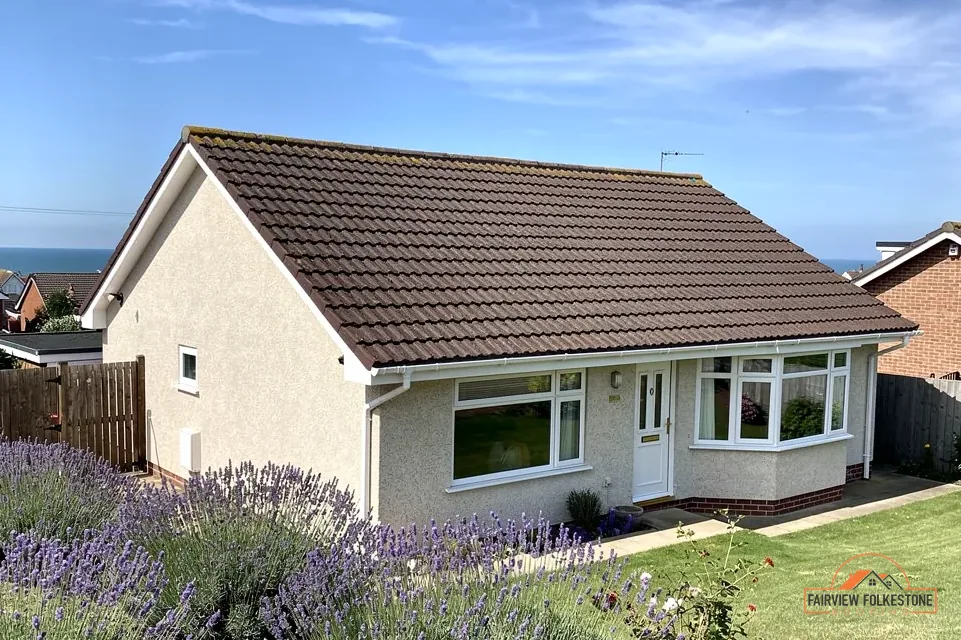
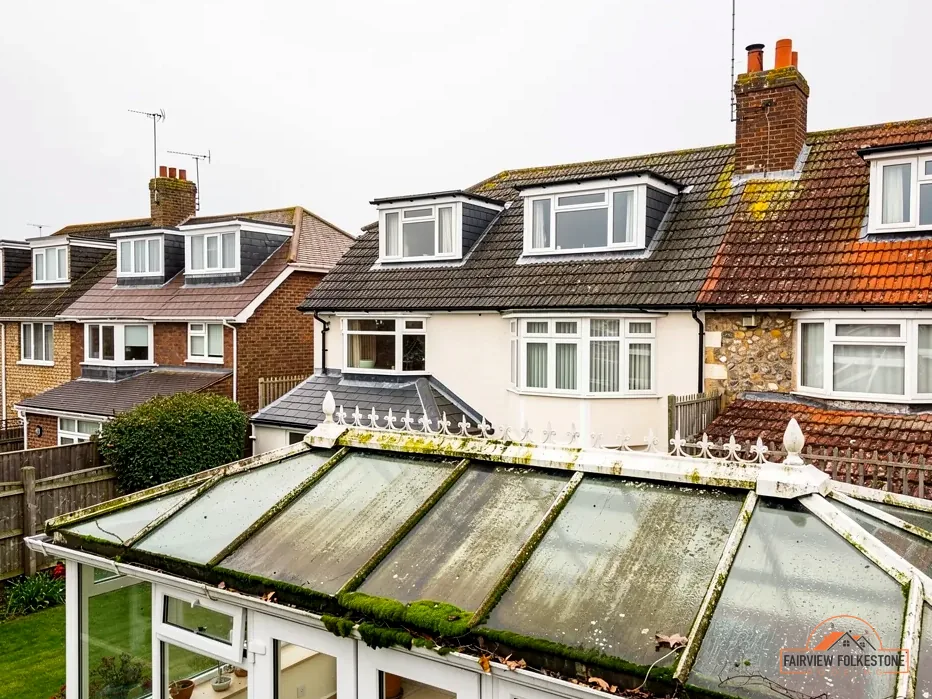
- Exposure
- The centre sits 0.03 miles from the coastline, and each roof gets its own fixing specification
- Flood Zone
- Zone 2 for the village centre, from the Environment Agency's flood map
- Listed church
- St John the Baptist, Grade II, in Church of England use
- Highway licence for scaffolding
- Kent County Council charges £52 per week for 2026 to 2027
Three Swalecliffe findings, each with its stamp
What we found
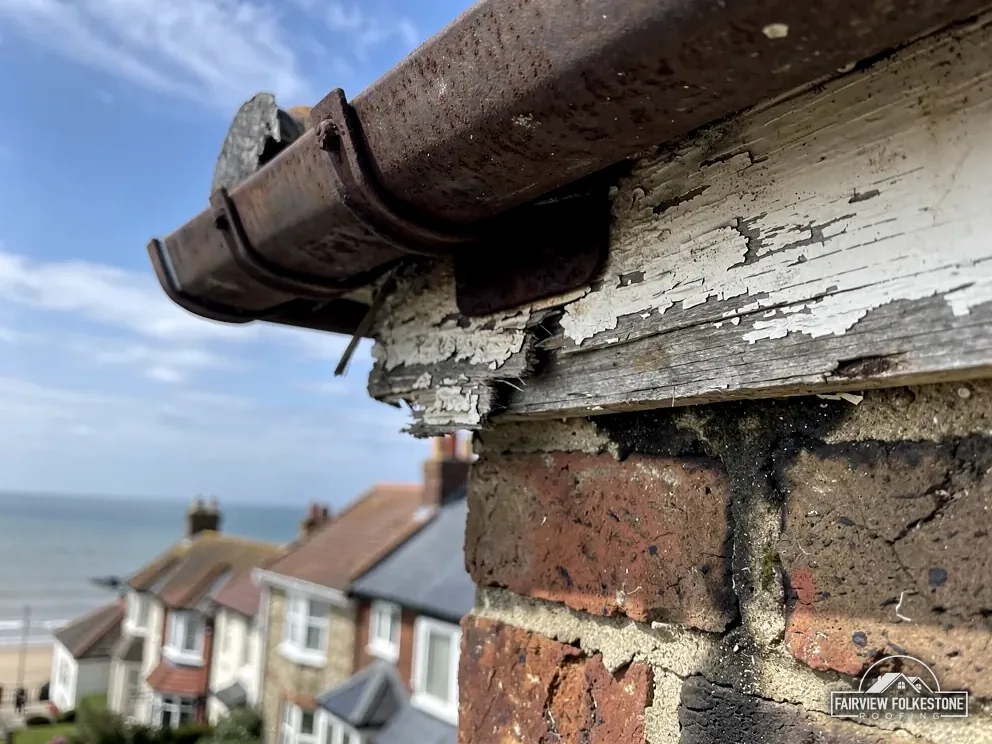
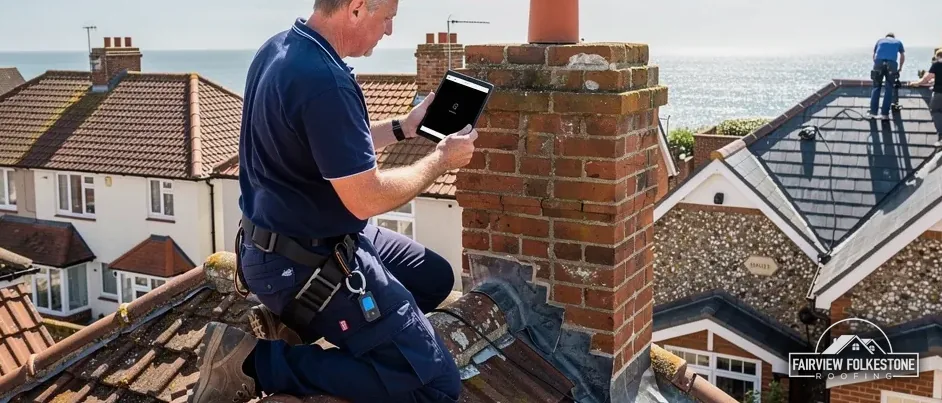
A gutter run that holds water
What it fairly needs
Reset it to a steady fall.
What we found
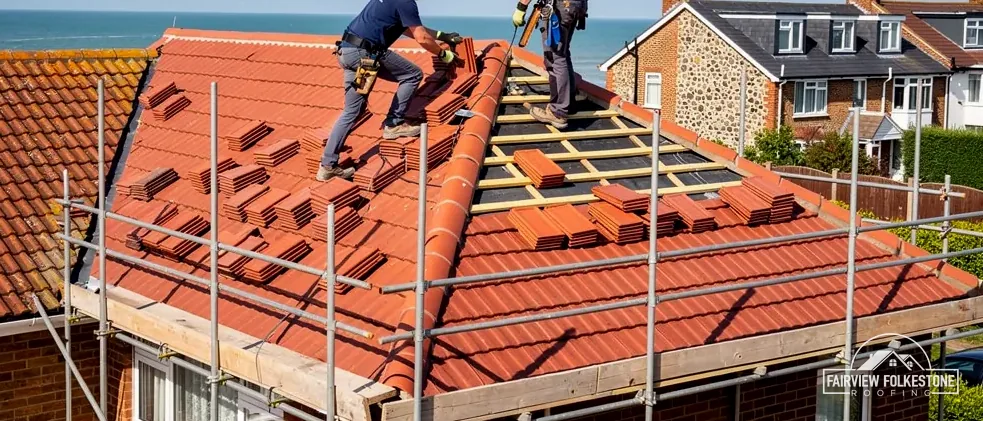
A roof near a listed church
What it fairly needs
Ask the council before pricing.
What we found
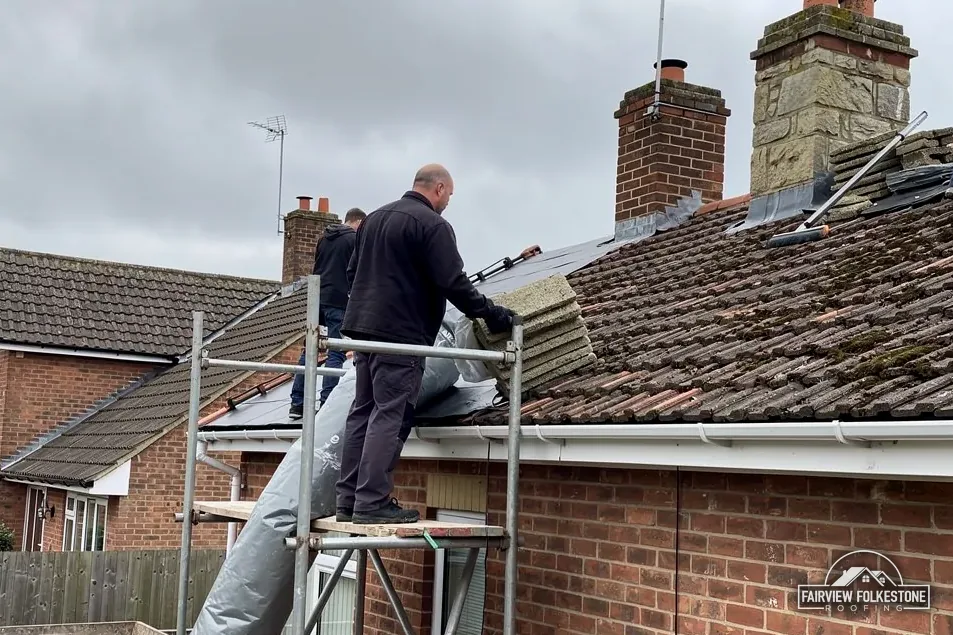
Underlay torn along a batten line
What it fairly needs
Strip the slope and re-lay it.
The fair ledger
Coastline fixings, Zone 2 gutters and a Grade II church in Swalecliffe
Swalecliffe's centre is 0.03 miles from the coastline, and the Environment Agency's map shows it in Flood Zone 2. Three entries follow: fixings, gutters and the Grade II church. Each ends in a verdict.
Entry 01Fixings
Fixed for the site: a roof 0.03 miles from the coastline
Cupa writes that coastal areas get graded for higher exposure. At Swalecliffe's centre, that makes the fixing schedule a calculation for the roof, once pitch, battens and underlay have been measured.
Where the specification comes from
BS 5534 describes how battens go on and how slates and tiles are fixed. Marley adds that the standard is voluntary in law, and that a bed of mortar by itself has not counted as a fixing since the 2015 amendments. The standard covers batten choice, fixing methods and the calculation behind the schedule, and the answer depends on where the roof stands.
Cupa gives one figure that shows why. For natural slate, BS 5534 indicates a minimum pitch of 20 degrees where exposure is moderate, the slate is 500 mm long and the overlap is 115 mm. That is a moderate-exposure figure, and a roof 0.03 miles from the coastline is graded higher, so it cannot simply be borrowed from a sheltered street. We measure each slope and set the schedule from the findings, then write it into the survey.
The practical result is a short schedule written for the roof: how many fixings per course, where extra ones go at the verge and ridge, and what the battens must be. It is the same schedule whoever lays the roof, and you can hand it to any other roofer who is pricing the same job.
- Slate or tile on top
- Batten it hangs from
- Underlay beneath the battens
- Rafter carrying the roof
What the underlay and battens tell us
- Whether the underlay is intact, or torn along the batten line where it has been stretched.
- Whether the battens are sound, and spaced for the covering that is on the roof.
- Which tiles or slates are held by fixings, and which only by their own weight and the course above.
- The state of the verge and ridge, where uplift acts first.
If the roof needs stripping back to the battens, our roof replacement service is where that work sits. Where only a few courses are loose, the repair is smaller, and the survey says which case yours is. Either way you see the photographs of the battens before any price is written.
Myth: Slates and tiles need the same fixings wherever the house stands.
Fact: Coastal areas are graded with higher exposure, Cupa says, so BS 5534 is used to work the fixings out from the site's own conditions.
Entry 02Drainage
Flood Zone 2 on the map, and gutters on the house
On the Environment Agency's map, the centre of Swalecliffe sits in Zone 2. That labels the land, and the gutters on a house are a separate matter that a survey can settle.
What the zone is, and what it is not
Zone 2 is the label the Environment Agency's planning map gives the land at the centre of Swalecliffe. It describes flood risk to land, and no roofing requirement hangs on it, so none of the verdicts in this ledger depends on the zone.
It does make a useful prompt. Rain that leaves a roof by a clear gutter and a free-running downpipe goes where it is meant to. Rain that spills over a sagging run, or backs up at a blocked outlet, lands against the wall and the ground beside it. Checking where roof water ends up is part of every survey, and a house in Zone 2 gets no different treatment, only a closer look at the outlets.
A roof that is tired can still drain well, and a new roof can drain badly. So we photograph the outlet and the run, not just the slopes, and the stamp on a gutter is its own verdict, separate from the roof above it.
- Bracket holding the run
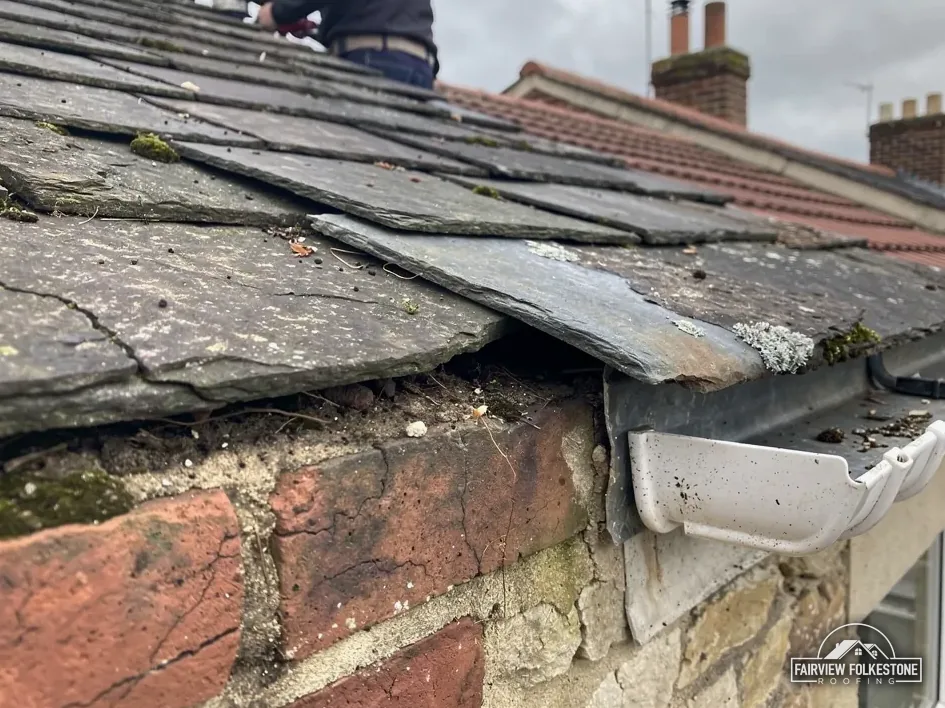
- Joint that has dropped
- Outlet to the downpipe
How a gutter should fall
Gutter maker Brett Martin recommends a drop of 1 mm in every 600 mm along the run towards the outlet. A run of 9 m therefore needs to fall 15 mm between its high end and its outlet, and a gutter that holds a film of water may be short of that at one bracket.
- Each bracket firm, and none dropped below its neighbours.
- Joints tight, with the seal intact.
- The outlet and downpipe running clear.
- The fascia behind, pressed for rot.
The work itself is described on our gutters, soffits and fascias page. A spirit level sets the line, so you can see for yourself where the run sags.
Zone 2
the Environment Agency's flood map category for the centre of Swalecliffe
A land category, not a roofing rule
A recent listing, an older route
The church was first listed on 28 September 2012. As a working Church of England church, it falls inside the faculty jurisdiction, so works to it are authorised by faculty and not by listed building consent. That route belongs to the church building. A house nearby is covered only if its own list entry says so, and then listed building consent applies, with Canterbury City Council deciding.
Conservation areas are a separate question. The ones nearest Swalecliffe are Church Street (Whitstable), Chestfield, Tankerton, and Canterbury and Whitstable Railway and Whitstable Station. Canterbury City Council lists 97 conservation areas in all and maps each one. Where an Article 4 direction applies, more rights may be withdrawn, so the council is asked about each address.
Entry 03Church
St John the Baptist church and the conservation areas nearby
St John the Baptist's church (list entry 1410894) is listed Grade II and used for Church of England worship, so work to its roof follows the faculty route.
Is my Swalecliffe house inside a conservation area?
The council's map decides, address by address, and the nearest named areas are in and around Whitstable. Check your street there, then ask Canterbury City Council about any Article 4 direction. We put that question to the council for you before we price, and its reply is copied to you.
Loose tiles on a house near the church
Ask Canterbury City Council first
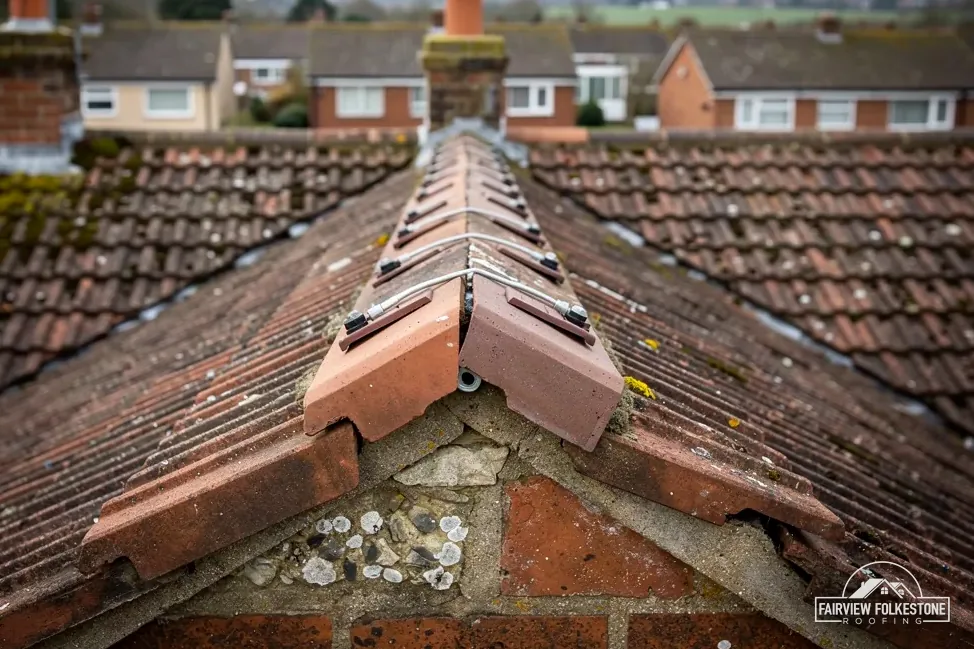
Sound slopes, a cracked ridge run
Refix the ridge
Steps before a covering is chosen
- Look your address up on the Historic England register.
- Open the council's conservation area map and locate your street.
- Ask Canterbury City Council whether a direction touches the address.
- Pick the covering with those replies in hand.
What stays permitted is in our planning guide for roof work, and our roof inspections record the roof first, so that every answer is tied to a photograph and to a date.
Mention in your first message if the church is a near neighbour. We then write to the council early, so its reply is back before the survey is written up.
A short written note goes to you with each reply: the question put, the body that replied and the bearing on the covering. It stays with the survey, which helps if the house is sold or the roof is looked at again.
Which of these three is closest to your Swalecliffe roof?
Photograph the slopes, the gutter that worries you and the eaves, and email or message them. Each finding gets its stamp, in writing, ahead of any price.
The road to Swalecliffe from Folkestone
Swalecliffe is 23.9 road miles north of Folkestone, about 41 minutes by road. A first view can start with photographs taken from the pavement, an upstairs window and the loft hatch, and we ask for the gutters and the eaves as well as the slopes. The survey comes next, and one written total price follows it, with the stamps explained beside each finding. Where the gutters or the eaves look wrong from the ground, a close-up helps most.
Fixings, Zone 2 and a Grade II church: Swalecliffe questions
How are slates and tiles held down on a Swalecliffe roof?
Through a schedule calculated for the site. Swalecliffe's centre is 0.03 miles from the coastline, and Cupa notes that coastal areas get a higher exposure grade, so BS 5534 is the route to what each slope needs. The standard is voluntary in law, but a mortar bed alone has stopped counting as a fixing. We measure the pitch, examine battens and underlay, and set the fixings from those readings.
Does Flood Zone 2 in Swalecliffe change how a roof is built?
No. The Environment Agency's map labels the land at the centre of Swalecliffe as Zone 2, which says nothing about roofs. The survey and its verdicts run as they would anywhere else. It is still sensible to make sure gutters, downpipes and outlets are clear, because they carry roof water away from the walls, and any that fail are reported with a photograph.
Who obtains the road permit when a Swalecliffe scaffold needs one?
According to Kent County Council, the skip or scaffolding company should submit the application for you. A single permit runs for 7 calendar days, and Kent County Council charges £52 per week for it in 2026 to 2027. We arrange it with our scaffolder. A scaffold kept off the pavement and road needs no highway permit, and the survey notes which applies.
Does re-covering a Swalecliffe house involve STG?
It can. The Planning Portal's test is less than 25 per cent of the building envelope and less than 50 per cent of the roof affected, plus a weight rule: a covering 15 per cent or more heavier must be approved. Where building control applies, Canterbury City Council works with STG Building Control Partnership, on 01634 331133. A registered building control approver is the other route, and we compare coverings at the survey.
Does the listed church in Swalecliffe affect the houses near it?
Only where a house is itself listed. The church is Grade II and in Church of England use, so its works follow the faculty route, and a neighbouring house is not listed because the church is. Look your address up on the Historic England register. If it appears there, we put the roof work to Canterbury City Council before a scaffold is booked.
Is a Swalecliffe address inside a conservation area?
Four named areas lie nearest: Church Street (Whitstable), Chestfield, Tankerton, and Canterbury and Whitstable Railway and Whitstable Station. Canterbury City Council keeps the map, so your own street should be checked there. A house re-cover normally keeps within permitted development either way, but we still ask the council about Article 4 before pricing, since a direction can change what is allowed.
Send the Swalecliffe roof and we will look
You'll get one written total price.