
Rye · 28.4 road miles south-west
Roofers in Rye
Rye is a town of 4,483 residents (2021 Census) in East Sussex, with a Grade I parish church, Ypres Tower, scheduled town walls, a conservation area and the High Weald National Landscape at its edge. Share a few photographs of the roof that has you worried; the reply sets out what each fault needs, with mending preferred wherever mending is sound, and the reasons are given in full.
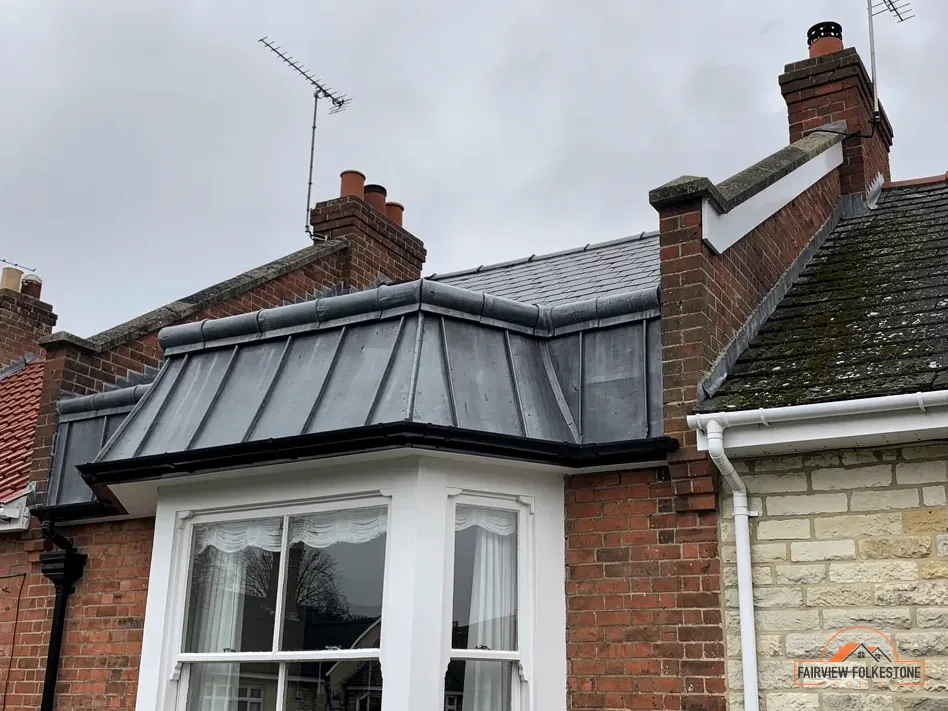
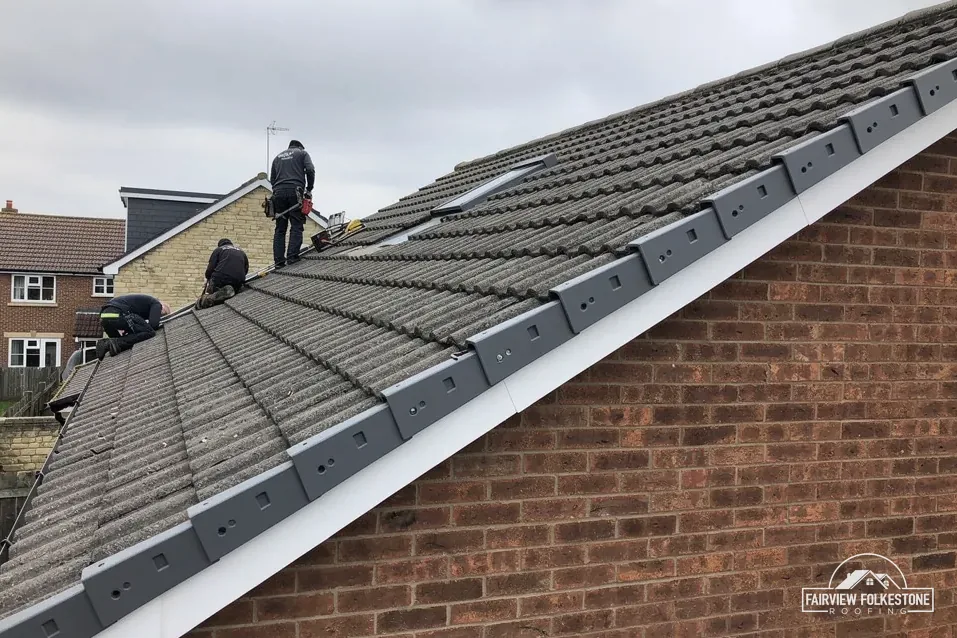
- Grade I parish church
- St Mary's, list entry 1190669, is in Church of England use, so its roof works need a faculty
- Ypres Tower and the walls
- Ypres Tower is listed Grade I; Rye Town Walls are a scheduled monument, entry 1002309
- East Sussex building control
- East Sussex Building Control Partnership, on 01892 602005
- Scaffold licence in Rye
- East Sussex Highways lists £127 for 28 days; we arrange the licence with our scaffolder
Rye roof faults in three verdicts, from mending to a closer look
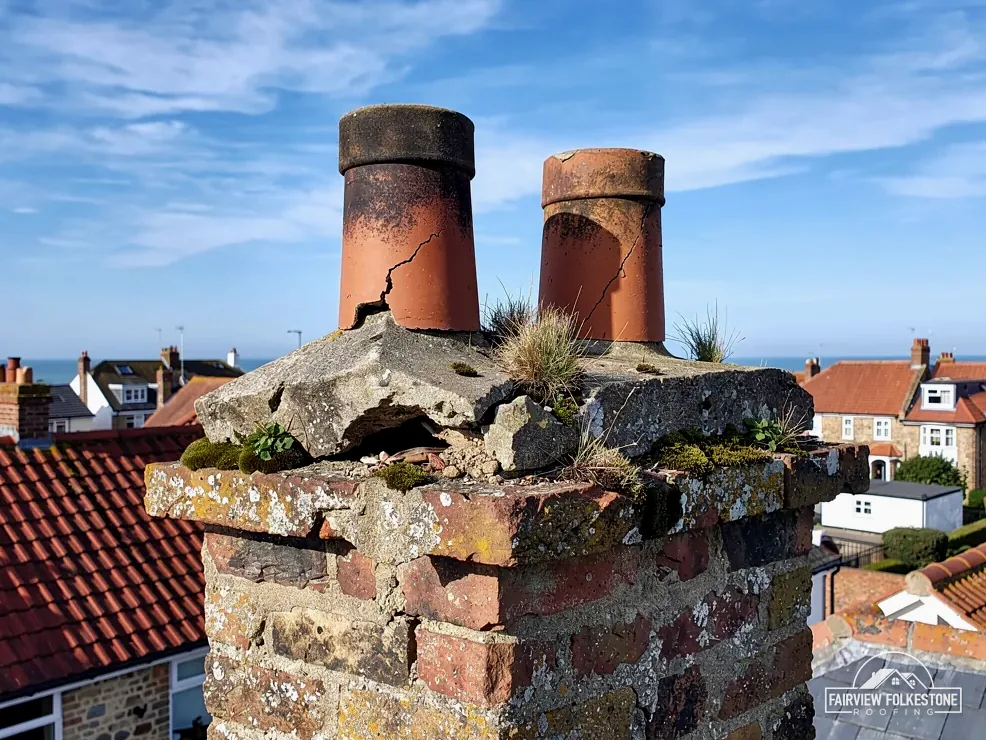
What we found
Lead soaker lifted beside a chimney
What it fairly needs
Redress and fix it; nothing else.
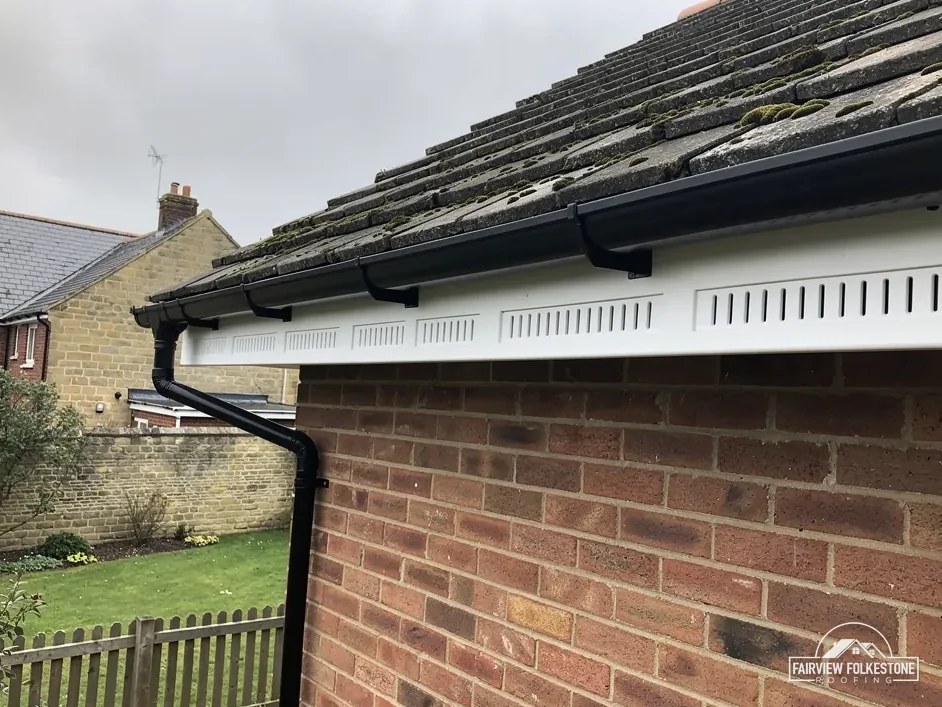
What we found
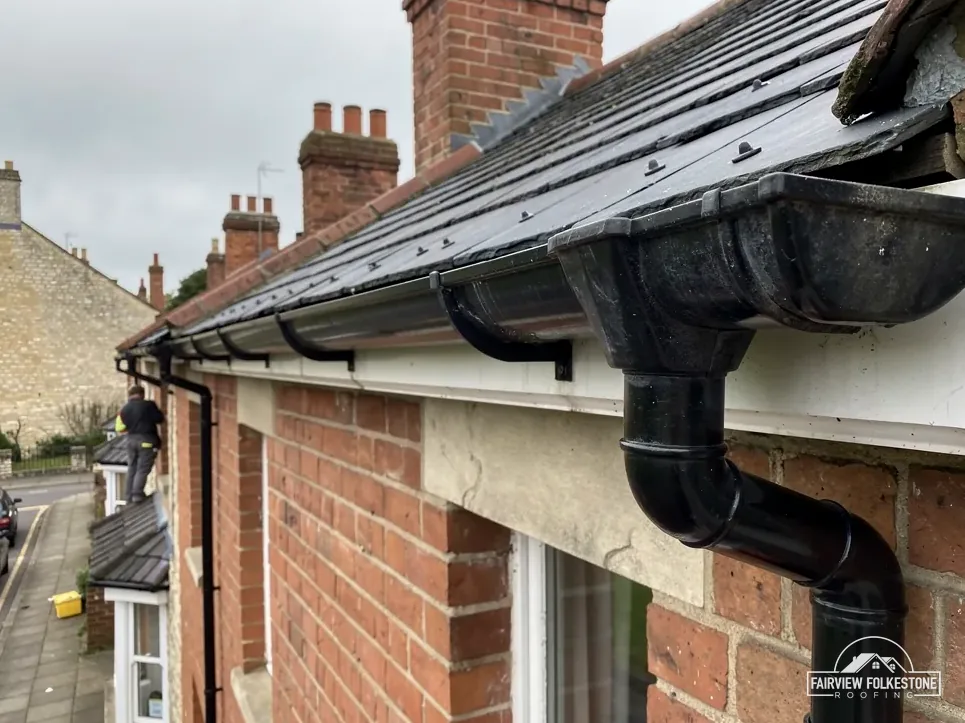
Cast gutter cracked at several joints
What it fairly needs
A new run with fresh brackets.
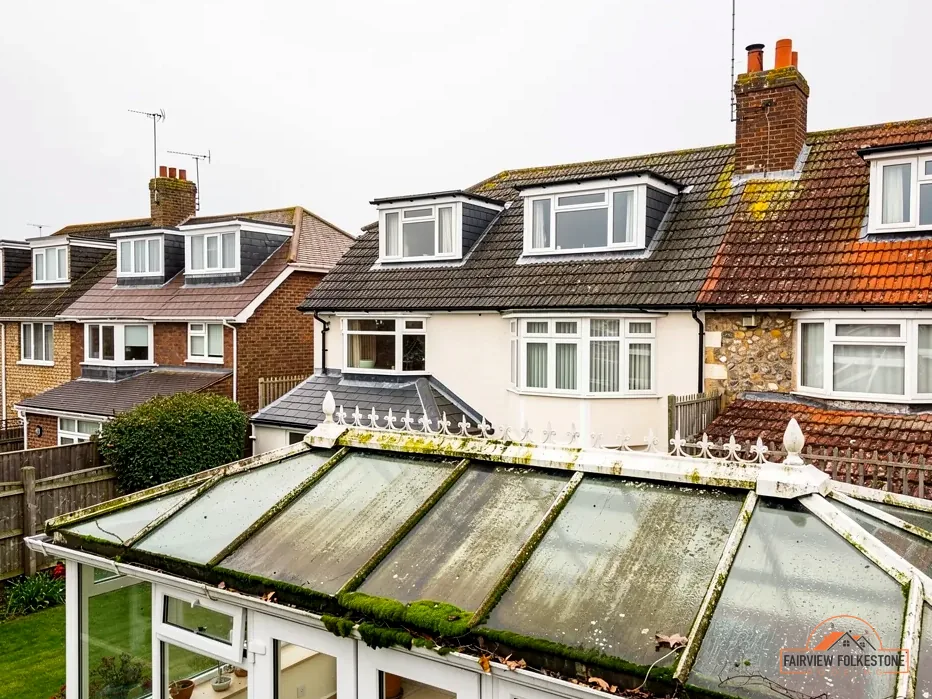
What we found
Damp at a party wall below the roofline
What it fairly needs
Trace it before deciding anything.
Send photographs of your Rye roof and the name of the street
The fair ledger
A Grade I church, a tower, town walls and a boundary
Rye has St Mary's church at Grade I, Ypres Tower and a scheduled stretch of town wall, and a conservation area with Article 4 directions on record around it. For each one we name the deciding body and give a roof verdict.
Entry 01St Mary's
Rye's St Mary's: a Grade I church and the faculty route
St Mary's in Rye is a Grade I building and the town's Church of England parish church, which sends its roof works down the faculty route.
A faculty, not a council form
Historic England list entry 1190669 gives Rye's church its Grade I status, and it is in use as the parish church, in the Church of England's Diocese of Chichester. For a church placed like that, listed building consent is not the application to make. It goes through the faculty system, which the Church of England runs for its own buildings, and a council is not the body that decides. That is the rule for St Mary's, and it is the first thing to settle before any quote is drawn up. For the town's other buildings, the council to ask is Rother District Council.
What we offer to a church is evidence. A survey of a tall roof is slow, careful work: each slope, every junction with the tower or the walls, the lead and its fixings, and the gutters and the outlets beneath. Everything is photographed and written down in plain language, so those responsible for the church hold a dated record of what is wrong and what each fault fairly needs.
Access is part of the survey. A scaffold or a tower, if one is needed to see a slope properly, is stated in the notes together with the reason, and any highway licence is dealt with on our side. Nothing begins until the faculty question has been settled by the people responsible for the church, and we would rather wait for that answer than start on an assumption.
Grade I
Historic England's grade for the Church of St Mary in Rye
list entry 1190669
Does Rother District Council grant consent for St Mary's roof?
No. A church in Church of England use follows the faculty route, which belongs to that church's own system. For a house or shop near the church, ask Rother District Council what applies to that property, and we will survey the roof whichever route is needed.
Entry 02Tower and walls
Ypres Tower, the Town Walls and a Grade I club
Ypres Tower and a Grade I club are listed, and Rye Town Walls are a scheduled monument. Each follows a different consent rule from an ordinary house roof.
Listed buildings and scheduled ground
Historic England's list records Ypres Tower and Part of Rye Town Wall at Grade I (entry 1251521) and Rye Working Men's Conservative Club at Grade I (entry 1251550). Work that affects the special character of a listed building needs listed building consent, and a house that is listed still holds its permitted development rights for roof work, and consent is an added layer. Rye Town Walls (entry 1002309) are scheduled, and the Ancient Monuments and Archaeological Areas Act 1979 means works to a scheduled monument need authorisation first.
A house that stands near any of these does not take on their status. Every listed building has its own list entry, so an address can be checked against the list one property at a time. Before a survey we search the national list for the address, and if the house is listed the quote says plainly that consent comes first and shows the like-for-like repair that would be put forward. If it is not listed, the quote records that as well, and the work takes the ordinary route from the outset.
Matching matters on a listed roof, and so does the order of work. First the record: covering, fixings, ridge, lead, timbers, each photographed. Then a specification to suit what is there. Then, if an application is needed, a description the council reads in a minute. Our leadwork page covers the flashings and valleys that can carry the repair, and the roof inspection page covers the survey behind it.
Where each situation starts
Listed building, tiles slipping
Consent, then repair
Unlisted house near the walls
The ordinary route
Roof covering failed throughout
Full re-cover
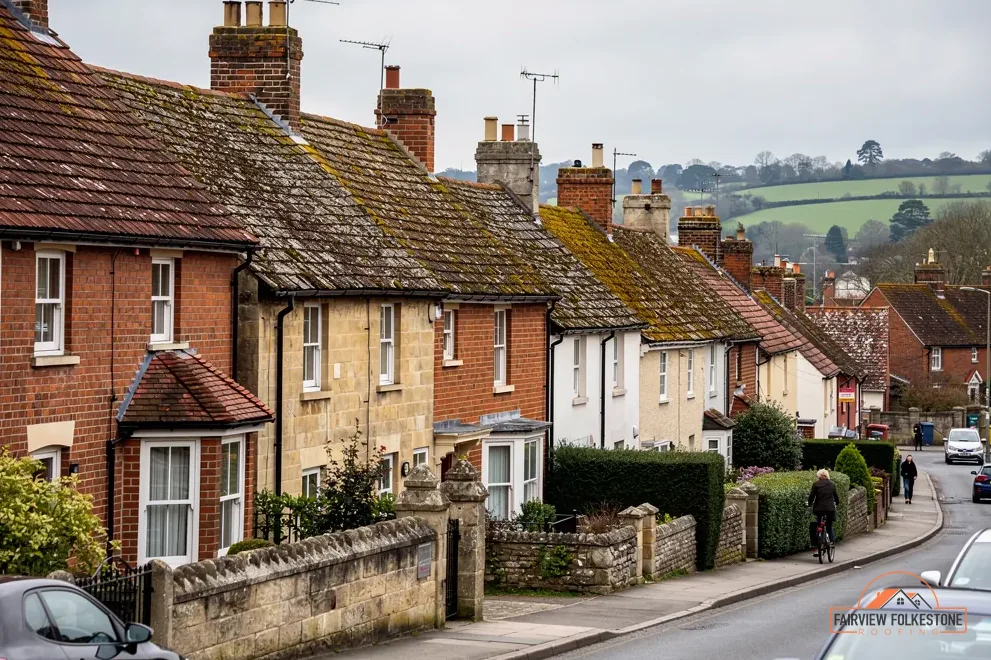
Myth: Living next to the town walls puts my roof under scheduled monument rules.
Fact: Those rules cover works to the monument itself; a neighbouring house follows whatever applies to its own entry.
Three questions for one council
Rye has a designated conservation area. For where its line runs, and for whether an Article 4 direction reaches an address, the answer lies with Rother District Council: check with Rother District Council before you plan work. Directions are recorded near Rye, and what any one of them removes is for the council to tell you. An Article 4 direction can remove further rights, and a short enquiry in writing settles whether yours is one of the addresses it touches.
The High Weald National Landscape (formerly AONB) touches the ground around Rye, though the centre of the town lies outside it. A National Landscape is a designation, with a partnership that gives advice; the decisions on planning applications stay with the district council. Whether one particular address stands inside the boundary is a map question, and we read the map before we say anything about it. Anything bigger than a repair or a like-for-like re-cover starts with our planning permission guide.
Meanwhile the roof does not wait. A split gutter or a slipped tile is made good on the usual footing, and the council's reply, when it comes, is filed with the survey notes and the photographs so that the whole job can be read from one place, by you, by a buyer later, or by whoever carries out the next repair.
Entry 03Rye boundary
The Rye conservation area, High Weald edge and Article 4 directions
Rye has a conservation area, the High Weald National Landscape touches the ground around it, and Article 4 directions are recorded nearby. Rother District Council decides.
Where do I ask about Article 4 for my Rye house?
Put it to Rother District Council in writing, with the full address and a line on what you plan to do. Ask for the reply on paper, because it can then go onto the quote and be read by anyone who needs it later.
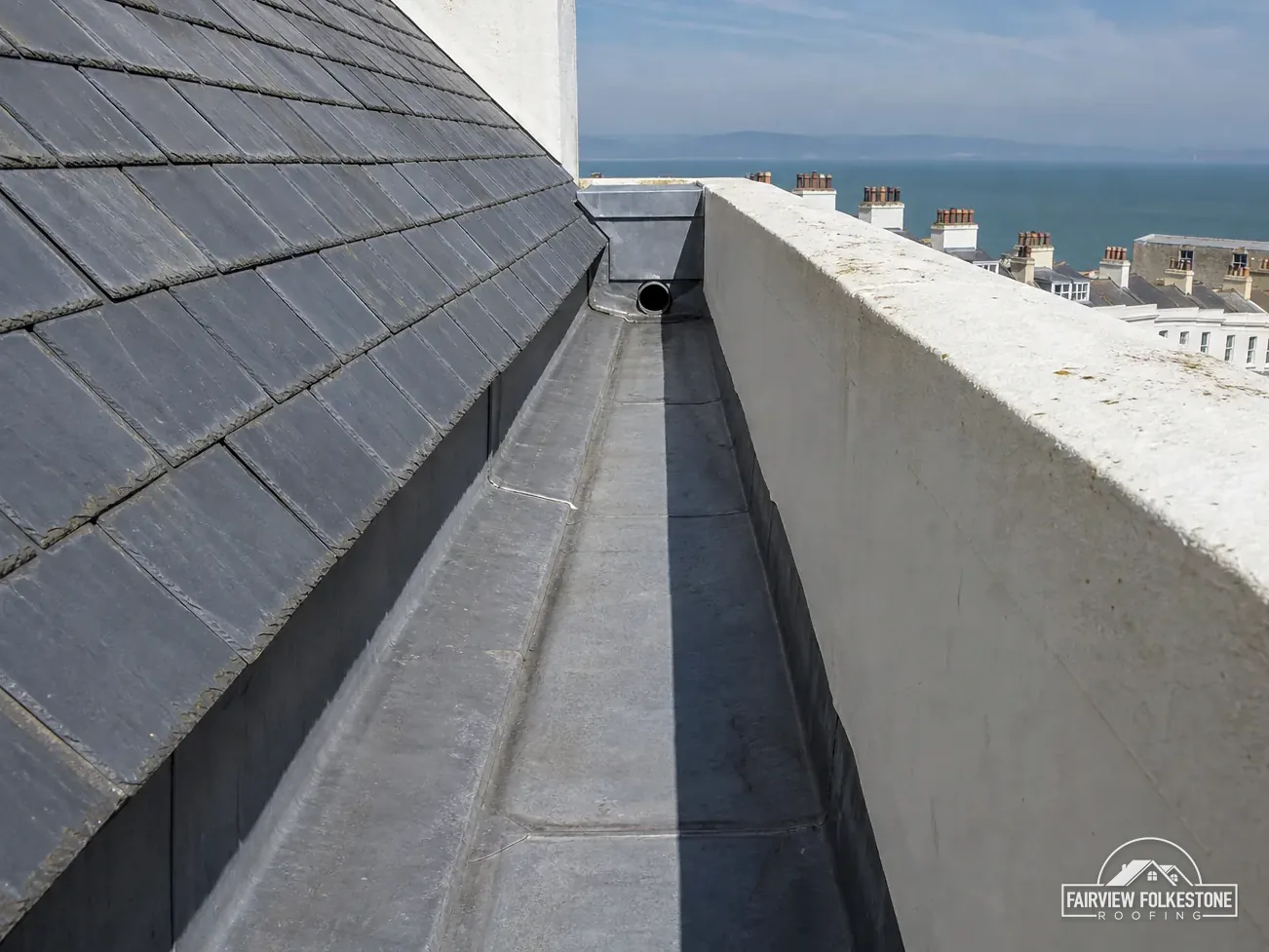
- Lining under the valley
- Board it sits on
- Cut slates meeting it
Does the church, the walls or the boundary reach your Rye roof?
Name your street, add a picture of the roof, and a verdict comes back ahead of any figure.
From Folkestone to Rye
Rye is 28.4 road miles south-west of Folkestone and roughly 41 minutes on the road, so each survey is booked as a proper block of time, with the loft included wherever it can be entered safely.
Rye roofs: the church, the walls, the flood map and the boundary
Short answers about consent, councils and the way we survey a roof in Rye, in plain terms and with the deciding body named each time.
How does a survey cope with a Rye roof that is hard to reach?
By choosing the safest way up and recording what that way allows. A ladder, a roof ladder or a scaffold tower is used where it is safe, and a slope that cannot be reached is recorded as unseen, along with the access that would reveal it. From the loft, the underside tells us about daylight, damp and timbers. Every finding gets photographs and one of three stamps, repair, replace or check, and a single total price comes once the survey is written up.
Who licenses scaffolding on a Rye street, and what does it cost?
East Sussex Highways licenses scaffolding that stands on the highway, and its fee table lists £127 for 28 days; check the current table before relying on that figure. A scaffold within your own boundary needs no licence. We arrange the licence with our scaffolder, and the scaffold is built into the quote. The licence must be in place ahead of erection, so it is applied for early and the dates are confirmed with you, which keeps the start date from slipping at the last moment.
Who deals with Building Regulations for a Rye re-roof?
The East Sussex Building Control Partnership, which acts for four councils (Eastbourne, Hastings, Rother and Wealden), on 01892 602005. The Planning Portal's guide gives the first test: the two limits are under 25 per cent of the building envelope and under 50 per cent of the roof, and inside them no application is normally due. A covering 15 per cent or more heavier needs approval separately, and we confirm the position with the partnership before work.
Is my Rye address in the conservation area, and does Article 4 apply?
Rye has a conservation area, and Rother District Council holds the boundary and the answer on Article 4 directions, which are recorded near the town. Ask Rother District Council before any work bigger than a repair is planned. We look the address up before the survey is booked, and whatever the council replies goes onto the quote beside the figure, so nobody has to remember what was said on a call.
Whose permission does roof work on St Mary's church in Rye need?
Rye's St Mary's carries a Grade I listing and serves as a working Church of England parish church, so its roof works take the Church of England's faculty route and not listed building consent from a council. For the people responsible for the church, a photographed survey from us gives each fault a written record that can accompany whatever application is put forward, and it can be updated as work proceeds.
With Flood Zone 3 land near Rye's centre, does a roof repair change?
Rye's centre lies outside every flood zone, though the Environment Agency maps Flood Zone 3 land near it, and we state it only as that. That is a statement about flooding and sets no roofing rule; each Rye roof is surveyed on what is found, from the covering and its fixings to the flashings, eaves and gutters. For flooding concerns, ask the Environment Agency, and ask the council what applies to your address.
Rye roof trouble? Tell us what you see.
Photographs and a street name get us started, and the reply tells you what happens after that.