
Spray foam removal
Why homeowners are removing spray foam insulation: lenders, surveys and condensation
Spray foam under a roof can complicate a sale, hide the timbers from a surveyor and raise questions about moisture. Here are the reasons people take it out, with what published sources say.
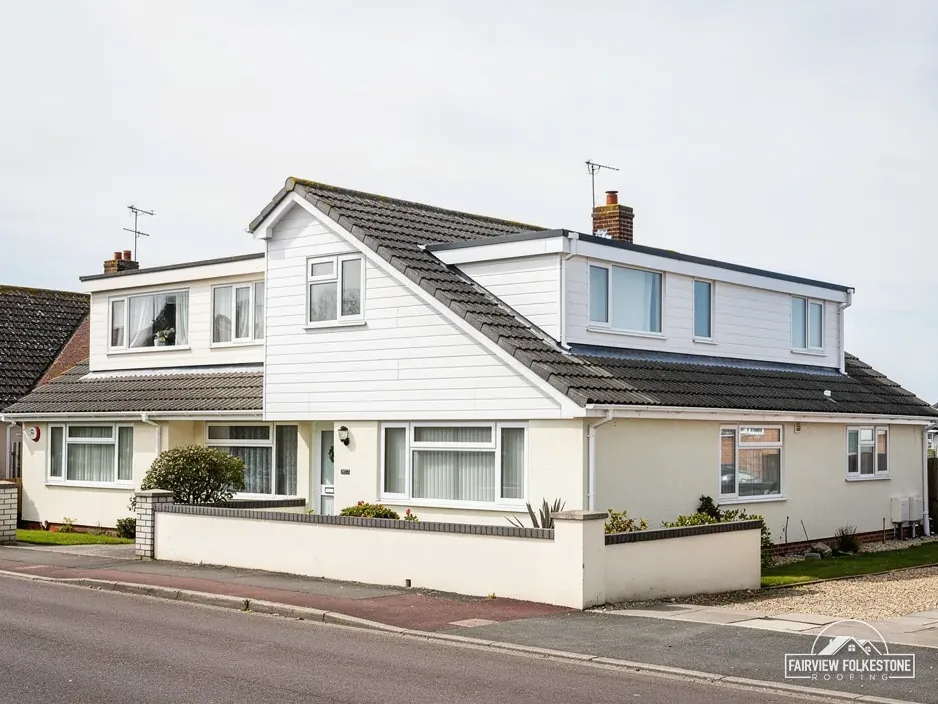
Spray foam has been sold as a quick, tidy way to insulate a roof from underneath. Some owners now want it out again, and the reasons are not complicated. They come down to three things: how a lender or a buyer reacts to it, what a surveyor can and cannot see behind it, and what it does to the roof timbers over the years.
Each of those is easy to overstate. This post keeps to what published sources say, with each source's wording kept whole, because the exact words matter. The Royal Institution of Chartered Surveyors (RICS) reported concern in part of the lending market, which is a narrower thing than a blanket policy. The Energy Saving Trust says foam can partially seal timber and that the risk of rot should be much lower with one type of foam, which is a very different statement from saying foam rots roofs.
If you have spray foam in your loft and you are thinking about selling, remortgaging or simply worrying, the sections below take the questions in turn. Whether yours needs to come out is a call for a survey of your own roof, not a general rule.
01Side by side
Two kinds of foam, two different questions
Not all spray foam behaves in the same way, so start by working out which type is in your loft. The Energy Saving Trust names two main kinds, closed-cell and open-cell, and it gives closed-cell one main drawback: it does not let vapour pass through.
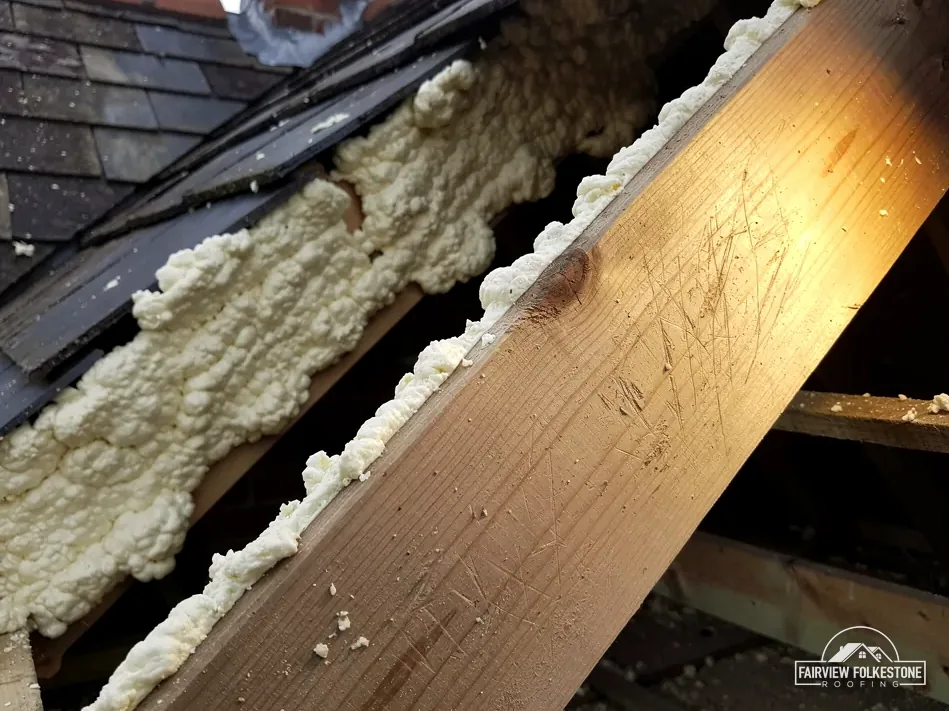
That single property drives most of the worry. Foam applied directly under the roof covering, the Trust says, "will partially seal the timber". For open-cell foam it expects the rot risk that follows to be "much lower", and it hedges even that with "should". Hold on to the hedge: the Trust does not say the risk is gone.
| Point | Closed-cell | Open-cell |
|---|---|---|
| Vapour | Does not let it pass | No such drawback named |
| Timber under the foam | Partially sealed | Partially sealed |
| Rot risk | The comparison point | Should be much lower |
Two other facts are worth noting down at the same time: roughly when the foam went in, and who fitted it. They do not change what the foam is, but they help any later conversation with a lender or a buyer's surveyor.
Which kind you have is worth knowing before anything else, because every later question depends on it: the lending point, the inspection point and the moisture point all read differently for each type, and a quote for removal can differ too. A survey of the loft can identify it, and the answer is worth writing down, since a buyer, a lender or a later surveyor may ask the same question. Our guide to open-cell against closed-cell spray foam explains the difference in more depth.
02Key points
The lending question and spray foam
Start with the lending question. The accurate version is narrower than the one that circulates, so it is worth keeping to the source.
In a March 2023 release, RICS reported "concern within specific sectors of the lending market, such as equity release mortgages". That is the whole of its claim: concern, in specific sectors, with equity release given as an example. The release goes on to say the concern was now having a wider impact on lenders, and it stops there. It does not describe any individual lender's decisions, and nor should anyone repeating it.
The Energy Saving Trust is more relaxed: where the foam was put in correctly, it expects "less of an issue" in getting a mortgage. Put the two together and the fair summary is that the position is uneven, and depends on your lender and on how the foam went in.
Spray foam in the loft: your questions
Will my mortgage lender object to spray foam in the roof?
That depends on the lender, so ask yours. In March 2023 RICS reported concern within specific sectors of the lending market, such as equity release mortgages. The Energy Saving Trust says there should be less of an issue with a mortgage where foam was installed correctly. Check before you sell, buy or remortgage.
- The consumer guidance says to check your own mortgage provider's policy on such products, and the answer can be in writing.
- If you are buying or selling, put the question to the lender early, before the survey and before an offer.
- If you are remortgaging, ask the same thing again, because the answer can differ between products.
None of this means the foam has to come out. It means you should find out where you stand with your own lender and decide from there. Our guide on removing spray foam before selling covers the selling side.
03Survey
What a survey can and cannot see
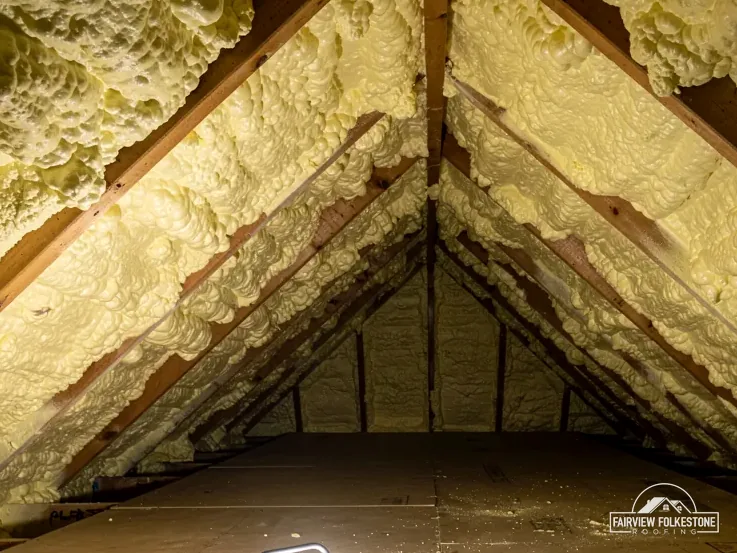
The second reason is about inspection. A roof is judged by its timbers: the rafters, the battens and the underside of the covering. Foam sprayed over them hides all of it.
The RICS consumer guide describes timber under foam as something that "cannot be fully seen or inspected". That is a statement about visibility, not about condition. A roof under foam may be perfectly sound, but nobody can confirm it by looking, and that is the position a buyer's surveyor is in.
It helps to think about it from each side of a sale.
- As a seller, you may be asked for evidence that the hidden timbers are in good order, and you cannot supply it while the foam is on.
- As a buyer, you would be told that part of the roof structure could not be inspected, and you would weigh what to do about that.
- As an owner who is staying put, you lose the chance to spot a developing fault early, because the signs are behind the foam.
For some owners, removal is the way to turn an unknown into a known: the foam comes off, the timbers are looked at, and the roof is dealt with on what is found. For others, a survey that confirms the foam type and the state of what can be seen is enough, and the foam stays. We set out which it is for your roof, and any work comes as one written total price. Nothing needs deciding before you have seen the facts.
04In order
Moisture, the timbers and the standard that applies
The third reason is the one behind the phrase "spray foam causes condensation". The sources are more careful than that phrase, and so should we be.
BS 5250 deals with moisture management in buildings, and BSI lists its 2021 edition as "Current, Under Review". It is the document that advice on roof-space ventilation leans on, and the reason an installer should ask where moisture is going to go before filling a roof void with a material that blocks it.
Put those together and the concern is clear: moisture that gets into hidden timber is hard to find, and the foam is what hides it. That is a reason to look, not a finding that rot is present. The roof may be perfectly dry.
The pieces of the argument fit together like this:
- Closed-cell foam is the type that does not let vapour pass (Energy Saving Trust).
- Foam applied to the underside of a roof partially seals the timber (Energy Saving Trust).
- For open-cell foam, the resulting risk is expected to be "much lower" (Energy Saving Trust).
- Timber beneath foam is timber that nobody can inspect in full (RICS).
If you already notice damp patches, mould in the loft or staining on ceilings, treat that as a reason to have the roof surveyed whatever the cause. Our answer on whether spray foam causes condensation deals with the question directly. Do not poke at or cut into the foam yourself while you investigate; leave the opening-up to the survey.
Does open-cell foam rot a roof less than closed-cell?
The Energy Saving Trust says spraying foam to the underside of a roof partially seals the timber, and that with open-cell foam the risk to the rafters should be much lower. It does not say there is none. A survey can show which type you have and what can be seen of the timbers.
05Costs
What removal costs, as published
Removal is specialist work, and the published cost data is limited. MyJobQuote gives one per-area figure and one total for a stated example, and both are worth reading with their conditions attached.
Treat the per-area figure as a guide to how prices are built, not as a number to multiply by your roof size. The total belongs to MyJobQuote's own example, and your roof will differ. What moves a price is the area of roof space, how much foam there is, how it was applied, the access, and whether the exposed roof then needs repair.
| Source | Figure | What it covers |
|---|---|---|
| MyJobQuote | £40 per m² | The average cost of spray foam removal |
| MyJobQuote | Around £3,200 | A standard 3-bedroom property with roughly 80m² of roof space |
Once we have surveyed the roof, the price arrives as one written figure, with any scaffold in it. Ask every quote what happens once the foam is off, because the timbers may need attention when they can finally be seen, and a quote that stops at removal leaves that open. Check, too, that it says who removes the waste, so the loft is left clean and clear.
Removal also reveals a roof that has not been seen since the foam went on. If the survey finds the timbers sound, the roof can be insulated again another way. If it finds a fault, you hear what it is, and whether a repair or a replacement fits, before any further work is priced.
06In brief
Keep it, check it or take it out
After the facts, the decision is a practical one, and it ends up in one of three places.
Whichever you choose, start with the lender, because that question can be settled with a single call. The consumer guidance says to check the provider's policy, and that advice suits anyone with foam already in the roof as much as anyone about to have it fitted.
Then arrange a survey of the roof space. It should name the type of foam, look at what can be seen, and say what removal would involve at your address. The price that follows is one written total, with the survey findings set out first.
If you decide on removal, our spray foam removal page explains how we approach it. If you are unsure, ask first. A straight view of what a roof needs, including that it needs nothing, is how we work.
- Keep it, when the lender is content, the foam is the type and condition you expected, and there is no sign of damp. A survey confirms that and you move on.
- Check it, when you are unsure about the type, the lender or the timbers, and the facts should come before the choice. A survey gives them.
- Remove it, when a lender, a buyer or your own worry about the timbers makes the hidden roof structure the problem, since taking the foam off turns it into a known.
Can a surveyor inspect roof timbers under spray foam?
Not fully. The RICS consumer guide describes timber under foam as impossible to see or inspect in full. That limits what can be checked; it is not a finding of damage, and it is why some owners choose to have the foam removed and the timbers looked at.

Tell us what's wrong with the roof.
You'll get one written total price.