
Spalling brickwork
Why are my chimney bricks crumbling or spalling?
When the face of a brick flakes away, it tells you something about the stack. Here is what spalling is, what the survey traces, and what the repair involves.
The short answer
Spalling is the face of a brick flaking or breaking away, and on a chimney it points to wet brickwork, so the repair starts with finding where the wet comes from. A few damaged bricks can be cut out and replaced with the pointing renewed. Where whole faces are going, the top of the stack may need rebuilding.
4 min read · Part of Chimney repairs
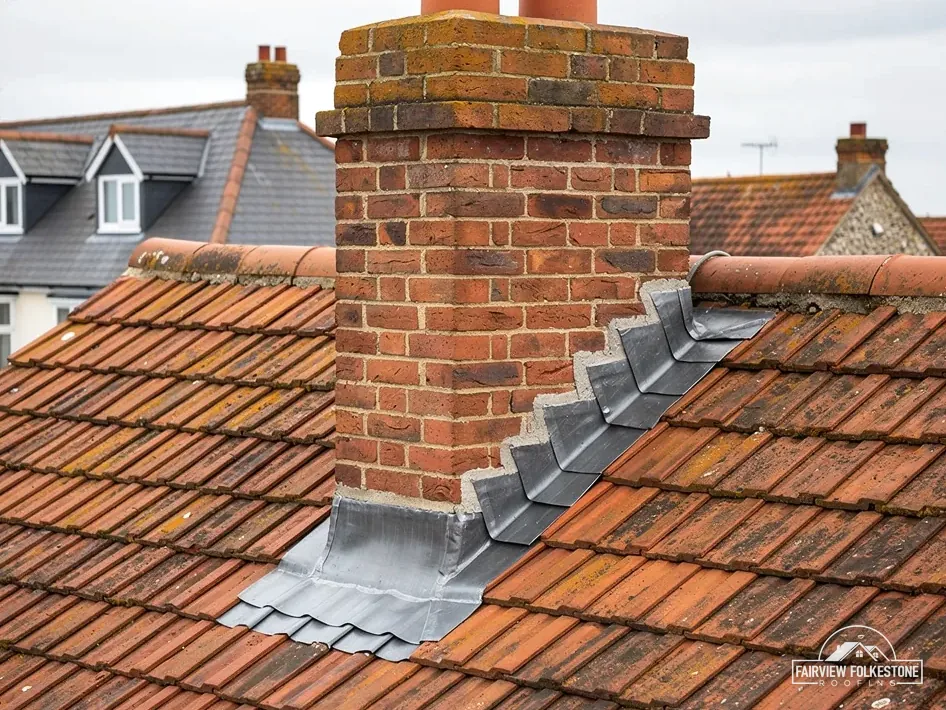
What spalling looks like on a stack
A spalled brick has lost its hard outer skin. The face comes away in flakes or small plates, and what is left underneath is softer, rougher and sometimes a different colour. On a chimney you may be able to see it from the garden, and the flakes can turn up in the garden, a downpipe hopper or a porch roof below.
Crumbling is not always spalling, so the survey separates the cases.
| What you see | What we note |
|---|---|
| Brick faces flaking off in plates | Spalling: how far down each brick it runs |
| Sandy dust coming off the mortar | Pointing past its best, which is a mortar fault |
| White powder on the surface | Moisture in the brick: noted with the search for where it enters |
| Cracks running through bricks | Movement: a separate check on the stack |
Keep a few of the flakes in a bag and photograph the worst bricks, with a coin or a tape beside them for scale. They show the surveyor how deep the loss goes, and whether the bricks are soft all the way through or only at the face. Do not scrape at them or pull loose pieces away yourself from a ladder.
Tracing where the wet comes from
A stack stands in the open on every side, so its brickwork takes whatever the weather brings. Spalling tells you the bricks are getting wet and staying wet, and the survey looks for the reason, because new bricks set in the same conditions would suffer in the same way, and the repair would not last.
From the roof, the survey looks at:
- the pointing between the bricks, for open or crumbling joints
- the flaunching, the sloping mortar round the pot, for cracks that let water down into the stack
- the lead where the stack meets the slope, for lifted edges or gaps
- the pots and any cowl, for cracks or missing pieces
- the cap or top courses, for loose or missing bricks
Inside the house, damp on the chimney breast or a stain on the ceiling beneath points to the same cause. A stain from the room side is traced separately from the roof. Spalling that sits only on one face may mean the weather arrives from one side, and the survey notes the direction.
Replace the bricks, repoint, or rebuild the top
The survey sets out which route the stack needs, and none is chosen before we have looked at the brickwork close up, from the roof, with a camera.
| Condition of the stack | Work it leads to |
|---|---|
| A few bricks spalled, the rest sound | Cut out and replace those bricks, then repoint |
| Pointing failed across the stack | Repoint the stack, with spalled bricks replaced |
| Top courses crumbling right through | Rebuild the top of the stack |
| Bricks failing the full height | Rebuild the stack from the roofline |
Painting or coating a spalled brick does not give it its face back, and it can hide the problem from the next inspection, so the cause is dealt with before the finish. A repair that skips the cause can look right at first and then fail again. New bricks are chosen to match the old ones in size, colour and texture as closely as the supply allows. Our guides on chimney repointing and stack rebuilds explain the two bigger routes.
Listed homes, access and the written price
On a listed home, consent is required for any work that alters its character, and swapping a brick for a different one can do that, so the council is asked before bricks are matched or replaced, and the answer is kept with your papers. Altering or replacing a chimney is outside the permitted development rule for roof alterations, Class C, and a conservation area can add an Article 4 direction. Ask the council before any brick is changed on a listed home or one in a conservation area, and send it the survey photographs so that it can see what is meant.
Brickwork at the head of a stack is worked on from scaffold or an equivalent platform. Scaffold that overhangs the highway is licensed by the county, and we arrange the licence with our scaffolder. Our page on scaffolding for chimney repairs gives the fees and periods for Kent and East Sussex.
You get one written total price after the survey, with the scaffold in it, and it states whether bricks are to be replaced singly or the top rebuilt. Everything we do on stacks starts from the chimney repairs page.
More questions
Can crumbling chimney bricks be sealed or painted?
A coating does not return a brick's lost face, and it can trap wet behind it. The cause comes first: the survey finds where the water is entering. Bricks that have lost their faces can then be replaced and the stack repointed. Sealing a stack that is still taking in water leaves the cause where it was.
How long can spalled bricks be left?
No safe interval can be given from the ground, since the brick behind the face may be sound or may not. Loose pieces can fall, and bricks that keep taking in water keep losing their faces. Take a photo from the same spot every few weeks, and book a survey so we can say what is happening.
More on chimney repairs
All guides and posts

Tell us what's wrong with the roof.
You'll get one written total price.