
Chimney repointing guide
Chimney repointing: when it is needed and how it is done
Repointing renews the mortar joints between a chimney's bricks. This guide covers how to spot worn pointing, how the mortar is chosen, and when repointing is not enough.
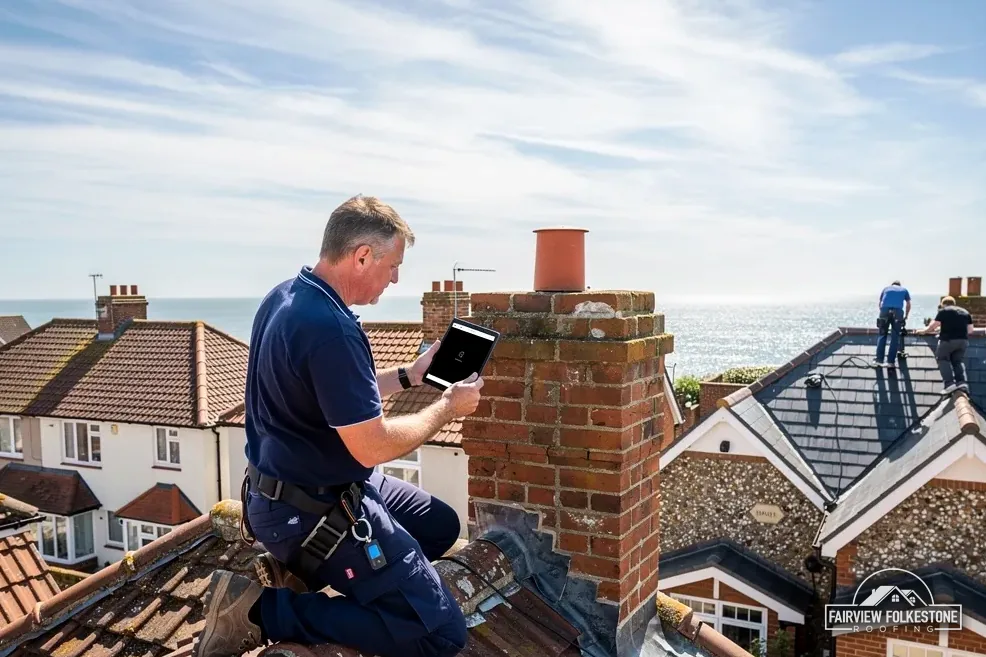
Pointing is the mortar finish in the joints between bricks, and on a chimney it does two jobs: it keeps rain out of the stack, and it holds the bricks in line against the wind. A stack stands higher than anything else on the roof and takes the weather on every face, so its pointing wears faster than the pointing on the walls below.
Repointing means raking the old mortar out of the joints to a sound depth and filling them again with new. Done well, it is one of the more modest jobs on a chimney. Done with the wrong mortar, or on a stack whose bricks have already failed, it can do more harm than good, which is why the choice of mortar and the condition of the bricks come before the trowel.
This guide takes the job in the order we work: reading the pointing, choosing the mortar, allowing for exposure, doing the work, knowing when it is not enough, and the price drivers. You will find it under our chimney repairs pages.
01Key points
Reading worn pointing from the ground and the roof
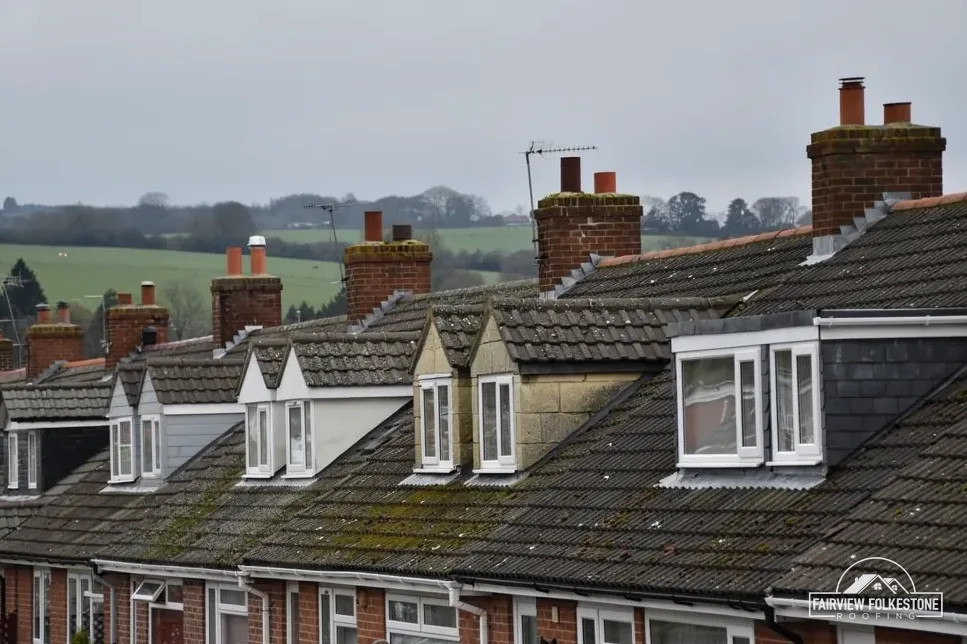
You can learn a fair amount about a stack without going near it. From the garden or the street, with binoculars if you have them, the signs of tired pointing are visible.
- Joints that sit back from the brick faces, leaving a shadow line where mortar used to fill the gap.
- Mortar that has crumbled and left holes, or fallen onto the roof below.
- Bricks that look loose or out of line, especially near the top of the stack.
- Staining on the breast inside the house, which can mean water is getting into the stack.
- Moss or plants rooting in the joints, which need a crack to start from.
Growth in the joints is a symptom, not the cause. It roots where the mortar has already cracked, so clearing it away without repointing only exposes the gap.
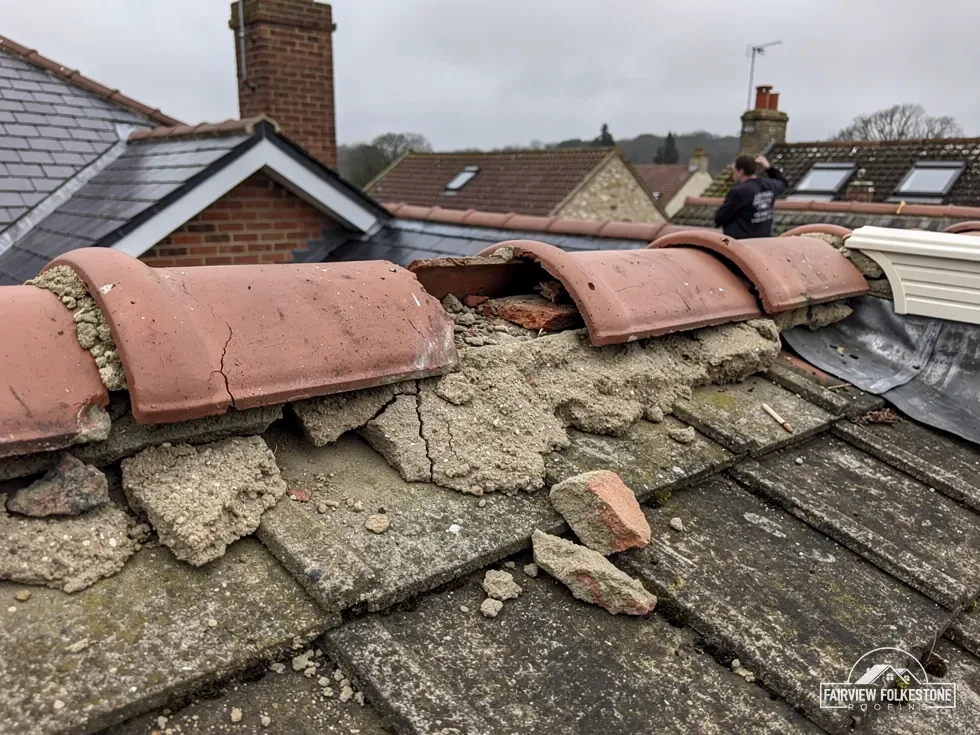
A close look from scaffold adds what the ground cannot show: how deep the loss goes, whether the mortar is sound behind its surface, and whether the bricks themselves are intact. A joint that looks only a little worn from the ground can be hollow behind the surface, and a joint that looks bad can turn out to be sound a short way in.
Pointing and flashing are neighbours. The lead round the base of a stack is tucked into joints in the brickwork, so worn pointing there can let the lead lift, and lifted lead can let water into the joints. We look at both together, and our guide to chimney flashing repair explains the lead side.
Crumbling brick faces are a separate question from crumbling mortar, and our answer on spalling chimney bricks explains what the bricks themselves are telling you.
02Mortar
Choosing the mortar before the work starts
Mortar choice matters more on an old stack than on a new one. As a rule of good practice, the mortar in a joint should be the weaker of the two materials beside it, so that if anything has to give it is the joint, which can be renewed, and not the face of the brick, which cannot.
That is the reason to match the mortar to the masonry. Where an older stack was laid in a lime mortar, the repair uses a lime mortar. A hard cement mix pressed into soft old brickwork reverses the logic, because the joint then outlasts the brick, and it is the brick that wears. Where the original mortar was cement-based, a cement-based repair follows.
So before choosing, we ask:
- What is the existing mortar made of, and how hard is it?
- How soft or hard are the bricks, and are their faces sound?
- Is the house listed or in a conservation area, where the council may care about the mortar as well as the look?
- How exposed is the stack, which affects how well a mix has to stand up to weather?
We write the mortar type into the quote. For a listed house, roof work stays within permitted development, but the building's character is protected by listed building consent, and the pointing mortar can count as part of that character. In a conservation area, check with the council before the work.
Colour and joint finish are matched too, so repointed brickwork does not announce itself from the street. A small trial patch is left to dry first, because mortar changes tone as it cures.
Repointing questions
Should the flashing be done before the pointing?
The two are done together where both are due, from one scaffold. The lead is tucked into joints in the brickwork, so those joints are renewed as part of fitting the flashing. Doing them in two visits would mean paying for access twice, so the survey covers pointing and lead together.
03Exposure
Why exposure changes the specification
A chimney stack rises through the roof into open air, higher than the ridge, and every face takes wind and rain. That puts it in a harsher position than the roof around it, whichever town it stands in.
Cupa, a slate maker, names exposure to wind and rain as the two main environmental factors, and says buildings on slopes and hills, in coastal areas, or simply tall, will be graded with higher exposure. BS 5534, which Marley says includes wind uplift formulas, takes exposure into account when fixings for a roof covering are worked out. Those rules are for roof coverings, not for chimney pointing, but the principle carries over: the more exposed the stack, the more the mortar has to resist.
In practice, three things follow:
- The face that takes the most weather is checked first, because it is where the mortar has worked hardest.
- The top courses and the flaunching get particular attention, because they are the part of the stack that takes the weather first.
- The mortar mix is chosen with the exposure in mind, instead of being the same on every job.
Pots and cowls are part of the same exposure picture. A cracked pot or crumbling flaunching lets water into the head of the stack and loads the pointing below it, so repointing beneath a failing top will not hold, and that is raised with you before work begins. Flaunching, the mortar collar that holds the pots, is the part to watch.
04In order
How repointing is done
The sequence is the same on every stack, though the time it takes is not.
Does repointing a chimney need Building Regulations approval?
Repointing is maintenance of existing brickwork, and Folkestone and Hythe District Council says most repairs, replacements and maintenance work need no approval. That is its wording for its own addresses, so ask your council's building control team. For a listed house or a conservation area, ask about consent first.
- Make access safe. The stack is worked from scaffold or a tower, and scaffolding set over a footway or road needs a licence, so we arrange the licence with our scaffolder.
- Rake out the loose and perished mortar from the joints, working to a sound depth and taking care not to chip the brick edges.
- Brush out the dust and dampen the joints, so dry brick does not draw the water out of the new mortar too quickly.
- Fill the joints with the chosen mortar, pressing it in firmly in stages.
- Finish the joint to match the existing profile, and brush back the surface once it has stiffened.
- Clear away the old mortar, leave the roof tidy, and check the flashing and flaunching while the scaffold is up.
Old mortar raked from the stack is gathered up and removed, so it does not wash down the roof into the gutters and block them.
The last step is why a repointing visit includes a short inspection of the whole stack. With the scaffold in place, it costs very little to look at what could not be seen from the ground, and it is better to find a cracked flaunching now than after the scaffold has been taken down.
Weather decides the timing. Fresh mortar needs to cure without being washed out or frozen, so the work waits for suitable days, and the sequence of rake, fill and finish is paced to the weather, not to the clock.
05Side by side
When repointing is not enough
Pointing is a surface repair, and some stacks need more than a surface.
| Sign | What it points to | Verdict |
|---|---|---|
| Shallow worn joints, bricks sound | Mortar at the end of its life | Repoint |
| Joints loose to a deep level in places | Mortar failing through the stack | Repoint those areas in depth |
| Bricks flaking or crumbling | Faces of the brick have failed | Replace bricks, then repoint |
| Stack out of line or leaning | Movement in the structure | Check, then likely rebuild |
| Open joints and cracked flaunching together | Water getting into the head of the stack | Repair the top, then the joints |
A stack that leans, or whose bricks have shifted, is a structural question and not a pointing one. Repointing a stack that is moving buys very little, because the new mortar cracks along the same lines. In that case our guide to rebuilding a chimney stack explains the alternative, and we show you the evidence for the verdict before any price is agreed. Replacing a chimney is also outside permitted development under Class C, so the council is asked first, and our planning guide sets out the conditions.
A stack serving two adjoining houses gives the neighbour a stake in the work. Notice and cost are worth settling before any scaffolding is erected, and we talk the position through with you.
A stack can need more than one row of that table. One with flaking bricks on a single face and shallow joints elsewhere gets bricks replaced on that face and a repoint across the rest.
06Price · Quotes
Price, access and the written quote
Repointing a stack is priced after a survey. The written total follows from what the survey finds.
Access is the part that surprises people. For a Kent address, scaffolding on the highway carries a Kent County Council licence at £52 per week in 2026 to 2027, and Kent County Council says the scaffolding company should do the applying. A Rye or Camber address falls under East Sussex Highways, which lists £127 for 28 days; confirm the current fee before relying on it. In both counties we arrange the licence with our scaffolder, and it sits inside the one written price.
What shifts the price on a given stack:
- how many faces need repointing, and to what depth
- whether bricks must be replaced first
- the mortar chosen, including lime for an older stack
- the state of the flaunching, pots and flashing, which may be done in the same visit
- the height of the stack and how it is reached
If you are weighing quotes, see whether each one states that VAT and the scaffold are covered, and which mortar it specifies. A quote that is silent on the mortar leaves the most important choice unmade.
Repointing is maintenance of existing brickwork. Folkestone & Hythe District Council's building control page says most repairs, replacements and maintenance work do not need approval, but that is one council's wording, so ask the building control team for your own address if you are unsure.
Can I repoint a chimney myself from a ladder?
We would advise against it. A stack stands above the roof edge, so a ladder leaning on the roof is a fall risk, and loose mortar and tools drop onto anyone below. We work from scaffold or a tower. A look from the ground with binoculars is a safer first step.
More on chimney repairs
All guides and posts

Tell us what's wrong with the roof.
You'll get one written total price.