
Metal roof guide
Cut edge corrosion on metal roof sheets: causes and repair
Cut edge corrosion starts where coated steel sheet was cut and left bare. This guide covers how to spot it, how far it has gone, and whether to treat, overlay or re-sheet.
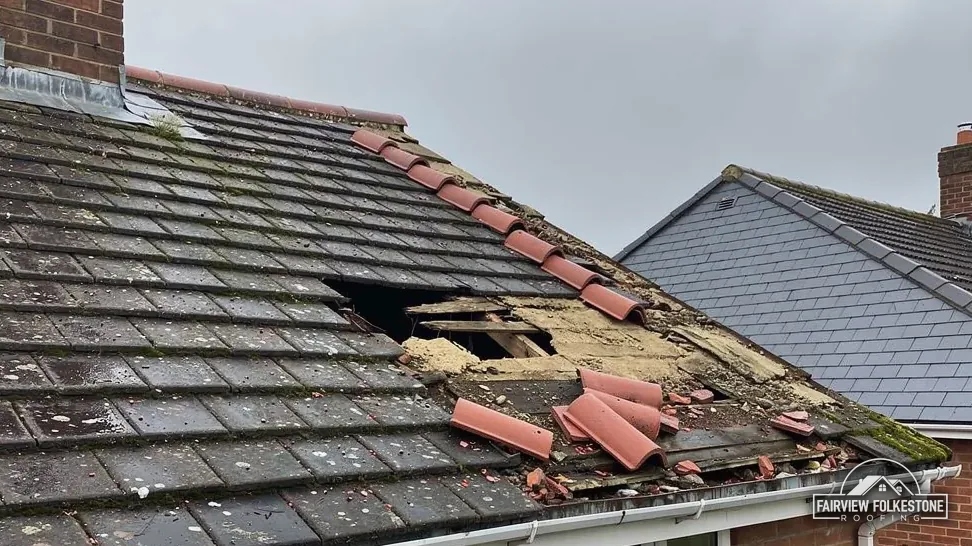
Profiled metal sheets arrive from the factory with a protective coating on the face and the back. Every time a sheet is cut, drilled or notched afterwards, that coating stops at the edge of the cut and the steel inside is left open to the air and to wet. On a warehouse, a workshop or a unit on an industrial estate there are a great many such edges: the sheet ends at eaves and ridge, the laps between sheets, the notches round a flue or a rooflight, and every hole for a fixing.
Rust that begins at one of those edges creeps under the coating and lifts it. Left alone, it works its way along the sheet and into the laps. This guide explains how we recognise it, how we judge whether the sheets can be treated or whether they have gone too far, and what has to be checked before anyone steps onto a roof of this kind. We give you the verdict with the evidence, and the work follows the building, not a standard package.
01Key points
What cut edge corrosion is and where it starts
Coated steel sheet is protected at the factory by a metallic layer and a paint finish. Both end at the edge of the sheet. The cut face of the steel is left exposed, and in time rust appears there, then spreads sideways under the coating and lifts it from the sheet. The name describes the point of origin: the corrosion begins at a cut edge and travels in from it.
On a roof, the cut edges that matter are the ones where water lies or runs:
- The lower end of each sheet at the eaves, where it hangs over the gutter.
- The side laps, where one sheet sits on the next and water can be held between them.
- Notches and cut-outs round pipes, flues, vents and rooflights.
- Holes made for fixings, particularly any that were drilled oversize or off line.
- Cuts made on site to fit a sheet to an awkward corner or a hip.
Any cut edge on a coated sheet is a place where the coating needs looking after, whether the cut was made in a factory or with a grinder on the day. Roughly cut or burred edges are harder to protect than clean ones, and cuts that were never touched up at all have no protection.
The condition is a surface issue first and a structural one later. Early on it is a stain and a line of lifting paint. In the later stages the steel loses thickness, holes form at the laps and the sheet can no longer shed water as it should. Our commercial roofing page, commercial roofing in Folkestone and Kent, shows where this sits among the faults we survey.
02Side by side
Reading the roof for the early and late signs
Much of the evidence can be seen from the ground or from the gutter line, so a first look costs a tenant or owner nothing. The detail comes from a closer survey.
Inside the building, look for brown drips on the floor or on stored goods after rain, stains running down from the laps, and rusty water marks around the fixings. A gutter full of flaking paint and rust scale tells a similar story, because that debris comes off the sheets above it.
The condition is not always even. One slope, or a run of sheets beside a rooflight, may be well advanced while the rest of the roof is sound, because the edges that hold water longest are where the damage shows. A survey records each slope on its own, and a sheet-by-sheet view lets the work be limited to where it is needed.
Fixings deserve a close look as well, since a fixing that has rusted can fail or leave a hole at the very point that holds the sheet down. A sheet with sound edges but loose or rusted fixings needs a different repair from one with the opposite fault.
The safe way to carry out this look is from a platform or mobile access, not from the sheets themselves. Our page on commercial roof surveys sets out what a survey covers.
| What is seen | Stage | Likely response |
|---|---|---|
| Orange or brown streaks below laps | Early | Clean and treat the edges |
| Paint blistered along cut ends | Developing | Treat, then recoat |
| Rust spread across the lap faces | Advanced | Overlay or renew sheets |
| Pin-holes or daylight at laps | Failed | Renew the affected sheets |
Cut edge corrosion questions
Can rusted sheet edges simply be painted over?
Only when they are caught early, and only after the rust has been cleaned back to bright steel and the edge sealed. Paint put over loose rust hides the fault and lets it spread under the new coat. Once the steel has thinned or holed at the laps, no paint can restore it, and the sheet needs overlaying or replacing.
03In brief
Treat, overlay or re-sheet
The choice turns on how much sound steel is left. A sheet that is stained but still full thickness can be cleaned, treated and sealed. A sheet that has thinned or holed cannot be brought back, however well it is painted.
Overlaying changes the weight on the building. We ask a structural engineer to confirm the roof can carry an overlay, and we put the question to building control, before the first new sheet goes on. Weight is easy to overlook on a roof that has carried the same sheets for years.
We lay out the options with the evidence against each. If treatment would only extend the life of a roof that has already failed in many places, we tell you so, because paying twice for a short gain helps nobody.
- Treat. Clean the rust back to bright steel, treat the exposed edge, then seal and recoat it. This holds the fault where it is, and it suits sheets caught early.
- Overlay. Fix new sheets over the old ones where the old roof is flat enough and strong enough to carry them. This closes the roof quickly and avoids stripping, but it adds load and hides the old sheets, so the structure and any rooflights have to be checked first.
- Re-sheet. Strip the old sheets and fit new ones. It is the answer when the sheets are holed, when the roof is fragile, or when the supporting purlins (the beams the sheets are fixed to) have rusted as well.
04Asbestos
Fragile sheets and asbestos: checks before access
A metal roof can be fragile. Sheets that have rusted through at the laps, and rooflights that have aged and crazed, may not take a person's weight, and a fall through a roof is a fall from height. Treat any roof as fragile until a competent person has said otherwise. Where there is no safe access, work from a platform, crawl boards or a mobile tower, and never from the sheets.
Some roofs that look like metal from the street have cement sheets beneath, or are cement sheets themselves, and age matters here. HSE's advice for a building built or refurbished before 2000 is to assume asbestos is in it. Its A14 guidance counts asbestos cement roofs as fragile every time.
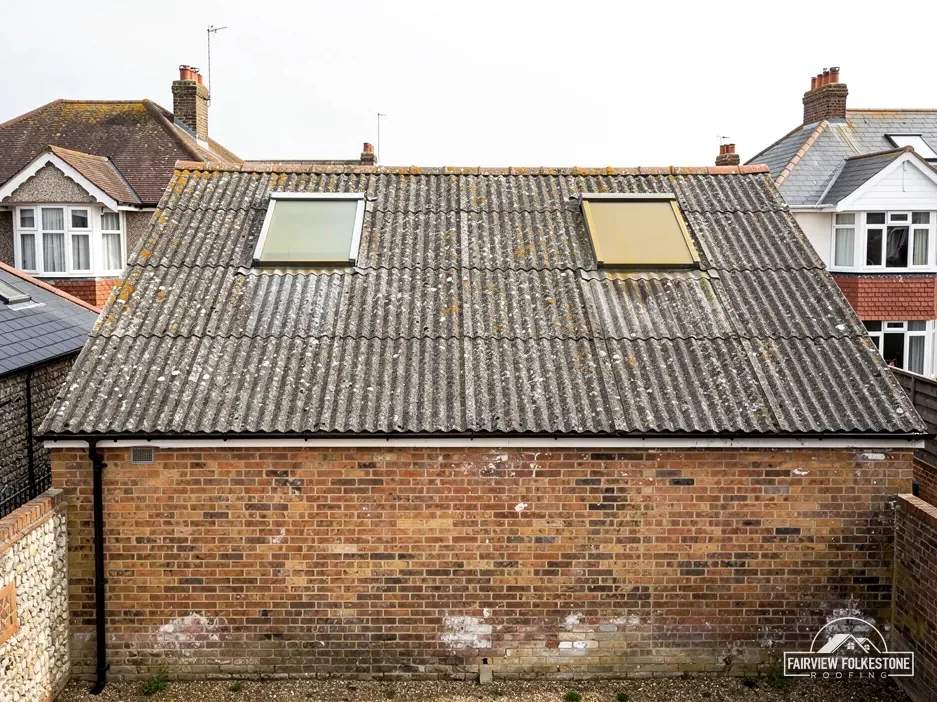
- Taking cement sheets away carefully, each lifted in one piece, counts as non-licensed work.
- Sheets broken up, as after a fire or flood, fall into the notifiable non-licensed category.
- Asbestos insulating board, which turns up in soffits and linings, is mostly licensed work.
- Waste goes into a lockable skip, never an open one, and moves under a consignment note with a registered carrier.
A survey confirms what the sheets are before anyone cuts, drills or treats them, and the result is written down so that everyone on the job works from the same answer. We cannot tell asbestos from a photograph, so where there is any doubt we stop and arrange for it to be tested. Our page on an asbestos roof on a commercial building covers that route in full.
Do I have to stop trading while the sheets are treated?
Not always. Treatment or an overlay can often be planned in sections, with the area below cleared and protected while each part is worked on. The plan depends on what the building holds, how the roof is reached and what noise and falling debris you can tolerate. We set it out in the construction phase plan before the date is fixed.
05The short list
Duties and wildlife on a working building
A homeowner's duties under the Construction (Design and Management) Regulations 2015 pass to the contractor, but a business is not a domestic client, so the duties on a unit or a warehouse stay with the owner or the occupier who commissions the work. Extra duties turn on there being more than one contractor, which happens easily when a roofer, a scaffolder and an electrician for rooflight wiring are on the same job.
Whatever the size of the job, a construction phase plan has to exist. For a metal sheet roof it should cover:
- How people reach the roof and how falls are prevented.
- Which areas are fragile and how they are marked.
- How goods, vehicles and staff are kept clear of the working zone below.
- Where waste is stored and how it leaves the site.
- Who may visit the roof during the works, and who signs them in.
- What happens if the weather turns while a section of roof is open.
Large roofs on industrial buildings can be home to birds and bats. Bats need particular care. Bats and their roosts are protected, and GOV.UK counts roof repair and replacement as work that can disturb them. Harming a roost is an offence even when nobody meant to, so if droppings or roosting bats are found, the work stops while advice is taken.
We cover the practical side of working around a business in replacing a roof while trading.
06Price · Quotes
Scope, price and the written quote
Commercial roof work is priced after a survey. There is no useful published figure for treating, overlaying or re-sheeting a metal roof, because the area, the access, the condition of the steel and the state of the purlins differ from one building to the next. A figure copied from a different building would not help you, and it could mislead you about what the work involves.
How do I know whether my roof has asbestos cement sheets?
You cannot tell from the ground. HSE's instruction for a building from before 2000, built or refurbished, is to assume asbestos is there, and its A14 guidance counts asbestos cement roofs as fragile every time. A survey and, where needed, a sample sent for testing give the answer before any work starts. Until then, nobody should walk on the roof or break a sheet.
What shapes the price on your own roof:
- The area of sheet involved, and whether the whole roof or only some slopes need work.
- How far corrosion has gone, which decides between treating, overlaying and re-sheeting.
- Rooflights, gutters and flashings that need renewing alongside the sheets.
- How the roof is reached, whether by mobile tower, scaffold or edge protection.
- Whether the building stays open to customers or staff while the work goes on.
Scaffold on a public footway needs a highways licence. In Kent the fee is £52 per week from Kent County Council for 2026 to 2027, while East Sussex Highways shows £127 for 28 days at Rye and Camber, a fee to confirm before you budget. We arrange the licence with our scaffolder.
A survey is followed by one written total. If a quote you have been given lists a single treatment for every roof, ask what it is based on, because the right answer depends on the condition of each slope.
More on commercial roofing
All guides and posts
Tell us what's wrong with the roof.
You'll get one written total price.