
Roof survey
What does a commercial roof condition survey cover?
A commercial roof survey records the covering, falls, drainage, details and build-up beneath, then turns them into a written verdict. Below: the checks in order, and what you receive.
The short answer
A commercial roof condition survey covers the covering, the falls, the drainage, every detail, and the insulation and deck beneath. It also checks access, fragile surfaces, asbestos and wildlife before anyone stands on the roof. The result is a written view of what is sound, what needs repair and what needs replacing, with photographs and a roof plan, followed by one written total price.
4 min read · Part of Commercial roofing
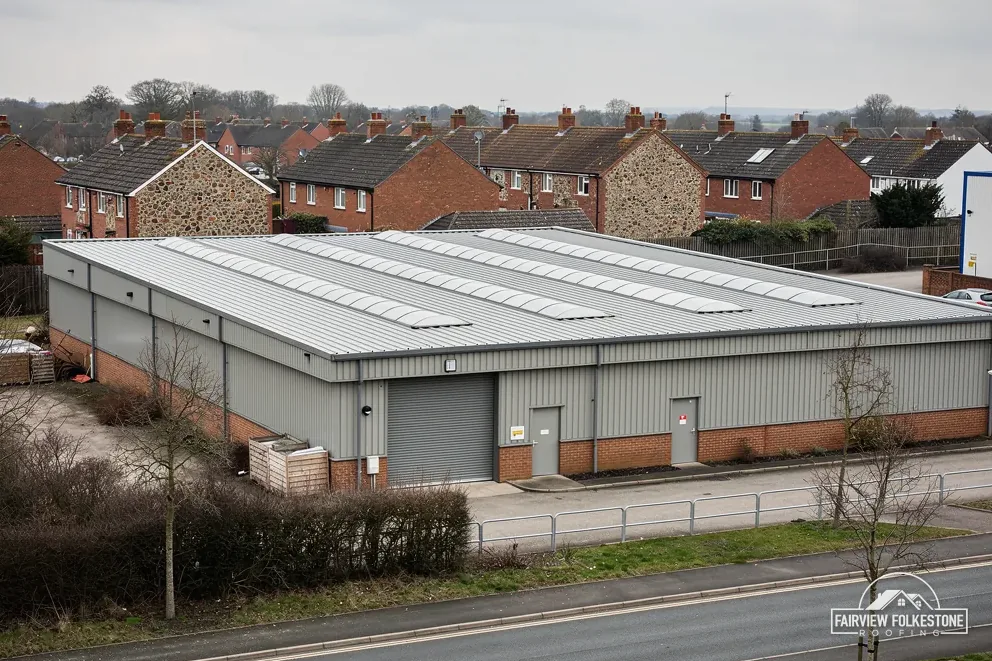
Before anyone steps on the roof
The survey opens with the safety questions, because a commercial roof can be fragile in places that look solid.
- Access: how the roof is reached, whether a fixed ladder or hatch is safe, and where a platform or scaffold could stand.
- Fragile surfaces. Rooflights in any sheet roof are treated as fragile until checked, and HSE says asbestos cement roofs are fragile in every case.
- Asbestos. HSE's rule is to assume there is asbestos in a building built or refurbished before 2000, so the survey records the building's age and what the sheets are thought to be.
- Wildlife. Roosting bats are protected by law, and so are wild birds' nests while they are in use or being built, so droppings, nests and entry gaps are noted before work begins.
Where a surface is fragile, we survey from boards, a platform or the edge, and any area we cannot reach safely goes down as not inspected, never as a guess. Our page on fragile roofs and CDM duties covers the duties behind that.
What is checked on the roof itself
Once access is safe, we work across the roof in a set order, so that nothing is skipped and the notes read the same way every time.
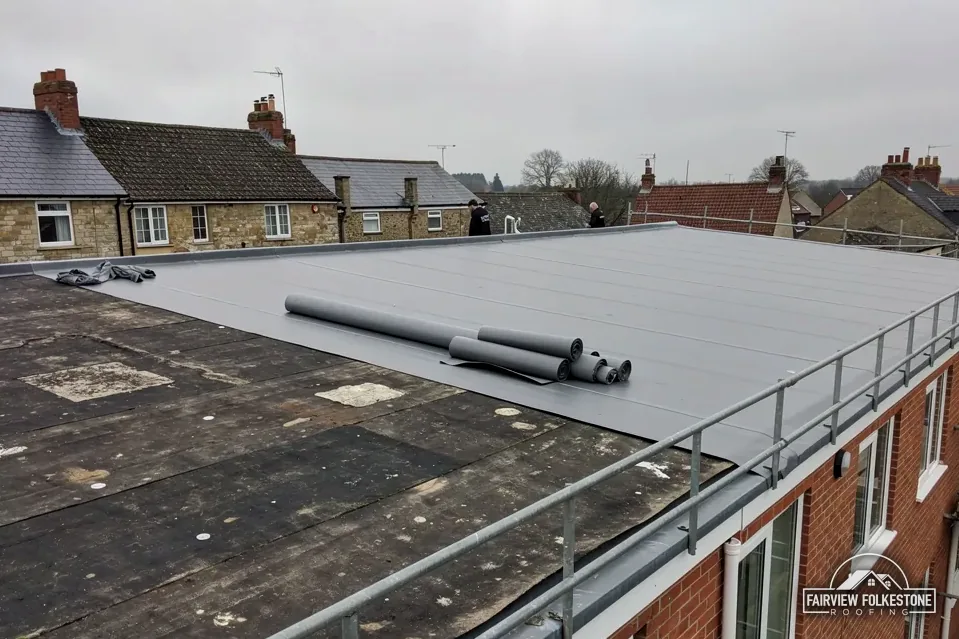
The covering comes first: seams, laps, blisters, splits, ageing and any patching already done. Then the details, where leaks can start: upstands where the covering turns up a wall, drip trims at the edge, flashings, penetrations for pipes and plant, and the fixings on metal sheets. After that, the drainage: outlets, box gutters, downpipes and any overflow, along with the marks of ponding.
Whatever stands on the roof is looked at as well. Cooling plant and walkways load the covering around their supports, and those spots are checked closely. On metal roofs, the sheet ends and the sealant at the laps are recorded for cut-edge corrosion, which our guide on cut-edge corrosion on metal roof sheets explains.
Measurements and photographs go into the notes at each stage, taken from the same positions each time, so the report places every fault on the roof instead of describing it in general terms, and you can find it again from the plan.
Underneath and inside
A roof is a build-up, and the covering is only the top layer. The survey looks beneath and inside as well.
- Insulation: tested for wet patches, which are marked on a roof plan.
- The deck: timber, metal or concrete, checked for softness, sag or corrosion.
- Falls: whether the surface sheds water to the outlets. The NFRC reports that BS 6229:2025 sets a minimum finished fall of 1:80 for membrane flat roofs.
- The ceilings and walls inside, for stains that map to a point on the roof. A drip indoors can land some distance from the hole above it.
These checks change the verdict, because insulation that is wet counts against a recover and points towards stripping the roof. That is why this part of the survey carries real weight in the choice between repair and replacement.
Where the survey cannot see something, because a ceiling void is locked or a section of roof has no safe access, the report says so. A gap in the survey is recorded as a gap, and the price says what it assumes about it.
What you are given afterwards
The survey ends with a written report you can keep and pass to a landlord, a surveyor or a lender.
- A roof plan with the findings marked on it.
- Photographs of each fault and each wet area.
- A verdict on every area of the roof: repair, replace, or check further.
- A note of anything not inspected and why.
- The route we would take, with one written total price.
The route is explained in our answer on refurbishing or replacing a commercial roof. We then give you one written total price, worked out from what the survey found rather than taken from a rate card.
For the other roof types we survey, see our commercial roofing page. Where the survey finds asbestos or presumes it, the report says so plainly and the next step is an asbestos survey, not a quote. Send us the address and a few photographs and we will tell you what to expect on the visit, including how long it takes and what we need from you on the day, such as a key for the roof hatch and a contact in the building. A named contact makes the visit quicker for everyone involved.
More questions
Do you need to be on the roof to survey it?
Where it is safe, yes, because the details only show up close. Where a surface is fragile or the access is unsound, we survey from boards, a platform or the edge and mark the parts we could not reach. A view from the ground can add to that, but it cannot replace it.
Will the survey disrupt the people working in the building?
Hardly at all. The survey itself takes place on the roof, and the inside part is a look at ceilings and walls for stains. If we need to see a plant room or a roof void, we agree a time with whoever manages the building so the visit fits around the working day.
More on commercial roofing
All guides and posts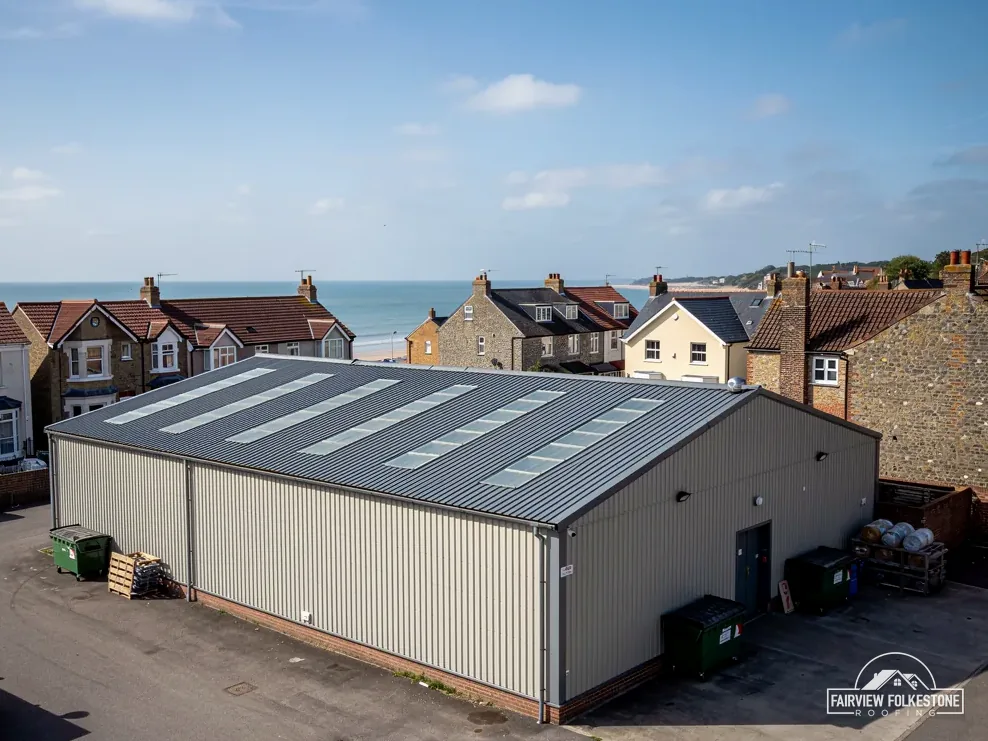
Tell us what's wrong with the roof.
You'll get one written total price.