
Roof safety guide
Fragile roofs and CDM: what building owners must do before roof work
A fragile roof will not carry a person, and the law puts duties on the person who commissions work on it. This guide sets out what those duties mean for a building owner.
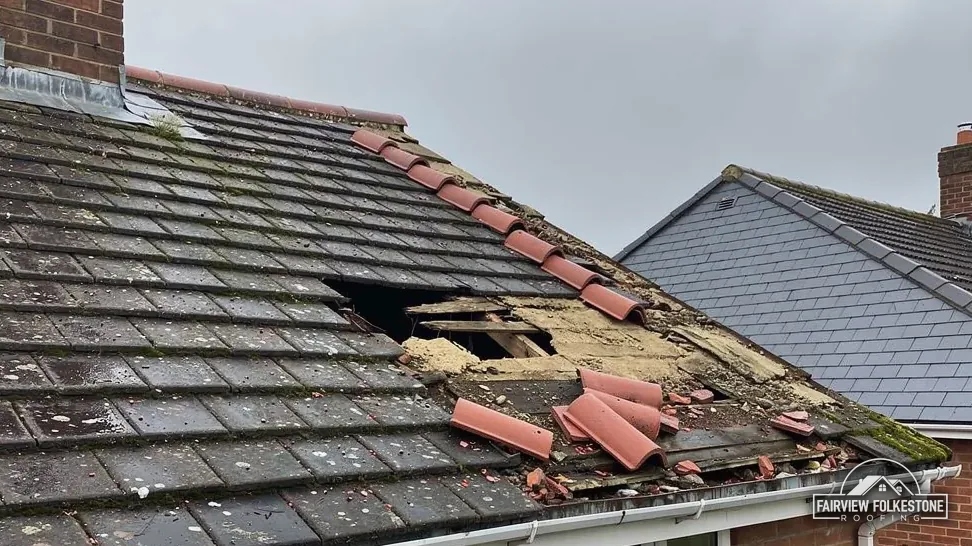
A roof that looks solid from a ladder can give way under one footstep. Old cement sheets, rusted metal, aged rooflights and some glazed panels all have this fault, and the person who steps on one gets no warning. For a building owner there is a second problem alongside the physical one: roof work counts as construction work, and the Construction (Design and Management) Regulations 2015, usually called CDM, say who must plan for it and who answers if nobody does.
This guide is for owners and managers of shops, offices, units, warehouses and blocks, not for a homeowner whose duties pass to a contractor. It explains what fragile means in practice, who holds the client duties on a business building, what to ask a roofer before any work starts, and how asbestos cement sheets change the plan. We survey first, we say what we find, and the plan is written before anyone goes onto the roof.
01Key points
What makes a roof fragile
A fragile roof is one that cannot be relied on to support a person's weight, or the weight of materials and tools carried across it. The surface may look sound. Some fragile roofs have a sound-looking skin over a covering that has weakened with age, and others have panels that were never meant to be walked on.
We treat each of these as fragile until someone competent has shown the roof will carry a person:
- Asbestos cement sheets. HSE's A14 guidance says plainly that asbestos cement roofs are always fragile, whatever their age or how they look.
- Rooflights and glazed panels, particularly plastic ones that have aged and crazed in daylight.
- Metal sheets that have corroded at the laps, the edges or the fixings.
- Liner panels and old fibre-based sheets over a void.
- Any roof covered in moss or debris, which hides weak areas from view.
A roof that is solid in one place can be fragile a few metres away, so the whole surface is assessed, not just the part near the hatch. Where an area is in doubt, we mark it on a roof plan and give you a copy, so the same information reaches everyone who goes up after us.
Treating a roof as fragile changes how the work is done. People reach it by a platform or tower, not by walking across it. Crawl boards or covers spread the load, and edge protection and covers over openings keep anyone from falling through or off. Our page on commercial roofing shows the kinds of building we survey, and the same rules apply to all of them.
02Side by side
Who holds the client duties
CDM gives the person who commissions the work, the client, duties that begin before the roofers arrive. A domestic client is defined by HSE as an individual who has construction work carried out on their own home, or a family member's home, that is not done as part of any business. For that person, regulation 7 hands the client duties to the contractor on a one-contractor project, and to the principal contractor on a project with several, or to the principal designer under a written agreement.
A building owner who has roof work done for a business falls outside that definition, so the duties stay with the owner. The table sets out how the pattern changes.
| Client | Contractors | Duties sit with |
|---|---|---|
| Homeowner | One | The contractor |
| Homeowner | More than one | The principal contractor |
| Business owner | One or more | The client itself |
A construction phase plan belongs to every project. Where there is one contractor, regulation 15(5) says that contractor must draw up the plan or arrange for it to be drawn up. Where there is more than one, regulation 12(1) says the principal contractor must draw it up. The extra duties turn on the number of contractors, not on whether the job has to be notified.
If you are unsure which row describes you, ask the contractor to say in writing which role each party holds. A clear answer on the first visit is a good sign.
Fragile roof questions
Does my shop need a construction phase plan for a small roof repair?
Yes. A construction phase plan is needed on every project, however small. Where there is one contractor, that contractor must draw up the plan or arrange for it to be drawn up. A short repair gets a short plan, but it still covers access, fragile areas, waste and who else is on the building.
03Choosing a roofer
What to ask a roofer before work starts
These questions are fair to put to any contractor, and the answers should be in writing. A contractor who has surveyed the roof will have most of them ready.
Ask also for the contractor's plan for rescue. If someone is hurt on a roof, the time between the fall and the help arriving matters, and a plan that names who calls, where the ambulance can reach and who meets it is far better than one made up on the day.
Notice what is missing from the list: a promise that the job will be quick. A rushed roof job on a fragile roof is the one most likely to go wrong, and an honest contractor will tell you how long the access, the survey and the plan take before the first sheet is touched.
We put the same questions to ourselves. Our commercial roof survey page explains how the survey records the roof type, the fragile areas and the access route, so that the plan can be written from facts and not guesses.
Keep the plan and the survey together in the building's file. The next contractor, and the next owner, will want to know what was found.
- What is the roof made of, and has it been checked for asbestos?
- Which areas are fragile, and how will they be marked and protected?
- How will people and materials reach the roof, and is any of that from the sheets?
- Who is drawing up the construction phase plan, and can you see it before the date is fixed?
- Will other trades be working on the building at the same time?
- What happens to the building's occupants, customers and vehicles while the work goes on?
- Where does waste go, and who carries it away?
04Asbestos
Where asbestos cement sheets fit
Cement sheeting on a commercial roof may contain asbestos, and the HSE rule of thumb is to assume it does if the building was built or refurbished before 2000. The assumption matters for fragility as well as for health, because a cement sheet roof is fragile in every case.
The rules for working on it depend on what is being done to the sheets:
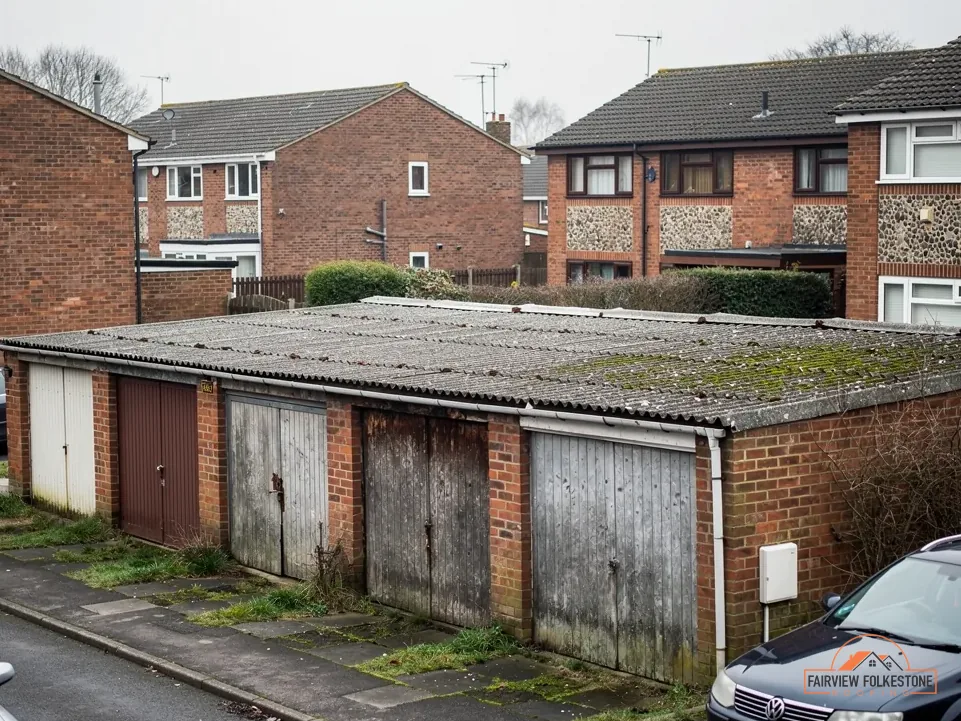
- Taking cement sheets off whole, carefully and without breaking them, is non-licensed work.
- Cement that has been broken up or badly damaged, say by fire or flood, moves the job into notifiable non-licensed work.
- Asbestos insulating board, which HSE lists among soffit materials, is mostly licensed work, so it is not a job to improvise on a Friday afternoon.
Waste has rules of its own. Asbestos goes in a lockable skip, and sheeting thrown over an ordinary skip does not meet that standard. The consignment-note exemption for household waste excludes asbestos. A roofer's asbestos waste is trade waste, so a registered waste carrier collects it, and you can ask to see its registration. Kent household recycling centres take only a householder's own small amounts, which does not apply to a firm's waste.
If a sample is needed, the survey arranges it, and the result is kept with the plan. Until the result is back, nobody walks on the sheets or cuts them, and nobody leans a ladder against them. Our page on an asbestos roof on a commercial building goes through the route from survey to disposal, step by step.
Can a roof be made safe enough to walk on?
Sometimes it can, with crawl boards, covers over weak areas and edge protection, but the fragile areas stay fragile. HSE treats asbestos cement roofs as fragile in every case, so those are never treated as safe to walk across. We prefer to work from a tower or platform, and to keep people off the sheets altogether.
05In brief
Everyone else who goes on the roof
The roofers may not be the only people who visit. Engineers service air-handling plant, installers fit solar panels, signwriters and aerial fitters work from the edge, and a caretaker might go up to clear a gutter. Any of them can step onto a fragile area without knowing it is there, and the person who controls access to the roof is usually the owner.
Contractors change, and so do tenants, so write the rules down and review them whenever the roof is worked on. A sheet of paper at the hatch that is five years out of date can mislead as badly as no sheet at all.
When you let a contractor onto a roof you remain the owner of the building and its condition, and a short conversation at the hatch is cheap against the cost of an accident. If the roof carries plant that needs regular visits, ask for a walkway route to be built, and for that route to be tested before it is used.
Wildlife can affect the plan too. Birds and bats use large roofs, and where either is found the work waits while advice is taken.
A few habits protect them and you:
- Keep the roof hatch locked, and give the key to a named person.
- Fix a notice at the access point that says the roof is fragile, with a plan showing where.
- Ask each visitor to tell you what they are doing before they go up, and sign them in and out.
- Pass the survey and the construction phase plan to anyone who works on the roof after us.
- Mark fragile areas on the roof itself, in a colour that is clear from the access point.
06Price
Programme, access and price
Much of the time can go on things other than the sheets themselves. They are the survey, the asbestos result, the access arrangements and any notice that must run before a start. We build those into the programme from the beginning so the date you are given is one we can keep. If a result or a notice is late, the start moves with it, and you hear about it at once.
Commercial roof prices are set after a survey, because a figure taken from another building would not fit your roof. What changes the price:
Who is liable if a contractor falls through my roof?
That depends on the facts, and nobody can answer it fairly without them. As a client under CDM you have duties on a business building, and they are easier to meet with a survey, a written plan and a clear record of who holds which role. If you are worried, ask your insurer or a solicitor.
- The roof area, and how much of it is fragile.
- Whether the sheets are asbestos cement, which changes the method and the waste.
- The route to the roof: a tower, a scaffold lift or permanent edge protection.
- The number of trades involved, and so who must act as principal contractor.
- Whether the building stays in use while the work goes on.
Where scaffold takes up part of the pavement, a highways licence is needed. Kent County Council charges £52 per week for 2026 to 2027, and East Sussex Highways lists £127 for 28 days for Rye and Camber, which is worth checking again for the current figure. We arrange the licence with our scaffolder.
The quote is one written total after the survey. A related page explains cut edge corrosion, one of the faults that makes a metal roof fragile.
More on commercial roofing
All guides and posts
Tell us what's wrong with the roof.
You'll get one written total price.