
Block roof guide
Section 20 consultation for roof works: a guide for freeholders and leaseholders
When a freeholder plans roof works that leaseholders will pay for, the consultation is only as good as the roof evidence behind it. This guide covers what a roofer can supply.
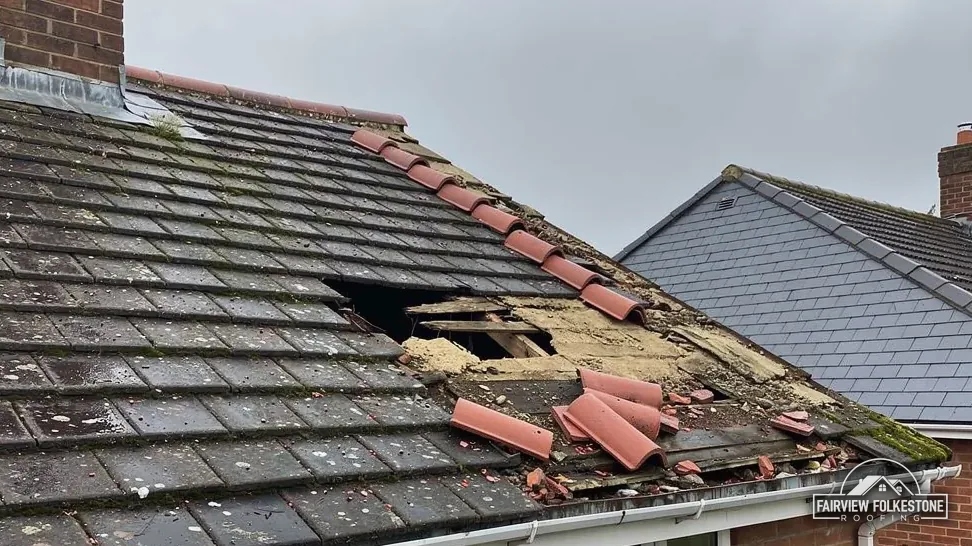
A block of flats shares one roof, and when that roof reaches the end of its life the bill is shared too. Where a freeholder or a management company proposes major works that leaseholders will help to pay for, the process is known as section 20 consultation. It exists so that those who pay get to see what is planned and why, and to have a say in who does it.
The legal side belongs to the notices your managing agent issues, to your lease, and to a leasehold solicitor or adviser, and nothing here replaces them. What follows is the roof side: what a good survey records, how the work is described so that every estimate covers the same thing, what changes in a block that stands on the seafront, and what a leaseholder should ask a roofer. We survey first and report what we find, whether that is a repair or a full replacement, with the reasons behind it. It forms part of our commercial roofing work.
01Key points
What the roof evidence needs to show
A consultation that starts from a vague statement that the roof is failing invites argument. The leaseholder who is asked to pay wants to know what is wrong, how bad it is and why the answer is repair or replacement. A good survey report gives them that in terms they can follow without being a roofer.
The report should carry:
- Photographs of each fault, with the position marked on a roof plan.
- The make-up of the roof: what the covering is, what lies under it, and the condition of both.
- A clear statement of which faults are local and which run across the whole roof.
- The cause of each leak where it can be traced, and a note where it cannot.
- A verdict on repair against replacement, with the reasoning, so a reader can test it.
- Any matter that has to be settled before work starts, such as asbestos, access or wildlife.
This is why the verdict comes ahead of the price. If a repair is sound, the report states that, and a leaseholder is not asked to fund a new roof the building does not need. If the roof has reached the point where repairs would only chase the next failure, the report records that too, with the evidence.
The commercial roof survey page covers how the inspection is done and recorded, and a block roof goes through the same process.
02Side by side
Describing the work so it can be priced
Two estimates can differ by a large amount without either being wrong, simply because they were not pricing the same job. The cure is a specification: a written description of the work that every contractor prices, so the figures can be compared like for like.
A specification also records what happens if the work uncovers something unexpected, such as rot in the deck under a flat roof, or a failed upstand where a parapet meets the roof. A sound approach is for the contractor to stop, show what has been found, and give a revised price before going on. The managing agent needs to know that route exists before the work begins, so a surprise on site is handled by an agreed step and not by argument.
The person who writes a specification should have seen the roof. One lifted from another block looks efficient but prices work this building may not need, and leaves out work it does. Our page on commercial roof refurbishment or replacement sets out how the decision between the two is reached.
| Item | What it should say | Why it matters |
|---|---|---|
| Extent | Which roofs and which slopes | Prevents partial quotes |
| Method | Repair, overlay or strip and renew | Fixes the size of the job |
| Materials | Covering, insulation, flashings | Sets quality and lifespan |
| Access | Scaffold, tower or edge protection | Affects cost and safety |
| Exclusions | What is left out, such as rooflights | Avoids later extras |
Section 20 roof questions
Can a leaseholder ask for a roofer to be considered?
The notices sent out for the consultation explain how leaseholders can put forward a contractor, so read them carefully and ask the managing agent or a leasehold adviser if anything is unclear. A roofer can then be asked to survey and price the same specification as the others, so that the estimates can be compared fairly.
03In brief
Comparing estimates on equal terms
The notices a managing agent sends set out how many estimates are sought and how leaseholders can put forward contractors of their own, so the rules about that come from the notices and not from us. What we can speak to is how to read the estimates once they arrive.
A fair estimate gives one written total for the whole defined job. When a total is split into many parts, it becomes harder, not easier, for a group of leaseholders to see whether the estimates are equal. For that reason we give one written total after a survey, with a note of what is and is not inside it.
The lowest total is not always the lowest cost. If an estimate leaves out the flashings or the insulation, the roof will cost more over the following years than one that includes them. Ask each contractor to explain how their figure was reached, and keep the answers with the consultation papers.
For the rules a block re-roof has to meet, our page on commercial roof building regulations explains what the rules require alongside the price.
- Check that each one prices the same specification, and look for any that have quietly changed the scope.
- Look for a statement on whether VAT is included, because a figure without VAT and a figure with it cannot be compared.
- Look for a statement on scaffold, including whether the highways licence is part of the figure.
- Look at what is excluded, since a low total can hide an exclusion that returns later as an extra.
- Check what the estimate says about the survey it rests on, and whether the roof was actually inspected, from the roof itself and not only from the ground.
04Flat roofs
Flat blocks and buildings on the seafront
A block of flats is treated differently from a house in several ways, and the roof work reflects it. In the permitted development order, the word dwellinghouse leaves out a building containing flats and any flat within one, so the household rights for roof work do not reach a flat. Canterbury City Council states it directly: flats and maisonettes carry no permitted development rights, and altering the exterior of a flat needs planning permission. A re-roof that keeps the look unchanged may raise no question, but a different colour, a new roof light or a parapet raised for insulation can, so we check the route with the council before the specification is finalised.
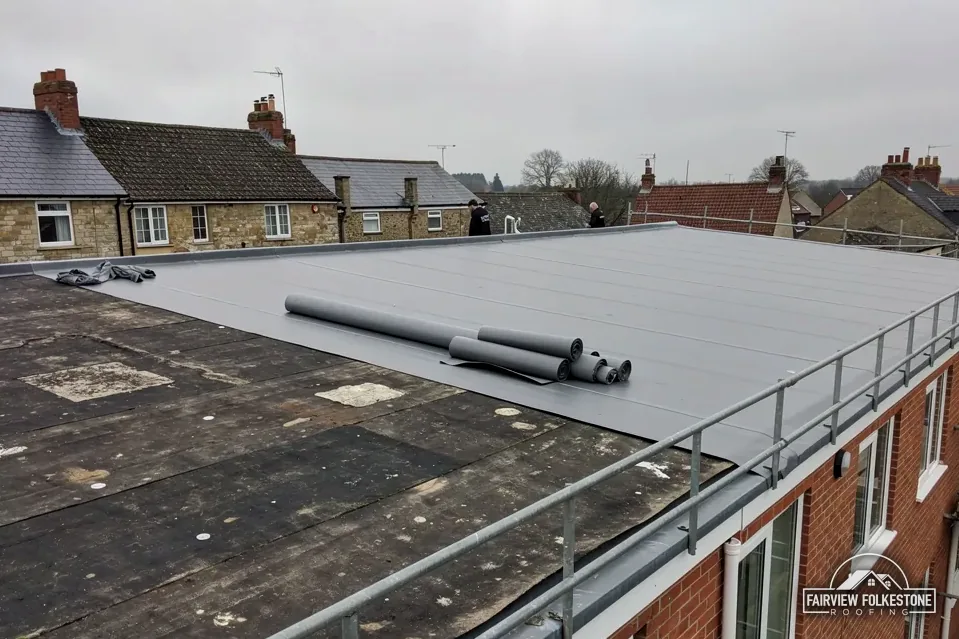
Building Regulations come into it as well. The Planning Portal sets the test for a re-roof: under 25 per cent of the building envelope and under 50 per cent of the roof, with no application normally needed. A block whose flat roof is replaced in full may well exceed that, and approval is needed whenever the new covering is 15 per cent or more heavier. In the Dover district, the council's own building control page puts roof coverings, even like for like, on its list of approvals, so we confirm the route with it first.
On the seafront a block faces more weather. Cupa, a slate maker, says buildings in coastal areas, like those on slopes and hills, are graded with higher exposure, so a pitched covering has its fixings calculated for the site under BS 5534. For a flat roof, BS 6229:2025 sets a minimum finished fall of 1:80 for membranes.
Listed or conservation area blocks need the council's view before anything is ordered.
Does a repair to one leaking flat roof need the whole process?
That is a legal question for your managing agent, your lease and a leasehold solicitor, and a roofer cannot settle it. What a roofer can do is survey the roof and say whether the fault is local or part of a wider failure, because that evidence is what lets everyone judge the size of the job.
05In order
Access, safety and the people who live there
Roof work on a block affects every household beneath it, so planning for the residents is part of the specification. Residents need to know when scaffold is going up, where the working zone is, how long the noise lasts and what happens to access to bin stores and entrances.
Scaffold on the footway or the road is licensed by the highway authority at the county level: £52 per week from Kent County Council for 2026 to 2027, or £127 for 28 days on the East Sussex Highways fee table for Rye and Camber, where the current fee should be confirmed. We arrange the licence with our scaffolder.
The points to settle with the managing agent before the start date:
- Where the scaffold stands, and whether it takes any of the footway or the road.
- How residents reach their doors while the work goes on.
- Whether any flat needs access to its loft, a hatch or a roof terrace, and who holds the keys.
- How the roof is protected overnight and in rain.
- Who residents contact if there is a problem, and how quickly they will hear back.
On the CDM side, HSE reserves the term domestic client for an individual having construction work done on their own home outside any business. A freeholder or management company commissioning work on a block does not fit that definition, so ask who is acting as client, and who will draw up the construction phase plan. Extra duties turn on more than one contractor being on the job.
A block built or refurbished before 2000 should be treated as one that may contain asbestos, and the survey checks the roof sheets and any soffits before anyone drills or cuts. Birds and bats are checked at the same visit.
06Price
Timing, phasing and the written price
Consultation takes time, and the dates are set by the notices and by the lease, not by the roofer. Because of that, it helps to have the roof evidence in hand early. A survey carried out before the first notice is drafted means the work can be described accurately from the start, which spares the managing agent from having to revise it later.
Who decides whether the roof needs repair or replacement?
The freeholder or the managing agent decides what to commission, but the decision should rest on a survey that shows its reasons. We say which we think the roof needs and why, with photographs, and where repair is sound we tell you that. If you disagree with a report, ask for a second survey before the consultation closes.
The things that move the date once consultation is over:
- The time a contractor needs to order materials and book scaffold.
- The result of any asbestos sample, where cement sheets or board are present.
- Whether the roof can be worked in phases, with one section open at a time.
- Weather, which decides when a flat roof membrane can be laid.
We will tell you the programme we can keep, and we will tell you early if something changes it. A price that depends on a date we cannot meet is no use to you.
What sets the price of a block roof:
- The area of each roof and how much of it needs work.
- Repair, overlay or strip and renew.
- Insulation, falls and the detail at parapets and edges.
- Access: scaffold, towers and the licence.
- Phasing, and whether residents stay in their flats throughout.
A block roof is priced once it has been surveyed, since only the building itself can set the figure. You receive one written total, with the inclusions stated.
More on commercial roofing
All guides and posts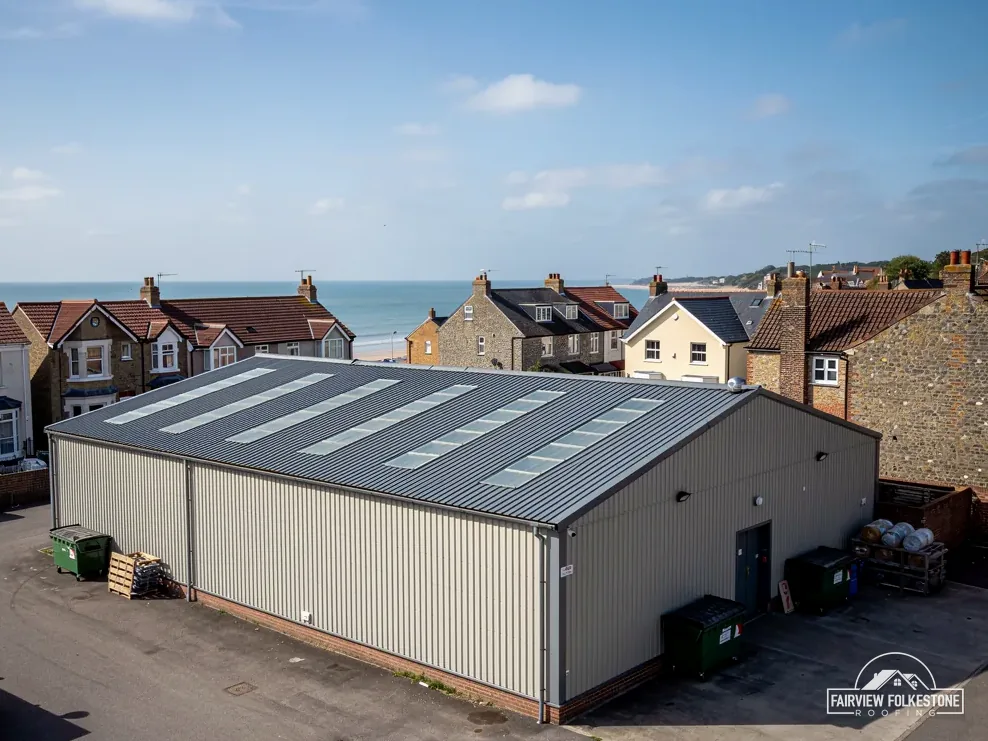
Tell us what's wrong with the roof.
You'll get one written total price.