
Roof damage
Will removing spray foam damage the roof?
Foam removal can harm what the foam is stuck to if the method is wrong. Below: where the risk sits, how the route is chosen, and which rules apply.
The short answer
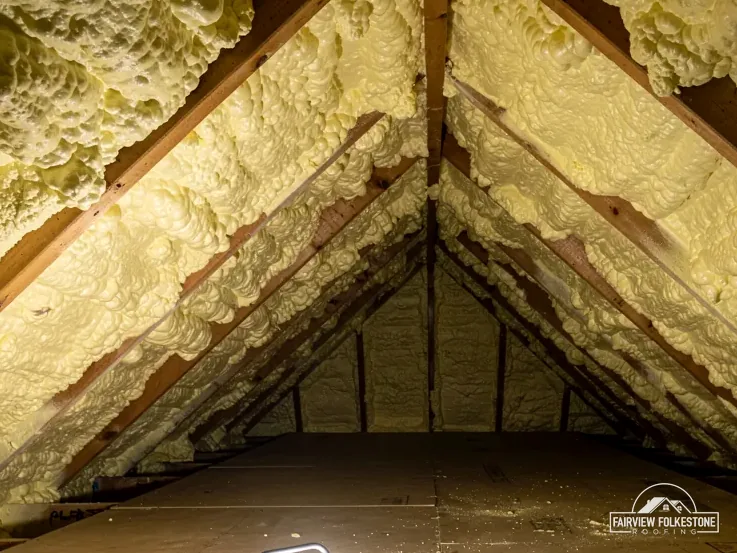
Not when the method suits the foam, but it can if it does not. Foam bonded to old felt or to the backs of tiles may tear the felt or crack a tile as it lets go, which is why a small test area is opened before any price is set. If the felt tears, the covering is lifted and relaid on new felt, rather than the foam being forced away. Done that way, the roof ends the job sound, ventilated and re-insulated.
5 min read · Part of Spray foam removal

Where the damage can happen
Foam is hard to separate from whatever it has stuck to, and the layers it touches are not built to be pulled at. The risks sit in a handful of places:
- The felt or membrane under the battens can tear as foam is peeled away from it.
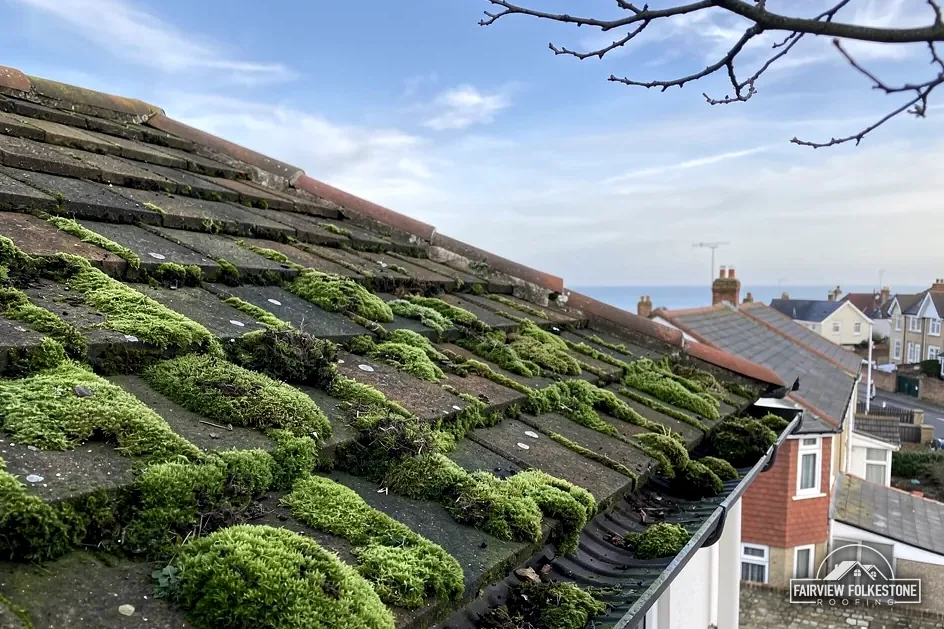
- Tiles and slates can crack where foam has bonded to their backs.
- Battens can split when foam stuck to them is levered off.
- Rafters can be scored by a scraper held at the wrong angle.
- Ceilings below can be marked by dust and falling lumps if the loft floor is not sheeted.
Each one can be avoided with the right method, and each is the reason removal starts with a trial in a spot where a failure would matter least.
Foam laid over a defect can also hide a problem that existed before anyone arrived, such as a worn flashing or a slipped tile. If one comes to light during the work, it was not caused by it, and you are shown it with a photograph and the moisture reading beside it. Our guide to how spray foam is removed follows each step.
Choosing a route that protects the covering
The test area shows how the foam lets go, and what happens there decides how much of the roof is disturbed.
| Test area result | Route | Tiles and felt |
|---|---|---|
| Foam peels clear, felt stays whole | Cut away from the loft | Left in place |
| Felt starts to tear with the foam | Open the roof from above | Lifted, then relaid on new felt |
| Foam fixed to the tile backs | Open the roof from above | Lifted carefully and sorted |
| Wood soft or dark under the foam | Allow for timber repair | Depends on how far it spreads |
A cracked tile found as the roof is lifted is replaced, never hidden or glued back together, and the replacement is matched to the tiles around it as closely as stock allows. A switch of route alters the quoted total, and you hear about that, with the evidence, before work carries on. The page on removing foam without lifting the tiles looks at when the loft route is open, and our spray foam removal service page has the wider picture.
Keeping the roof weathertight while it is open
A roof stripped back to its rafters is exposed until the felt, battens and tiles go back, so the work is planned in sections that can be closed before the day ends. That is a planning point for any open roof, and nothing special to foam.
Opening a roof also means meeting whatever lives in it. Bats and their roosts are fully protected, according to GOV.UK, and the law treats damage to a roost as an offence, intended or not. Wild birds' nests are covered too, against intentional damage, from the point a nest is being built until it stops being used. If bats or a nest turn up, work in that spot stops until the right way forward is clear.
Before any cutting near the eaves, we get soffit boards and old sheet material identified. HSE advises assuming asbestos is in any building built or refurbished before 2000, and most jobs on insulating board need a licence. Where foam is stuck to anything that could contain asbestos, we stop and have it identified first, since broken board is the real hazard, not the foam.
When the work brings Building Regulations in
If the chosen route lifts and renews the covering across a large part of the roof, the Building Regulations can apply. Two tests matter. The first is share of the roof: in the Planning Portal's guide, no application is normally called for while a re-roof affects under 25 per cent of the building envelope and under 50 per cent of the roof. The second is weight, because a new covering that adds 15 per cent or more to the weight of the roof covering needs approval even on a small patch. Dover-district addresses follow a stricter rule from Dover District Council, which names new coverings on pitched and flat roofs, even if just like for like, as work needing approval. For those we ask the council first.
Part L, the energy part, can come in as well. For a roof, AD L 2021's Table 4.3 lists a threshold of 0.35 W/m²K, with 0.16 W/m²K the improved value. Once over 50% of the roof surface has been renovated, the entire element is brought up to the improved figure where that is feasible. Our answer on building regulations approval to re-roof sets out both tests, and at the survey we say whether your route is likely to need an application.
More questions
What happens if the felt tears during removal?
Work on that route stops, and the covering is lifted so the felt can be replaced before anything is relaid. The change in the written total is explained to you with photographs first, and you can ask for another opinion on them. Pressing on and leaving a torn underlay in place would only store up a leak.
Could foam removal crack my tiles or slates?
It can where foam has bonded to the back of the covering. Tiles that must be lifted come off by hand, are stacked and checked as they go, and any that break are replaced. Where the foam sits on the felt or the rafters instead, the covering can stay untouched while it is cleared.
Tell us what's wrong with the roof.
You'll get one written total price.