
Spray foam removal guide
How spray foam insulation is removed from a roof
Spray foam leaves a roof by one of two routes: cut away from the loft side, or lifted off with the tiles and felt from above. What the foam is stuck to picks the route.
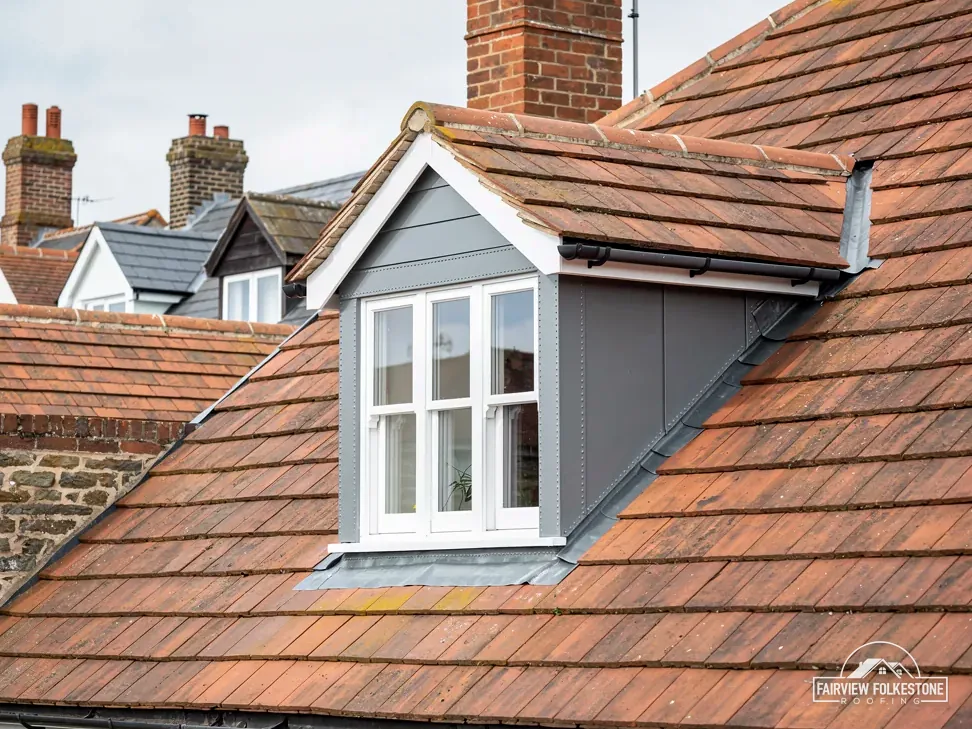
Spray foam goes on as a liquid and sets hard, so it cannot be lifted out like a roll of mineral wool laid between joists. Taking it off is a cutting and scraping job, and how much of the roof has to come apart depends on one thing: what the foam has bonded to. Foam stuck to an underlay that is still sound can be worked off from the loft side. Foam stuck to the underside of the tiles, or to felt that is past saving, means the covering has to come off first.
This guide follows the job in the order it happens. It starts with the survey and the small test area that settle the route, then covers the two ways of taking the foam off, then the weather, wildlife and timber questions that arise once the roof is open, and finally what you are left with at the end. Where a rule applies on the way, such as a scaffold licence or a Building Regulations threshold, it is named at that step. The reasons people take foam out, and what the work costs, have their own guides, linked below.
01Survey
The survey and the test area
The route is chosen before anyone picks up a knife. Surveying starts at the loft hatch, torch in hand and a moisture meter alongside, and three things are worked out: what the foam is stuck to, how deep it lies, and whether it covers the rafters or only fills the gaps between them. Foam on a sound underlay (the waterproof layer laid over the rafters, beneath the battens) is one job. Foam that was sprayed up against the underside of the tiles is quite another.
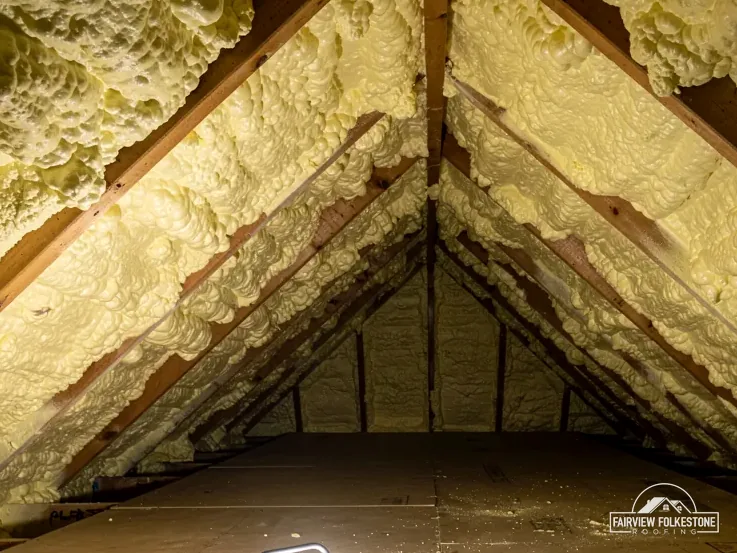
RICS's consumer guide says a roof timber under spray foam "cannot be fully seen or inspected", which is why a survey alone cannot settle every question. Where the foam is thick across every rafter, a small test area is cut out first, usually in a bay at the eaves where a failure would do least harm. It shows how the foam lets go of the felt, what the timber looks like underneath, and what the moisture readings say.
- If the foam peels cleanly from a sound underlay, the loft route is open.
- If the felt tears or comes away with the foam, the roof covering has to come off.
- If the timber under the test area is soft, the quote has to allow for repairs.
Because HSE's rule is to assume asbestos is there in a building built or refurbished before 2000, soffit boards and old sheet materials near the eaves are identified before anyone cuts close to them. The test area is made good whatever you decide, and the result reaches you in writing before the main work is priced.
02Side by side
Two routes, and what decides between them
Almost every removal falls into one of two routes. The table pairs each foam condition with the route it points to and the effect on the roof covering.
The loft route is the lighter job, so it is tried first wherever the survey allows. It is not always the better one. Pulling foam away from old bitumen felt can tear the felt, and a torn underlay no longer does its work of sheeting off wind-driven rain. Clearing the loft and leaving a roof without a working second layer would save a day now and cost a great deal later.
For that reason the decision rests on the test area, not on hope. If the felt starts to tear, work stops and you are shown. Switching from the loft route to the strip route changes the written price, and the change is put to you before it happens, with the photographs that justify it. You can ask for a second opinion on those photographs at any point, and you are never asked to approve a change without seeing what prompted it.
| What the foam is stuck to | Route | The roof covering |
|---|---|---|
| Sound felt or membrane | Cut away from the loft | Stays in place |
| Brittle or torn felt | Strip from above | Lifted and relaid |
| Underside of tiles or slates | Strip from above | Lifted, sorted, relaid |
| A roof with no felt at all | Strip from above | Lifted, new felt fitted |
Spray foam removal questions
Can I stay in the house while the foam is cut out?
On the loft route you can, because the work is confined to the roof space and the hatch, landing and floor below are covered. Stripping from above is noisier and puts scaffold at the house. On either route the loft is closed off from the rest of the home while cutting goes on, and the arrangements are agreed with you at the survey.
03In order
Cutting foam away from the loft side, bay by bay
On the loft route the work moves along the roof one bay at a time, a bay being the gap between two rafters. Before it starts the floor is sheeted, the hatch and landing are covered, and tanks, cables and pipes are moved aside or protected. Anything fixed into the foam is logged for the report.
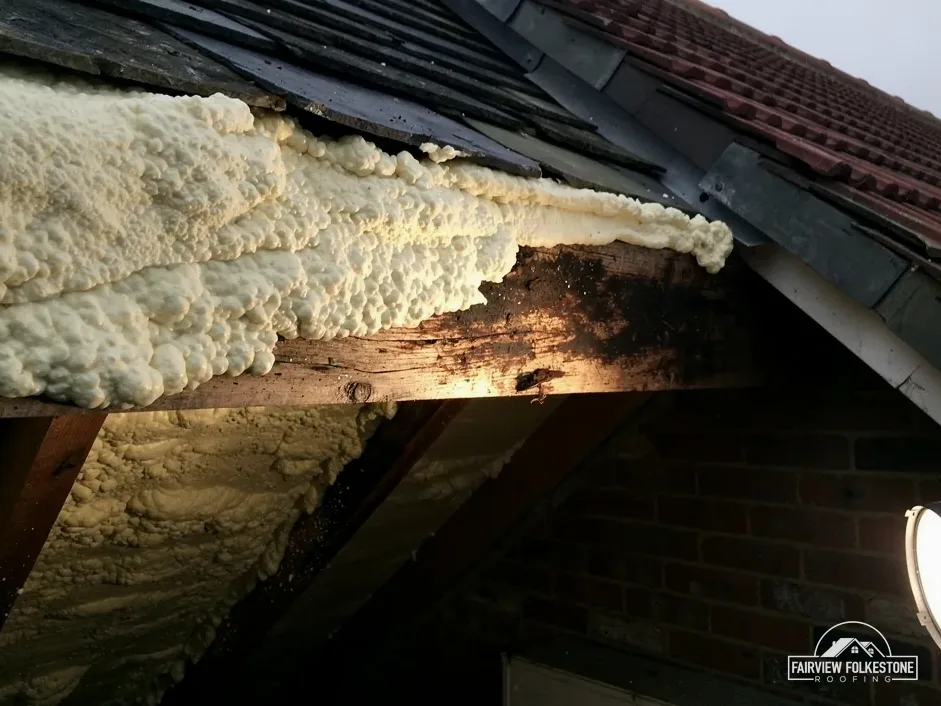
- The foam is cut from between the rafters in blocks and bagged straight away.
- The rafter faces are scraped back to the wood.
- The underside of the felt is cleaned, working down from the ridge to the eaves.
- Foam packed into the eaves is cleared so that air can reach the roof again.
- Each cleaned bay is photographed beside a moisture reading.
It is slow, dusty work, and the pace is set by the foam. Thick foam takes longer than a thin skim, and foam on a rough surface takes longer than foam on a smooth one. Hard foam is cut in smaller pieces so the felt behind it is not dragged. A faint crust can remain on timber faces after scraping, and that is cleaned back before the timber inspection begins, so that nothing hides a split or a soft patch.
Spray foam is a polyurethane product, so the loft is closed off from the rest of the house while the cutting goes on. When the last bay is finished, the loft is swept and vacuumed before anyone starts on the timber check, and the sheeting that protected the floor is rolled up with the dust inside it.
04Key points
Stripping the roof from above
Where the foam clings to the underside of the tiles, or the felt will not survive being pulled away, the sound route is from outside. Tiles or slates are lifted by hand and stacked for reuse. Foam-coated felt and battens go to the skip, the rafters are cleaned from above, and the whole roof stands open to the timber check. A tile that breaks is replaced with the nearest match. The roof then goes back on new battens and new underlay.
What if the foam turns out to be thicker than expected?
You are told before work carries on. Thicker foam takes longer to cut and bag, and a hidden patch can change the route from the loft to stripping from above. The test area is there to reduce surprises, but if something unforeseen appears you see it, you get a revised written total, and the work only continues with your agreement.
A job of this size brings in rules that a loft-only removal never meets.
- Scaffold. Poles standing on the public highway need their own licence. Kent County Council charges £52 per week for 2026 to 2027, and its guidance wants the scaffolding company to put in the application. East Sussex Highways' fee table shows £127 for 28 days, a figure worth checking again before you rely on it. We arrange the licence with our scaffolder in either county.
- Building Regulations. The Planning Portal's guide puts the line at under 25 per cent of the building envelope and under 50 per cent of the roof: work that stays below both limits needs no application as a rule, but approval is needed if the new covering would be 15 per cent or more heavier.
- Fixings. Marley says installing to BS 5534 isn't required by law, though mortar alone is "no longer relied upon" to hold a covering down, so ridges and verges are fixed mechanically.
A listed house still has permitted development for roof work, and it also needs listed building consent for anything that alters its character, so the listing is checked before a strip is priced. For Dover, Deal and Sandwich addresses, Dover District Council counts even like-for-like replacement of a roof covering as work needing approval, and we confirm with building control before fixing a start date.
05In brief
Staying weathertight, and what lives in a roof
An open roof is a risk to everything under it, so stripping is planned in sections small enough to be covered before the working day ends. Sheeting is fixed down against wind, and the ceiling below is checked each morning before work resumes. If the forecast turns, the section in hand is closed up before more is opened. A roof left bare overnight can do more harm to a ceiling than the foam ever did.
Wildlife is the other thing that can turn up once the covering is lifted. Two protections matter here.
- Wild birds are protected: an intentional attack on a nest while it is in use or being built is an offence.
- A bat roost is protected whatever the intent behind any damage to it.
If we see signs of either, we pause that area and take advice before going on. A short delay is the price, and it is better than a legal problem for you afterwards.
The Energy Saving Trust explains that spraying foam directly onto the underside of a roof "will partially seal the timber". That is one reason the bare timber is checked carefully on the day it is exposed, while the cause of any damp can still be traced. Foam that sat over a slipped tile or a split in the felt can hide a leak for a long time, so every stained area is followed back to its source before new felt goes on. The moisture readings taken in each bay go into your report with the photographs, so you can see what the wood read on the day the foam came off.
06The short list
Taking the foam away, and what you are left with
Cut foam is bulky and light, and it fills sacks quickly. It is bagged as it comes away, carried out through the house under protection and taken off site, so it never builds up in the loft or the garden. Gutters, paths and the drive are swept as the job goes on, and the site is left clean when it finishes.
Removal is only the first half of the work. Once the foam is gone, the roof has bare rafters, possibly new felt, and no insulation at all. Our guide to what happens after spray foam removal covers the timber checks, the re-felting and how the roof is insulated again so that it can dry out.
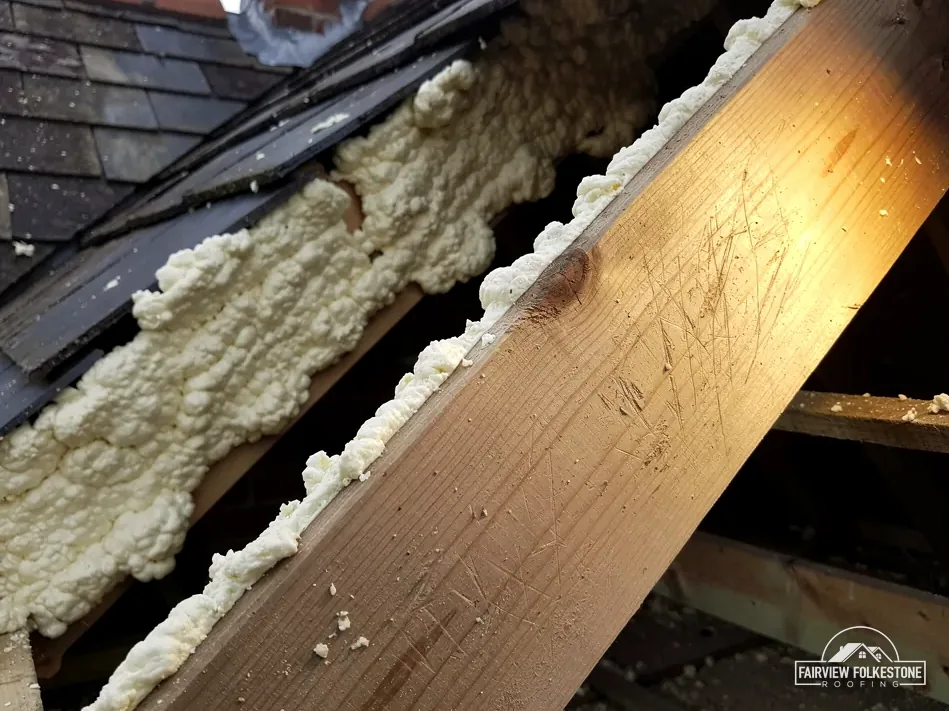
Foam can come off from the loft only while the felt underneath will stay in one piece.
At handover you receive:
- a written account of the foam type, its depth and what it was stuck to
- photographs of the bare rafters with their moisture readings
- a note of any timber trimmed, sistered (a new length fixed beside the old) or replaced
- the new felt, ventilation and insulation described
- one written total price, which covers all of the above
That record answers the questions a lender or a buyer's surveyor is likely to put, and the guide on removing spray foam before you sell explains how it is used in a sale. The full service, from survey to a finished roof, is set out on our spray foam removal page, and what the work costs is in the spray foam removal cost guide.
Do the tiles get reused after the foam is off?
Sound tiles and slates are sorted, stacked and relaid on the new battens and felt. Any that break during lifting are replaced with the closest match the roof allows, which on an older roof can mean a reclaimed tile. Tiles with foam fixed to their backs are cleaned before they go back, and those that cannot be cleaned are replaced.

Tell us what's wrong with the roof.
You'll get one written total price.