
Spray foam removal cost
How much does spray foam insulation removal cost?
One published UK guide gives an average per square metre and a worked example. This guide explains what those figures leave out and what pushes a real roof above or below them.
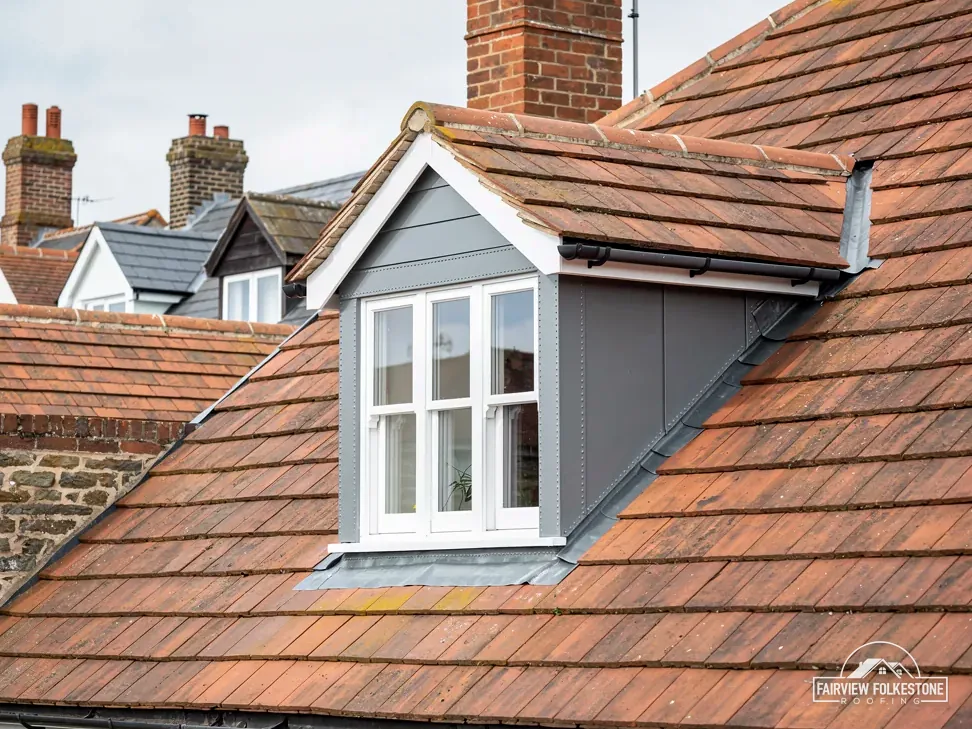
Anyone searching for the price of spray foam removal finds a handful of numbers and very little about why a roof lands where it does. That is because the figure depends less on the foam than on what is under it. Foam on a sound underlay can be cut away from the loft. Foam bonded to the underside of the tiles means the roof is stripped. Between those two jobs sits a large gap, and a roof's position in it is only known once someone has been into the loft.
Nothing here is a price for your roof. The guide sets out the one published average and its example, says what they are, and then goes through the things that move a real figure up or down: the foam, the route, the timber and felt, the scaffold, the approvals and the finish. It ends with how to read a written quote so you can compare like with like. After our survey, the price you receive is one written total.
01The detail
The published average and its example
MyJobQuote's cost guide for spray foam removal, updated in September 2026, gives the average cost of spray foam removal as £40 per m². It also works through an example of its own: for a standard 3-bedroom property with roughly 80m² of roof space, its stated typical total is around £3,200. Those are third-party UK figures drawn from that site's own data. None of them is our price, and none is a quote or a promise for a particular roof.
There are two reasons for caution. First, an average per square metre hides the spread underneath it. A roof with a thin coat on sound felt and a roof with thick foam bonded to the tiles can both be described as 80 m² of foam, and the work on each is very different. Second, a per-m² average is a yardstick for judging quotes, not a way of building one. The area that is foamed may not be the same as the area of the roof, so multiplying a rate by a guessed area gives a figure that looks precise and is not.
Treat the numbers as a sense of scale. The worked example sits in the thousands of pounds for an ordinary house. What they cannot tell you is where your own roof falls, whether nearer the low end or the high end of the spread, and nothing short of a visit to the loft will settle that.
The sections below take the drivers one at a time, starting with the foam itself.
02Price
How the foam itself moves the price
Start with the foam, because it sets the amount of cutting. Three features count most, and each can be judged from a loft hatch.
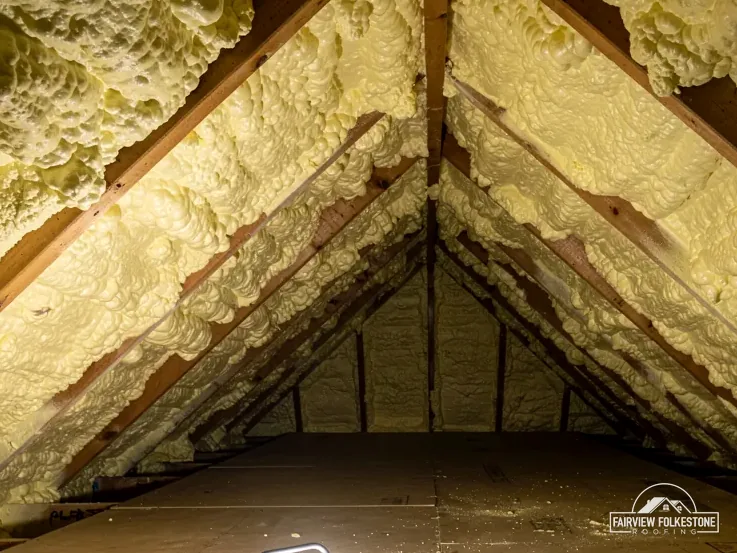
- Area. The more of the roof is sprayed, and the more bays the foam fills, the more hours the work takes. A job that stops short of the eaves is a different size from one that runs right down to the wall plate.
- Depth. A thick layer takes longer to cut and fills more sacks than a thin skim, so depth is recorded in several bays and never guessed from one.
- Type. Hard closed-cell foam bonds firmly to felt and tiles and is cut in smaller pieces, which takes longer. The softer open-cell kind is, in MyJobQuote's words, quicker and easier to remove.
The type of foam is not always obvious, and a wrong guess changes the price. Our guide to open-cell and closed-cell spray foam shows how the two are told apart. A price built on the wrong foam goes wrong on hours and on method alike, which is why the survey comes first.
What the foam is attached to is the fourth feature, and it matters enough to have its own section, because it decides whether the roof covering has to be lifted at all. A roof that needs lifting carries a very different price from one that does not.
Finally, the way the loft is laid out affects hours more than people expect: a boarded floor, stored belongings and a small hatch all slow the work and are noticed at the survey.
Spray foam removal pricing questions
Can I work out my own price from the per-square-metre average?
Not reliably. MyJobQuote's £40 per m² is a published average, and the area of foam on your roof can differ from the area of the roof itself. Depth, foam type, route and the state of the timber all change the work. Use the average for a sense of scale, then get the written price once the loft has been seen.
03Side by side
The route: loft side or roof side
The choice of route is a large step in the price. Working from the roof space leaves the covering where it is. Stripping from above takes the tiles or slates off, removes the foam with the felt and battens, and puts everything back on new felt and battens. The second job includes the whole of a re-cover.
The route follows from the surface the foam clings to. Foam that has set on sound felt can be worked from inside. Foam welded to the backs of the tiles, or to old felt that rips when the foam is peeled off, calls for the roof to be opened from above. A small test area at the eaves shows which applies, and you see the result before the main work is priced.
| Route | What it involves | What it adds |
|---|---|---|
| From the loft | Foam cut and bagged inside | Labour, protection, disposal |
| From above | Roof stripped, then relaid | Scaffold, felt, battens, tiles |
Because the route is a matter of how the roof reacts when the foam is lifted, it is also a part of the price that can change after the survey. If the felt behaves better than feared, the loft route holds. If it tears, the written price changes, and you hear about it before work goes on, with photographs showing why. Any change of route is raised with you first and never settled on your behalf.
04Felt
What the timber and the felt can add
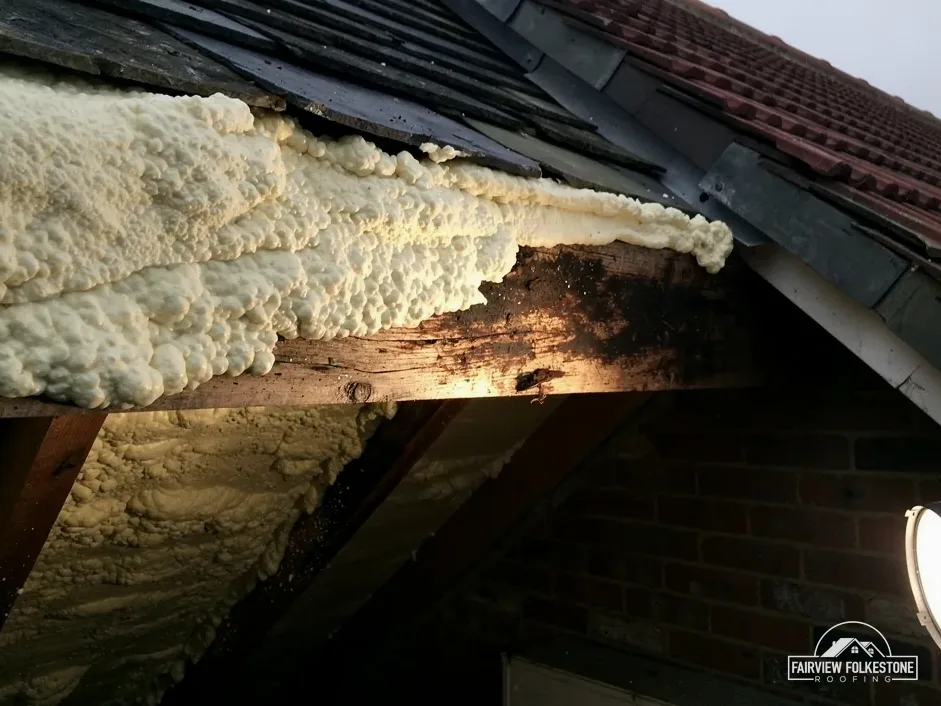
Under the foam sits the roof structure, and until the foam is off nobody has read it. The Energy Saving Trust says spraying foam directly to the underside of the roof "will partially seal the timber", so the wood has to be examined once it is bare. What the timber shows can add to the work in several ways.
- Sound timber with surface marking needs drying out and nothing more.
- Decay near the foot of a rafter can be cut out with fresh timber fixed alongside what remains.
- A rafter gone soft along its run, or a purlin that can no longer carry its share, has to be replaced.
- Felt that did not survive the foam is renewed, together with the battens that carry the tiles.
None of that can be priced from the hatch, which is why a survey says what is likely and then stops short of promising. The test area is the fairest way of finding out early, and where it shows soft timber the quote is written to allow for it.
Should lifting the foam reveal something no test area could have shown, work pauses and you get the photographs and moisture readings with a revised written total before anything continues. No extra work starts until you have agreed to it. It runs the other way too: where the timber reads better than feared, the total comes down, and you are told that as well.
What happens once the timber is cleared is the subject of the guide to what happens after spray foam removal.
Is the price fixed once the foam is out?
The written total stands unless something hidden changes the work. If lifting the foam shows rotten timber or torn felt that no test area could have revealed, work pauses and you receive a revised written total with the evidence. Nothing extra goes ahead without your agreement, and a better result than expected brings the total down.
05Scaffold
Scaffold licences, access and approvals
Where the roof has to be stripped, scaffold enters the price, and so can a licence to put it on the highway. In Kent, Kent County Council's permit for scaffolding on the highway costs £52 per week for 2026 to 2027, covering seven calendar days, and its page says the scaffolding company should submit the application. Over in Rye and Camber, in East Sussex, East Sussex Highways shows £127 for 28 days on its fee table, though it is sensible to check the current figure. A week and 28 days are different periods, so the two fees cannot be set side by side. We arrange the licence with our scaffolder, and whatever it costs is folded into the one written total, not sent as a separate bill.
Access beyond the scaffold matters too.
- A tall or steep roof takes more time to work on safely.
- A hatch that is small or awkward slows the carrying of foam sacks out of the house.
- A loft crowded with stored boxes has to be cleared before anything starts.
- A narrow street or a shared drive can change where the scaffold and skips are placed.
Approvals are the last item. In the Planning Portal's guide, re-roofing does not normally need a building regulations application if it affects less than 25 per cent of the building envelope and less than 50 per cent of the roof. Beyond that, the wider rules on insulation can apply to the work. At Dover, Deal and Sandwich addresses the district council takes a stricter line, listing even like-for-like replacement of roof coverings as work needing approval, so building control is asked before a date is fixed.
06Quotes
Reading a quote so you can compare it
You are likely to collect more than one quote, and the numbers may not line up. Different firms price different jobs without knowing it: one sets out to cut foam from the loft, another to strip the roof, and a third to cut a test area first and price the rest afterwards. The totals then mean different things, and the lowest figure is not necessarily the lowest cost.
Does the quote cover putting insulation back?
Yes: the written total covers the whole job, which includes the new felt where it is needed, the ventilation and the insulation that goes back once the timbers are checked. When you compare other quotes, look for the same items and see whether each says if VAT and scaffold are included in the figure.
A price for foam alone leaves out the roof that is under it.
Before comparing, check that each quote answers these points.
- Which route it assumes, the loft or the roof stripped from above.
- Whether VAT is included in the total.
- Whether scaffold and any highway licence are included.
- What happens to the foam and the waste, and who removes it.
- Whether the new felt, ventilation and insulation are in the figure.
- What happens to the price if the timber turns out to be damaged.
A figure that leaves out any of these can look lower and end up higher. Our own written total, given once the survey is done, puts the answer to each question into a single figure. Ask other firms for the same, so that you are comparing whole jobs and not fragments of them. It is also fair to ask each firm how it would learn the foam type and what it would do if the felt tore, because the answers show whether the quote was built from a survey or from a guess.
For the method behind the figure, read how spray foam is removed. The spray foam removal page sets out the work end to end.

Tell us what's wrong with the roof.
You'll get one written total price.