
Lead welding
What is lead welding, and when is it used on a roof?
Lead welding joins two pieces of lead by melting their edges together. Below: how it works, where it suits a roof, what it cannot fix and what to ask.
The short answer
Lead welding joins pieces of lead by melting the edges so they fuse into one, with no solder between them. On a roof it is used where a folded or lapped joint would be awkward or weak, such as an internal corner, a junction of two upstands or a decorative detail. It makes a continuous piece of metal at that joint. It does not replace good fixing, and a welded sheet still has to be free to move.
5 min read · Part of Lead work
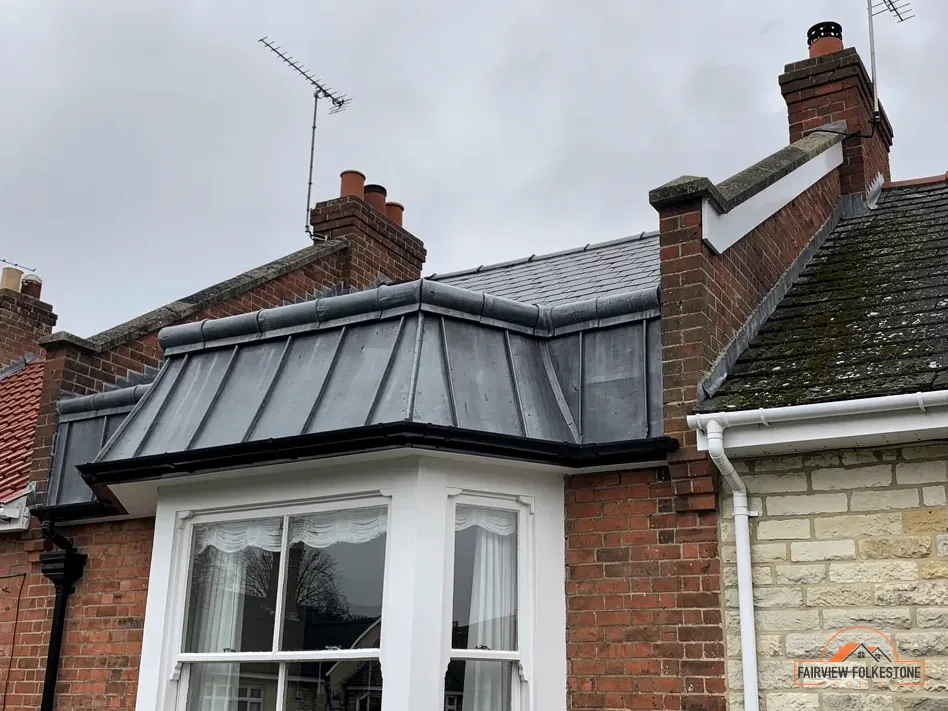
How a lead weld is made
Lead melts at a low temperature compared with most metals, which is what makes the process possible, and also what makes it easy to spoil. A skilled worker cleans the two edges back to bright metal, brings them together and runs a gas torch along the joint, feeding in a thin strip of lead as filler. The edges and the filler melt together and, once cool, form a single seam.
The result differs from a soldered joint, because there is no second metal in it: it is lead joined to lead. It also differs from a lapped joint, where one piece simply overlaps another and relies on the overlap to shed water. That is why the work is sometimes called lead burning.
Doing it well is a matter of practice. Too much heat burns a hole through thin sheet, and too little leaves a weak seam that opens later. For that reason it is done by roofers who have trained for it, and it is not a job to hand to a general builder with a torch. Ask to see a sample of their work if you are unsure.
Where welding suits a roof
Most lead on a roof is folded, lapped and dressed to shape, and needs no welding at all, so welding is the exception and not the rule. A weld comes in where the shape of the detail would otherwise leave a joint that is hard to keep watertight. This table shows the places where we would consider it, and the reason in each case. Anything not on the list is almost certainly a folded detail.
| Detail | Why a weld is considered |
|---|---|
| Internal corner of an upstand | Avoids a lapped seam in the corner |
| Junction of two valleys or gutters | Gives one unbroken lining |
| Ornamental lead, such as finials | Joins shaped pieces cleanly |
| Lead roofs over bays | Closes awkward corners |
On an old building the lead may be part of the design, and our answer on leadwork on listed buildings covers what to check with the council first. Where lead has been cut away or torn off, a welded corner is sometimes the neatest way to rebuild what was there. The lead work page shows the full set of details we deal with.
What a weld cannot do
A weld is a joint, and a joint is only one piece of the work. It does not cure a fault elsewhere in the detail. Lead expands and contracts as it warms and cools, and if the sheet is nailed down all round, it will tear beside the weld however well the weld was made. The fixing, the lead code and the size of each piece of sheet still decide how the detail behaves. A neat weld in a badly fixed sheet is still a badly fixed sheet, and the failure simply happens next to the weld instead of at a lap.
So a welded detail is not stronger in every sense, and it is not a reason to choose thinner lead, because the thickness has to suit the detail whether or not it is welded. Royston Lead lists Code 4 as the lightest for flashings and Code 5 as the lightest for the gutter types that carry the most water. Our lead codes explained post reads the table.
Why lead cracks even when the work is neat is covered in our answer on why lead flashing cracks, and it is a fixing question, not a welding one.
Safety and questions to ask
Lead welding means a naked flame on a roof, close to timber, felt, insulation and sometimes a loft full of stored things. That is a real fire risk, and it should be managed. Ask the roofer to say how the area around the work is protected, and what is checked once the work is finished. A fire can smoulder out of sight for a while after the flame has gone, which is why the checks after the work matter as much as the care during it.
- Which details need a weld, and why a folded joint will not do
- Who does the welding, and what training they have
- How the timber and covering around the work are protected
- What is checked afterwards, and for how long the area is watched
- Whether a fire watch is kept once the torch is put down
Welding adds time to a job, so it is one of the points that sets the price. The survey says whether a weld is wanted at all and where. Your quote then follows as a single total, in writing. If a roofer proposes welds on every joint, ask why a folded joint would not do, because on most details it does.
More questions
Is lead welding the same as soldering lead?
No. Soldering joins lead with a second metal, solder, melted between the pieces. Welding melts the lead itself, with a lead filler strip, so the joint is lead throughout. Welded work needs more skill, because lead is soft and melts easily, and a mistake can burn through the sheet.
Does every lead roof detail need welding?
No. Most flashings, soakers and simple valleys are folded and lapped, and are watertight without a weld. Welding comes in at awkward corners, shaped ornamental work and some bay roofs. We say at the survey which details need it and which do not, so you pay for the work the roof needs.

Tell us what's wrong with the roof.
You'll get one written total price.