
Roofing services
Roofing services explained: what each job involves and when you need it
Roofing is several trades under one name. This post walks through each job a roofer does, what it involves and the signs you need it, with a link to the full page on each.
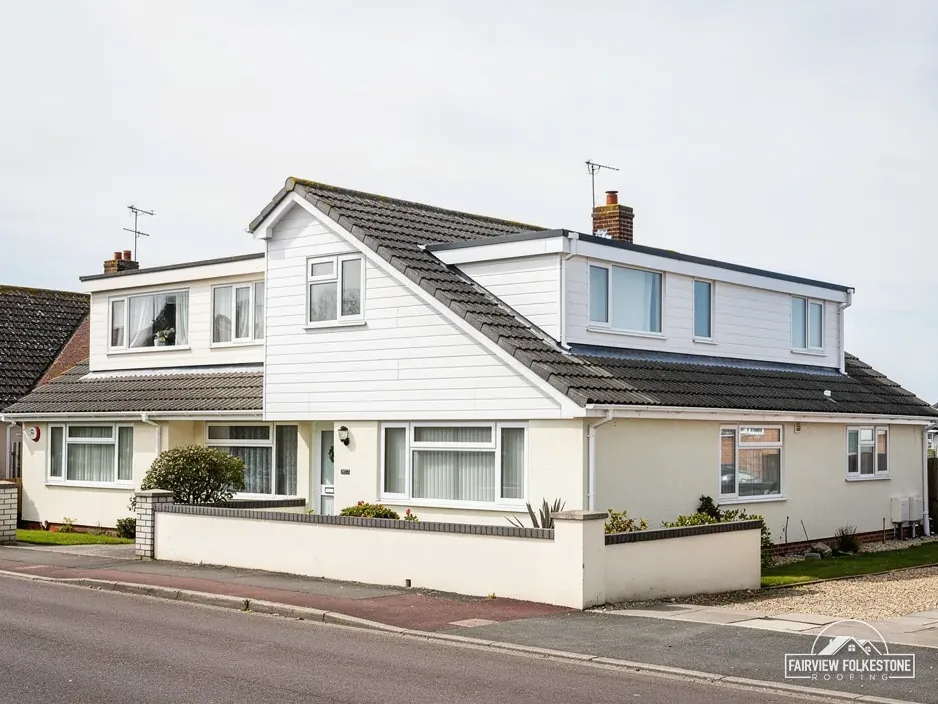
Ask three people what a roofer does and you will hear three answers. One thinks of slipped tiles after a gale. Another pictures a whole new roof going on over a week. A third has a leaking flat roof over a kitchen extension in mind. All three are right, and the jobs have very little in common beyond the height at which they are done.
That is why a plain tour helps. Below, the work is grouped into six sets of jobs: repairs and inspection, re-roofing, flat roofs and lead, the roofline and chimneys, windows and special roof types, and the specialist jobs around cleaning, insulation and asbestos. Each section says what the job involves, what prompts it and what published sources say it costs, and each links to the full page for that service. Our roofing in Folkestone home page lists them all.
One principle runs through all of it. The right answer for a roof is the smallest job that puts it right and keeps it right, and a quote worth having says which job that is and why. Where a repair is sound, a repair comes first. Where a roof has run out its useful life, patching it only delays the bill, and a plain explanation of the difference is part of what you are paying for.
01Repairs
Repairs and inspections: the smallest sound job
A repair puts back what has failed without disturbing what has not. That could be a few slipped tiles refixed, a cracked ridge tile replaced, a section of lead dressed back into place or a torn patch of flat roof covering sealed. An inspection comes first when the cause is unknown: someone goes up, or into the loft, and reports what they find in plain terms.
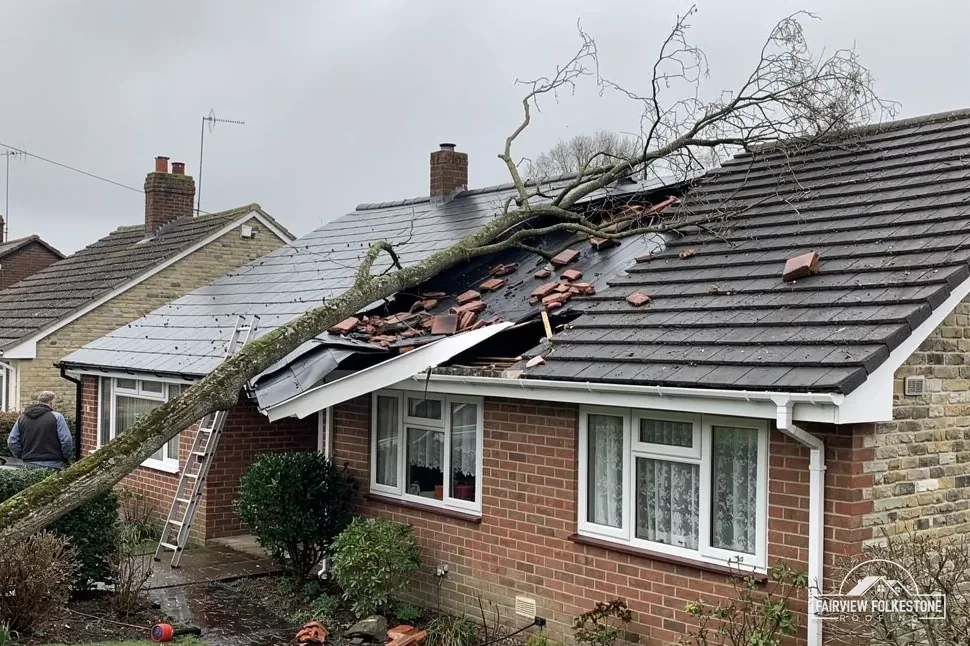
You need this work when you see a stain on a ceiling, tiles on the ground after a gale, a gap along the ridge or daylight in the loft. Storm damage is the urgent case, and our roof repairs page covers it. For a survey with nothing yet wrong, see roof inspections.
Which? Trusted Traders, writing in November 2025, give £75 to £400 before VAT for replacing one to six broken tiles and £80 to £300 for a new ridge tile. MyJobQuote's figures come in the next table.
A call-out figure pays for someone to turn up; making safe and the repair itself are separate jobs. For a repair we give one written total once the survey is done, which means the full figure is known before work starts, and we leave the site clean.
| Job | Figure |
|---|---|
| Average roof repair | Around £650 in 2026 |
| Emergency call-out | £150 to £300 |
| Roof survey, average | Around £300 |
| Extensive storm damage repairs | Can cost £1,200 or more |
02Key points
Re-roofing: new coverings on a sound structure
A re-roof strips the old covering and fits a new one, usually with new battens and underlay, onto the timbers beneath. It is the right answer when the covering has failed widely, when repairs have become frequent, or when a survey finds the underlay and battens beyond saving. It is not the answer to a few loose tiles.
Three covering types dominate this work, and our pages on roof replacement, pitched roofing and slate roofing look at each.
Your questions about choosing the job
How can I tell whether my roof wants mending or renewing?
A survey answers it. A repair is the sound choice where the covering, battens and underlay are in good order and the fault is local. A replacement is right when the covering has failed widely or repairs keep recurring. Ask for photographs of what was found, and a written quote that says which job it is.
- Clay tiles: HomeBuilding gives an approximate life of 60 to 80 years.
- Plain concrete tiles: HomeBuilding puts these at 40 to 50 years.
- Welsh slate: HomeBuilding gives 100+ years.
On price, HomeBuilding's figure for a three-bedroom semi with a 65 m2 roof and plain concrete tiles is between £10,000 and £15,000, including labour, scaffolding and insulation, and the same house in Welsh slate could come to £18,000. MyJobQuote puts its average slate roof fitting at around £7,800. The sources differ, so a survey gives the real number.
Re-roofing also brings rules. The Planning Portal's test: a job touching under 25 per cent of the building envelope and under 50 per cent of the roof will not normally need an application filed. The exception is a new covering that adds 15 per cent or more to the weight. Our planning guide sets out the full picture, and a roofer should tell you which side of the line your job falls.
03Flat roofs · Leadwork
Flat roofs and lead: the waterproofing trades
A flat roof is not flat. It needs a fall so water leaves it. BS 6229:2025 sets a minimum finished fall of 1:80 for membrane flat roofs, and IKO says the code of practice asks for a 1:40 design fall to get there. A puddle still sitting on the roof days after rain points to a fall problem, and our flat roofing page explains the options.
Where each material stands on lifespan depends on who you ask, which is why this table names both sources.
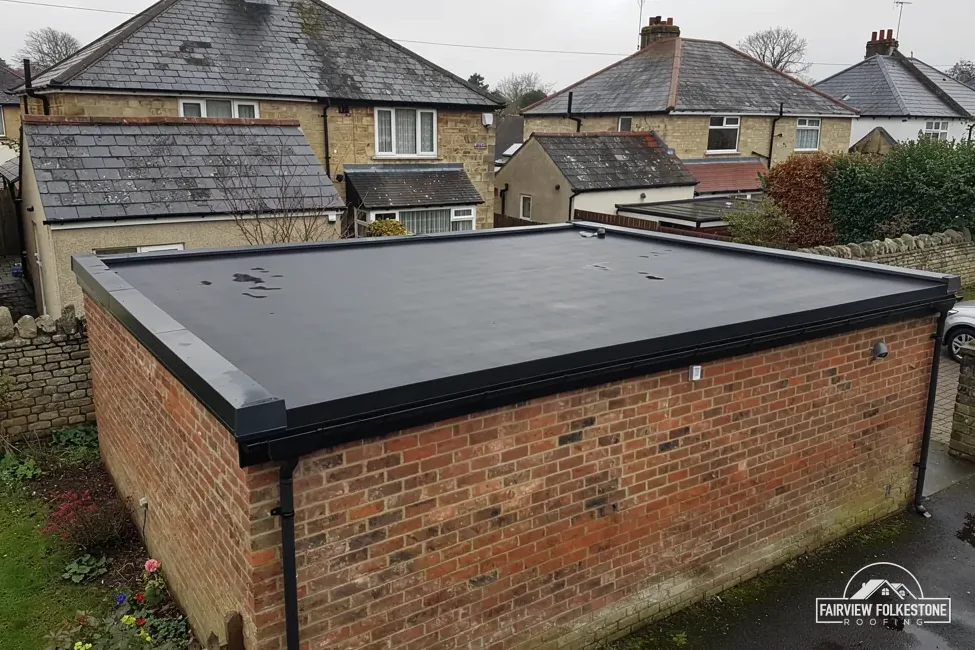
| Material | HomeBuilding | Less |
|---|---|---|
| EPDM rubber | 25-30 years | 30 to 50 years |
| GRP fibreglass | 25-30 years | 25 to 40 years |
| Torch-on felt | 10-15 years | 10 to 20 years |
Lead is the other waterproofing trade. It lines valleys and gutters and forms the flashings at the junction of roof and wall or chimney. MyJobQuote says correctly installed lead flashing can last for over 80 years. The same source puts a chimney lead flashing patch at around £200 and a full replacement at around £570 on average. Lead comes in numbered codes, and the code chosen depends on the detail; the post on lead codes explains why, and our lead work page covers the service.
You need a flat roof or leadwork job when a membrane splits or blisters, a joint opens, or a stain appears below a wall junction.
04Rooflines · Chimneys
The roofline and chimneys: gutters, fascias, soffits and stacks
The roofline is the edge of the roof: gutters, fascia boards, soffits and the stack that rises through it. These parts carry rain away from the walls and hold the covering at the eaves, so when they fail, damp shows in places that look unrelated to the roof.
Gutter work comes down to fall and fixing. Brett Martin advises a fall of 1 mm for every 600 mm towards the outlet, so a gutter that droops between brackets keeps its water instead of passing it on. Our gutters, soffits and fascias page covers the choice of materials. One retailer says uPVC boards can typically maintain performance for 20 to 40 years.
- Clearing gutters at the front and back: £75 to £350 ex VAT (Which?, November 2025).
- Replacing guttering: an average of around £1,000 to £1,600 (MyJobQuote).
- Capping fascias and soffits: an average of around £800 (MyJobQuote).
Chimneys are the other roofline job. A stack takes the weather on every face and sits where lead flashings meet brick and mortar. The chimney repairs page covers pots, flaunching, repointing and rebuilds. If a stack is no longer used, our post on chimney removal or capping compares the two choices.
You need roofline work when gutters overflow or drip, fascia boards are rotten, or soffits are cracked or missing. You need chimney work when mortar crumbles, pots lean or damp marks follow the line of the stack, and a survey will say which.
Do all of these jobs need Building Regulations approval?
No. Going by the Planning Portal's test, a re-roof touching under 25 per cent of the building envelope and under 50 per cent of the roof normally goes ahead without an application, though a covering that adds 15 per cent or more to the weight does need one. A small repair is unlikely to reach those limits, and building control can confirm a particular job.
05The detail
Windows, conservatory roofs and commercial roofs
These are jobs where the roof carries something extra. A roof window or rooflight is a hole in the roof with a seal around it, a conservatory roof is a separate structure joined to the house, and a commercial roof spans a larger area than a house with a different layout of falls and drainage.
For roof windows, Table 4.2 of AD L 2021 asks for 1.4 W/m2K, or a WER Band B rating, while the 2.2 W/m2K figure applies to rooflights only. MyJobQuote gives an average of £1,100 for a mid-range Velux. See roof windows and skylights, and the guide to planning permission for Velux windows before you commit.
For a conservatory, the Planning Portal's advice is that a replacement roof has to meet the Building Regulations, so ask building control at the outset. The energy-rules exemption for a conservatory built at ground level, up to 30 m2, holds only while it stays divided by a wall, door or window from the main house, and the house's heating does not reach into it. MyJobQuote's average for conservatory roof replacement is between £3,200 and £6,000, and HomeBuilding gives a typical polycarbonate lifespan of 10 years. Our conservatory roofs page covers the work.
Commercial roofing, on our commercial page, covers shops, workshops and units. Expect a survey before a price, as area, access and system differ site by site. You need this work when a seal fails and a window mists or drips, when a conservatory roof becomes too hot or too cold, or when a business roof leaks into stock.
06Asbestos
Cleaning, spray foam and asbestos: the specialist jobs
Three jobs sit slightly apart from the rest, and each carries a warning. Roof cleaning and moss removal is the gentlest, but the method matters: Marley does not recommend high-powered jet washes, which it says can damage slate or tile and cut its expected life. Wild birds' nests are protected as well, and under section 1 of the Wildlife and Countryside Act 1981 intentionally damaging or destroying one that is in use or being built is an offence.
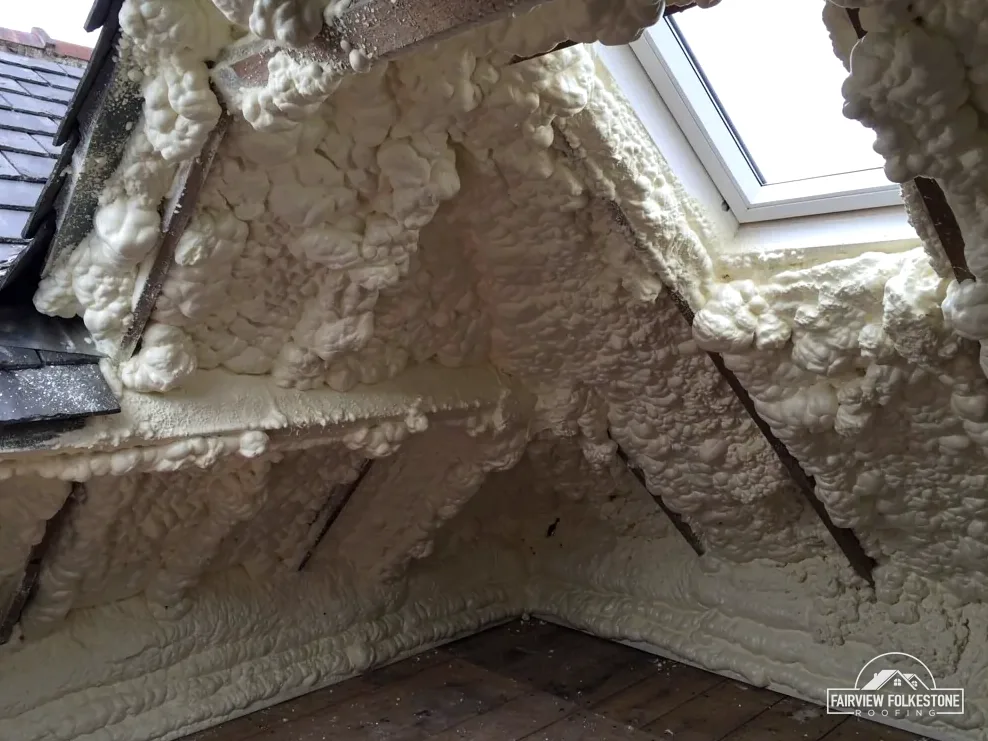
Spray foam removal follows from foam applied beneath the roof covering. The Energy Saving Trust describes two types, closed-cell and open-cell. Closed-cell foam lets no moisture vapour through, which it calls the main drawback. RICS has reported concern within specific sectors of the lending market, including equity release mortgages. MyJobQuote gives an average removal price of £40 per m2.
Garage and asbestos roofs need the most care. For a building built or refurbished before 2000, HSE says to presume asbestos is part of it. Cement sheets lifted off whole, without breaking them up, rank as non-licensed work, while work on asbestos insulating board, which HSE lists among soffit materials, is licensed unless it is short-duration refurbishment work. Asbestos belongs in a lockable skip, never an open one. MyJobQuote's average for removing asbestos from a roof is around £2,750.
- Moss and algae on tiles: cleaning, with a method that spares the surface.
- Foam on the rafters: a survey first, then removal if it is causing trouble.
- Corrugated sheets on a garage: test before anyone touches them.
Can one roofer handle every kind of roof job?
Some firms cover pitched roofs, flat roofs, leadwork and the roofline between them, but the specialist work needs particular care. Asbestos, spray foam and listed buildings each have their own rules. Ask a roofer which of them they handle themselves, and who does the rest, before you accept a quote.
More from the blog
All guides and posts
Tell us what's wrong with the roof.
You'll get one written total price.